
Lessons Learned
Agile Lessons Learned from Running Marathons
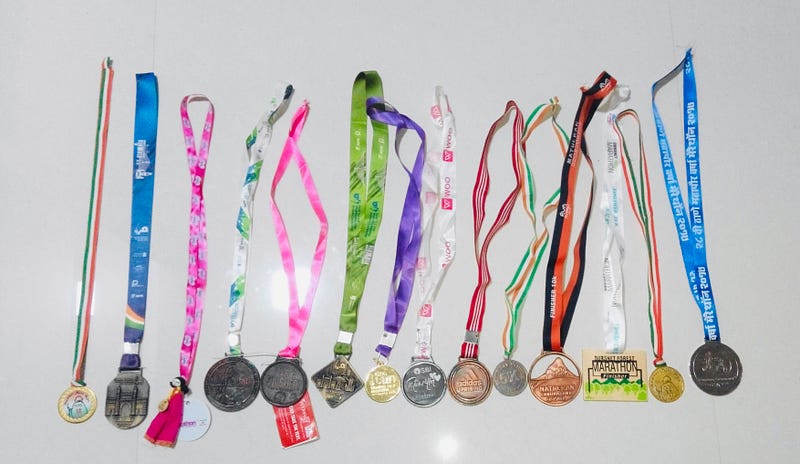
After doing one full marathon, multiple half marathons, and innumerable 10Ks and almost fitting 5Ks into my daily routine, would I be tagged as a runner? Well, someone wise did say – Never judge a book by its cover.
A few years ago, I was an event-specific runner, meaning, I only ran in marathon-related events. It would be rare for someone to spot me running just for fun. It was just at the end of the first lockdown in the UK when Mike (CEO, ex-colleague), decided to do a virtual running challenge for a month, I decided to participate and buckle up and it transformed me.
Little did I realize the thought of competing would flow inward than outward and turn into a passion that I’d follow diligently.
This time too my analyst instinct kicked in, every move I made was identified, captured, tracked, and improved in iterations and increments. My runs seemed to be working just like Agile teams. Hope you enjoy my thoughts on the lessons I learned during my journey so far,
Lesson 1: Sustainable pace
To achieve maximum output in minimum time, I tried running faster. This left my body exhausted and my mind frustrated, for not achieving the goal. Instead of increasing the distance, I tried to reduce the time.
Can you guess what went wrong? I ignored the sustainable pace that could have kept my runs longer. Instead, I experienced burnout, which wasn't effective, if I had to make this my routine. I realized that if I experienced this burnout every day, I’d either injure myself or would lose interest in running.
What did I do? I muted all the alerts (distractions) that I received after every kilometre while running. Instead, I only reviewed the distance at the end. By doing this, I had no deadlines and pressure to perform better, however, I was able to run longer.
Make your growth sustainable by moving at a pace that is challenging but not overwhelming — Michelle Josefina.
Lesson 2: Energy flows where Focus grows
I noticed that people talk, people inspire, and people motivate, but only my actions can bring change. Instead of focusing and comparing myself with other runners on the leaderboard, I started comparing my run yesterday with my run today. I started focusing on my actions, not the results. In turn, my actions changed my results.
Lesson 3: Measure to improve, not to punish
Many say, you can’t improve what you can’t measure. Quite often, we fall into the trap of Rewards and Punishments. On the days I couldn’t run, I punished my body by eating less. I starved and as a result, I overconsumed unhealthy food. Alternatively, whenever I ran better, I rewarded myself with guilty foods again.
What went wrong? All my efforts seeped through the drain. I was neither happy in my journey nor did I achieve my targets. It was stressful.
What did I do? Instead of setting a hard target and feeling disappointed for not achieving it, I tried forecasting my targets based on the current progress and adapted to the changes. I also became fully aware that not all metrics are beneficial. Rather, I shifted my focus from ‘Pace’ and ‘Miles achieved’ toward my sleep quality, number of active days, and hydration. By doing this, I started enjoying the journey more and worried less about my final destination.
I learned progress and passion are more important than perfection.
Lesson 4: Celebrate small victories
Making progress in meaningful work brings happiness and contentment, which is highly subjective. What differentiates my best day and worst day, is the progress I’ve made. Small wins are the little milestones that steer my path towards bigger wins or rather, better habits. I started treating my failure as lessons learned and eventually understood, that success is a series of small frequent wins and that every achievement counts.
Lesson 5: Success is subjective, create your own
Hearing the crowds cheering when you approach the finish line, builds up your pace, and triggers the sudden rush of endorphins. People motivate you to help you thrive, and to keep you going, and this, in turn, improves your pace and helps you run faster. I’ve noticed I ran faster when I have people cheering me with all the courage and positivity whilst I ran. It’s not the endorphins that have done the magic, it’s the people who helped me succeed that gave me the runner's high.
I can fail alone, but to succeed, I figured out that I needed help. To stick to a routine and make it a habit, I needed support and motivation from the people around me. I needed an environment where I could be challenged to grow, vulnerable enough to accept feedback, and able to learn and unlearn. For me, this was my stepping stone to success.
If you don’t define your success, someone else will do it. And letting someone else define your success could be a recipe for failure because one size doesn’t fit all.
Lesson 6: Embrace the journey but don’t forget the destination
Trust the process, as success is a journey, not a destination. In the past, I worked hard and pushed myself without caring why I ran. It stressed and frustrated me at all levels. When I understood the purpose of WHY I was doing this, I suddenly started enjoying it even more.
Once you attain the level of maturity in what you pursue, it becomes easy to follow. It is the journey that provides a good learning experience, and the purpose keeps you motivated. Without a purpose, we won’t embark on the journey and eventually cease to grow.
Lesson 7: Slack is important
What happens if you neglect to recharge your phone?? It eventually dies…indeed!
Rest and recovery constitute a part of this recharging process, which reduces tense muscles and speeds up their rebuilding. I realized I could only polish my personal best when I had a good night's sleep, ate better, and took complete rest to ease out my muscle fatigue. So I’d better be energetic and excited about my next run than deprived and stressed.
Remember, you can’t pour from an empty cup.
Lesson 8: Change is inevitable, but Growth is optional
About a decade ago, I’d never imagined I could run even a mile until I did it and I felt super contented having achieved it. Next time I wanted to do better and after years of practice and training I eventually ended up finishing a 42 km marathon. Excitement knew no bounds, as this was an achievement that came from a person who never thought they would run a mile.
Nothing is impossible, the word itself says I M Possible and here I am, the living example for myself to quote back.
What did I do? I intermittently surprised my body with better habits and continuously adapted to a routine that helped me grow. I inferred that not everything you learn and put into practice works well. At times, we need to change what we learn to make it work for ourselves and fit in our ecosystem.
Lesson 9: Inspire and Motivate
To be inspired is great, but to inspire is an honour. At times, unknowingly we tend to inspire people around us with our actions, not because of perfection, but because of our ability to deal with imperfections.
It was only when I became passionate and loved what I did, that I was able to influence and motivate people around me to try running. Within a few weeks, I had my first running partner, dad, who ran with me in every marathon and got me back home in a single piece. This slowly became contagious and spread across my cousins, nephews, and nieces, who pursued running at a very tender age.
I feel elated when people remember me and still notify me about their running accomplishments as a part of the running club I initiated in 2015 (as a member of the Wealth and Wellness community, at the organization I worked with). Not everyone loved running, but everyone was inspired to get out of their couch and at least walk. A colleague in her 50s, who had never run before, walked her first 3k and immediately informed me of her success. I had a sudden rush of dopamine (the feel-good hormone), and that night I slept better.
Remember what Steve Jobs quoted? Quality is more important than Quantity. One home run is better than two doubles.
Lesson 10: Jack of all trades is better than the Master of none
Running alone doesn’t help if your purpose is to stay fit. You need to balance three musketeers – cardio, strength training, and a healthy diet. Though running and eating healthy keep my calories steady and burn them enough to avoid me becoming overweight, I incorporated cross-fit, yoga, and weight training to improve my core and stability to avoid probable injury & to carry out daily activities.
I may not be the best runner in town, but I’m the happiest and best version of the runner I ever was. A harvest of peace is produced from a seed of contentment. And for me, that’s all matters…the desire to be the best version of oneself.
I just want to end my musings on a remarkable quote by Simon Sinek that changed my perspective on life, “The mind must be convinced, but the heart must be won”.
Are there any lessons you could relate to? Share your comments and let me know how you felt.
If you loved this article, how about sharing some love with your friends and colleagues too?
And if you would like to support further, subscribe here today. By using my referral link, you support me in continuing to write & share on this platform.
Thank You!


