
Affinage
Don’t worry; you won’t age while reading today’s brief article
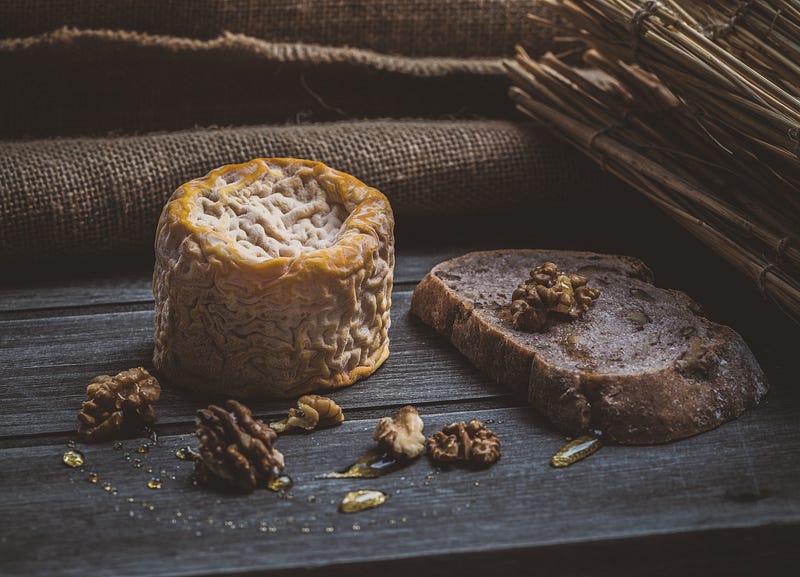
Today’s New York Times Spelling Bee letters:
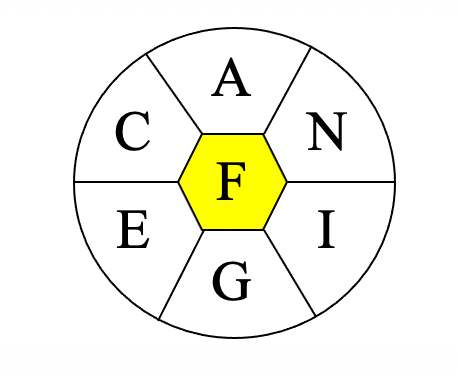
A, C, E, G, I, N, and center F (all words must include F)
Merriam-Webster says…
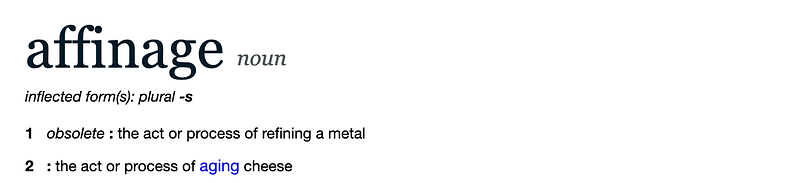
Silly little dictionary! Don’t you know that affinage can’t possibly be a word if the New York Times says it ain’t?
For further fascinating facts, check out the Spelling Bee Master.
What’s your favorite dord* from today’s puzzle?
My Two Cents
One assumes that many, if not most, of the Spelling Bee enthusiasts who play the game on a regular basis also read the New York Times, where the puzzle appears. I’m not 100% sure if you need to subscribe in order to access the puzzle, but even if you don’t, there must be plenty of gamers who are.
Why am I mentioning this? Well, I did a search for the word affinage in the Times database, and found articles that include it as recently as 2014. In fact, one of them even mentions Murray’s Cheese (more on that later). There are tons of articles going back as far as 1984.
So… wouldn’t readers of the Times who are also Spelling Bee players know the word affinage? Why the heck was this word not included in today’s list?
Say cheeeeese!
Ah, cheese! Queso. Fromage. Whatever language you choose to use, I love it. Soft, semi-soft, hard. Aged, young. I’ll even go for some of the stinky ones, although I will admit they are not pleasant to keep around one’s home.
Our friends at the dictionary explain that affinage comes from the French word affiner (to refine) + the suffix -age. When one looks up the word affine, one finds this definition:
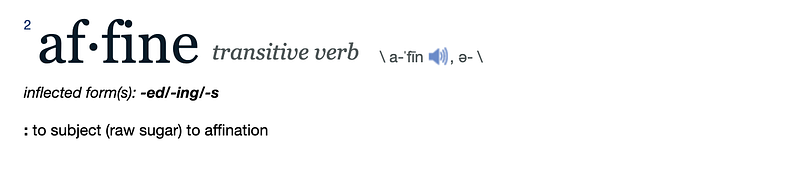
And there the dictionary explains that this word was likely taken from the French affiner meaning “to make finer or thinner, refine, purify,” going back to the Old French, from a- (Latin ad- ad-) + fin “fine, refined” .
One could argue, then, that the aim of affinage is to not just age the cheese, but also to make it better.
How do cheese makers go about doing this? Well, they have a “kit” of ingredients they use for this purpose:
▹ Rennet, or a substitute for rennet ▹ Milk enzymes ▹ several types of bacteria — called starter and non-starter — and their associated enzymes
Rennet consists of several enzymes produced in the stomachs of ruminant mammals (cows are the preferred choice). One of these enzymes is chymosin, well-known for centuries to curdle milk. Rennet is a byproduct of butchering; in other words, cows and calves are not killed just for their rennet.
However, due to its expensive nature and the fact that more and more people are becoming vegetarians, cheese affinagers — I just made up that word, in case you-re wondering — have experimented with other sources to obtain rennet: vegetable, microbial, and fermentational — another word I just made up. Kosher cheeses also can’t use animal rennet since mixing meat and milk products is verboten in Judaism. So, if you’re a vegetarian or just don’t like animal rennet, kosher cheeses are a sure bet.
Historically, cheese was ripened in caves and cellars. It still is and, in some cases, cave-aging is a must for a given cheese. You know how sparkling wine is called Champagne only if it’s made in that region of France using certain methods? Well, one requirement of Roquefort cheese is the affinage must take place in designated caves in south-western France.
When humans developed modern refrigeration and biochemistry processes, affinage took on a new meaning. It also became a more industrialized process, which has its supporters and detractors. Yes, there is something to be said about buying a cheese made by an old fart from Spain who’s been using a method started by his family twenty generations ago. As long as you can afford it. Because traditional, handcrafted cheeses can go for a pretty penny these days. Technology can lower the cost while still maintaining some of the long-established methods of making fine cheese.
In softer cheeses, the aging can produce a coat of edible mold, usually chalky grey, but sometimes in other colors. Blue cheese a category in which cultures of the mold Penicillium is added to produce the characteristic spotted or veined look of certain cheeses.
Hard cheeses that are aged can produce two types of crystals. One is known as the flavor crystal, formed from the calcium salt of lactic acid. The other type, tyrosine crystals, are found in many aged European cheeses. Tyrosine is an amino acid (building block of proteins), and it’s crystals emerge through the use of the bacteria Lactobacillus helveticus in these cheeses.
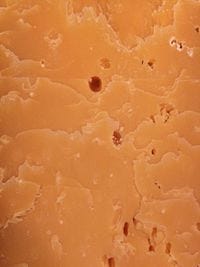
The above is an extra-aged Beemster cheese, and you may be able to spot the tyrosine crystals if you look closely.
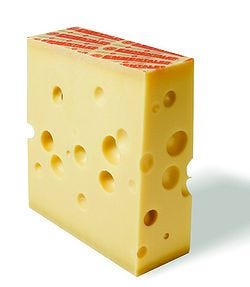
Another effect of affinage is what most people call “holes”. In the cheese-making world they are known as eyes, and are typical of some Swiss cheeses like Emmental.
Then there is cheddar, which undergoes a very specific process called… cheddaring. As Wikipedia explains:
Cheddaring is a unique process in making Cheddar cheese that involves stacking “loaves” of curd on top of one another in order to squeeze additional whey out of the loaves below. It is a multi-step process that reduces whey content, adjusts acidity, adds characteristic flavour, and results in a denser and sometimes crumbly texture.
The little cheese shop around the corner
When I lived in New York and worked in downtown Manhattan, I used to frequent an awesome cheese shop called Murray’s. What started in 1962 as an egg and dairy wholesaler in Greenwich Village soon became a boutique cheese store famous for both its imported cheeses from around the world as for showcasing American varieties. They even have their own affinage room.
Murray’s now boasts hundreds of locations around the U.S., with three of them in New York City. It was bought by The Kroger Company in 2017.
I would log onto their web site and pick from the mouth-watering selection of cheeses listed. Back then, when I first started shopping there, I would take a handwritten list with me. And of course I was always open to suggestions from their very helpful staff. Usually I would purchase cheese on Fridays in order to gorge myself over the weekend with them, along with some tasty bread and fine wine. Three-day weekend holidays were a good time to do this.
Having moved to Spain years ago, I can no longer go to Murray’s. And I do miss it. But I can’t complain. Aside from wine, ham, and olive oil, one of Spain’s most famous products is cheese. Everyone always just thinks of Manchego but, trust me, there are plenty of varieties across the different regions of this beautiful country.
And there is also plenty of affinage going on with Spanish cheeses.
Below is a link to Murray’s, set up for you already with the cheese page:
Cheese lovers may appreciate the art of affinage, but it’s clear that the editors of the Spelling Bee don’t care for it too much. Perhaps they prefer Velveeta, because, after all, they’ve decided that affinage is a dord.*
You can check out my previous entry on another dord* here:
*What the heck is a dord, you ask? Here’s the answer: