
Achene
The real story behind the tiny seeds on strawberries
Today’s New York Times Spelling Bee letters:
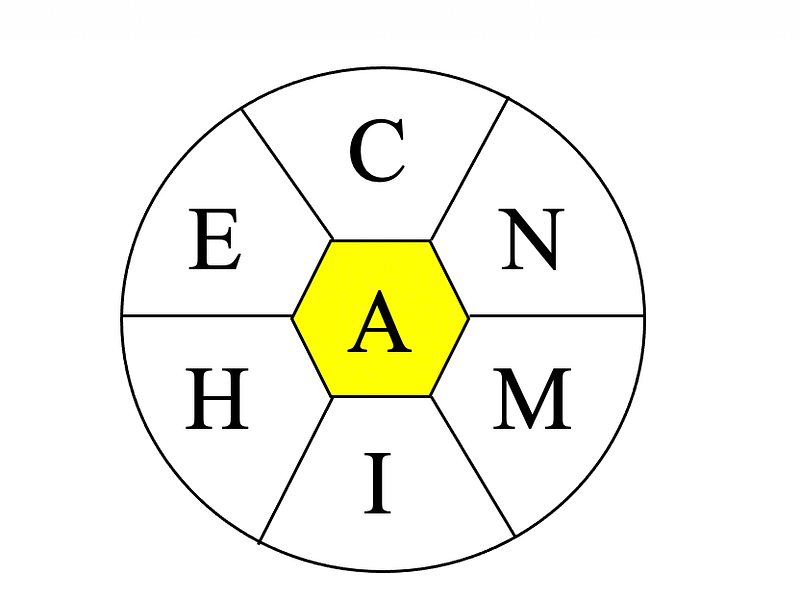
C, E, H, I, M, N, and center A (all words must include A).
Merriam-Webster says…
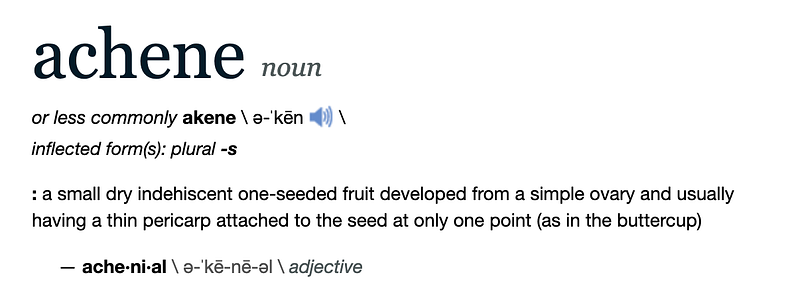
Silly little dictionary! Don’t you know achene can’t possibly be a word if the New York Times says it ain’t?
For further fascinating facts, check out the Spelling Bee Master.
What’s your favorite dord* from today’s puzzle?
My Two Cents
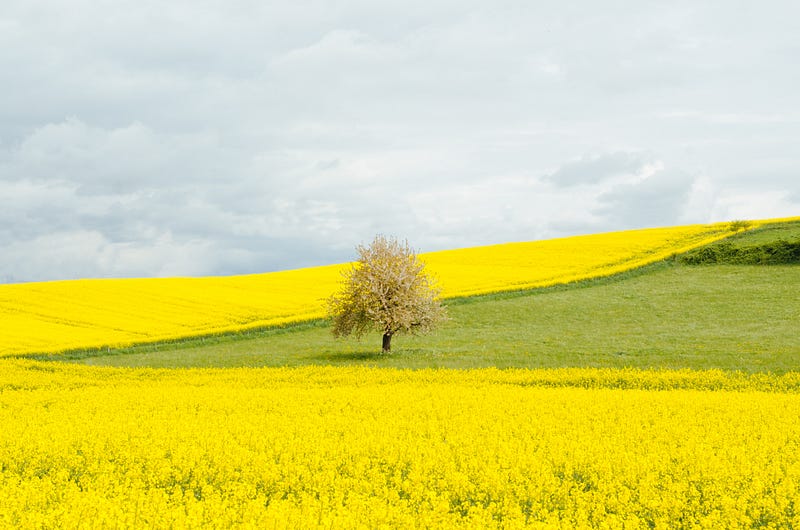
Wait a second! That’s not a strawberry in the photo! You must be thinking I’m drunk or high. Well, first of all… what if I am? Jealous much? Second of all, I just did it to add an element of mystery to today’s column. You probably wondered what achene, strawberries, and a field of buttercups with a tree in the middle all had to do with each other.
Well, wonder no more.
Oh, you didn’t realize those were buttercups? Well, Unsplash claims it is, and I’m not going to argue with them. Especially when I’m getting my photos for free and automatically credited.
Before we start, I do want to throw a shout-out to the person I call the Spelling Bee Master. That person managed to put up the fact sheet about today’s puzzle despite having issues with the game app itself because the New York Times changed the splash screen. It took the Spelling Bee Master quite a while to get the page up, but up it went. So, triple kudos to them!
Although I play the game myself and find many of the rejected words in that way, I always check the Spelling Bee Master’s page to see what other dords* are available to write my daily column (the list of “non words” appears at the bottom of the web page). I started to panic when the page did not update for today’s puzzle, because the only good word I had was Manichean, but being that it’s Friday and I’m tired and short of time, I really did not want to get into a deep philosophical discussion.
All this to tell you we’re stuck with achene.
Back to the botanical drawing board
An achene (pronounced a-KEEN), according to the dictionary, is “a small dry indehiscent one-seeded fruit developed from a simple ovary and usually having a thin pericarp attached to the seed at only one point (as in the buttercup)”.
Aha! Buttercup! Now you know why I picked that photo.
Let’s quickly review some terms that will help me — I mean you — better understand what an achene is.
▹ indehiscent: that does not open when mature
▹ fruit: a seed-bearing structure
▹ ovary: the part of the pistil that holds the ovules, which contain the female reproductive cells
▹ carpel: a flower’s individual female reproductive organ. One or more carpels form a pistil
▹ pericarp: the outer walls of a plant ovary
Okay, let’s try this again: an achene is basically a tiny fruit that contains one seed and remains closed once it has reached maturity; the fruit comes from a single ovary and has a shell to which it does not stick.
I think that may have been easier to unpack.
Here’s a photo that probably could have saved us all that gobbledygook:
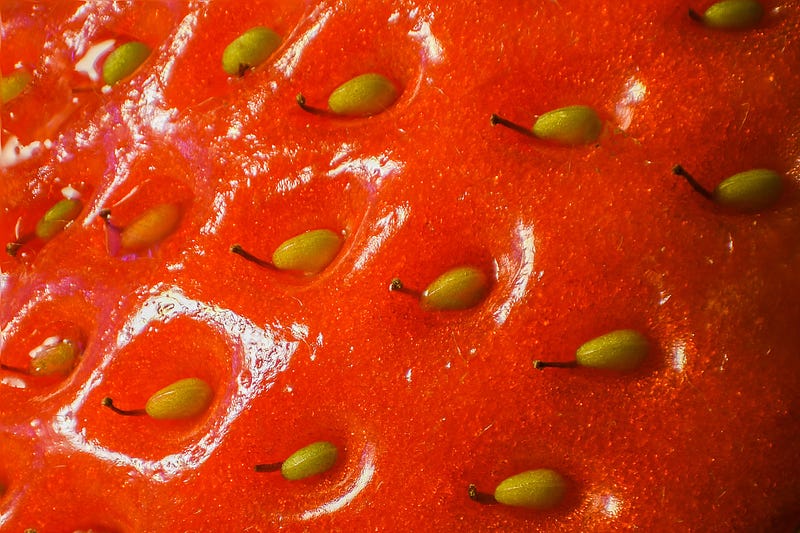
No, those are not teeny tiny pears embedded in a red vinyl couch.
It’s a closeup of a strawberry. What we’ve always called “seeds” are actually fruits! Yes, the strawberry is meta. It produces fruits of fruits.
So, inside those tiny things we have been calling seeds all our lives are the actually seeds of the strawberry.
Wait… so what is a strawberry then?
Accessories after the fact
An accessory fruit is that fruit who knows how to drive a stick-shift and is hired to be at the wheel of the getaway car during a bank robbery.
Kidding.
In accessory fruits some of the flesh comes from adjacent tissue that is outside the carpel, instead of the flower’s ovary like most other fruit. Accessory fruits are usually indehiscent.
Examples include apples, pears, figs, and… strawberries.
But apples and pears and fig do have seeds, not achenes.
So who else has achenes? Well, buttercups (remember that photo?), buckwheat, quinoa, and cannabis.
Now you know! Those all-important plant buds are actually achenes.
So next time you’re smoking some weed, return to this article, scroll down really slowly, and then show off your scientific knowledge to your pals.
Just remember not to use the word achene in your description, because the editors of the Spelling Bee puzzle decided that achene is a dord.*
You can check out my previous entry on another dord* here:
*What the heck is a dord, you ask? Here’s the answer: