
Edibles from the forest
Abundant wild blueberries in the Alps!
I thought it was already late for wild blueberries this year. But to my surprise, a large cluster of plants at 1600 m in a sun-exposed location of the Alps gave me over a kilogram of fruit in half an hour of work. See the pics and check out the hints to harvest them!
Picking wild fruits from the forest: raspberries, blackberries, and now blueberries
I showed you in a previous story that every summer I go to the forests for raspberries and blackberries, and how I store them as jam to be consumed all year long until next summer:
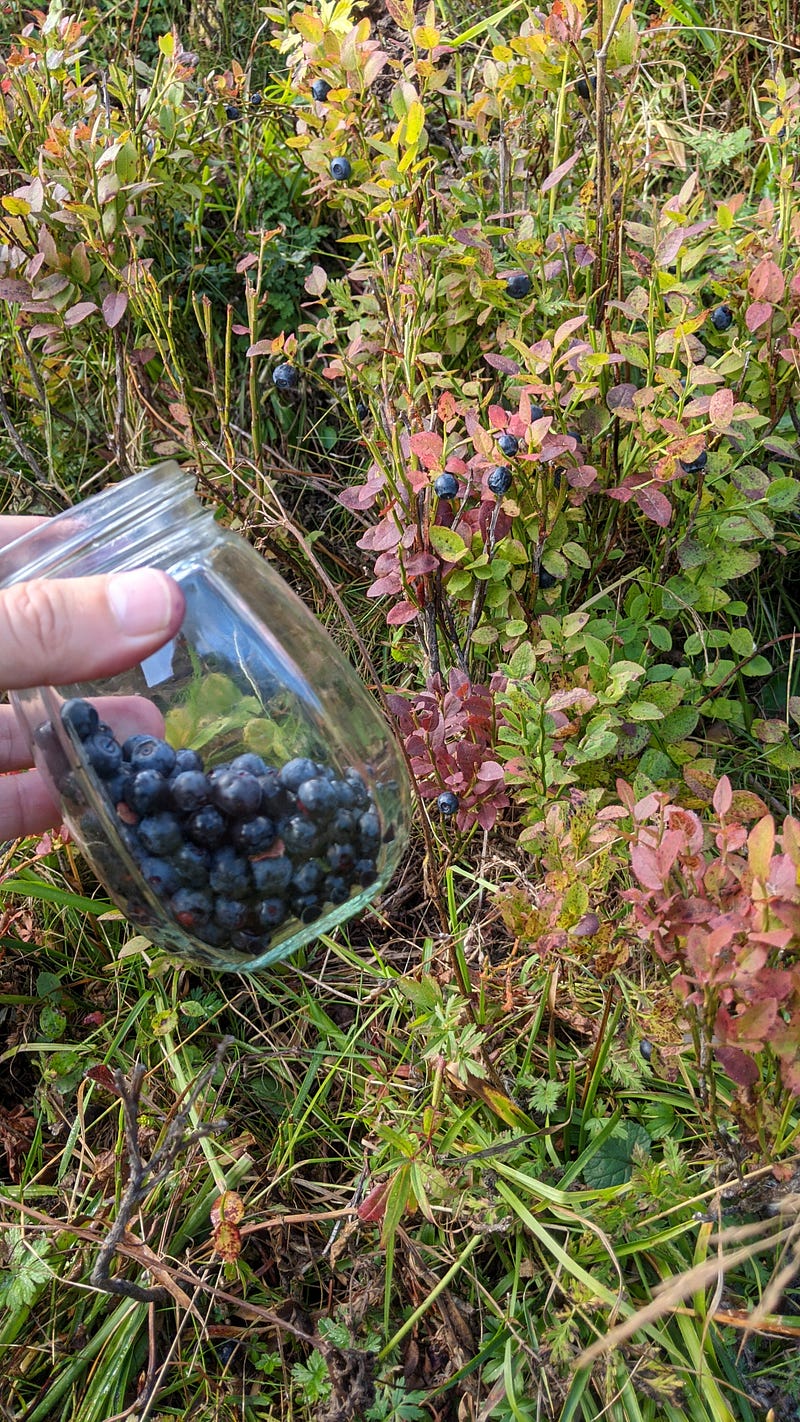
Well, yesterday we were hiking in a place we already know has blueberry plants. Although it’s already quite late, I anyway decided to quickly check if there were any fruits left. I went right straight to this kind of blueberry shrub mini-forest, and to my surprise… Wow! Lots of ready-to-harvest fruit!
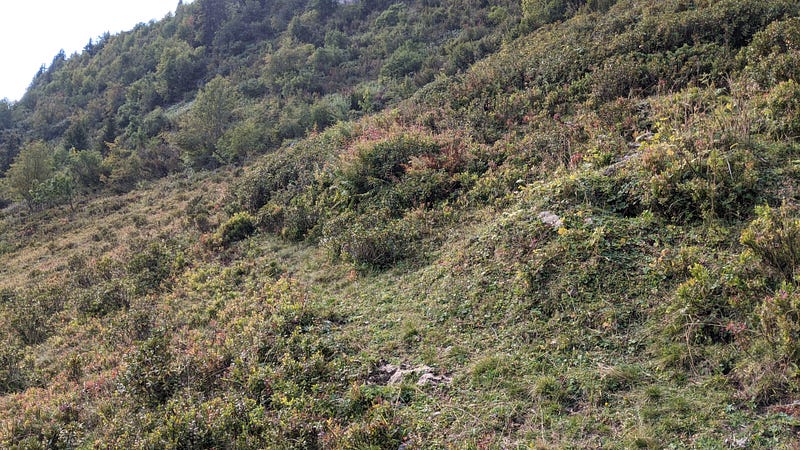
Most of the plants you see in this photo are in fact wild blueberry shrubs, forming a kind of small forest dominated by these plants:
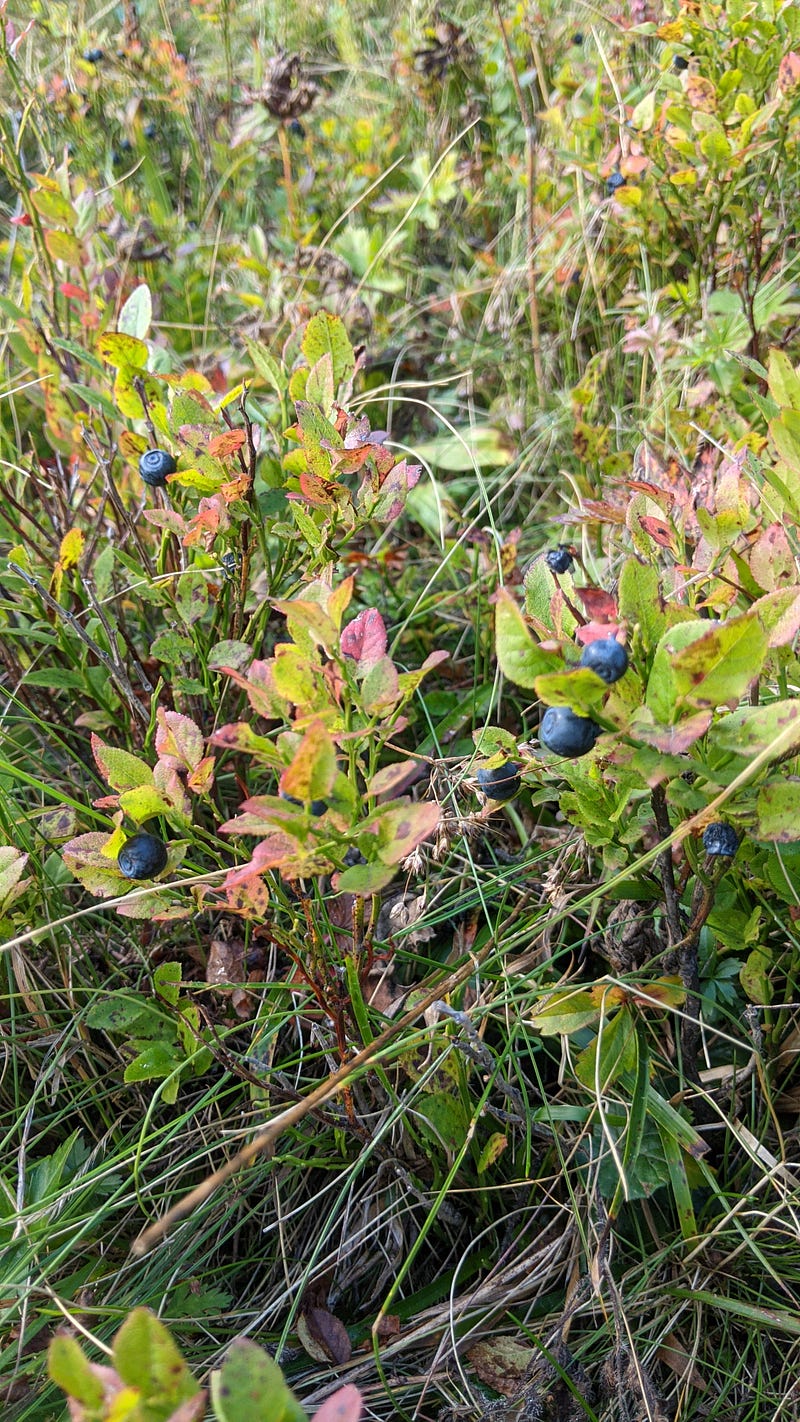
Here is one of the hundreds of plants in this mini-forest:
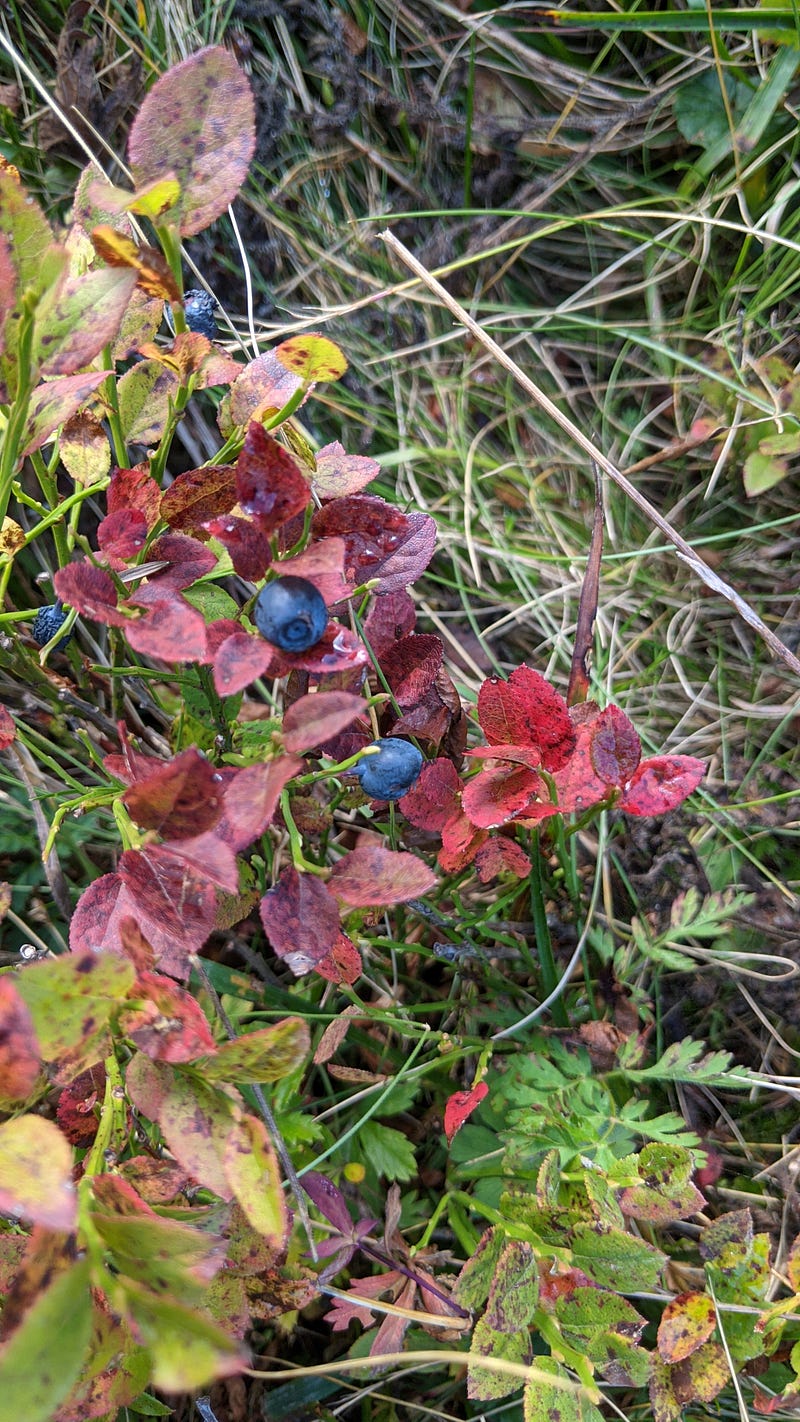
Some plants had already experienced frosts hence were starting to get red, yet had their fruits perfect for harvest:
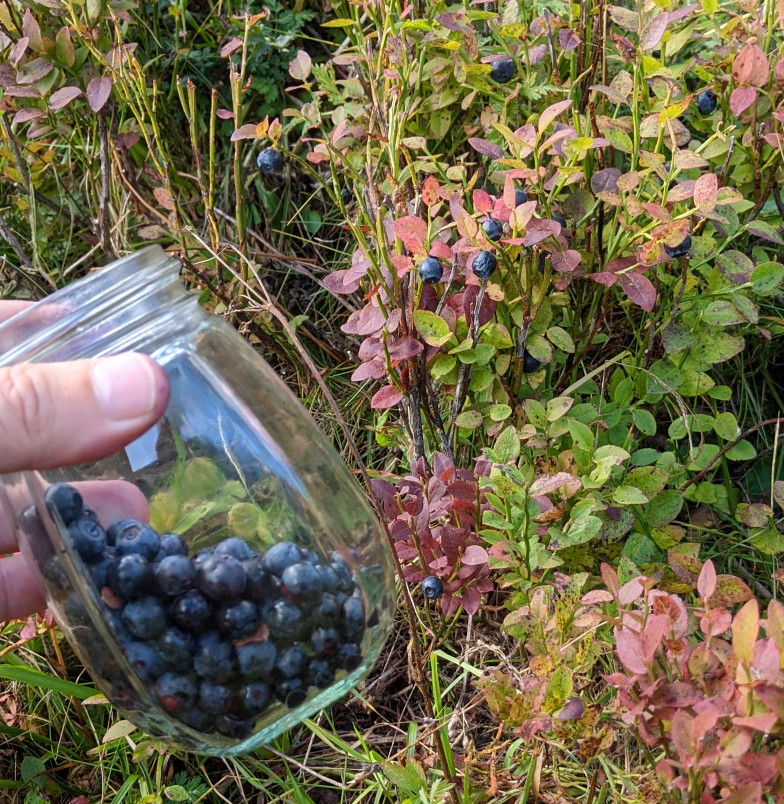
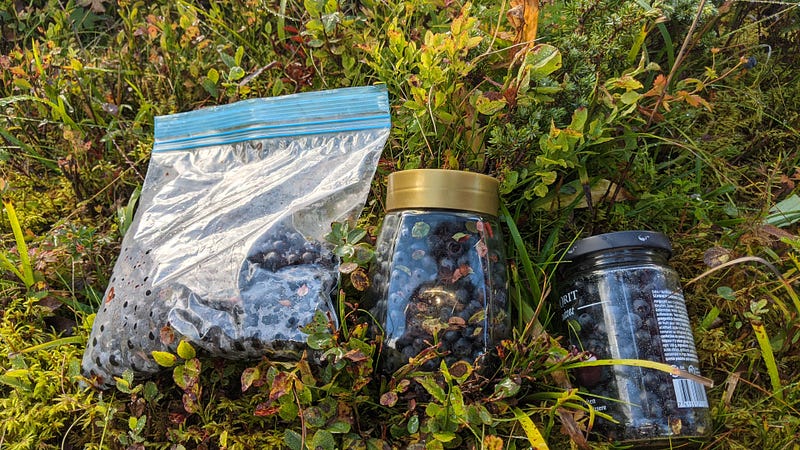
We started collecting the fruits in two jars that we happened to have at hand:
The produce
But we collected so much, we had to complement the jars with a bag.
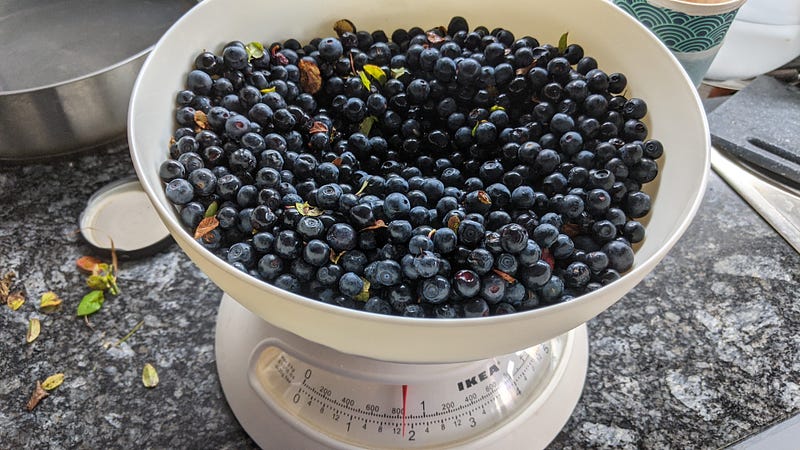
After half an hour we decided to continue our hike (still 4 hours to go!). We already had harvested over a kilogram, as we weighed when we came back home.
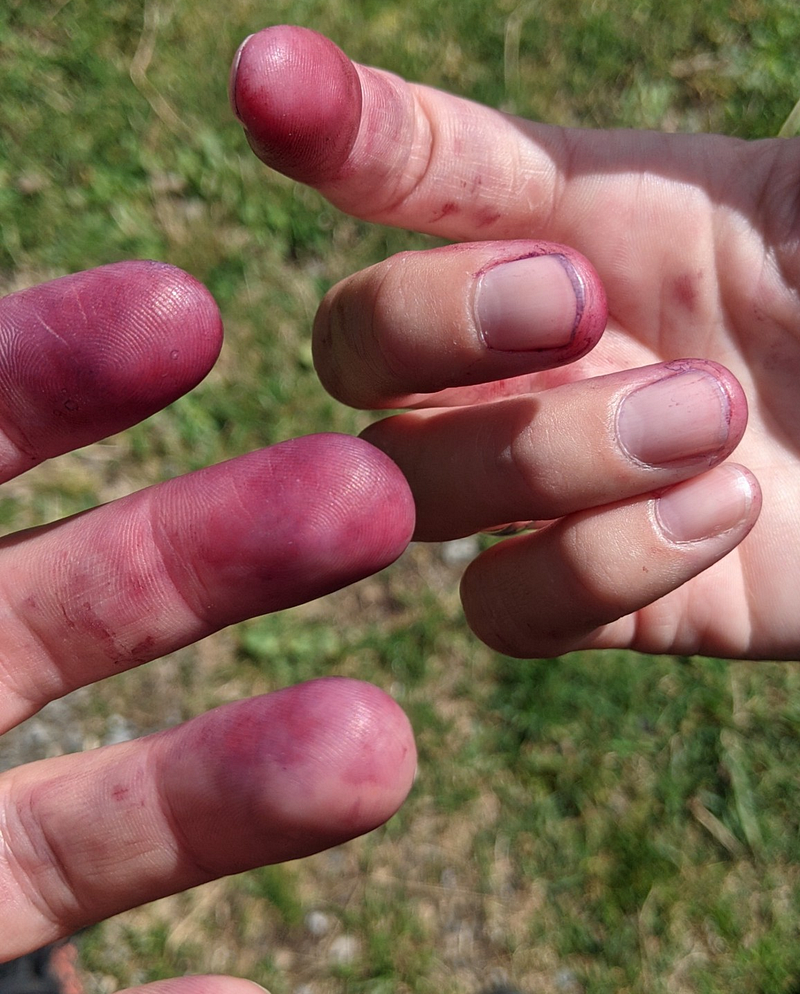
Fingers stained purple after the harvest. But well worth it! This feels like real work: go walk the forest, lean your back and collect over a kilo of fruits that you’ll enjoy later.
Another surprise when we moved on
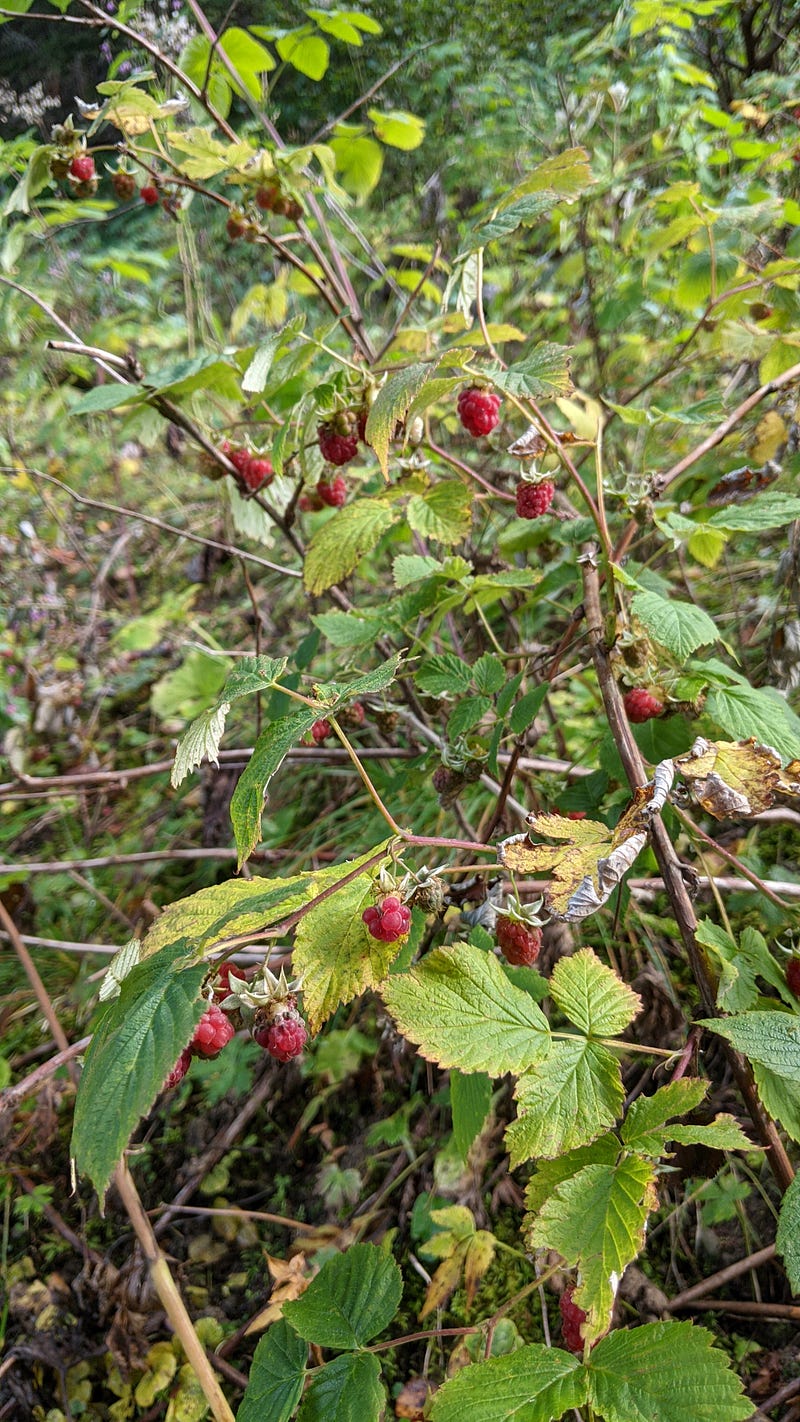
As the hike continued we found another mini-forest but this one of raspberries. They were super tasty, more than I had ever found in the wild. But we didn’t take these home because they are much more sensitive to pressure, etc. and we still had to walk for a couple of hours. I just ate a lot there in place!
Washing and storage
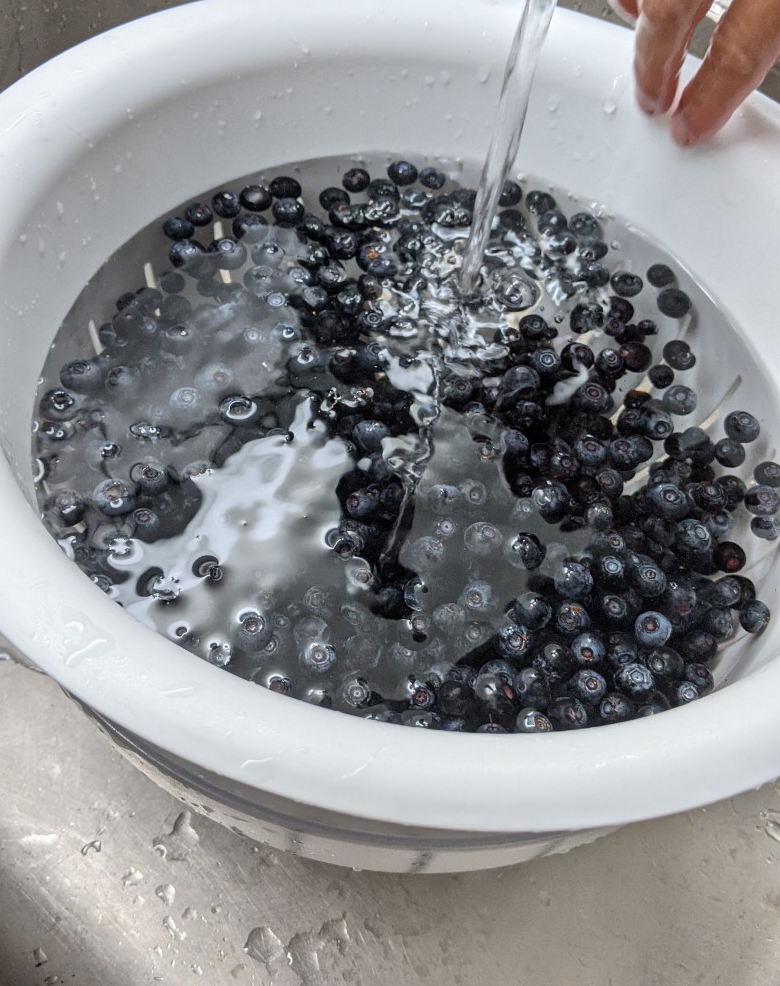
It’s very important to wash these low-hanging fruits carefully because they are too close to the soil and some animals like foxes carry diseases in their urine (less of a problem with raspberries and blackberries because I collect them higher in the plants).
Just as important it is to check for ticks after a hike like this, during which you go so much into the plants! A large fraction of the ticks around here carry the bacterium responsible for Lyme’s disease and one of the viruses that produce encephalitis.
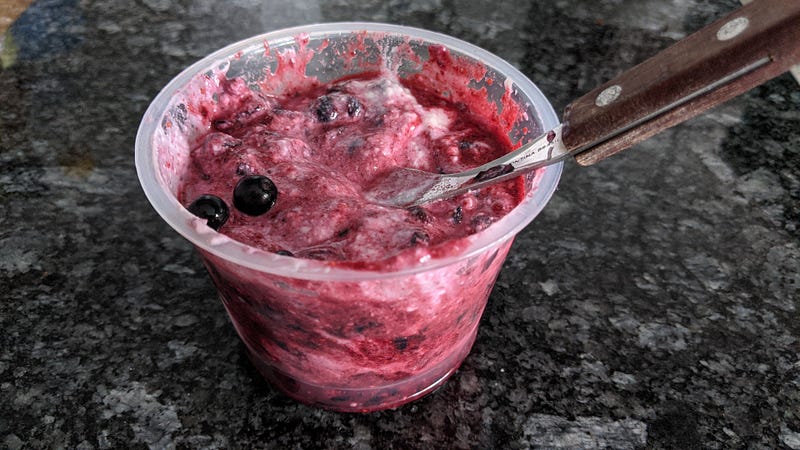
The blueberries from this harvest are now standing as snacks in the fridge, that we eat just as they are or mixed with yogurt or ice cream:
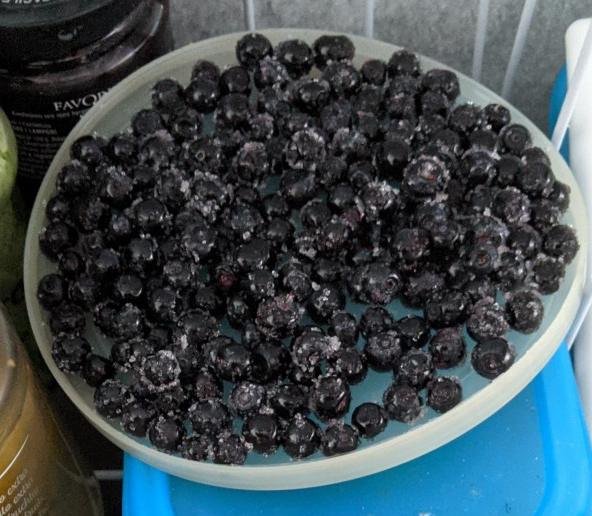
But I also froze around a fifth of the produce to enjoy them in the subsequent weeks… (Although in the freezer, they could last for months):
Want to know more about this hike? Check out this story:
And check out Dennett’s recipe for (gluten-free) muffins filled with blueberries:
I am a nature, science, technology, programming, and DIY enthusiast. Biotechnologist and chemist, in the wet lab and in computers. I write about everything that lies within my broad sphere of interests. Check out my lists for more stories. Become a Medium member to access all stories by me and other writers, and subscribe to get my new stories by email (original affiliate links of the platform).


