
Absolute Loyalty from Disposable Workers is Impossible
Disposable employees are not loyal workers and will inevitably leave.
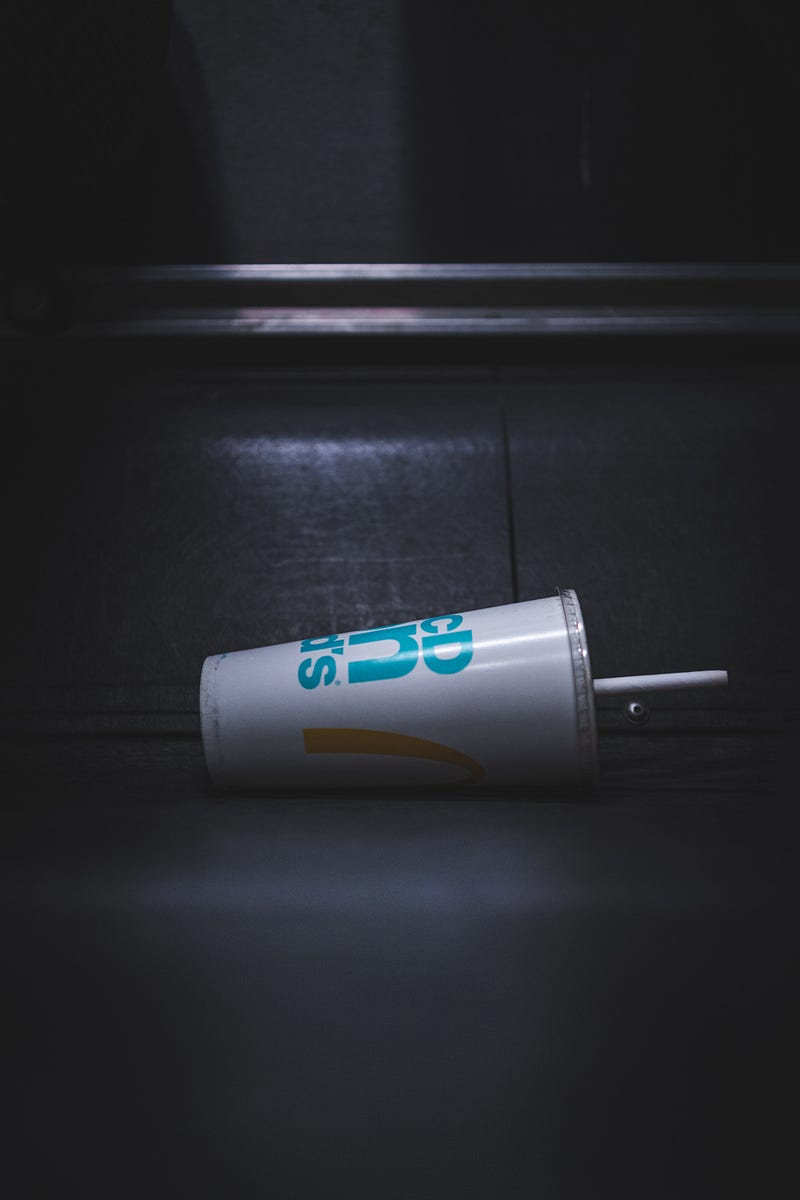
Pre-COVID, turnover in the fast-food industry was upwards of 150%. That’s mind-boggling: in a calendar year, the staff of a store will be completely different before the year is over and halfway there again by December 31st.
This was generally seen as a feature, not a bug: fast food has, for a long time, been considered to be a low-skill job that “anyone can do.” So, fast food companies invested very little in employee retention and budgeted the training costs for that 150% annual turnover.
Why bother retaining employees when you can just train a replacement for very little money? There are always people willing to work crappy jobs for no money, so there will always be people lining up to apply. So the logic went, anyway.
Of course, the same fast food companies that budgeted for obscene turnover also encouraged their employees to be “brand ambassadors” or whatever they call it these days. Yes, we pay you just above minimum wage to work a hard, thankless job, but you should be spreading the love for your company! Tell everyone you know to eat at McDonald’s! Get your friends to apply to their local restaurant and be underpaid, overworked brand ambassadors too!
Then COVID happened, and all those fast-food workers were suddenly heroes, putting their bodies on the line to give us our McRibs and whatnot. They still got paid terribly, of course, and still endured all the standard abuse from the Karens of the world, but they were heroes!
Yeah, of course that didn’t last. The Great Resignation happened, and all the overworked, underpaid line cooks and fry jockeys decided that there were better options than being paid $9 an hour to be harassed by bitchy customers and pissy managers.
Basically, they realized that the company still considered them disposable — and with the potential to literally die in the line of duty, that was gruesomely true. And, once that realization struck, all the “job perks” in the world — the free sodas and one free meal a day — weren’t worth the potential payment in blood.
And, as the wave of people quitting their thankless jobs intensified, all of these companies came to a horrible realization: all the backbreaking work for no pay with no tangible benefits wasn’t worth the so-called “perks.” Yeah, a free meal and all the soda I can drink is great, but what about a living wage, health insurance, and retirement benefits?
They tried to push it off on us, of course — not being able to get a burger whenever we wanted to wasn’t the fault of the company with low pay and no benefit, but of “lazy, disloyal workers.” Nobody wants to work anymore, they would say. Nobody wants to do an honest day’s work for an honest day’s wage.
It’s all utter garbage, of course. When your company treats all employees as though they’re disposable, you shouldn’t be surprised when they look for jobs that don’t treat them that way. That means decent pay, decent benefits, and managers who have your back. Basically, everything that fast food is not.
I’ve been picking on fast food for 500 words or so now, but this is true of many places: pick your retail store or restaurant, pretty much any customer-facing job treats their employees like crap in exchange for minimal pay and benefits. That’s the system we’ve built — front-line workers doing jobs like stocking shelves or ringing groceries are low-skill, low-wage, and disposable.
Even white-collar jobs are affected by this. If you’ve seen the ads for positions that require a Master’s degree but start at $15 an hour, you know what I’m talking about. Some job or another might require a Bachelor’s degree, but we’ve got a society of people who have Bachelor’s degrees and a mountain of debt, so they can afford to underpay that position.
When 50 people with Bachelor’s degrees apply for a job because they’ve got bills and debt to pay off, that job often goes not to the most qualified but the lowest bidder. It’s easy to hire a basic accounts person to manage money when business degrees are incredibly common. If one of them leaves, you’ll have a dozen more lined up to take their place — why bother investing in them?
And yet, just about every American company demands absolute loyalty from their employees. It manifests in different ways: company events, happy hours, ping-pong tables, company stock, whatever it takes to gain the loyalty of the low-level workers. Sure the workers are underpaid, but they’ll stick around if we let them wear jeans and leave 15 minutes early on Friday, right? Thankfully, people are starting to see through those efforts too.
So many companies treat their workers like they’re disposable but demand absolute loyalty from them at the same time. This strange set of opposite ideals — a loyal workforce that can still be replaced at any time — was bound to fall apart at some point. I’m a bit disappointed that it took a global pandemic to do it, but I’m happy it’s here nonetheless.
Many companies, particularly publicly-owned companies, take this approach. Loyalty is demanded but not rewarded in any meaningful way, and most workers put up with low wages and maybe an occasional cost-of-living raise. By and large, if you want a better job with better pay, your best bet is to apply elsewhere.
So, that’s what everyone is doing. Why should I break my back at Mcdonald’s for $10 an hour when I can break my back at Target for $15 an hour? Why should I stick around working for a crappy manager at a crappy company when I can make a bit more working for a better manager at a better company? If I’m going to be disposable, I might as well be disposable somewhere that will treat me better and pay me well.
And if my choice is between being poor and working hard or being poor and biding my time at home looking for better prospects, I know what I’d pick.
There is a saying that floats around my circles: you can’t demand a service while simultaneously denigrating the people who provide that service. This is used broadly to talk about the people who argue that fast food is a “low skill job” and that they deserve minimum wage but then demand the ability to buy a McChicken at 3:00 a.m. and gripe when they can’t. The people who yell at hapless retail employees and ask for the manager because they know that they’ll get free stuff that way.
Well, somebody should’ve told that to all of the big companies that are shedding workers left and right: they’ve been demanding loyalty from their workers while simultaneously treating those workers as disposable. Disposable things don’t stick around by nature: When I blow my nose into a Kleenex, I don’t keep it around forever, I get as much use out of it as I can before it gets thrown away.
So goes the many company policies that use this method: employees are to be used up until they aren’t useful and thrown away when there is nothing to be gained from them anymore. Why invest resources in something that won’t last when we can squeeze them for all they’re worth?
Oh, but as long as they have some use, we might as well ask them to spread the Good News of the company, right? I’m sure asking a disposable, stressed, overworked, and underpaid drone to tell all of their friends about how great a company we are won’t backfire at all!
You can have loyal workers or disposable workers, but you can’t have both and be sustainable. Loyal workers who feel disposable will throw others under the bus at any given opportunity to save their own skins and feel less disposable, which will only make things worse for everyone.
And, when those loyal but disposable workers inevitably stick around long enough to become managers, they’ll drive off even more people by defending their own interests in the name of the company. People don’t leave bad jobs, they leave bad managers, as the saying goes, and the kind of people who get promoted to management tend to be bad managers as often as not.
We live in a sort-of dystopian bizarro hellscape where multi-billionaires make their hypothetical money on the backs of the disposable working class and are considered smart because of it. I don’t think it’s surprising or unreasonable that the disposable working class is fighting back with the tools they have: their own labor.
There is no way to make a 100% ethical choice when buying things, and trying to boycott a company like Amazon or Walmart is damn near impossible because of their sheer size and market share. So, simply put, the best way for us to make an impact on them as companies is for employees to quit.
It’s hard for a company to exploit disposable labor when there is no disposable labor to exploit. It’s especially hard when social media allows any worker to post about what it’s like working for a company like Amazon and have it go viral. We have reached the point where when someone posts a TikTok about how great it is to work for Amazon, people immediately think it’s fake because of all of the horrible stuff about working for Amazon that countless others document on TikTok.
The long and short of it is that if companies treat their workers as disposable, then employees will have no reason to be loyal to that company. When employees aren’t loyal, they don’t stick around. And, when we all realize that we don’t have to put up with being treated as disposable, we get the Great Resignation.
American corporate culture has been one of maximizing profits for shareholders, and part of that is reducing labor costs as much as possible. That held out for quite a long time — much longer than it should’ve, I think — but now those companies are reaping what they have sown. And, generally speaking, what they’ve sown has been discontent among their workers and malice among society at large.
I’ll end this in the same way I ended another article on this topic: with a quote from Twisted Sister.
We’re not going to take it anymore.
If you appreciate my work, why not join Medium as a paying member, which allows you access to unlimited stories (not just three free stories per month). Click this link or the image below. I will receive a little portion of your membership fee, but it won’t cost you any extra.
If you liked this, please subscribe to my publication, Thing a Day. I publish something every day on a variety of topics, so you never know what you’re going to see!
Here are some other things I’ve written: