
About Dante, Michelangelo, and Stable Diffusion- Reimagining the Divine Comedy with AI
This is how AI reimagines the best Dante quotes, as Michelangelo would do.
Every day, new Artificial Intelligence algorithms that convert text to images (and video) astound us but last week, with Stability.ai announcing the public release of the AI art model called Stable Diffusion, something really important just happened.
I believe we are experiencing the new state-of-the-art generative AI model, and it may herald a new era for creative work.
So, to get a true sense of Stable Diffusion’s’ artistic mastery, I’ve’ spent every free moment I’ve’ had since the AI model’s launch developing a conceptual art project that explores an idea I’ve’ had in my head since the early 2000s, when I lived for many years immersed in Renaissance culture and inspiration in Florence, Italy.
The idea is to combine Dante and Michelangelo’s talents to reimagine some of my favorite “La Divina Commedia” quotes, and thanks to AI, it is finally possible for me to achieve it, so I am sharing the first results here.
But first, allow me to provide some context…
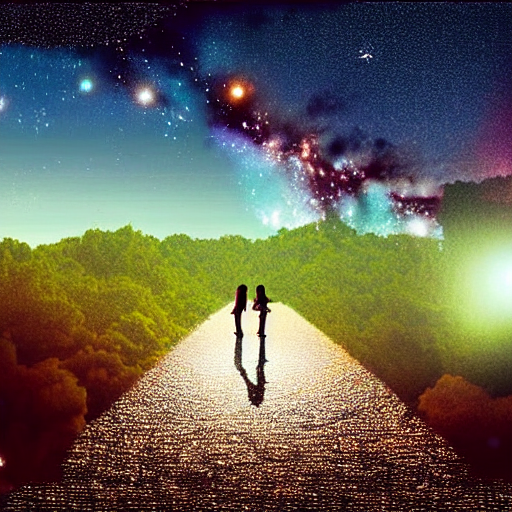
Are we witnessing a Renaissance in art creation?
For those who don’t know what is going on with the new trend of AI-generated images, here’s a very brief and simplified explanation of the basic concept:
We humans don’t draw or paint anything anymore; we write what we want the AI to deliver as an artistic result interpreted by its analysis of millions of images cataloged on the internet.
The next step, following this concept, is to apply it to videos, 3D-printed sculptures, light installations, poems, literature work, and any other manifestation of artistic creation.
I see it as a time when human art is receiving a fresh breath of inspiration. New artists can already use many of these technologies to “improve” their ability to delight us.
This could potentially be a new digital Renaissance powered by AI.
The Renaissance — a quick refresh
From 1998 until 2016, I have been living in Italy, mostly in the city of Florence, and there I learned and got fascinated by Italian culture and get introduced to the concept and history of a cultural, economic, and political movement that began in Italy in the 14th century and lasted throughout Europe until the 17th century.
Around 1550, the art critic Giorgio Vasari coined the term Renaissance to describe the first ideological manifestation of the European bourgeoisie, which sought to distinguish itself from medieval cultural production through values such as individualism, naturalism, and hedonism.
The Renaissance is often divided into three periods:
- Trecento (the 14th century or the 300s);
- Quattrocento (15th century or the 1400s);
- Cinquecento (16th century or 1500s);
However, Renaissance artistic productions were not limited to Italian cities. There were Renaissance artists in England, the Netherlands, Spain, Portugal, Germany, and France.
Names such as Sandro Boticelli, Rafael Sanzio, Pieter Brueghel, Bosch, El Greco, Michelangelo, and Leonardo da Vinci stood out in the field of plastic arts. These last two examples show how artists of the time were not limited to one artistic specialty but also contributed to architecture and science.
Dante Alighieri, William Shakespeare, Rabelais, Miguel de Cervantes, Nicolau Machiavelli, and Luiz Vaz de Cames were among the literary figures.
Nicolaus Copernicus, Galileo Galilei, and Johann Kepler were notable scientists.
The Renaissance reformulated medieval life and gave rise to the Modern Age, inspired by the values of Classical Antiquity and generated by economic changes.
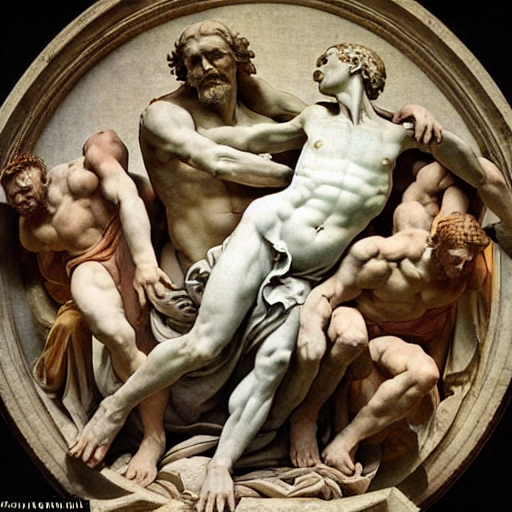
In this project, I will focus on two of the greatest Renaissance artists: Dante Alighieri and Michelangelo Buonarotti.
The Divine Comedy and Dante
Dante Alighieri (1265–1321) was a major humanist writer during the Renaissance. He is considered the greatest writer in the Italian language and one of the most influential in world literature.
Despite being married and having children (at least three), Dante had a platonic love for Beatrice de Folco Portinari, a childhood friend with whom he reconnected in 1283. Beatrice married the banker Simone dei Bardi in 1287, and Dante married Gemma Donati two years earlier, in 1285. Unfortunately, Beatrice died unexpectedly in 1290, much to the chagrin of the Italian author.
Dante is considered the greatest poet of the Tuscan region, and in addition to being a writer, Dante Alighieri served as a politician of the moderate party.
In the year around 1285, he attended the University of Bologna. When he held public office, he was exiled from Florence on suspicion of corruption, administrative impropriety, and opposition to the pope. He lived in Forli, Verona, Arezzo, Venice, Lucca, Padua, Paris, Bologna, Verona, and Ravenna during his exile.
Dante’s Divine Comedy is essentially the story of a sinner’s conversion to the way of God. The verses emphasize the importance of following the path of goodness and ethics. The protagonist symbolizes the common man, representing the common citizen who has doubts, hesitates, and is tempted by evil.
The Commedia is Dante’s best-known work. It is a narrative poem, written in Italian, about human nature and the nature of man’s relationship with God.
It was written for moral edification; its composition may be seen as a response to what Dante considered to be the moral degeneration of the society of his day and as a response to what Dante considered to be some of his moral shortcomings. At the same time, it also reflects on how poetry ought to function and on some of the major intellectual and political questions of Dante’s day.
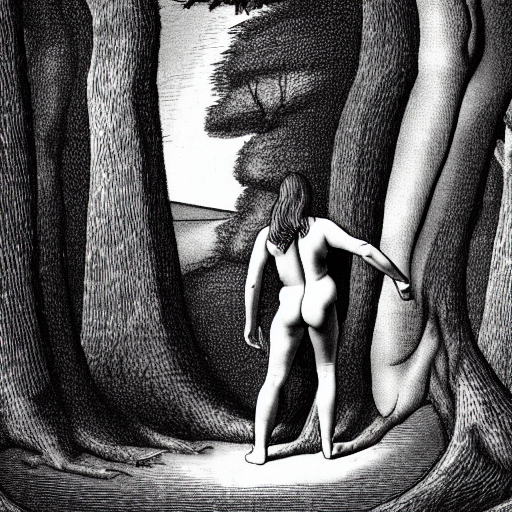
The Commedia is a first-person narrative and tells the story of Dante’s journey through the realms of the afterlife. It begins with Dante finding himself lost in a dark forest and ends with his vision of, and union with, God. In between, Dante journeys through Hell, Purgatory, and Paradise. His guide through Hell and Purgatory is the Latin poet Virgil.
At the top of the mountain of Purgatory, Dante is left by Virgil and meets Beatrice, who guides him all the way through Paradise. She leaves him just before the vision of God, to which Dante is led by St Bernard of Clairvaux. The fictional date for the start of Dante’s journey is Good Friday, 1300.
The work is divided into three parts, or cantiche: Inferno, Purgatorio, and Paradiso. Little is known about when Dante wrote the different parts of the Commedia and the chronology I.
The Inferno was probably written between 1307 and 1309; the Purgatorio between 1310 and 1313; and the Paradiso between 1313 and 1321. It is also likely that copies of the Inferno and the Purgatorio were circulating before the Commedia as a whole was completed. The Commedia comprises 100 cantos, thirty-four in the inferno and thirty-three in each of the other two cantiche.
These are the three main characters in the poem:
Dante, the protagonist who personifies the humanity;
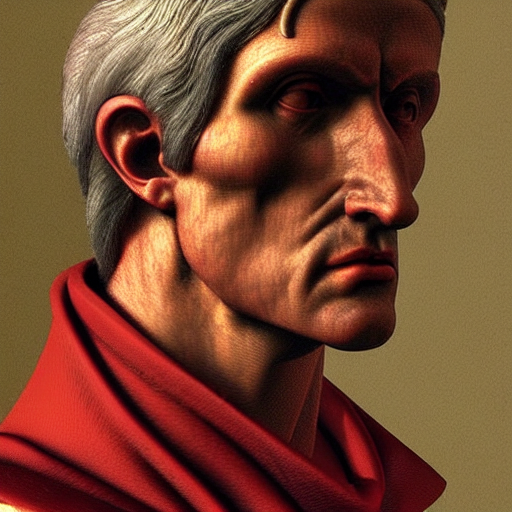
In the Comedy, Dante represents the whole of humanity, whose name he makes his journey, willed by God. In this new dimension, the miracle that Beatrice, the incarnation of divine revelation, had represented for Dante acquires a new meaning and a new fullness.
Dante’s task is to show all humanity how to reach salvation: the miracle that had happened for Dante thus becomes the miracle of all humanity.
Beatrice represents faith.
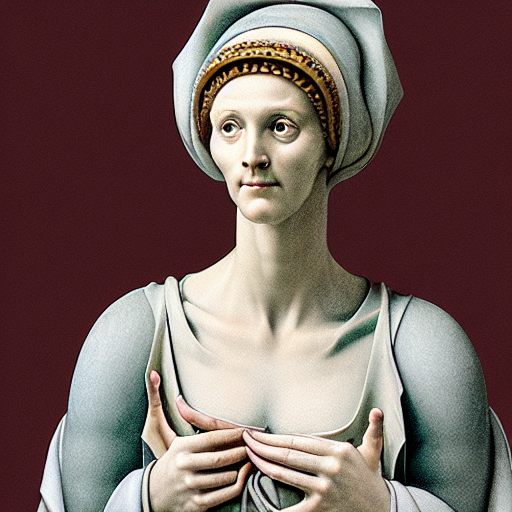
Dante defines Beatrice in the sonnet “So kind and so honest it seems,” in an extraordinary way, as a “thing that has come from heaven to earth to show miraculously”. “Cosa” is the term for the indefinable, and Dante’s words indicate that Beatrice was, at the same time, a truly lived woman, a celestial creature, a reflection of the poet’s desire for spiritual ascent and purification. Beatrice donna belongs to the private sphere of Dante’s life, his Florentine youth, and the years of human and poetic maturation. But, although historical evidence is scarce, no one doubts that Beatrice existed and that she is to be identified with Beatrice, or Bice Portinari, wife of Simone De ‘Bardi, who died very young on 8 June 1290.
Dante, in the beginning, loved her according to the canons of courteous love, singing the sweetness of his gaze, “che ‘ntender no, who can not prove it,” the beauty of his face, the grace, and modesty of his gestures. Soon, however, that love acquired a different meaning, free from any connection with earthly reality, a stimulus to a profound human and moral introspection.
Virgil represents the reason.
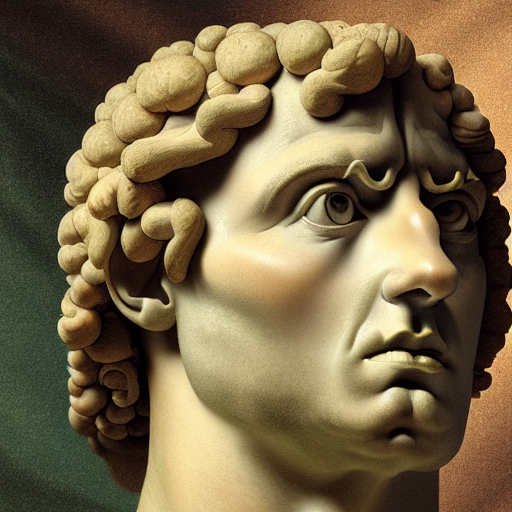
Virgil is Dante’s guide in the journey through the nine infernal circles and in the ascent to the mountain of Purgatory. From the seventh frame of Purgatory, the two poets are joined by Stazio, who has completed the journey of purgation and is about to ascend to Paradise. Once in the Earthly Paradise, Virgil greets Dante and prepares to return to Limbo.
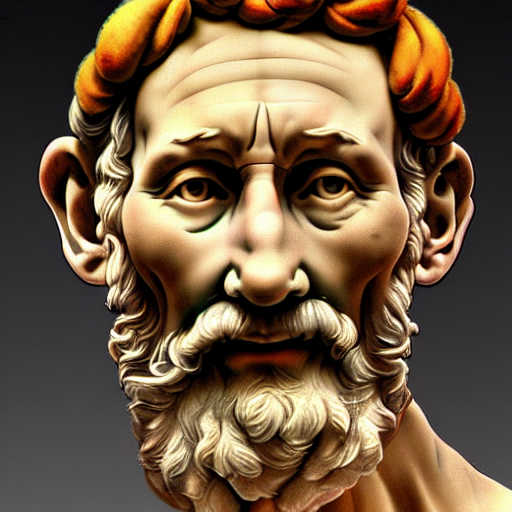
Michelangelo, The genius.
Michelangelo Buonarroti, the artistic genius par excellence, was also a privileged witness of his time. His long life — 89 years, from 1475 to 1564 — coincided with a critical period in European history.
Writing about Michelangelo feels like putting the ocean in a glass. Like Bach or Proust, Einstein or Pythagoras, he was not an alien who arrived in the terrestrial desert in a flying saucer to shower humanity with unexpected gifts. Instead, his time-displaced genius is a chimera, a strange stereotype.
Heir to the great art of Medici Florence, Michelangelo reached the pinnacle of his artistic career with magnificent creations for Rome’s popes, such as the frescoes in the Sistine Chapel. Yet, as a leading figure of the Renaissance, he reflected in his works the crisis of an era on the verge of religious wars and Counter-Reformation repression.
Michelangelo’s art had original features beyond simply imitating the classic from the start. His figures glowed with intense power and appeared to be possessed by internal tension. The obsession with the representation of the human body became a recurring theme in his career, which was ironic given that he was a well-known misanthrope.
Throughout his life, he was on very bad terms with his family, as evidenced by his letters to his brothers, and despite the enormity of his work, he never agreed to be helped by assistants. His personality was as rough as his brush was flexible.
It’s fascinating that Michelangelo was a man of his time, the result of centuries of research and knowledge that he could condense in and out of himself. I am confident that he would be eager to experiment with new technologies and approaches such as AI today, and I often wonder what he could do with AI if he were still alive.
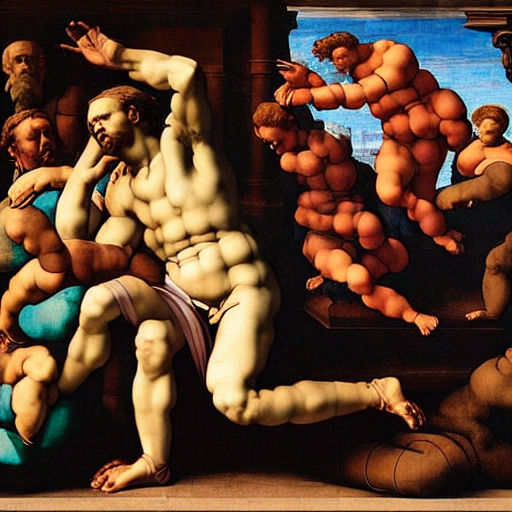
The new AI Artists tool, Stable Diffusion
Stable Diffusion is an AI that can generate high-quality images by analyzing text input. Unlike similar tools we have seen almost everywhere, this one is open to the public.
Stable Diffusion is a diffusion model, a type of image generation model that gradually builds a coherent image from a noise vector over several steps.
The model was trained on the LAION Aesthetics dataset, a subset of the LAION 5B dataset that contained 120 million image-text pairs out of nearly 6 billion image-text pairs. LAION datasets are created to be freely available to promote a democratized AI development environment.
Given that Stable Diffusion reportedly uses less than 10 GB of VRAM at inference time, generating 512x512 images in a matter of seconds, you can access it in the cloud and create your images; or, in my case, I am running it on-premises on my NVIDIA Jetson Nano and conducting all of my experiments for this project for free…I will write an article about it.
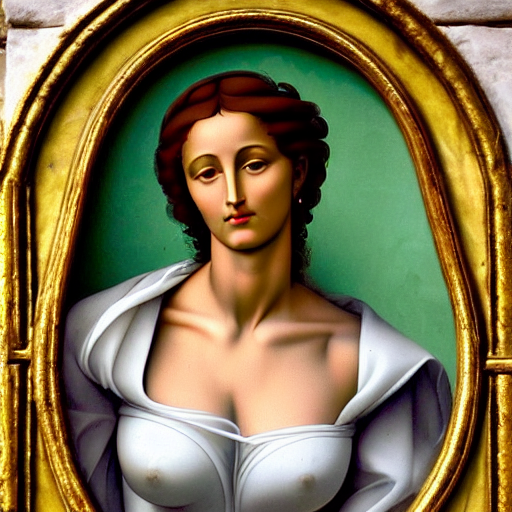
This is how I am putting together Dante, the Divina Comedia, Michelangelo, and Artificial Intelligence.
As I mentioned earlier, my concept art project is to reimagine the most beautiful and famous quotes from the Divina Comedia of Dante, with the style of my favorite genius, Michelangelo… at least for me… this is something impossible to do without the help of Artificial Intelligence.
Stable Diffusion will use my inputs or prompts and recommends including certain criteria in your prompts for the best results.
For example, “Dante” could be used as a keyword for the elements. Then, in addition to adjectives like “caricaturesque” or “hyperrealistic,” include a feature of the style, such as “photography” or “oil painting.”
I can also specify whether I want it in the style of a particular artist, such as Frida Kahlo or Vincent Van Gogh. For this project, of course, I used “Michelangelo” as the style for all the images, and if you want to go all out, you can add specs like 4K, 8K, dim, dramatic lighting, and so on.
To generate the images, I have to regulate the size, the number of results, and the precision of the task I gave to the AI, together with the prompt that I adapted from Dante’s quotes from the Divina Comedia.
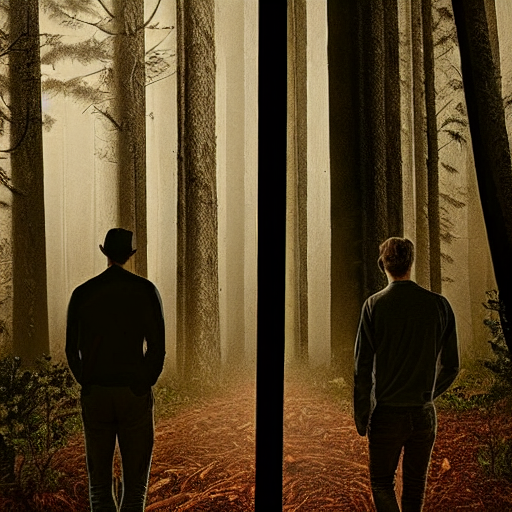
For example, starting from the original Italian quote del Canto I: “Nel mezzo del cammin di nostra vita · mi ritrovai per una selva oscura · ché la diritta via era smarrita”, which translated to English becomes “In the middle of the journey of our life I found myself within a dark woods where the straight way was lost.” I have adapted the input to the AI model “ A vision of two men whom, In the middle of the journey of their lives, have found themselves within a dark woods where the straight way was lost.”, representing Dante and Virgil.
Of course, one of the key differences between algorithms and human creativity is that human artists, poets, painters, and illustrators helps clients in creating and evolving the initial concepts rather than just generating the final images as AI does.
Humans’ distinctive work is fundamentally dependent on something unique, the human experience of communicating an emotion or opinion and connecting with the public. Something that AI is still a long way from achieving.
There is a lot of debate about how AI systems do not understand the real world and its complexities, the nuances of human language, the laws of science (like the laws of physics), and AI has no idea what science is. And, of course, it may absorb the biases we’ve unconsciously built into its training data sets.
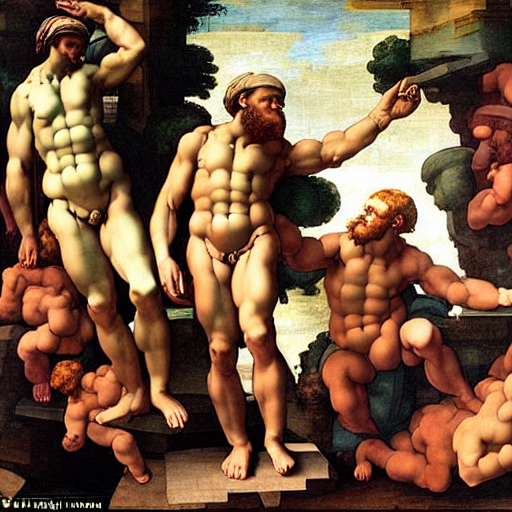
Despite being surprising and exciting, the images generated by Stable Diffusion reveal a lot about the limitations of current ML technology, opening up a new window into what AI understands about the human world and especially what it doesn’t.
Of course, a growing number of researchers are working to address these flaws to allow the evolution and creation of increasingly sophisticated AI algorithms, but one fact appears to be limiting: mathematical models of “statistical AI” are still unable to deal with human characteristics such as abstraction and reasoning, which are the foundations of human creativity.
Conclusion
Artificial intelligence is definitively changing how we perceive the world and our relationships and we this historical moment is one-of-a-kind when we have never seen so much innovation.
So, when I use the term “new Renaissance,” I am referring to my humble opinion of how AI is bringing to Arts and Science a set of powerful tools that help us achieve our highest results, helping us in many tasks such as medicine, education, law, driving, and, of course, arts, rather than a frightening entity attempting to replace humans with machines completely.
The Renaissance, as seen in the XII-XIV centuries, taught us that to evolve as a society, we must broaden our horizons and be aware of all possibilities for innovation.
Today, I believe that using the available AI tools can determine who wins and who loses in the modern era: Those who have the capacity to help our society thrive and solve global challenges, become more inclusive and equal, and unleash its full creative potential, resulting in actions that impact people’s lives worldwide.
If you want to see these and all my AI-powered creations with Stable Diffusion, please follow me on my dedicated Instagram account:
Note: Unless otherwise stated, all images are created by me, using Stable Diffusion.
Other Articles you may want to read.
- These 9 Research Papers are changing how I see Artificial Intelligence this year.
- Are We Witnessing the Next Evolution of Artificial Intelligence?
- The most impressive Youtube Channels for you to Learn A.I., Machine Learning, and Data Science.
- These are some of the best Youtube channels where you can learn PowerBI and Data Analytics for free.
- These 10 Algorithms Can Change Your Life — If You Work With Data
- 5 amazing books about A.I. that you must read.
- The Best MIT Online Resources for You to Learn A.I. and Machine Learning for Free.
Links, Resources, and References
- Michelangelo Contributions — 1896 Words | Bartleby. https://www.bartleby.com/essay/Michelangelo-Contributions-PKRXP2H6USR
- Dante Alighieri > Quotes — https://www.goodreads.com/author/quotes/5031312.Dante_Alighieri
- Inferno Quotes — https://www.goodreads.com/work/quotes/2377563-la-divina-commedia-inferno
- https://www.instagram.com/mystablediffusioncreations/
If you made until here, Would you like to support me?
To get access to unlimited stories, you can also consider signing up to become a Medium member for just $5. In addition, if you sign up using my link, I’ll receive a small commission (at no extra cost to you)


