

6 amazing books about A.I. that you must read now.
A list of 5 of my favorite A.I. books that surely will inspire you.
I love to read! I'm always reading… and most of all, I love to read about Artificial Intelligence.
I want to share some of my favorite A.I. books that will surely inspire you. These are great books for anyone who wants to get serious about A.I. algorithms and how we humans can relate to this topic today and in the future.

The Book of Why: The New Science of Cause and Effect
Written by the Chancellor's professor of computer science and statistics at UCLA and Turing Award winner Judea Pearl and Dana Mackenzie, a Ph.D. mathematician turned science writer, and he has written for various popular science magazines over the last 20 years, including New Scientist, Scientific American, and Discover.
This book tells the story of science that has changed how we distinguish facts from fiction and yet has remained under the radar of the general public.
"Correlation is not causation." This mantra, chanted by scientists for over a century, has led to a virtual prohibition on causal talk. What might sound like a reasonable assertion metastasized in the twentieth century into one of science's biggest obstacles as a legion of researchers became unwilling to claim that one thing could cause another? This all changed with Judea Pearl, whose work on causality was not just a victory for common sense but a revolution in studying the world.
The causal revolution, instigated in this book by Judea Pearl and his colleagues, has cut through a century of confusion and established causality — the study of cause and effect — on a firm scientific basis.
Pearl's work enables us to know not just whether one thing causes another: it lets us explore the world and the worlds that could have been.
It shows us the essence of human thought and the key to artificial intelligence, and if you want to understand it more in-depth, you need to read The Book of Why.
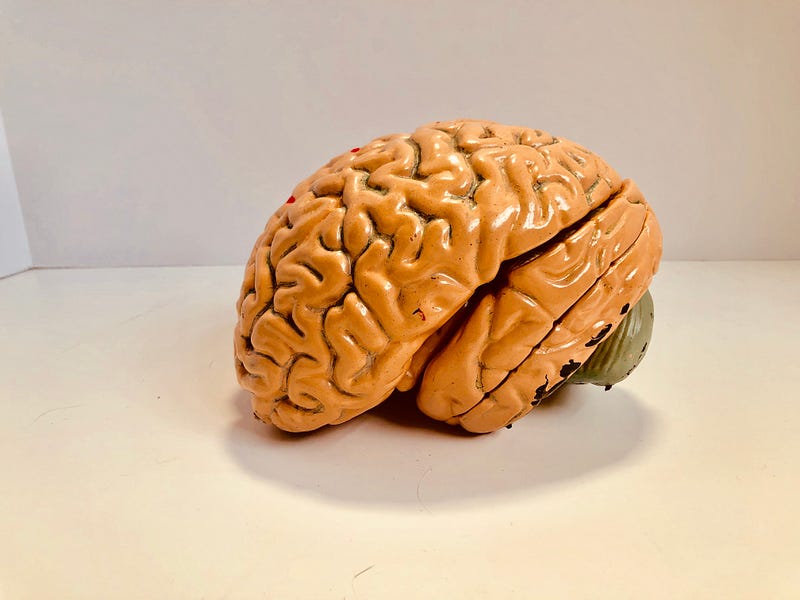
How to Create a Mind: The Secret of Human Thought Revealed
Ray Kurzweil, an inventor, and futurist who has published books on health, artificial intelligence, transhumanism, and the technological singularity, is arguably today's most influential and often controversial futurist.
In How to Create a Mind, Kurzweil presents a provocative exploration of the most critical project in human-machine civilization — reverse-engineering the brain to understand precisely how it works and using that knowledge to create even more intelligent machines.
Kurzweil discusses how the brain functions, how the mind emerges from the brain, and the implications of vastly increasing the powers of our intelligence in addressing the world's problems. He thoughtfully examines emotional and moral intelligence and the origins of consciousness. Finally, the author envisions the radical possibilities of merging with the intelligent technology we create.
Sure to be one of the most widely discussed and debated science books of the year, How to Create a Mind is sure to take its place alongside Kurzweil's previous classics, which include Fantastic Voyage: Live Long Enough to Live Forever and The Age of Spiritual Machines
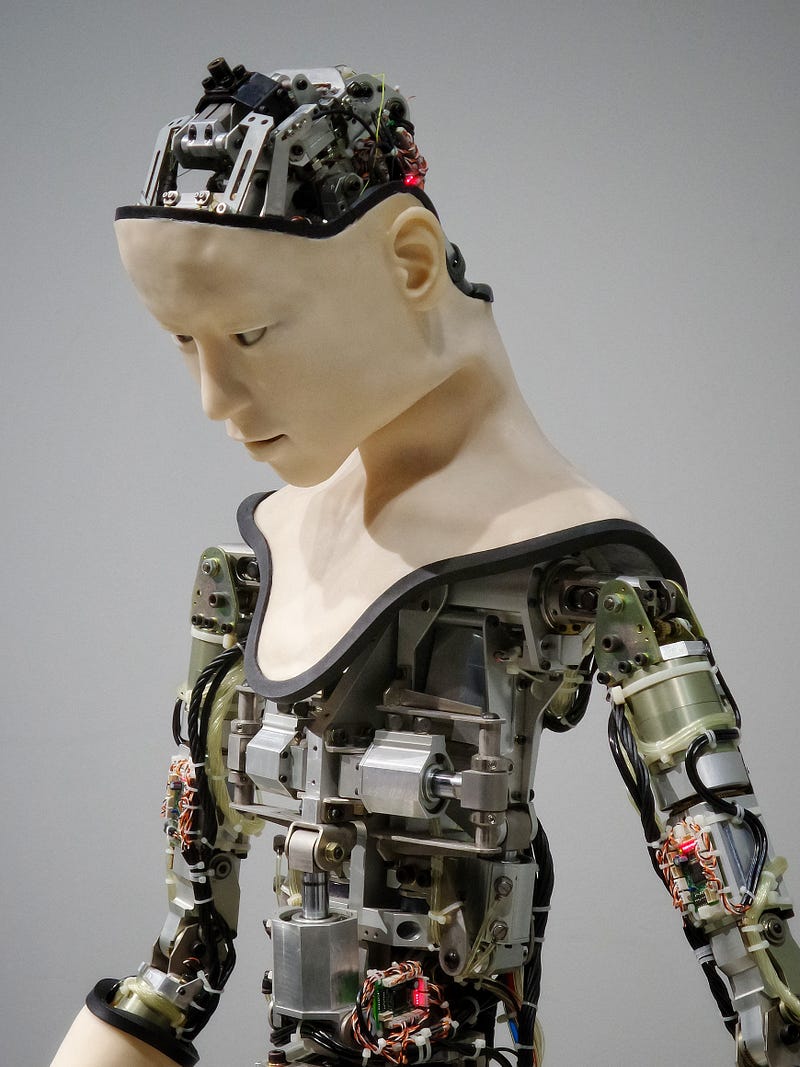
Life 3.0: Being Human in the Age of Artificial Intelligence
How will Artificial Intelligence affect crime, war, justice, jobs, society, and our very sense of being human? The rise of A.I. can transform our future more than any other technology — and there's nobody better qualified or situated to explore that future than Max Tegmark, a Swedish-American physicist and cosmologist. He is a professor at the Massachusetts Institute of Technology and the scientific director of the Foundational Questions Institute.
This book empowers you to join what may be the most important conversation of our time. It doesn't shy away from the full range of viewpoints or the most controversial issues — from superintelligence to meaning, consciousness, and the ultimate physical limits on life in the cosmos.

The Emotion Machine: Commonsense Thinking, Artificial Intelligence, and the Future of the Human Mind
Our minds are always working, but we rarely stop to think about how they work.
The author, Marvin Lee Minsky (born August 9, 1927, died January 24, 2016), was an American cognitive scientist in artificial intelligence (A.I.), co-founder of Massachusetts Institute of Technology's A.I. laboratory, and author of several texts on A.I. and philosophy.
The human mind has many different ways of thinking, said Marvin Minsky, the leading figure in artificial intelligence and computer science. In other circumstances, we use these different ways of thinking; some don't even associate with the review.
"The Emotion Machine" explains how our minds work, progressing from simple kinds of thought to more complex forms that enable us to reflect on ourselves — what most people call consciousness or self-awareness.
Once we know thinking, we can build machines — artificial intelligence — that can assist with our thinking, which can follow the same thinking patterns that we follow and believe we do. But, of course, these human-like thinking machines would also be emotional, just as we are.
This brilliant book challenges many ideas about thinking and the mind. It is as insightful and provocative as it is original, the fruit of a lifetime spent thinking about thinking.
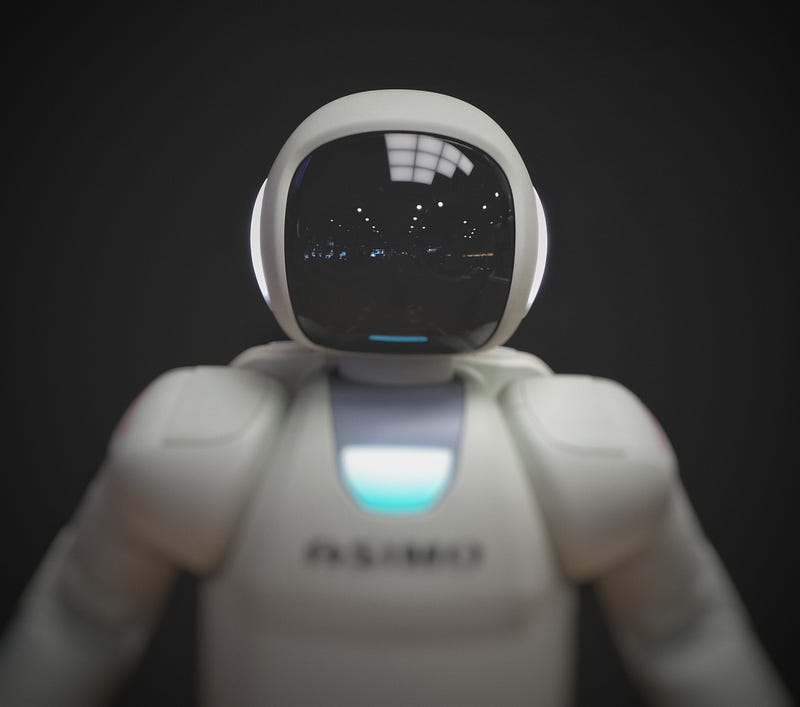
Artificial Intelligence: A Modern Approach
The long-anticipated revision of this best-selling book by Stuart Russell, Professor of Computer Science and Smith-Zadeh Professor in Engineering, University of California, Berkeley and Honorary Fellow, Wadham College, Oxford and Peter Norvig, Director of Research at Google, offers the most comprehensive, up-to-date introduction to the theory and practice of artificial intelligence.
The book is as close to exhaustive as is currently available in the field, including in-depth treatments of non-technical learning material while providing an accessible and understandable overview of significant concepts.
Since the 2003 edition, increased coverage has been given to constraints satisfaction, local search planning methods, multi-agent systems, game theory, statistical natural language processing, and uncertain reasoning over time.
Attention has also been given to providing more detailed descriptions of algorithms for probabilistic inference, fast propositional inference, probabilistic learning approaches, including E.M., and other topics.
The comprehensive, up-to-date coverage includes a unified view of the field organized around the rational decision-making paradigm.
The authors' approach delivers in-depth coverage of basic and advanced topics. It provides a basic understanding of the frontiers of A.I. without compromising complexity or depth.
It conveys an in-depth understanding and a clear explanation of such concepts as supervised and unsupervised machine learning. Thus, to the layman, a sense of why there will be no jobs for machine learning supervisors!
It is highly recommended. Intellectually, Artificial Intelligence: A Modern Approach provides a conceptual artificial intelligence gym and a running track to limber upon. The more you use it, the more you will get from it.
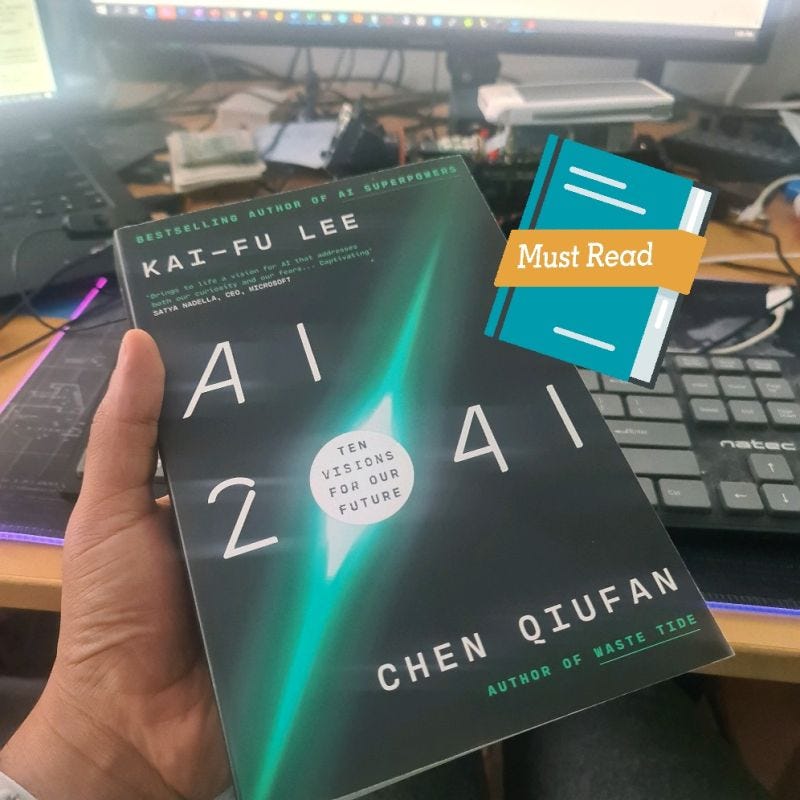
A.I. 2041 — Ten versions of our future
Kai-Fu Lee is the CEO of Sinovation Ventures and New York Times bestselling author of A.I. Superpowers. Lee was formerly the president of Google China and a senior executive at Microsoft, SGI, and Apple.
Co-chair of the Artificial Intelligence Council at the World Economic Forum has a bachelor's degree from Columbia and a Ph.D. from Carnegie Mellon. Lee's numerous honors include being named to the Time 100 and Wired 25 Icons lists. He is based in Beijing.
Some of the reviews:
"An invaluable and entertaining vision of the future." — Ray Dalio, #1 New York Times bestselling author of Principles
"To say that A.I. 2041 is enlightening and valuable is to understate its significance. . . . A.I. 2041's science fiction gives us a way to open our eyes to what is going on all around us and where things are heading." — John Kao, Forbes.
"By blending imaginative storytelling and technical expertise, Kai-Fu Lee and Chen Qiufan bring to life a vision for A.I. that addresses both our curiosity and our fears. Read this captivating book to understand better how and when certain technologies are likely to mature, and what that could mean for all of us." — Satya Nadella, CEO, Microsoft.
"A.I. 2041 is the perfect fusion of science and fiction, illuminating the pervasive impact artificial intelligence will have in our lives and the challenges we face in shaping a techno-future that benefits all of humanity." — Marc Benioff, chair and CEO, Salesforce.
"Applying A.I. to business usually means learning the technology first and then figuring out how to apply it. A.I. 2041 allows readers to take the exact opposite approach. Through amazingly entertaining stories, Lee and Chen take us on an immersive trip through the future and then zoom out with exceptionally clear explanations of the technology at work. The result is an enjoyable and eye-opening book for those trying to understand how to apply A.I." — Mark Cuban.
"Making predictions about the future of A.I. is not for the faint of heart. However, this inspired collaboration between a pioneering technologist and a visionary science fiction writer offers bold and urgent insights into how these technologies may impact our lives." — Yann LeCun, winner of the Turing Award; chief AI scientist, Facebook.
Conclusion
These six masterpieces are not just good A.I. books; I would consider them some of the most exciting and thoughtfully structured textbooks I've seen on this subject.
They present useful information about particular aspects of A.I. while providing fascinating historical background.
I always think that people, especially in the scientific and engineering society, underestimate the importance of simple explanations of difficult concepts, especially concerning people who are new in the field; these books help make difficult concepts seem not so difficult!
Other Articles you may want to read.
- These 9 Research Papers are changing how I see Artificial Intelligence this year.
- The most impressive Youtube Channels for you to Learn A.I., Machine Learning, and Data Science.
- These are some of the best Youtube channels where you can learn PowerBI and Data Analytics for free.
- What is the MIT MicroMasters Program?
- 5 companies that are revolutionizing recruiting using Artificial Intelligence.
- 5 amazing books about A.I. that you must read.
- The Best MIT Online Resources for You to Learn A.I. and Machine Learning for Free.
My books about Artificial Intelligence
Also, I've just published other interesting ebooks on Amazon, and I'm sure some of them may be interesting for you… let's keep in touch, follow me and do it together.
A.I. in 2020: A Year writing about Artificial Intelligence
AI, Robotics and Coding (for Parents): A practical guide for analog parents with digital kids
The Terminator paradox: How neuroscience can help us to understand Empathy and the fear of Artificial Intelligence
Artificial Intelligence from A to Z: Demystifying the essential concepts of AI
Would you like to support me?
To get access to unlimited stories, you can also consider signing up to become a Medium member for just $5. In addition, if you sign up using my link, I'll receive a small commission (at no extra cost to you).
Disclaimer: I do not receive any money from the authors or editors or have any direct relationship with anyone. Mine are simple indications based on my positive learning experience through their excellent books.


