
Are People Who Defend Deteriorating Cities Like Los Angeles Fooling Themselves?
They might be, and I would know, because I’m one of them
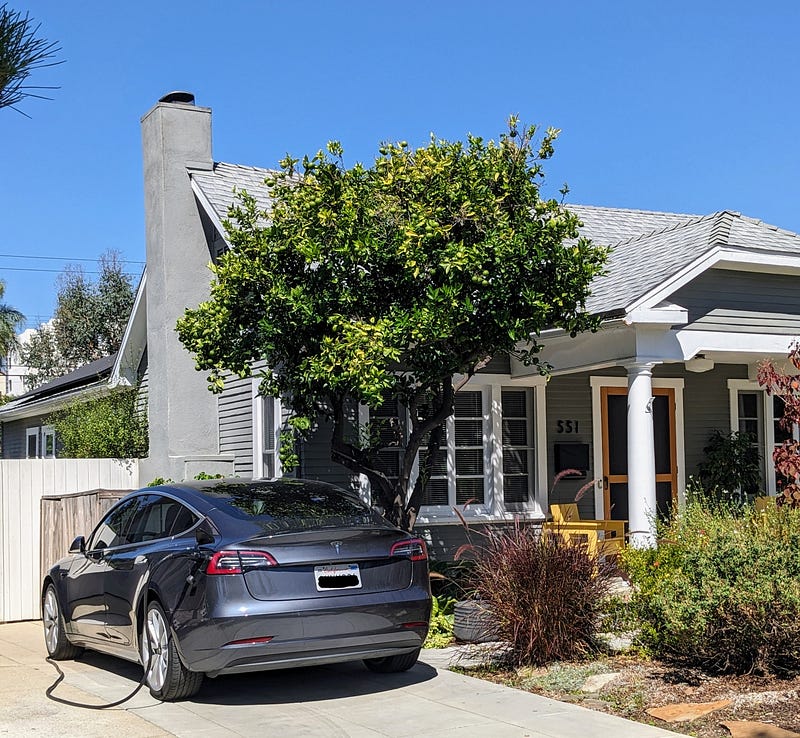
I was walking home the other day to my rent-controlled apartment on the edge of the Los Angeles neighborhood where I live.
A neighborhood where the median price of a home is $1.8 million, an increase of 5.5% from last year.
I was walking from the main street that blew up over the last year. A commercial corridor with pricey shops, necessary services, expensive cafes and even more expensive restaurants. It has become the trendy place to see and be seen with random regulars like me and families, navigating the recent influx of clueless tourists, the coolest-looking people in LA, celebrities at all levels and garden variety Hollywood wannabes.
After I passed the second Tesla charging in its driveway on the same block, I thought to myself — you finally have to write that article.
As a lover of cities — who spent seven years studying urban planning — it’s difficult for me to admit this, but I feel like people like me who defend large American cities might be fooling ourselves. We’re deluded by this odd need to promote urban life in the United States, even if it’s no longer worth promoting.
In a Medium article from May, I wrote about the problems of homelessness and retail theft in cites such as Los Angeles and San Francisco, two places where I have spent nearly all of my time since moving to California in 1999.
I said —
I’m beyond tired of reading portrayals of San Francisco and Los Angeles as dystopian wastelands from people who have likely never set foot in places such as San Francisco and Los Angeles, let alone lived there …
For the better part of my experience over the last 24 years, these cities have always had concentrated areas of the things you’re reading more and more about today — homelessness, out in the open drug use, shoplifting and such. While there’s no doubt the problems have gotten worse in these concentrated areas — while spreading into other parts of both cities (especially LA) — there are a few things that generally go unreported amid the hysteria and hyperbole.
And I stand by this. Because it’s true.
However, this is where the delusion comes in. Maybe or maybe not. You tell me.
I’m not one of these people who will argue his side to the death. I’m more than willing to alter, evolve or outright change my opinions as the facts or my perceptions and experiences change. I stopped caring about being right a long time ago.
And I’m here to tell you that, in the last few weeks, conditions on the ground — in Los Angeles, at least — have changed. Things have gotten worse.
Yes, there appear to be more homeless people.
There’s definitely an increase in weird things happening on the streets. Seemingly mentally ill people screaming into the sky or at other people, wandering into traffic, wielding objects such as bats, doing drugs, exposing themselves. You name it.
And the city feels like it’s getting dirtier. A lot dirtier.
At the same time, it seems as if the housed, just going about their lives Angelenos no longer care. Any respect they might have had for their city appears to have faded into oblivion.
It’s tough to put my finger on and illustrate the behaviors I see that culminate to form this opinion. But there’s just an anti-social and inconsiderate sense in the air. People being aggressive and outright mean on the roadways (even for LA), more aloof than ever on the sidewalks, skipping past trash on the ground as if it belongs there and, sometimes, even resorting to violence.
Just a few weeks ago, driving along La Brea in Hollywood, my girlfriend and I saw a homeless guy swinging one of those aforementioned bats around, not really at people and cars. You see it all of the time. And your street smarts tell you that 9.9 out of 10 times that guy is harmless.
Be alert. Keep walking or driving.
Well, one guy in a beat up old Mercedes didn’t keep driving. He swerved and circled the width of La Brea no fewer than three times, aiming straight for the homeless guy. I think he wanted to scare, not hurt or kill him. But we have absolutely reached a low point in society when you take random acts like this, treat them as personal affronts and viciously go after another human being — with or without the intent to harm or kill — clearly at or near the low point of their lives.
I wonder how the LA County cop who happened to see this and, subsequently, pulled the Mercedes driver over viewed the entire situation.
As my girlfriend and I started expressing these observations to one another over the last several weeks, we checked ourselves.
Are we just down on LA because we’re so fired up about starting the process to move to Spain next year? Are we taking a grass is greener attitude and deluding ourselves into thinking Los Angeles is getting worse?
I don’t think we are. Because we don’t hate it here. For us, it has been a good place to live. I thought a lot about this, as I hesitated to write this article.
Other people — mostly people she has talked to — confirm that, yes, something has gone down over the recent weeks and months. Conditions, on the ground, are deteriorating.
It’s not just us.
So if indeed —
The reality on the ground — at the neighborhood level, in neighborhood after neighborhood — just doesn’t match the dystopian narrative.
Is it okay (?) to be like —
Well the neighborhoods with streets that look the way streets probably should look in cities are fine. They make this a great place to live.
Even as —
The parking lot and area surrounding the grocery store that serves our affluent neighborhood does — at times, as much as I hate to admit it — feel dystopian. It sits adjacent to street after street of homeless encampment after homeless encampment amid people wandering and acting out in desperation due to their desolation. And it’s not just in my neighborhood.
Sadly, this has become emblematic of Los Angeles.
Just because you see it all the time doesn’t make it okay. Becoming desensitized is rarely a good thing.
To that end, the pending move to Spain has probably sensitized us.
It’s not like this there. Not even close.
And — alongside culture and cost of living — it’s a main reason why we plan to move.
To be able to live in a city (and country) you can be proud of. One where you can promote your city and not be delusional. One where you don’t have to overlook an overt and evident state of disrepair to fool yourself into thinking that, yeah, I live in a great city.
One that doesn’t make you feel hopeless and helpless in the face of problems so big there’s no way local — or even federal — government can ameliorate, let alone fix them.
One that doesn’t make it easier and easier to want to leave as soon as possible.
To receive a notification each time I publish a Medium article, go here. In future articles, we’ll go more in-depth on the things I touched on today.
To subscribe to my Never Retire: Living The Semi-Retired Life newsletter where we go even more in-depth and get way more personal, including on my plans to move to Spain, go here.


