
Retail Theft In Big Cities: Who’s To Blame?
Maybe it’s the people constantly complaining about retail theft In big cities
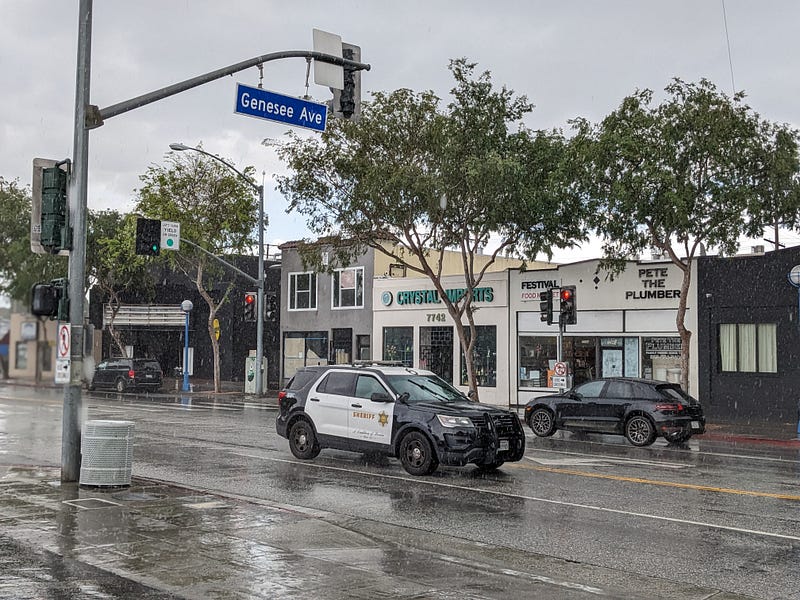
I’m beyond tired of reading portrayals of San Francisco and Los Angeles as dystopian wastelands from people who have likely never set foot in places such as San Francisco and Los Angeles, let alone lived there.
For the better part of the last 24 years, I have lived in San Francisco or Los Angeles.
For the better part of my experience over the last 24 years, these cities have always had concentrated areas of the things you’re reading more and more about today — homelessness, out in the open drug use, shoplifting and such. While there’s no doubt the problems have gotten worse in these concentrated areas — while spreading into other parts of both cities (especially LA) — there are a few things that generally go unreported amid the hysteria and hyperbole.
In today’s article, we use retail crime to illustrate the situation in these cities — and elsewhere — as I see and experience it.
First, the people who perpetuate the myth of San Francisco and Los Angeles as dystopian wastelands and have either never been to these cities or spent scant time there deserve zero consideration. Simply put, their uninformed opinions are shit.
The people who accelerate these narratives and actually have experience — recent past or present — in these places should be ashamed of themselves.
I could take you to any number of San Francisco (where my daughter now lives), Los Angeles (where I live) and Portland (another city that gets a similar rap, where I have spent considerable time) neighborhoods right now and you’d fall in love with them. They’re the best urban America has to offer. Walkable shopping streets with bars and restaurants packed with people. They’re the polar opposite of struggling downtowns.
I know these places because I live in one now, have lived in many and have spent most of my adult life living in and visiting them. I’ve seen them go through cycles. What’s happening today comes as no surprise and is absolutely not representative of how these cities and neighborhoods look, feel and function on the ground every single day.
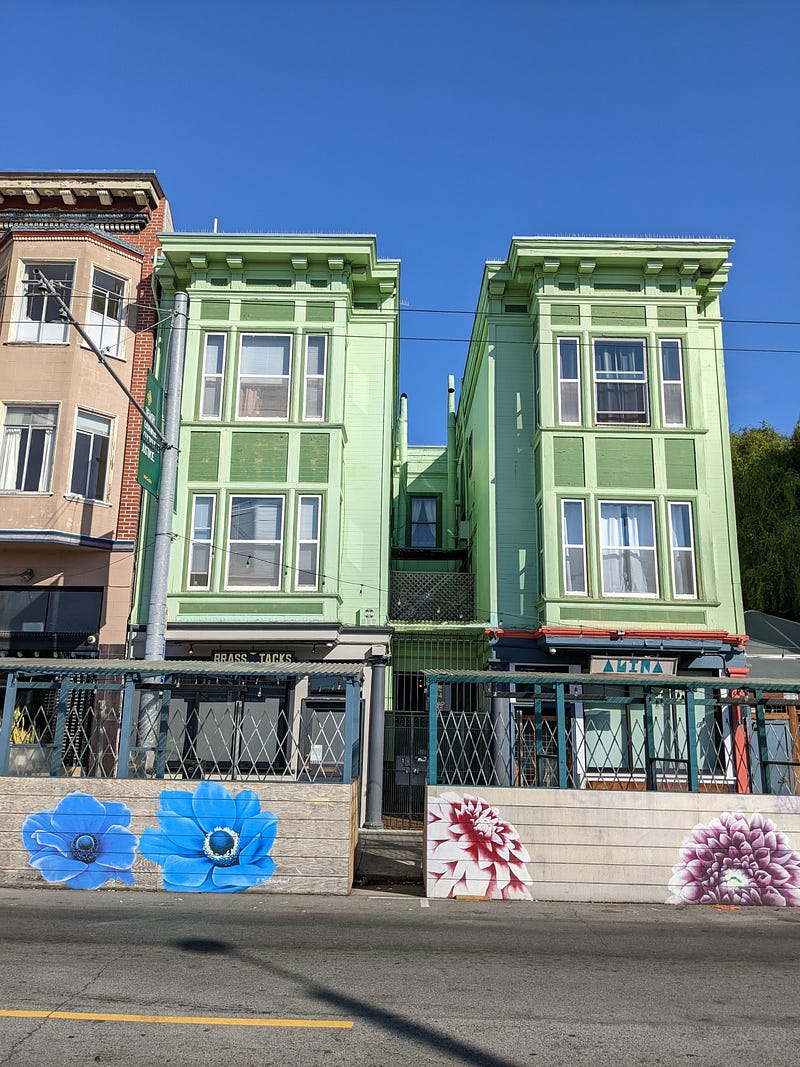
The reality on the ground — at the neighborhood level, in neighborhood after neighborhood — just doesn’t match the dystopian narrative.
Part of the problem, especially in San Francisco, is that people in largely white and affluent neighborhoods have an unhealthy fear of the other. The second a homeless person beats the hell out of a guy in the Marina District or a tech executive gets stabbed to death South of Market, they blame the homeless. They blame lawlessness. They blame politicians. The damage gets done before we find out the guy who got the hell beat out of him was routinely spraying homeless people with bear mace and the tech executive knew his killer.
In terms of retail crime, the San Francisco newspaper recently asked what’s the best way to stop it? How about take the same approach you take with Golden Gate Bridge suicides? Don’t report them and over blow the situation on the daily in your newspaper.
We’re essentially dealing with a self-fulfilling prophecy. Loosely speaking. Or a copycat situation.
People have been stealing shit since the beginning of time. Shoplifting isn’t new. This trend of organized group theft took hold during the pandemic.
Now, every time it happens people freak out and incidences get over-reported to the point where one robbery feels like 20.
If you read about how easy it is to steal from stores in Downtown San Francisco or elsewhere and you’re the type of person who wants or needs to steal where do you think you’re going to go commit your crime, especially when people expect you to do it anyway.
There’s a similar dynamic at play with the recent big name store closures in San Francisco. It’s a self-created doom loop narrative.
As stores close and people blame it on this false dystopian narrative, the false dystopian narrative gets amplified and takes on a life of its own. The people decrying The City’s problems have as much, if not more of a role perpetuating them as the actual people committing crimes and such.
One of the rare clearheaded, factual stories on retail crime and store closures presented these interesting facts:
- San Francisco, Los Angeles, San Diego, New York City, Seattle, Miami and Chicago lost retail stores from the beginning of 2017 to the end of 2021, according to research from the JPMorgan Chase Institute, a think tank.
- According to Morgan Stanley, from 1995 to 2021, more stores closed every year than opened. The trend became popularized as the “retail apocalypse.”
- “The logic of big box retail, period, is much weaker than it was 20 years ago or even 10 years ago,” said David Dixon, an urban places fellow at Stantec, a global design firm.
- For example, Walmart has shuttered about 40 stores since 2021 and will close 20 this year. Nordstrom will shut down 15 locations in 2023.
- CVS also announced in 2021 that it will close 900 stores over three years.
The article, from which all of the above are direct quotes, goes on to cite data on remote work and online shopping as well as prohibitive zoning laws for the decline of many big city downtowns. The latter — antiquated zoning — isn’t as much of an issue at the neighborhood level, which allows dozens upon dozens of urban neighborhoods to maintain their alluring character and even thrive in the face of these challenges.
It’s much easier to blame everything on the homeless — because you’re tired of seeing them in your enclave — than it is to think large corporations opened too many locations too quickly; mismanaged these locations before, during or after the pandemic; and/or merely fell victim to one of many non-nefarious forces the last several years have brought to the forefront.
The homeless get blamed for everything, get victimized routinely and are far more at risk than your relatively well-off urban resident. They get blamed even when there’s no large-scale nexus between their situations and what they’re getting blamed for.
Bottom line — city life and city living isn’t for everyone. This is why so many people with the money to live in cities isolate themselves in neighborhoods with other people who look and live like them. Within this bubble, it’s easy to virtue signal and wear a badge of tolerance. However, once urban problems merely seep their way into your protective and affluent cocoon, it’s not quite as easy to be tolerant.
When urban problems are out of sight, they’re out of mind for many city dwellers. The second they’re confronted with the reality of the consequences of a whole host of complicated and interconnected social and economic factors, they see the problem and blame it on the easiest and most vulnerable targets.
In the process they make the places they say they love and want to fix appear much worse than they actually are, especially across neighborhoods. A largely downtown problem turns into the false narrative that an entire city is in ruins. This makes the seemingly impossible challenge of ameliorating problems that actually do exist even more impossible.


