
Philosophy
A Yawning Hole in the Body of Materialism
You don’t have to be a religious person to notice this…
The materialistic worldview may seem dull and joyless to many, but its persuasiveness is hard to deny. In a sense, its merit stems precisely from its limitations.
Materialists are essentially ultra-conservatives. They don’t believe in anything that cannot be measured or at least supported by empirical evidence.
It is a reliable position. However, this vital aspect of the materialistic doctrine has one fatal flaw that undermines its authority. It is unable to explain the origin of life.
Of course, there have been plenty of attempts. Numerous clever hypotheses are put forward to justify the possibility of the natural emergence of life from inanimate matter. But none of them can be considered convincing. And we’re not talking about nuances or discrepancies here, but about a fundamentally important moment — the emergence of essence where there is no cause for its appearance.
The issue is not whether complex organic molecules can form stable aggregations, absorb substances from the environment, and so on. The main question remains how inanimate matter acquired the desire to self-preserve its state. This desire represents a process known as “homeostasis,” and it is impossible to explain its emergence based on what is currently known about the properties of matter.
So, life differs from its environment in that it cares about maintaining its systemic parameters — physical integrity, internal temperature, intensity of metabolism, and so on. From this perspective, the crucial difference lies not between the simplest and highly organized organisms but between the simplest organism and inanimate matter.
Because inanimate matter cannot care about anything. It lacks subjectivity. It is simply a collection of atoms, whereas life, by definition, is an interconnected system that distinguishes itself from the surrounding environment and interacts with it.
Synthesizing life under laboratory conditions could serve as evidence for its spontaneous origin. However, so far, no such achievement has been made. Dead matter remains lifeless, regardless of its composition and attempts to revive it.
Does this imply the existence of supernatural forces that have endowed matter with purpose?
It depends on what we mean by “supernatural.”
Certainly, the simplest way to explain the mystery of life would be to reference God. However, this is not an adequate explanation since it raises questions about the nature of this entity and its intentions. And here, any judgment inevitably becomes too speculative to be discussed logically.
The only internally consistent explanation for the problem under consideration seems to be the hypothesis of Panpsychism. Of course, it is also speculative and difficult to imagine empirical evidence in its favor. And it is a philosophical hypothesis rather than a scientific one.
Its essence lies in the proposition that consciousness is one of the intrinsic properties of the universe. Thus, consciousness is not only understood as a mental process inherent in humans or other highly organized organisms. The definition of consciousness expands: it implies a certain potential for matter to acquire varying levels of rationality upon surpassing a certain threshold of complexity in its organization.

Unsurprisingly, Panpsychism has several attractive aspects that are absent in competing hypotheses.
Firstly, it could be called inclusiveness. Incorporating mental aspects into the entire material space explains certain aspects of consciousness that are inaccessible within other philosophical or scientific frameworks.
Secondly, it offers the possibility of explaining the unity of experience. Panpsychism presents how different forms of consciousness interact and create a unified and continuous experience that we undergo.
And finally, it overcomes the problem of “living consciousness.” Panpsychism provides a means to resolve the philosophical issue of the emergence of consciousness in living organisms because it assumes that it is present even at the most fundamental levels of matter.
Materialism asserts that consciousness is an emergent property of highly organized matter, which in turn is a product of biological evolution. However, the Theory of Evolution does not explain life’s origin and makes no claims in that regard. Panpsychism overcomes this difficulty by making all levels of consciousness emergent.
Its proposed approach is supported by modern empirical knowledge about animal consciousness. Nowadays, no one doubts that animals possess this property. Of course, their consciousness level differs from humans, but there is no clear boundary here.
Ultimately, our distant ancestors also had some “animal” consciousness, i.e., one that did not allow them to think abstractly. There was undoubtedly a long transition between this form and what humans possess now. We do not know the content of their consciousness during that (certainly lengthy) period. But we can probably talk about some “borderline” consciousness.
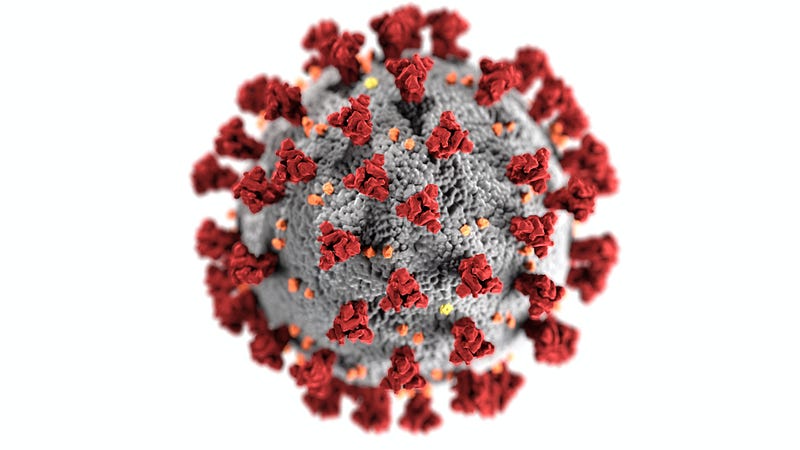
However, there is no reason to stop at highly organized animals. Panpsychism allows us to safely reach the very last link of the “great chain of being” — where the boundary between the living and non-living blurs. As the perceptive reader may have guessed, I am referring to viruses.
Yes, viruses occupy a special place in biology. To this day, scientists have not reached a consensus on whether they can be considered alive. Viruses do not have metabolic processes. They do not feed or grow like living beings. However, they reproduce by using the host organism.
Therefore, Panpsychism is a cunning rival to Materialism. It opens up new horizons in explaining the world where Materialism stumbles and ceases to work. Panpsychism offers a tempting metaphysical perspective, while Materialism operates within rigid self-imposed limits. Of course, the value of metaphysics can be disputed, but the truth is that the human mind hates limitations. Due to its transcendent nature, it always seeks to expand the boundaries of what is known.
Otherwise, we would have remained a biological species and never created civilization.
You are not obliged to praise Panpsychism, but I would not be surprised if you find this concept appealing (or already see it so). Something is encouraging about it. Isn’t there?
You also may like my other stories like these:
Dear reader, subscribe to my updates and share your best thoughts on our present and future!


