
INSPIRATIONAL HUMANS
A Woman Ahead of Her Time
An inspiration for ours
I love computer programming. What can I say “Geeks rule!”
My problem was that when I was growing up I’d heard of neither computers nor programming. Very few had.
When I was introduced to computer programming and main-frame computers twenty years later, it was as if my world righted itself, and everything fell into place.
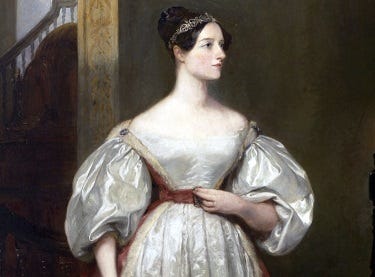
All this was made possible by a woman called Ada Lovelace.
Never heard of her? Right?
A century before electronic digital computers were invented, Ada Lovelace, properly known as Augusta Ada King, Countess of Lovelace, devised and wrote the first computer program.
She was the only legitimate child of the famous English poet Lord Byron. Though brilliant, wealthy, dissolute and at least a little mad, Byron seemed to have some affection for his daughter, writing of her:
Is thy face like they mother’s my fair child! Ada! Sole daughter of my house and heart?
Her parents separated when she was just a few weeks old. Her mother hated and despised her father, not without cause. She did everything she could to ensure Ada did not turn out like him.
Born in 1815, Ada was a contemporary of Queen Victoria (born 1819) and lived in Victorian England. At that time, girls of the upper classes were educated by governesses in poetry, music, art, history, a little geography, and household management, which included some basic arithmetic for keeping household accounts.
Ada’s mother was unconventional in that she, herself, was well educated with a very unfeminine flair for mathematics. She encouraged Ada in her love of logic and mathematics, at least in part to discourage her from being like her father in his love for language and literature.
When Ada was just twelve years old she became interested in flying, studied the anatomy of birds, and wrote a book called ‘Flyology’.
She was friends and worked with some of the great minds of her day, among them Charles Dickens, Michael Farraday, and Charles Babbage.
Babbage involved her in the design of his mechanical calculating machines, generally considered the forerunners of the modern computer.
Ada saw possibilities beyond the rigid programming of Babbage’s single-purpose machines, developing the concept of a ‘programmable’ machine that could have multiple uses. 1842, aged 23, she wrote the first published computer program.
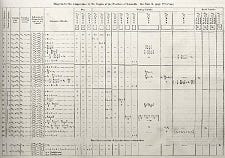
Unfortunately, she and Babbage saw the possibilities of using her programs and his machine to work out the odds on horse races and games of chance. Both became serious gamblers. She was her father’s daughter after all.
Despite persistent poor health and her unusual academic interests, Ada was popular with her contemporaries. She managed to carry out her social and family duties with flair, marry at nineteen, bear three children, and invent computer programming, all in her brief thirty-six years.
Our modern world owes her a great deal.
I consider her an inspirational woman.
Please also check out this recently published piece on Inspirational Humans:-


