avatarCharles McDonald

Free AI web copilot to create summaries, insights and extended knowledge, download it at here

4466

Abstract

ting place for dead horses. Horse drawn “pungs” delivered coal in winter snow.</p><p id="204b"><b>“The past is never dead. It isn’t even past.”</b></p><p id="c581"><b>-</b>William Faulkner “<i>Requiem for A Nun”</i></p><p id="821b">Technical, political, and social advances in my lifetime exceed anything Jules Verne or George Orwell imagined.</p><p id="5ffd">My parents marveled at television, Civil Rights, space travel, transistor radios, heart transplants, superhighways. But my generation witnessed change at warp speed.</p><p id="15cf">The internet, computers, smartphones — all shocking to all but a few thoughtful futurists.</p><p id="9124">Writing the World War II generation’s passing in hundreds of newspaper obituaries drew me into that past era. Nearly all the men served in the military.</p><p id="1ba9">Few women held major posts in large corporations. Even fewer were minorities holding high positions in government and industry. Thankfully that has changed. Somewhat.</p><p id="705d">These men and women whose lives I chronicled had lakeside cabins in New Hampshire. Grandchildren to spoil. They enjoyed a world of golf handicaps and worldwide travel.</p><p id="6d4b">Golf and global tourism had been enjoyed by only the wealthy few when my parents’ lives began.</p><p id="ced9">In the booming Post-war US economy, it was all in place. Then they were gone. Yet I have surpassed their lifespans.</p><p id="3b72">I saw newsroom technology stuck in a print press era of the 1920’s, little changed well in the 1970's.</p><p id="4a46">Publishing newspapers has drastically evolved from my early <a href="https://readmedium.com/how-a-robbery-murder-taught-me-a-journalism-lesson-eca593fee407">newsroom</a> experiences. I used an electric typewriter in college, but this throwback ruled my newsroom:</p><figure id="8e9c"><img src="https://cdn-images-1.readmedium.com/v2/resize:fit:800/0*qdeWM4CZs-4sRGWn"><figcaption>Photo by <a href="https://unsplash.com/@d_mccullough?utm_source=medium&amp;utm_medium=referral">Daniel McCullough</a> on <a href="https://unsplash.com?utm_source=medium&amp;utm_medium=referral">Unsplash</a></figcaption></figure><p id="9419">Carriage return typewriters used three sheets of pages cut from giant newsprint rolls separated by carbon sheets. A paste pot linked pages end to end. I carried dripping stories on car crashes, fires or City Council votes to the copy desk.</p><p id="2b21">A vacuum zip tube sped the hand edited news copy up the walls, across ceilings, through partitions, dropping into a composing room bin. Linotype operators turned liquid lead into blocks of raised print.</p><p id="7e52" type="7">That newsroom’s clacking typewriters, shouts, hushed phone calls and police/fire radios exists in memory.</p><p id="22bc">Then all went electronic. IBM ball typewriters and correcting codes arrived. CRT screens with amber print and blinking prompts followed.</p><p id="b47a">Finally, at my Massachusetts Statehouse gig, a Radio Shack TRS-80 and rubber phone cradles sped digital news over wires.</p><p id="be6c">But as newsroom technology advanced, the internet stole its financial lifeblood. Advertising went digital. Information rocketed the globe in microseconds.</p><p id="b229">Instant mass communication arrived in a blizzard of bits and bytes.</p><p id="133b">Residing in a phase of existence where dying might objectively be considered <i>unexpected </i>— I know the grim reaper lurks in my area code.</p><p id="1c76">So is one’s life to be judged by the odometer? Not unlike the departure of the brilliant writer <a href="https://www.npr.org/2022/05/20/1100514856/longtime-new-yorker-writer-editor-roger-angell-has-died">Roger Angell</a>, who passed at 101 years?</p><p id="4942">Or by the impact one has made while briefly on the planet — <a href="https://en.wikipedia.org/wiki/Wolfgang_Amadeus_Mozart">Mozart</a> — dead at 35?</p><p id="c63e">Angell wrote beautifully about baseball. And Mozart’s music is well, Mozart.</p><p id="0476">Ultimately the quality of experience in our lives — goals accomplished — as opposed to chronological mileage — may comfort my later years.</p><p id="5b7f">Science and medicine suggest our survival band lies somewhere beyond age 50. A clue is our parents’ lifespan: Both mom and dad lived into their nineties. Hurrah! One might think.</p><p id="5d35" type="7">But when I play with my daughter’s puppy, a thought nudges me. This bouncing, joyous dog might outlive me.</p

Options

<p id="2f69">Events large and small mark places in time.</p><p id="ab25">I shook the hand of the tiny woman who changed US history — <a href="https://www.womenshistory.org/education-resources/biographies/rosa-parks">Rosa Parks</a> at the 1988 Democratic National Convention in Atlanta.</p><p id="e994">The Blizzard of ’78 destroyed 11,000 homes, took 29 lives, dumped some four feet of snow, paralyzing Massachusetts. It happened on my newspaper shifts.</p><figure id="1f5e"><img src="https://cdn-images-1.readmedium.com/v2/resize:fit:800/1*VxDcm-VA9WNxYhpKdaWxNw.jpeg"><figcaption>Author photo of story of would-be ocean rescuers lost in 1978 Blizzard</figcaption></figure><p id="d718">A New England Press Association commendation for coverage of doomed ocean rescuers lost in that storm is on my wall.</p><p id="4110">I attended one of the defining events of the 1960s — the Woodstock rock festival.</p><p id="74d9">I bicycled 3,300 miles through Western Europe in my early 20s. Nations rebuilt from World War II’s devastation in Italy, England and France.</p><p id="4fb4">I listened to working men in pubs bemoan the waves of migrants derided as “wogs” as the British Commonwealth of Nations Empire contracted. And then heard them lecture me on segregation and racism in the U.S.</p><p id="c09e">My world view grew in 1972 touring roads built by Roman armies, along sheep paths in Wales, and past shattered Belfast storefronts after being frisked at checkpoints.</p><p id="adc7">I cycled through Trafalgar Square, along Amsterdam’s cobbled canal sides, down the Champs-Elysee, through the haunting Scottish Highlands and dodged traffic circling Rome’s Coliseum to visit the ruins.</p><figure id="019a"><img src="https://cdn-images-1.readmedium.com/v2/resize:fit:800/1*CMHjKEuQZT1ntB2rAg7yGA.jpeg"><figcaption>Author photo</figcaption></figure><p id="d2fd">I once stopped my bike on a deserted road on an overcast day after battling headwinds in Belgium’s fields.</p><p id="c3df">An unlikely copse of trees marked an otherwise flat plain in all directions. Beyond a path lay a military cemetery.</p><blockquote id="bcd5"><p>Rows of matching graves. Each with white stone crosses. French, English, Australian, German and American soldiers younger than me. I felt the silence of that solitary, lonely bit of earth as a slight breeze moved branches. My heart was overcome with sadness at lives lost so young.</p></blockquote><blockquote id="4620"><p><a href="https://www.poetryfoundation.org/poems/47380/in-flanders-fields">“Flanders Fields.”</a></p></blockquote><figure id="57f2"><img src="https://cdn-images-1.readmedium.com/v2/resize:fit:800/0*NeKtV2Un9CylrXdE"><figcaption>Photo by <a href="https://unsplash.com/@thomasbormans?utm_source=medium&amp;utm_medium=referral">Thomas Bormans</a> on <a href="https://unsplash.com?utm_source=medium&amp;utm_medium=referral">Unsplash</a></figcaption></figure><p id="2885">All framed by my handlebars.</p><p id="3fcc">Once in a Scottish pub, a punter took my measure:</p><p id="af47"><b><i>“I thought you Yanks all drove Cadillacs,” he observed.</i></b></p><figure id="450e"><img src="https://cdn-images-1.readmedium.com/v2/resize:fit:800/1*S-1p6Lvoe_XVOvrA8-tcZA.jpeg"><figcaption>Author photo, Scottish Highlands, 1972</figcaption></figure><p id="6025">The late NBA basketball champion, MVP, and consensus greatest player in league history, Bill Russell autographed my basketball in a near-empty Boston Garden in the early 1960s.</p><p id="4bf9">The team was “too black,” said a majority of Greater Boston fans.</p><p id="298b">How do we review our lives as age takes its inevitable toll? Thirty years of morning jogs and mountain biking closed out with a knee replacement last year.</p><p id="992e">But I still have memories of completing two Boston Marathons.</p><p id="04ae">My wife and I are active, walking our dog, and visiting our daughter and her husband. We’re hopeful for days, months, and years still ahead.</p><p id="c2c9"><b><i>“He knew that the century had gone in which the best part of his life had passed; he felt, more than ever, the strangeness and loneliness of our little adventure upon the Earth.”</i></b> — Thomas Wolfe, Look Homeward, Angel</p><p id="9b7e">I hesitate to think of this journey ending. We can’t live in a state of dreaded apprehension.</p><p id="b2f8">So it’s helpful to look back occasionally, take stock, and marvel that we hold living history in our memories.</p></article></body>

LOL LOOKING BACK

The Past Wasn’t Dead Yet
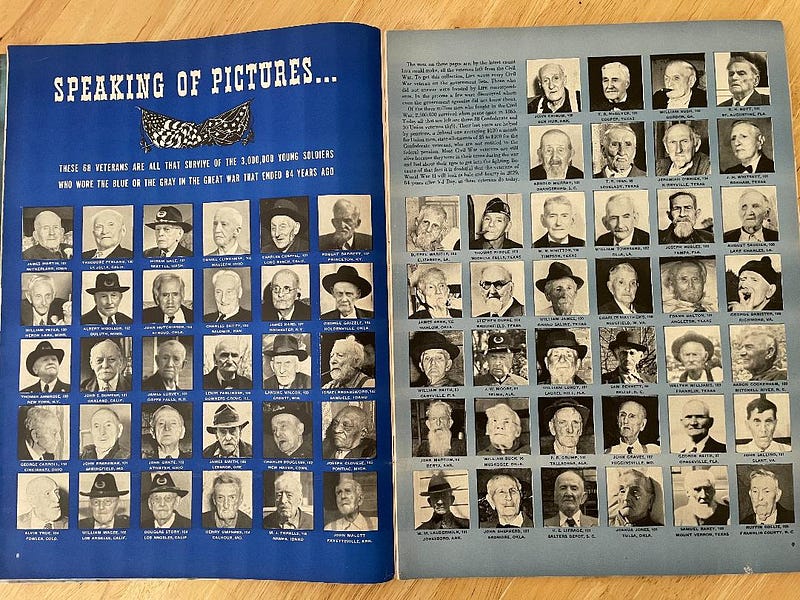
Copyright Life Magazine Vol. 26, №22 5/30/1949- Author photo

The date was on a Life Magazine published May 30, 1949, my birth week.

I discovered it in 1990, when Ken Burns’ PBS “The Civil War” narrative left audiences awestruck by its scope and insight.

Amid pipe tobacco and Vitalis hair oil ads, the photo array stunned me.

Civil War Veterans were still alive 84 years after it ended, as my life began.

There were 68 veterans of the 1861–1865 war staring from a page four years after WW2 ended.

How could my life overlap those of soldiers from that distant era?

Even if those 38 Rebel and 30 Union 19th Century soldiers lied about their ages, they still drew breath at mid 20th century.
Union Soldier George Carroll, Cincinnati, Ohio age 110. © Life Magazine

It was likely they lied about ages “to get into the fighting,” the story noted.

That bloody war was the first ever widely chronicled in the science of photography. The brutality of battles 162 years ago survive in sepia tones.

Military tactics hadn’t adjusted to artillery advances.

It was an era of horse cavalry, muskets and wool uniforms. Lines of troops marched with fixed bayonets, blasted to pieces by exploding shrapnel canisters and lines of enemy muskets.

The rotary Gatling Gun, a predecessor of the Maxim machine gun of WWI, was so poorly designed it became a footnote to military history.

Pickett’s Charge ordered by Confederate Gen. Lee at Gettysburg is famous for senseless loss of life.

Photographs erased romantic images of battlefield glory. Bloated bodies on Antietam’s recent battlefield stunned passersby in New York store windows.

Gettysburg lasted three days, averaging 17,037 casualties each day.

Decades passed as veterans read of “modern” wars. What passed through these old men’s minds as they witnessed how war evolved?

World War I’s machine guns and airplanes amazed soldiers who survived Gettysburg. WW2 exploded 21 years later in Europe and Asia while old Rebs and Yanks listened on yup-radios.

Trench warfare in World War I recalled entrenchment at Petersburg, VA, the last of the war between the states. A veteran of artillery barrages might have shuddered as atomic bombs ended WW II.

I searched those eyes on the page for traces of…what? regret? pride? stoicism? weariness? — as memories gracefully receded on horrors they witnessed.

But we all bear experiences from times past that in hindsight seem archaic.

The span of my life turns up strong links between my generation and what we consider distant history.

Technology, science and communications advance. I view it through a reverse telescope. While my parents saw their era as one of drastic change, as a kid their childhoods loomed distant as the American Revolution to me.

Mom was born six years before women won voting rights. Central heat only recently replaced wood and coal stoves. Gas lights and candles lit childhood homes.

Electric lights brightened only half of US homes even a decade after Mom’s birth. In her 93 years, the family home may have evolved more from 1914 than during the previous 500 years.

Dad marveled as a child at voices on a crystal radio. Mom called Spectacle Island in Boston Harbor “Boney Ward’s” -final resting place for dead horses. Horse drawn “pungs” delivered coal in winter snow.

“The past is never dead. It isn’t even past.”

-William Faulkner “Requiem for A Nun”

Technical, political, and social advances in my lifetime exceed anything Jules Verne or George Orwell imagined.

My parents marveled at television, Civil Rights, space travel, transistor radios, heart transplants, superhighways. But my generation witnessed change at warp speed.

The internet, computers, smartphones — all shocking to all but a few thoughtful futurists.

Writing the World War II generation’s passing in hundreds of newspaper obituaries drew me into that past era. Nearly all the men served in the military.

Few women held major posts in large corporations. Even fewer were minorities holding high positions in government and industry. Thankfully that has changed. Somewhat.

These men and women whose lives I chronicled had lakeside cabins in New Hampshire. Grandchildren to spoil. They enjoyed a world of golf handicaps and worldwide travel.

Golf and global tourism had been enjoyed by only the wealthy few when my parents’ lives began.

In the booming Post-war US economy, it was all in place. Then they were gone. Yet I have surpassed their lifespans.

I saw newsroom technology stuck in a print press era of the 1920’s, little changed well in the 1970's.

Publishing newspapers has drastically evolved from my early newsroom experiences. I used an electric typewriter in college, but this throwback ruled my newsroom:
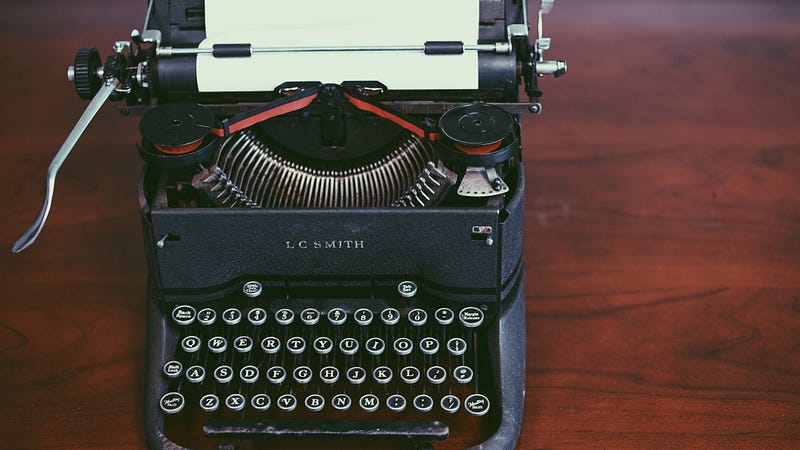
Photo by Daniel McCullough on Unsplash

Carriage return typewriters used three sheets of pages cut from giant newsprint rolls separated by carbon sheets. A paste pot linked pages end to end. I carried dripping stories on car crashes, fires or City Council votes to the copy desk.

A vacuum zip tube sped the hand edited news copy up the walls, across ceilings, through partitions, dropping into a composing room bin. Linotype operators turned liquid lead into blocks of raised print.

That newsroom’s clacking typewriters, shouts, hushed phone calls and police/fire radios exists in memory.

Then all went electronic. IBM ball typewriters and correcting codes arrived. CRT screens with amber print and blinking prompts followed.

Finally, at my Massachusetts Statehouse gig, a Radio Shack TRS-80 and rubber phone cradles sped digital news over wires.

But as newsroom technology advanced, the internet stole its financial lifeblood. Advertising went digital. Information rocketed the globe in microseconds.

Instant mass communication arrived in a blizzard of bits and bytes.

Residing in a phase of existence where dying might objectively be considered unexpected — I know the grim reaper lurks in my area code.

So is one’s life to be judged by the odometer? Not unlike the departure of the brilliant writer Roger Angell, who passed at 101 years?

Or by the impact one has made while briefly on the planet — Mozart — dead at 35?

Angell wrote beautifully about baseball. And Mozart’s music is well, Mozart.

Ultimately the quality of experience in our lives — goals accomplished — as opposed to chronological mileage — may comfort my later years.

Science and medicine suggest our survival band lies somewhere beyond age 50. A clue is our parents’ lifespan: Both mom and dad lived into their nineties. Hurrah! One might think.

But when I play with my daughter’s puppy, a thought nudges me. This bouncing, joyous dog might outlive me.

Events large and small mark places in time.

I shook the hand of the tiny woman who changed US history — Rosa Parks at the 1988 Democratic National Convention in Atlanta.

The Blizzard of ’78 destroyed 11,000 homes, took 29 lives, dumped some four feet of snow, paralyzing Massachusetts. It happened on my newspaper shifts.
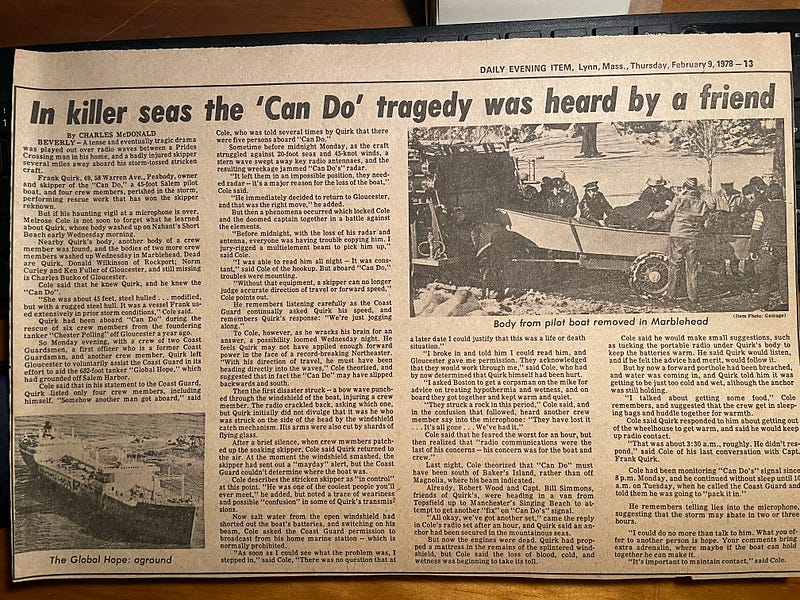
Author photo of story of would-be ocean rescuers lost in 1978 Blizzard

A New England Press Association commendation for coverage of doomed ocean rescuers lost in that storm is on my wall.

I attended one of the defining events of the 1960s — the Woodstock rock festival.

I bicycled 3,300 miles through Western Europe in my early 20s. Nations rebuilt from World War II’s devastation in Italy, England and France.

I listened to working men in pubs bemoan the waves of migrants derided as “wogs” as the British Commonwealth of Nations Empire contracted. And then heard them lecture me on segregation and racism in the U.S.

My world view grew in 1972 touring roads built by Roman armies, along sheep paths in Wales, and past shattered Belfast storefronts after being frisked at checkpoints.

I cycled through Trafalgar Square, along Amsterdam’s cobbled canal sides, down the Champs-Elysee, through the haunting Scottish Highlands and dodged traffic circling Rome’s Coliseum to visit the ruins.
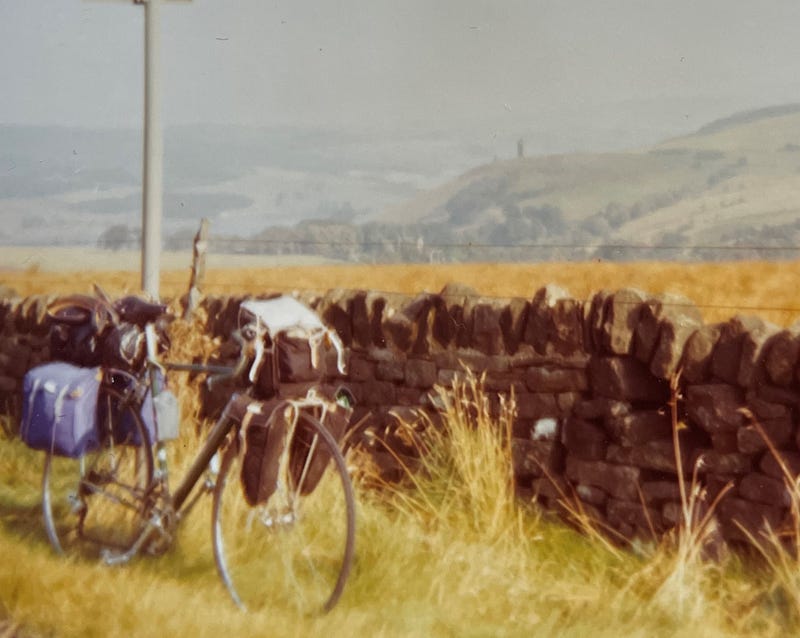
Author photo

I once stopped my bike on a deserted road on an overcast day after battling headwinds in Belgium’s fields.

An unlikely copse of trees marked an otherwise flat plain in all directions. Beyond a path lay a military cemetery.

Rows of matching graves. Each with white stone crosses. French, English, Australian, German and American soldiers younger than me. I felt the silence of that solitary, lonely bit of earth as a slight breeze moved branches. My heart was overcome with sadness at lives lost so young.
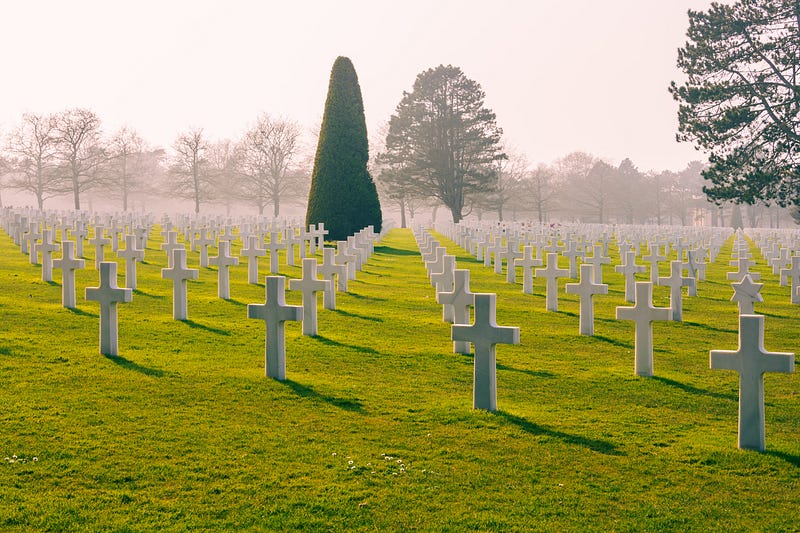
“Flanders Fields.”

Photo by Thomas Bormans on Unsplash

All framed by my handlebars.

Once in a Scottish pub, a punter took my measure:

“I thought you Yanks all drove Cadillacs,” he observed.
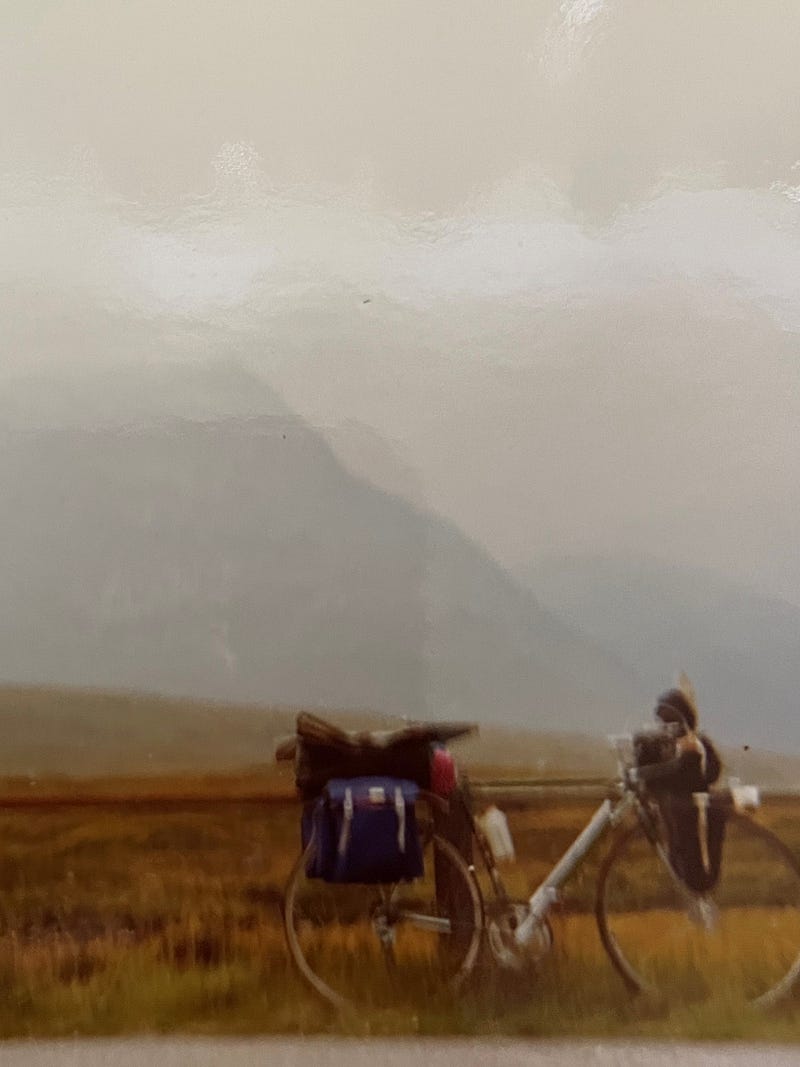
Author photo, Scottish Highlands, 1972

The late NBA basketball champion, MVP, and consensus greatest player in league history, Bill Russell autographed my basketball in a near-empty Boston Garden in the early 1960s.

The team was “too black,” said a majority of Greater Boston fans.

How do we review our lives as age takes its inevitable toll? Thirty years of morning jogs and mountain biking closed out with a knee replacement last year.

But I still have memories of completing two Boston Marathons.

My wife and I are active, walking our dog, and visiting our daughter and her husband. We’re hopeful for days, months, and years still ahead.

“He knew that the century had gone in which the best part of his life had passed; he felt, more than ever, the strangeness and loneliness of our little adventure upon the Earth.” — Thomas Wolfe, Look Homeward, Angel

I hesitate to think of this journey ending. We can’t live in a state of dreaded apprehension.

So it’s helpful to look back occasionally, take stock, and marvel that we hold living history in our memories.

History
Life
Journalism
Aging
About Me
Recommended from ReadMedium