
Gunned down
A Crime Beat Lesson
I learned long ago that “people” make the news. And how unfair life can be.
It clicked one Friday night 60 years ago during a fatal holdup in a dingy Boston neighborhood.
A shopkeeper’s murder was a senseless tragedy. This 18 year old Journalism student’s lesson happened on the fly.
My newswriting class with renowned editor Harold Banks was a streetwise plunge into deadline reporting.
Gathering facts to update a story while on the run was a valued skill.
As I scanned old classwork years later, Professor Banks’ cross outs, style tips and inverted pyramid prompts filled my yellowed pages.
It was a road map of how he wrestled my first news writing foray into a readable story.
The savvy newspaper mastermind helped young aspiring writers through basic training. It was boot camp on the crime beat.
The art of reporting and newswriting dawned on me in a clatter of teletype and whispered phone calls deep within Boston Police Headquarters in 1967.
A long forgotten story in big city life remains etched in memory. That elderly man’s life was lost in a savage act. Here’s how it happened:
Banks told the class that if we wanted a street journalism lesson, head to the Boston Police Department press room on a Friday night.
“Bring a six pack,” he suggested.
I was lucky. Nobody else from class showed up. In hindsight, I wondered if the others considered themselves a cut above ink-stained wretches pounding out police blotter tales.
My fake liquor ID came in handy. I strolled confidently past the uniformed duty cop in the Berkeley Street marble lobby at the old HQ building.
I figured the officer would take me for a delivery boy. What under-age teen was stupid enough to bring beer inside the biggest police station in New England?
He motioned me towards the basement newsroom, ignoring the brown bagged Bud six pack under my arm.
Lucky again.
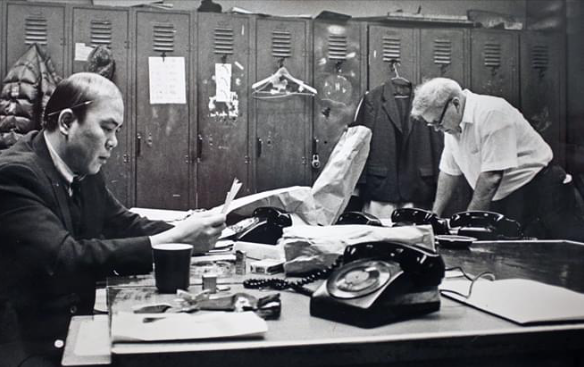
There were lockers, a police teletype machine, a table with ash trays and cigarette burns topped with black telephones alongside mugs of beverages.
This was long before emails. No internet or cell phones. There may have been a TV with an antenna somewhere.
Remington typewriters rested on rolling tables. Two grizzled reporters in shirt and tie from the Globe and Herald American checked PM newspapers and scanned notes.
Bob “Bucko” Smith of the Boston Globe and JC Kim of the Boston Herald Traveler were gearing up for another Friday night shift. Smith carefully tucked his suit jacket in his locker.
Kim and Smith used scrap paper from newsprint rolls to take notes, smoking, sipping a beverage and making low phone calls as the police radio separated the silences.
Professor Banks’ reputation paved the way. They welcomed the kid carrying a silly composition notebook.
Then ignored me.
Then things got busy.
It was an evening to remember; a brutal robbery on deadline.
An elderly shopkeeper in Boston’s South End lay bleeding on a street after staggering helplessly after his assailant.
Both reporters heard the police radio call and phoned their newsrooms.
Their papers were being “put to bed” -last edits turned into lead type before presses rolled. The story might be page 1 for Kim; it was definitely inside for Smith.
They updated editors in Dorchester and the South End to make space as pages went to press.
Between beer sips, I watched awestruck as the story angles and details fell into place.
They were “leg men” relaying updates to “rewrite” — reporters polishing a story.
Reporters hoped for prominent play in the “bulldog” edition hitting the street. Night revelers headed home early Saturday morning and workers sunrise buses might scan the piece.
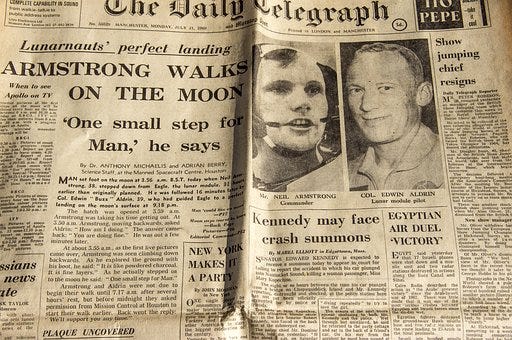
This was a transitional era. Crime stories no longer led daily newspapers except tabloids in big cities.
TV news dominated the crime beat. “If it bleeds it leads” was the snarky reference.
The 11 pm broadcasts would lead with film of flashing police lights, interviews of shocked customers and police tape garlanded across an El Producto cigar sign.
Kim’s story for the Herald American city neighborhoods and newsstands would get higher play than Smith’s urban/suburban Globe audience.
The next day I bought both papers. The Globe focused on the body count of homicides by September that year, a search for the gunman and the few scraps of information from police.
The Herald American story headlined with something like this, as I recall:
“Nice guy” slain in South End holdup.”
Quoting customers, Kim’s story detailed the unfortunate shopkeeper stumbling mortally wounded into the cobbled street in a vain attempt to catch his killer.
He contrasted that with the generosity of the slain store owner who had carried customers with lengthy credit tabs.
It was a classic tragedy, leaving readers shaking their heads. Both reporters recorded how the man’s life ended sadly in violence.
I got a “C” on my story.
The class paper survives, an instructive memory of cross outs and editing comments from Professor Banks.
It left me with a lesson long surviving from that evening in the basement of the Boston PD HQ.
People make the news. The best headline carries the day. But more important, it impressed on me how fragile life is.
And how it can change in an instant.