
OXYGEN
A Walk in the Park
And a breath of fresh air
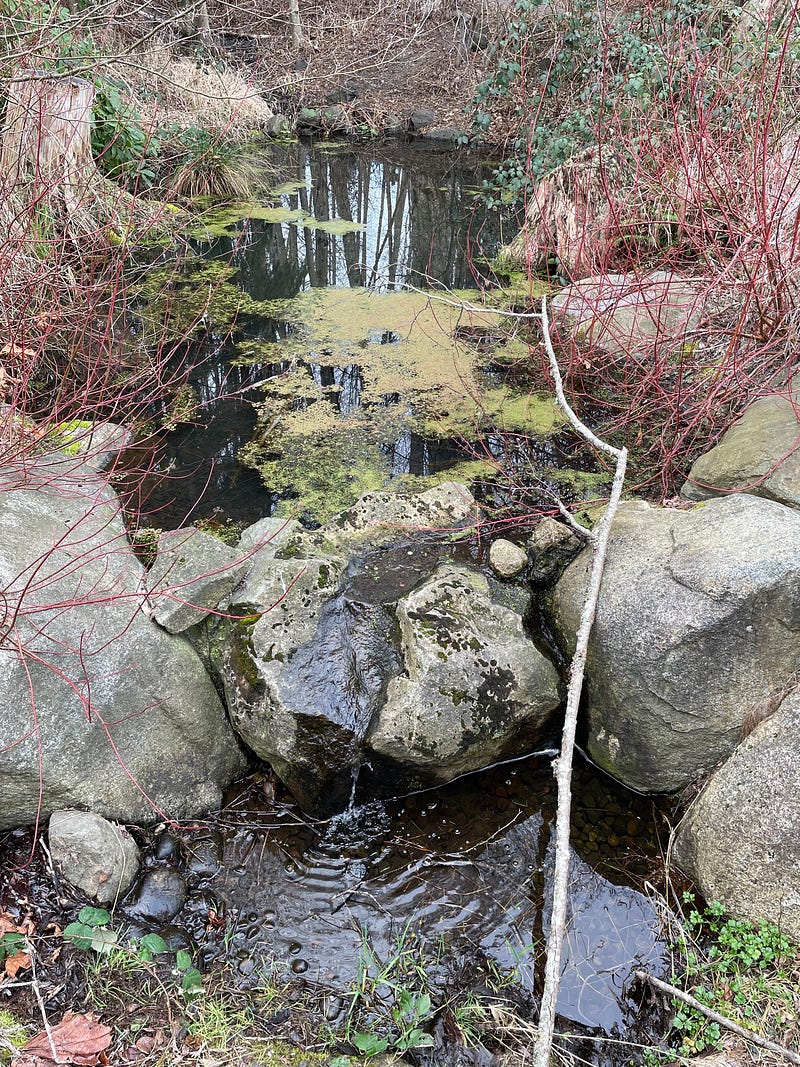
Sometimes a girl just needs a little oxygen. Today my writing studio seemed cramped and stuffy and not at all conducive to creativity. I rang up my buddy Dawn Jarvela Henthorn to see if she felt the same way, and off we trotted to a delightful walking trail near downtown Poulsbo, WA, along Dogfish Creek.
Except for the greens provided by conifers (mostly cedars in this location), ferns and mosses in the understory, and salmonberry canes preparing to blossom, winter shades of brown and gray predominate.
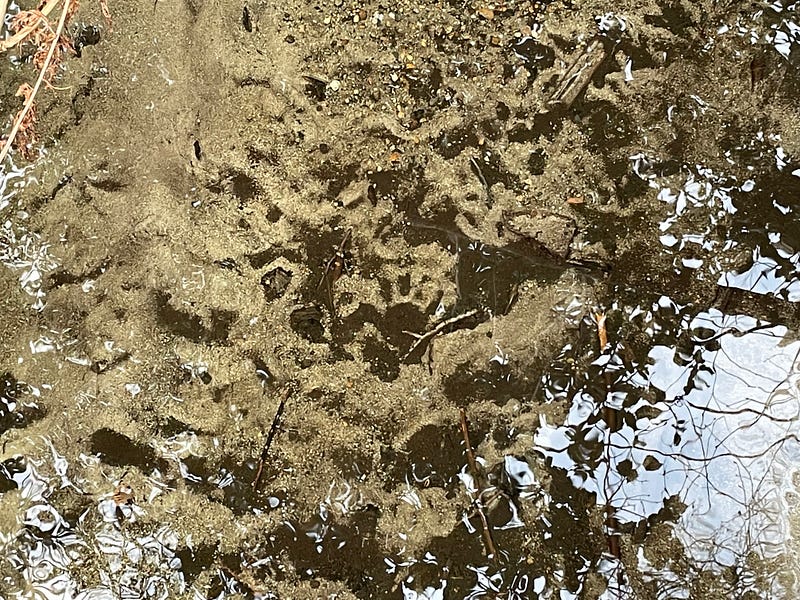
We didn’t see any live animals today, but the evidence of their presence was all around us. A Kingfisher chittered in a distant tree announcing his readiness to dive for a targeted fish, dry leaves and branches rustled as we passed by, and we spotted the footprints of a meticulous raccoon who had recently stopped to rinse off his dinner before consuming it with clean hands.
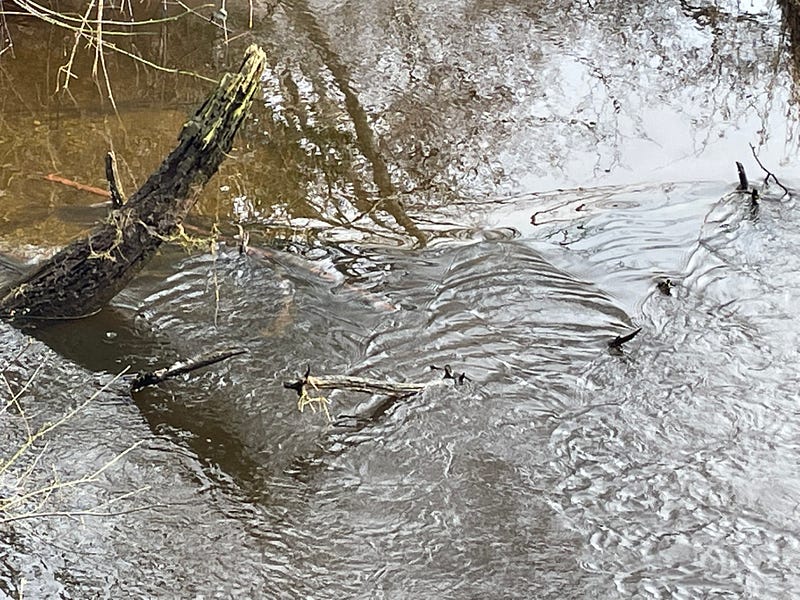
Who needs color when there’s so much structure, shape, and movement to study! This fallen branch was perfectly positioned to set up a beautiful wave train that could hold my attention for hours. And once again I recognize the extraordinary gifts of any artist who paints water successfully.
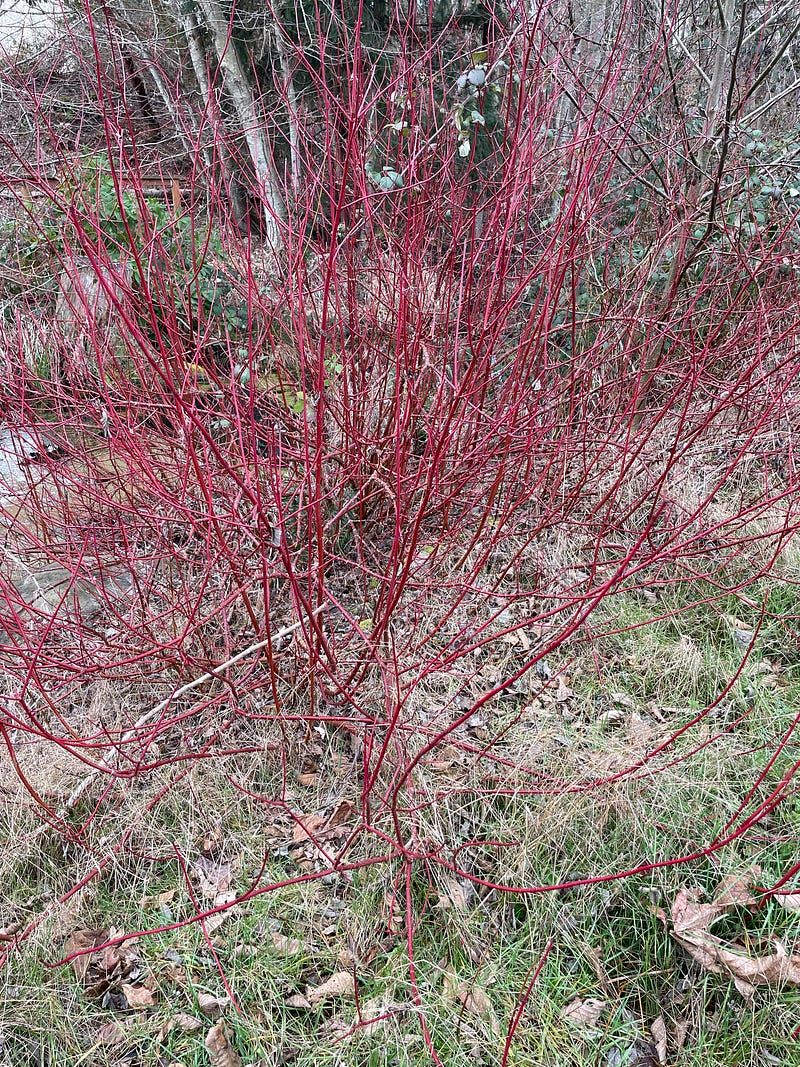
Now, with eyes accustomed to a wide variety of drabness, we round a corner to be blasted with the intense reds of our local red-twig dogwoods, a welcome bright oddity in the dun winter forest. Its cousin, the yellow red-twig dogwood — you’ll know it when you see it — adds its own merriment to local forests, but we didn’t happen to spot any this day.
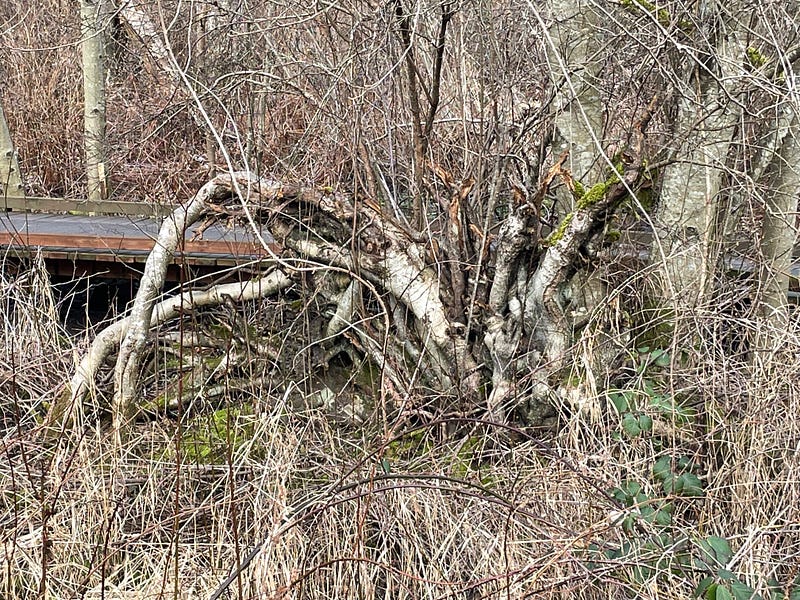
I believe it’s best to do all one’s woods-wanderings during daylight hours. Try to imagine finding this eight-legged monster at dusk. However harmless it may have been, we backed away ver-r-r-ry slowly, never losing eye contact.
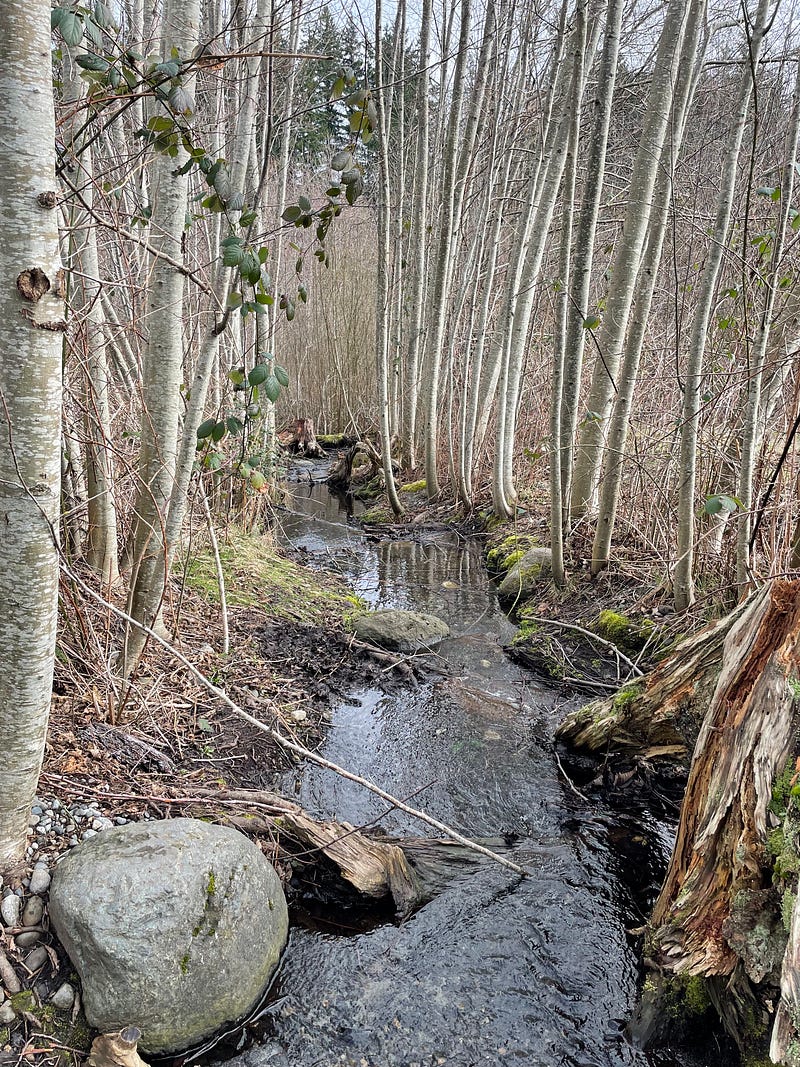
The entire cycle of life can be imagined from this breathtaking scene. The alders — all connected underground via a complicated relationship with a network of mycorrhiza — convert atmospheric nitrogen into a form usable by other trees, transporting this essential nutrient from their leaves down into the soil, where it nourishes the entire forest. Alders, considered “trash trees” by some, may not be the most beautiful specimen in the forest, but they could be the most valuable to the local ecosystem.
Perhaps humans should rethink the meaning of the word ‘beautiful.’
Restoration: In the time it would have taken to tear up drafts, chew the erasers off pencils, and drink a bucket of ginger tea while struggling to write something coherent, a quiet walk in the winter woods restored my will to continue living and writing and painting. My brain is richly infused with oxygen, my spirits are lifted, I feel human again. Connections restored. The forest is my happy place.
I now leave you with this short video to calm and inspire you, and encourage you all to get outdoors and go sit a spell, as my Grandma used to say. Breathe deeply. Observe carefully. Enjoy immensely.
Author’s note: Thanks for reading! And thanks to WotWU for hosting my (perhaps meaningful) meanders.