
A Tale of Two Workers: The Myth of the American Entrepreneur and the Plight of the Low-Wage Worker
How a pandemic is exposing the cracks in the economy.
The American Dream has a lot going for it. It’s such an ingrained part of American culture that we just sort of take it for granted. It even says it right there in the Declaration of Independence:
We hold these truths to be self-evident, that all men are created equal, that they are endowed by their Creator with certain unalienable Rights, that among these are Life, Liberty and the pursuit of Happiness.
This country was founded on the principle that pursuing happiness is something we are all entitled to by birthright. And there’s no better way to pursue happiness than by starting your own business, gaining unlimited success and riches, and living out a comfortable life at the top of the food chain. At least according to popular culture, anyway.
I’ve always been drawn to entrepreneurship. It’s glittering lights and promise of a better life and a high income are quite tempting to me, and many others like me. Since I have a marketable skill (writing), I have many options open to me.
And boy, do some people like to remind me of that fact. Shows like Shark Tank are constant reminders that entrepreneurs are the kings of the world. Books with tempting titles like The Four-Hour Workweek promise endless time and riches. Tony Robbins exists.
Then there are examples like Warren Buffet and Bill Gates and Jeff Bezos, who built multi-billion dollar enterprises from their garages. Steve Jobs is legendary as an eccentric businessman who created one of the biggest and most influential companies in the world from basically nothing but a dream.
As an example, a freelancer friend lent me The Well-Fed Writer by Peter Bowerman, but I couldn’t remember the title, so I Googled “freelance writing books.” Holy crud there are a lot of books dedicated to making loads of money freelance writing. Turns out, the American Dream sells lots of books.
Every day, we are sold the idea of the American Dream by people who got theirs. Freedom and happiness are within reach, they say, if you only follow my ten easy steps to success!
All it took to bring the tower down was a global pandemic.
Some people have boundless energy and endless ideas, others just want to do their data entry job and go home to watch Netflix. There’s nothing wrong with either.
In the before times, entrepreneurship was the key to wealth. Build the next big app! Be a freelancer! Bootstrap some innovative thing from your garage! Open a business! Be a day trader! Be your own boss!
That last one is an appealing thing. Not having to answer to some middle-manager who paces through a cubicle farm and looks over your shoulder to micromanage you is a glittering nugget of gold that many people reach for.
It is, many people find, largely out of reach for most. Freelancing is great, but unless you’re in the top 10% of freelancers in your field, you’ll probably not get rich doing it. Day trading is volatile at best, and anyone who tells you they’ve broken the system is selling you lies.
The thing is, building a business takes capital, a thing that can be hard to come by when 69% of Americans have under $1,000 in savings, and 45% have $0 in savings. This is exacerbated by the fact that 44% of workers work in low-wage jobs, earning median wages of $18,000 per year. Most of them are workers in their prime between the ages of 25 and 54. On top of that, 60% of workers say their jobs are mediocre or poor.
You could seek a business loan or line of credit, but having a low income can hamstring that opportunity. On top of that, 44% of people have a credit score under 700, which begins to increase possible interest rates and decrease loan and credit potential.
So, there’s a huge portion of the population that comes home from their crappy, low-wage job that barely covers their bills and who couldn’t afford a business loan anyway. So, they don’t have the energy for anything but sitting on the couch and watching Netflix. Can you blame them for wanting to relax with that kind of life?
Unfortunately, a lot of people say yes. Their situation is entirely their fault! They should use their crappy situation as a motivator to hustle and pull themselves out of their bad situation, you might say. Surely they can pick up a side-hustle or gain some bankable skill in their time away from work? They should pull themselves up by their bootstraps!
Aside from the fact that pulling oneself up by the bootstraps once referred to something so outlandish that it was considered impossible, it’s not something that can be applied to everyone because people are different. Some people are motivated by a bad situation, others are defeated by it. Some people have boundless energy and endless ideas, others just want to do their data entry job and go home to watch Netflix. There’s nothing wrong with either.
There are dozens of apps offering gig work, whether it’s delivering food, people, or packages; standing in line for someone who doesn’t want to; or building IKEA furniture. The possibilities are endless, it seems.
So, let’s start with the freelancers. About 57 million Americans freelanced last year, which is about a third of the workforce. About 28% of the workforce freelances full time. They also skew younger: 40% of millennials and 53% of Gen Z freelance, and more than half are under 38.
They also face a lot of challenges, many similar to the typical American, but often in greater numbers. Freelancers are more likely to have college loans or other debts, and more likely to live paycheck to paycheck. They are also concerned about unpredictable pay, with 72% reporting they are “very concerned” about it. Additionally, 27% report turning to other gigs, such as rideshare or seasonal work, to cover gaps.
That’s not to say that there aren’t benefits. Many freelancers like having the flexibility to work where and when they like, and many of them report that were it not for freelancing, they wouldn’t be able to work at all. They also report higher rates of emergency savings than people working traditional jobs. Technology has also aided freelancers in doing their jobs, as 66% report obtaining jobs online, and 63% report working remotely.
One of the recent trends in the American workforce was the gig economy. There are dozens of apps offering gig work, whether it’s delivering food, people, or packages; standing in line for someone who doesn’t want to; or building IKEA furniture. The possibilities are endless, it seems.
Of those endless possibilities, almost none of them pay enough to bootstrap yourself out of more than a meager existence. Everyone knows that you can make bank driving for Uber, except that’s not always indicative of the typical driver’s experience. Meanwhile, the executives of those companies and their shareholders are the ones making money.
Indeed, there is a marked difference between traditional freelancers and gig workers, according to this report by Gallup. Traditional freelancers, also called independent gig workers, tend to report more flexibility and freedom, while contingent gig workers (think Uber drivers and the like) are more in line with traditional job holders in how they rate their flexibility and other work metrics.
Paying workers poorly saves a lot of money when you tally your expenses, ensuring that executives and shareholders get their cut.
Meanwhile, those traditional job holders, the cogs that make the machine run, aren’t doing super well themselves. The Brookings Institute put together a report that described them:
More than 53 million people, or 44% of all workers ages 18 to 64 in the United States, earn low hourly wages. More than half (56%) are in their prime working years of 25–50, and this age group is also the most likely to be raising children (43%). They are concentrated in a relatively small number of occupations, and many face economic hardship and difficult roads to higher-paying jobs. Slightly more than half are the sole earners in their families or make major contributions to family income. Nearly one-third live below 150% of the federal poverty line (about $36,000 for a family of four), and almost half have a high school diploma or less.
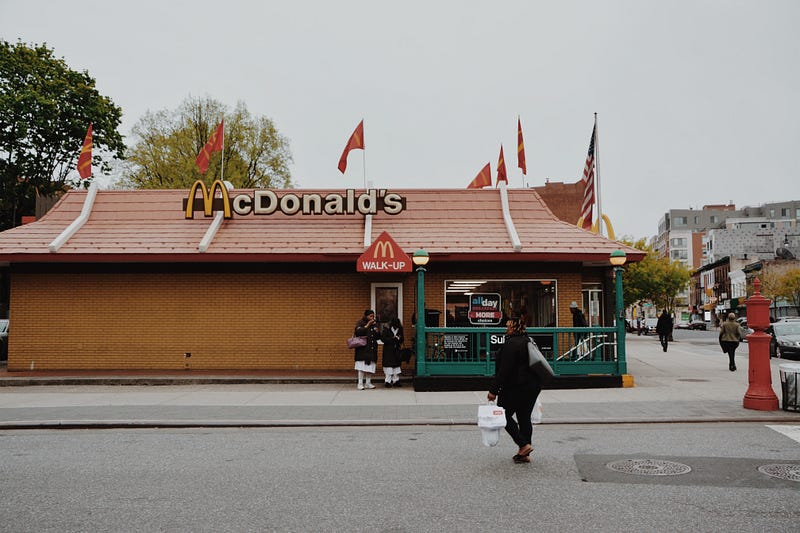
These workers are often the ones we see every day — making our hamburgers, bagging our groceries, bussing our tables. They have spent years fighting for higher wages, meeting resistance at every turn from politicians and business owners. The “Fight for 15” movement to increase the minimum wage is often met with sneers about how the minimum wage was meant for teenagers working their first fast food or grocery jobs.
For one, the minimum wage was implemented in 1938, when the idea of a part-time fast-food job for a teenager in high school didn’t exist. It was intended to be a living wage for the workers who were ravaged by the Great Depression and taken advantage of by business owners. I think it’s summed up in these two quotes by FDR:
No business which depends for existence on paying less than living wages to its workers has any right to continue in this country.
By living wages, I mean more than a bare subsistence level — I mean the wages of a decent living.
And yet, despite the original intent and political resistance to doing it, it’s incredibly popular among Americans, with two-thirds supporting it. Most of us recognize the need for Americans at the bottom to be paid more than they are.
But, for a long time, we treated workers at the bottom of the pay scale like replaceable cogs. Turnover in the fast-food industry has regularly been 100% or more, built around the idea of a replaceable worker doing a low-skill job. However, turnover is estimated to cost around $2,000 per worker, stretching the bottom lines of many fast food places.
This is compounded by the fact that people view fast food work as temporary and undesirable, with poor benefits and low pay. Plus, automation is driving many fast food places to cut workers in favor of machines and kiosks.
All of this is in favor of driving the bottom line. Paying workers poorly saves a lot of money when you tally your expenses, ensuring that executives and shareholders get their cut.
It doesn’t have to be that way, though. Starbucks has a turnover rate of 65%, which it achieves by offering good pay and benefits, all while driving good stock performance for investors. Outside of fast food, Costco also performs very well while having a reputation for providing good pay and benefits.
And yet, the low-paying jobs — food workers, cashiers, wait staff, and others — are routinely treated poorly by society. They’re seen as temporary jobs for teenagers and college students trying to get by (even as they participate in the labor force in lower numbers than in the past), or as jobs for losers who didn’t go to school.
Even people who treat them with some level of decency tacitly acknowledge that they’re undesirable jobs. My father had a lot of respect for wait staff and cashiers, but it didn’t stop him from reminding me to stay in school, lest that be my fate, as though it were some horrible thing and not a job that everyone needs and demands.
The problem, which I think this is a uniquely American problem, is that we view a lack of entrepreneurship as a moral failing.
All of this is being laid bare with the COVID-19 crisis going on. Freelancers and gig workers are losing clients left and right as businesses cut their budgets. Small businesses that cater to big businesses, such as marketing, PR, and law firms, are seeing their regular clients dry up. Family-owned restaurants are being forced to close indefinitely.
The CARES act passed by Congress last month is a stopgap for this. Freelancers and gig workers are now able to claim unemployment, but with 16.8 million workers filing for unemployment in the last three weeks and state unemployment systems overloaded, it’s going to be an interesting time. Meanwhile, small business loans are available for the mom-and-pop shops to keep them from going under, but the systems for getting those loan applications in and approved is not doing so well.
As the pandemic rages, the very idea of what constitutes a valuable job is being turned on its head. Food workers, cashiers, and delivery drivers, who previously didn’t have a good time of things, are suddenly finding themselves dubbed “essential workers.” People who derided them as losers are now thanking them for their service during this time of crisis.
If you’re a gig worker, it’s feast or famine. Professional workers are losing business left and right, as firms close up shop and work dries up. If you’re a gig worker, it largely depends. Drive for Uber or Lyft? You’re probably getting hosed. Deliver for DoorDash or Shipt? You’re probably flooded with work.
This, of course, is amplifying the call to raise wages and benefits for the workers at the bottom. While many companies are increasing their minimum wage and benefits, even if temporarily, the pandemic is being used as a call-to-arms over increasing the minimum wage nationwide.
The problem, which I think this is a uniquely American problem, is that we view a lack of entrepreneurship as a moral failing. Americans are rugged, inventive, and individualistic. We innovate our way out of every problem and rule the world in terms of business. Anyone who is a cog in the machine is obviously lesser than someone who is out there kicking ass and taking names.
Thing is, we need the cogs or the machine falls apart. For every genius writer hacking away at the latest novel in a Starbucks, there has to be the barista to make their drink. For every Jeff Bezos innovating the way we buy things, there is an army of people running the warehouses that distribute the things we buy. For every app developer, there are the people in Walmart that sell the phones that their apps run on.
I think this is what is fundamentally wrong with the American entrepreneurial spirit. We overvalue the entrepreneurs and undervalue the cogs. We don’t think twice at Jeff Bezos making a hundred billion dollars on a great idea, but we balk at the idea of paying the workers who run the company he built a living wage and giving them decent working conditions.
We scoff at fast-food workers for not going to school and getting a better job in the same breath that we order a large number three with cheese. We demand a service while simultaneously degrading the people who provide it. All the while, we put the movers and shakers on pedestals and tell the cashier at McDonald’s to do that instead.
We all want to stick it to the man, to run our own lives and do what we want when we want. For some people, that’s all that matters.
At the same time, the idea of no longer being a cog, working for ourselves, being our own bosses, is increasingly a dead-end proposition. Yes, apps like Uber and Shipt allow people to work when they want, to do jobs that they may not have been able to do otherwise. I know someone who, if it weren’t for Shipt, she probably wouldn’t be able to work at all.
But it’s no way to get rich. People who quit their jobs as a cog in the corporate machine to pursue their own path often find themselves as a cog in a different machine, one with a lot of trade-offs to their previous position. Either way, they’re making the man who runs the machine richer; the only difference is the machine.
I understand this, to some degree. We all want to stick it to the man, to run our own lives and do what we want when we want. For some people, that’s all that matters. They don’t mind making less money driving for Uber, as long as it gives them the freedom to run their own schedules.
But, in my opinion, we need to quit fetishizing entrepreneurship. While it is true that starting a business is one of the best ways to gain wealth, it’s also a long shot, and many businesses fail. It doesn’t mean that nobody should ever start a business, but we need to be more realistic about what that entails.
At the same time, we need to increase the value we give to the workers who flip burgers and bag groceries. The pandemic is doing a good job of highlighting their contributions to society; I just hope we can continue to move that ball forward when everything is said and done.
Both entrepreneurs and low-wage workers are valuable to society. We all know that entrepreneurs are valuable, based on how much we write about them. I just wish we’d realize the value in the dishwashers, the cashiers, the waiters and waitresses, the delivery drivers. They all play an important role in society; it’s time for society to realize that.


