EDUCATE TO INNOVATE
A Single Letter That Can Spark Innovation
A story about two words to educate innovators of tomorrow

Innovation occurs at the crossroads of a concept that we initially consider “useless” before it morphs into something we see as “useful”.
It’s that simple.
Not convinced? Consider this:
- Useless — 7 letter word
- Useful — 6 letter word
It’s a fine line. As such, a single letter stands between the meaningless, the “useless”, and something that has the potential to redefine society, humanity, or the Business world.
We define the difference between “useful” and “useless” as “Innovation” when the “useless” becomes “useful”.
This article is about the randomness of how the “useless” became “useful”.
Are You Crazy?
Let me ask you a few questions:
- Who would want to stick a mini-umbrella in their drink?
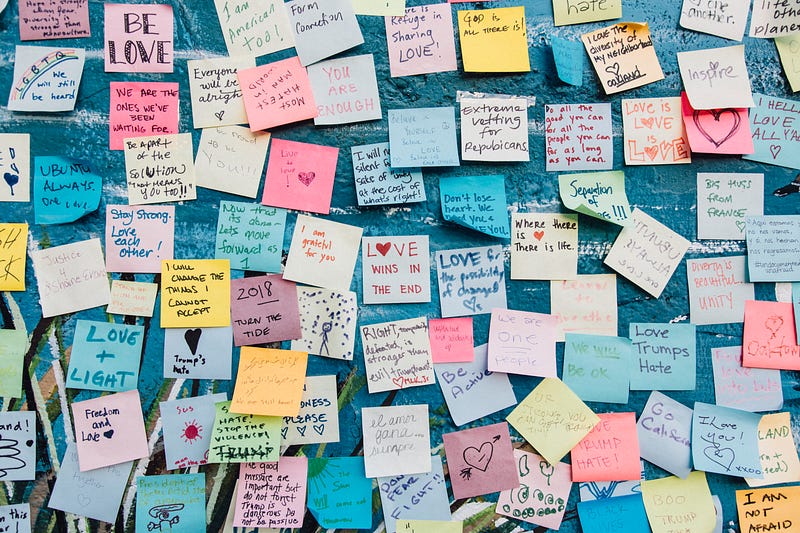
- Or use a square yellow piece of paper that sticks to things?
- Heat food in minutes?
- Use an App to connect with People?

As you know, the corresponding innovations led to:
- The Cocktail umbrella novelty that invented a mass market
- 3M created the Post-it
- The microwave oven
- And, Facebook
The inventions above that we take for granted today were once considered impossible, crazy even, but innovators brought them to fruition.
Allow me to expand on the non-linear journey towards innovation.
Stick To It
Years ago, Dr Spencer Silver worked as a 3M scientist responsible for adhesives. He invented a low-tack adhesive. A solution that stuck lightly to surfaces without bonding securely.
“It was part of my job as a researcher to develop new adhesives, and at that time we wanted to develop bigger, stronger tougher adhesives. This was none of those.”
As such, the idea that would eventually lead to the “Post It” sat on the shelf for years as it was deemed “useless”.
A few years later, Dr Silver stumbled across a function for his “useless” invention from an external source. One of his colleagues who sang in a church choir used the “useless” adhesive invention to tack bookmarks in his hymnbook because they kept falling out.
Suddenly the “useless” had a practical function, “useful” potential as a reusable adhesive.
This random event led Dr Silver to further develop his idea. Following a series of prototypes, the Post-It emerged. A product that eventually generated a billion dollars a year in sales for 3M.
The idea moved from being “useless” to becoming very much “useful”.
Useless ambiguity
Ambiguity is a facet of innovation. Innovators reside and operate in a nebulous world abundant in ambiguity. Every situation is uncertain. The unexpected is the only certainty, and it’s guaranteed.
Sometimes unexpected events occur as a result of internal priorities due to organizational shifts. One day you have everyone’s support for your innovative program until something changes. Progress is disrupted. Factors like a company acquisition, a re-structure or cutbacks impact departmental budgets and of course headcount.
External problems also occur. In a rapidly changing global marketplace, new entrants frequently emerge armed with new products and services. Or a poor customer experience goes viral on social media. One day everything is progressing well, the next day you awake to negative company headlines that can impact you, and everything changes in an instant.
Inventors stick with ambiguity
Innovators are courageous, nimble and agile in nature. They have to be to manage the onslaught of change. They’re adept at leveraging the brainpower of others to prevent a problem growing out of control.
Innovators are solution seekers. They don’t wish away a problem, rather invent scenarios to prepare for unlikely events. As such they can easily let go of aspects a strategy, their plan in exchange for progress.
This is what great innovative leaders do. They’re robust and resilient to lead a company forward despite challenges.
Final Thoughts
The 3M story reminds us that we don’t always connect the dots at the point of discovery. It's proof that the beginnings of innovation are grounded in doing and failing.
That said, “useless” failures have a function:
- They eliminate what doesn't work or apply today
- They create insight assets for future refinement
Inventors start with what’s possible, what exists today to find ways to improve or reduce problems in order to exceed existing benefits. The role of radical innovation is very much a throw of the dice, a gamble drenched in risk, but the potential to reinvent is too appealing to ignore.
To conclude, allow me to share key takeaway-rules that govern innovation:
- We can never know the cost or impact of a new solution until we try
- Some fantastic inventions, seen as “useless” today, may prove to be “useful” in the future
- Always endeavour to improve on the “useless” efforts of others to unlock potential “usefulness”
- Recognise that cost-effectiveness and demand are dependant on technological enhancements and social adoption — buy-in by the masses
Even brilliant inventions risk failure if implemented poorly, where flaws outweigh its usefulness. But someone somewhere wants a solution at some point, so timing is important to deliver where others have failed.
Efforts to innovate produce lots of “useless” ideas. But many “useless” ideas become “useful” under the right conditions.
“Here’s to the crazy ones, the misfits, the rebels, the troublemakers, the round pegs in the square holes … the ones who see things differently — they’re not fond of rules, and they have no respect for the status quo. … You can quote them, disagree with them, glorify or vilify them, but the only thing you can’t do is ignore them because they change things. … They push the human race forward, and while some may see them as the crazy ones, we see genius, because the people who are crazy enough to think that they can change the world, are the ones who do.”
— Steve Jobs
So to all the “useless” creators out there, the “misfits” among us, I encourage you to be “useless” together, starting with my “useless” article!