
Write in a Foreign Language, How to Enhance Your Skills
As a treat or out of professional requirement, writing in English calls for you? Board on the challenging adventure of a French girl who wanted to be read in America and build your method to enhance your skills.
All the reasons are good reasons
Why do you write in English rather than French? I don’t recall how many times I heard the question. My response doesn’t vary. I love the way English reflects my emotions and what it carries into my world. Pretty simple! I also like the precarious balance I feel when playing on two very different languages. Some of my ideas fit better in French, others in English. A word is more explicit here, more poetic there. I build on the endless bounty of this incessant back and forth, digging into a word hidden-meaning and its resonance in a language or the other. That’s how my ongoing novel title was born. I reckon my life is hanging in between many different cultures. I was born and raised in France but traveled the world as a professional athlete. I spread friends everywhere, most of them utterly unfamiliar with my native tongue. I lived in Montreal for a while, in a city where people’s brains are separated in two from an early age. I write in English, primarily for pleasure. But there are plenty of excellent reasons to develop writing skills in what is the most widely used expression in business, culture, sports… For some of us, it is a matter of enlarging their professional opportunities. Publications such as Medium speak predominantly in English, like many other influent media producing the best content in today’s world. Oral fluency is no longer enough to get jobs in the UK or the US, or in some major companies. Engaging a community through written content and addressing stakeholders with efficiency is a must in our global economy.
Writing is one big challenge
Or numerous high hurdles, shall I say. Writing in a foreign language, no matter how familiar you are with its spoken version, brings many more difficulties on the table. Here is an inventory of handicaps I mastered or attempted to.
1. Humor, first and foremost
Every culture has its own sense of humor, of which language is a vector. English sounds more facetious than French. French is naughtier. American is more rigid, standing on its values and the sharpness of its words. Representations of women, of what’s permitted or forbidden, of freedom, are diverse throughout the globe. A writer is accountable for cultural specificities and characteristics. Writing is not translating. It is a complete immersion in a new way of conveying messages. Far beyond words, common idioms and the correctness of a grammatical structure.
2. Sounding colloquial is tough, as are slang, regional, or sector-specific speeches
This comment is intended in particular for those of you interested in fiction. Authors step out of their comfort zone when they create characters who don’t resemble them, whether they do it in their native or a foreign language. My work-in-progress novel features an extroverted Cornish musician who loves surf, together with a shy French athlete born in Biscay who experienced a conventional upbringing. Their dialogues are a puzzle to compose.
3. How languages and thoughts blend and clash with each other
In the last twenty years, my life has balanced between French and English. I snap from one to the other according to my current needs, situations, and interlocutors. Specific moments of life, words, or ideas belong by instinct to one tongue or the other. My temper is anglophone, my dreams speak French. Some pieces I write flow the two languages in the same stream, which means I have to translate both ways. A paradox! Taking back to my novel hero, Jon. He speaks English in my head, but I can’t refine his feelings if I don’t transpose him into French. Words are sometimes more significant or precise in one language or the other. The pendulum then turns into an advantage (More on this later)
4. Words are both friends and ennemies
They might hide behind fallacious clothing. In French, we call them “false friends.” They don’t suggest what we think they do, and they lead us on an erratic trail. Grammar needs adaptability, as well. French is more verbose and sinuous than English. French people, when they write, listen to themselves a lot.
Thanks for ruining my hopes, now move on!
As previously stated, writers expecting to step out of their native language need to understand all cultural, grammatical, and ways of speaking, specificities. This is essential advice, but it is not enough. A method — your own! — can take you a little further into your project. I split mine into six steps, which I no longer deviate from. Each time I wandered out was crowned with failure.
1. Write a beta draft (The Roots)
No matter in what order or language my ideas come in, I scribble them down on a blank sheet. The mess they create is rooting an in-making story, in which thoughts get tangled, overlapped, and stepped on. When the brainstorming process is complete, comes the moment of sorting and ordering everything into a framework. I might leave stuff behind and pick up last-minute pieces. This is not much different from creating a project first draft, except that, at this stage, some parts are in English, others in French. It doesn’t matter, as long as I can picture the common thread out of this blend.
2. Upgrade to a first draft (The Canvas)
Harmonisation comes next. The language I use to formulate my first draft out of the beta version depends on a) how dominant French or English was in the beta draft, or b) how I feel at the moment. My daily moods and capacities sometimes drive me on a path or the other. Once again, I don’t blame myself if I can’t draft in full English, as long as I get the overall canvas of my story available in one single piece of language.
3. Translate your draft
If I drafted in French, now is the moment to turn it into English. I don’t allow much time to stage 3 and rely on my new bestie, Deepl, a rather powerful and free translation device. The result is barely correct, never optimum, but enough to move on to the next step.
4. Rewrite your draft
Here is when I move from the “what I want to say” to the “how I want to say it.” Regardless of the amount of time and effort one spends on a translation, it is never accurate nor nicely written. The same goes for a first draft in general. I rewrite three or four times when needed. I keep in the back of my head the many hurdles I talked about earlier. I follow the thread, and I combine my ideas flow with the spirit and tone I had in mind when I first started. I plug my brain into English and its basic rules. Simple and direct. Straight to the point. A touch of humor when possible. I chase away long, wordy sentences, as well as passive phrases. I look for synonyms to enrich my text and stick better to my original plan (Welcome Thesaurus in your toolbox). As hard as I can, I am putting on my English-speaking reader’s shoes.
5. Edit, edit, edit
You have shaped a fabulous story for your audience. But you don’t fancy average. You crave for perfection because that is who you are. A writer who cares about delivering a flawless performance to the people you respect the most, your readers. Although editing is a critical stage of any writing project, it bears a unique meaning for those of us, non-native writers. It’s time to chase away false friends, literal translation blur, convoluted phrases. Editing is about polishing, getting to the roots of grammar. Use and abuse of Grammarly — another free tool, although the Premium version brings your craft much further. This is a powerful weapon, a precious ally for me, but I try to remain critical when necessary. Grammarly is not a creative writer, sometimes I stick to my choices.
6. Publish
I am shy. I think my writing is not valuable. At all! I recently took a course in creative writing with Oxford, from which I learned valuable techniques. The most positive outcome was confidence, though. And the assurance that engaging a reader prevails on tiny linguistic imperfections. They might as well sound charming! My advice is, go on and press the button.
Before you go, 4 tips to improve
There’s always room for scaling up your craft. Here are a few strings I exert to keep myself on the move.
1. Listen to interviews, dialogues…
Not for content but to capture the features of a speech. I caught a lot from a conversation between Chris Martin and Zane Lowe to design the musician in my novel. I went through it ten or twelve times in a row, to hunt for intonations and hesitations, to conjecture their significance in terms of fragilities and strengths. I tried to catch the musicality of Martin’s voice and his expressions. I can’t remember anything of what he was talking about, though.
2. Write a lot
No matter the language. Your skills develop when you write, and they are not exclusive to a specific style. Writing is about creating and delivering a story to engage an audience. It is related to your ideas’ finesse. Because of my education in political sciences, my writing is more verbose than most French writers’ — which is hardly conceivable. But fiction drives me to poetry and storytelling when English articles drive me to be more straightforward and engaging with my readers.
3. Use external devices to reach new heights
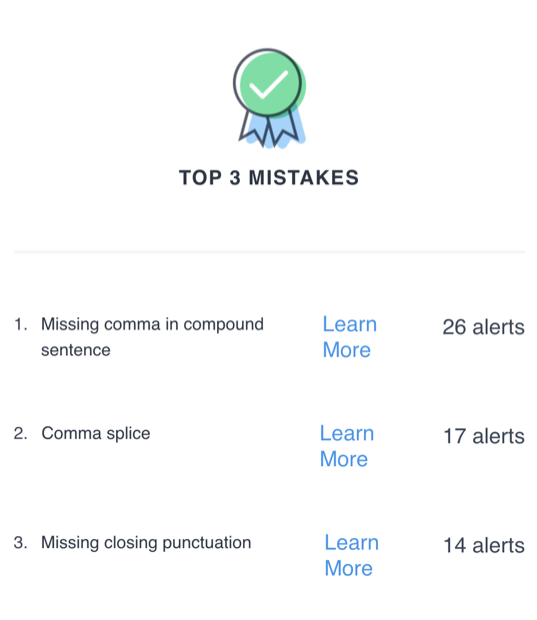
I receive a weekly review from Grammarly. And guess what? I always make the same mistakes: misplaced commas. They are evil to me. I need to give them a bit of consideration in the next future.
4. Read a lot
For content this time. Lexicon consistency and diversity come from samples you read, as well as particular ways of talking you might need for a future project. When you read, you create a bank of resources. I recently spotted on Medium this article, which I consider as a fantastic piece of advice for us non-native English writers. Don’t be absolutely sure, be dead certain you use the right word! This is my last tip for you.
Enjoy your writing journey, and have fun along the way.
Learn. Reflect. Love. Repeat. Sign up for my monthly newsletter to receive a digest of my latest stories.
I am a writer, speaker, Paralympian, mother of twins, and constant dreamer. I earned bronze in singles and doubles in Beijing 2008 as a wheelchair tennis player.