
A Secret Ingredient of the Strong Indian culture
Pearls of Wisdom from Indian Poetry

India is one of the most culturally diverse countries in the world. Unity in Diversity is our strength. Culture is deeply rooted in every home of an Indian, irrespective of religion. There are many factors that make Indian culture strong and Indian literature is one such aspect.
Indian literature, with its stories and poetry, leaves a very strong impact and builds up the value system in the child’s mind at a very early age. Morality (dharmic path), non-violence, peaceful co-existence, sharing, lending a helping hand, and respecting other life forms are some of the traits which are deep-rooted in our minds through poems, stories heard repeatedly during our childhood.
Usually, Languages are one such subject which accompany us in schooling and college days, where the specific emphasis is laid around building value systems through poetry and stories — which has been an age-old tradition.
India is in top 5 among the countries which have the most languages in the world (456 languages). Indians speak 122 major languages, out of which 22 are major spoken languages. Indian languages are mainly divided into two — Indo Aryan and Dravidian. Out of the Dravidian languages, Telugu is the most spoken across the world with around 93Mn speakers.
The Telugu language is considered the “Italian of the East” given that Telugu is the only language in the Eastern world that has it’s every single word ending with a vowel sound. Records suggest that Prakrit Inscriptions with some words dating back to 400 BC to 100 BC have been discovered in Bhattiprolu in the Guntur district of Andhra Pradesh. High antiquity of its early texts/recorded history over for period of 1500–2000 years. The language has been classified as a classical language of India, among 5 other languages declared. Telugu is the official and main spoken language now in two states — Andhra Pradesh and Telangana in India.
India is so culturally diverse that poetry and stories in one language may not be heard by other language speakers surprisingly. For instance, a Telugu speaker may not have enjoyed the fruits of Tamil poetry and vice versa. This article is a trial to open up those closed doors and introduce Telugu poetry to those fellow Indians as well as foreigners.
Here we are to know about a famous Indian poem in Telugu, which is taught to the children within the first 4 years of schooling.
Poem 1
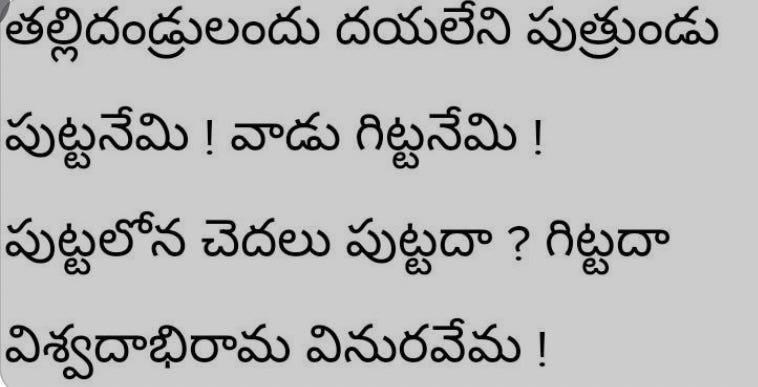
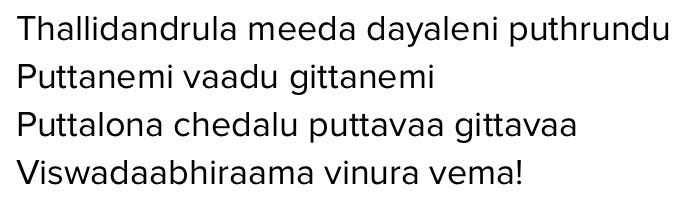
Poem 1 meaning :
A son who is not kind towards his parents, it doesn’t matter if he takes birth or just evaporates from this world similar to termites in anthills, which take birth and die on an ongoing basis.
This is one of the poems which strongly warns a son as to how important duty it is for him to take care of his parents their entire lifetime. This binds fellow Indians emotionally and dutifully to their family culture and never are ailing parents seen as a burden. Whatever family differences may be, families are always closely knit. Most of Indian families either live with their parents as a joint family, 3–4 generations together, or live in close proximity to support their parents. Given that Indian culture promotes joint families, neither Mother’s day nor Father’s day is celebrated in India as seriously as in the western world.
Poem 2
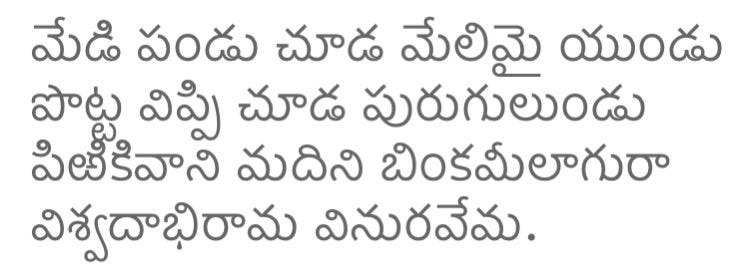
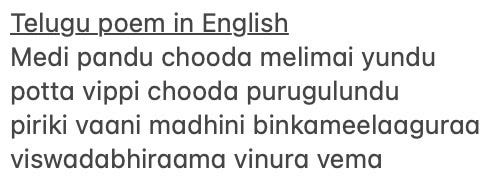
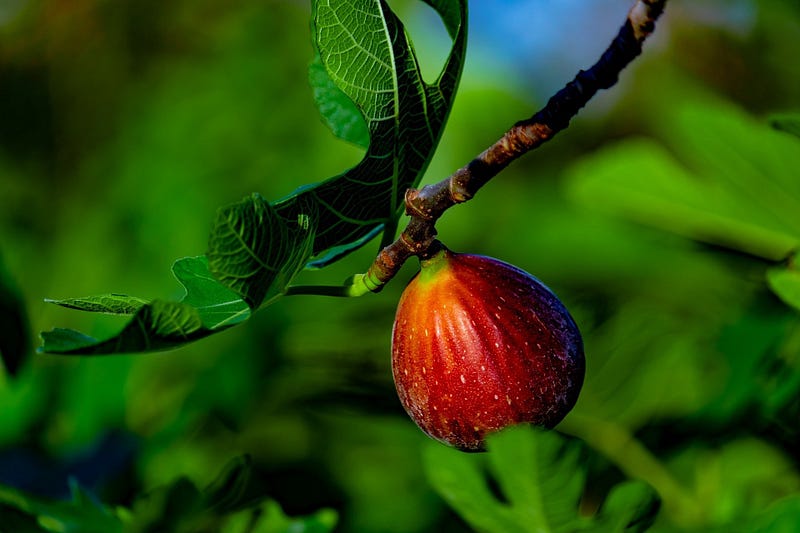
Poem 2 meaning :
If you look at a fig or any fruit, it may look like a shiny, attractive and a healthy eatable from the outside. But when you open it up and see, there may be insects inside. A coward person may look still from outside, but he may still hold the fear inside.
The above poem is an example to say how ‘complete’ the Indian poetry is — which embeds not only morals but also warns not to step into pitfalls.
Signing off — On this auspicious day of Ugadi festival ( The date on which I’m writing this article, coincidentally), it’s my duty and honour to write on such pearls of Indian wisdom. We celebrate this day as the beginning of a new year in many parts of India and in Telugu this year is named Shri Shubhakrutha Nama Samvatsaram, which means a year that brings in auspicious time and good luck. Wish and pray that this new year stays true to its name, wherein the world gets rid of the dreadful pandemic and ongoing war, leading to a peaceful life filling everyone with wisdom and joy.

About Yogi Vemana
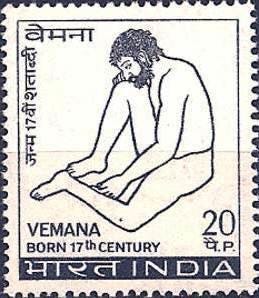

Yogi Vemana belonged to the 17th century and can be considered among the modern poets from the ancient Indian tradition. His works include around 30,000 poems, which mainly focus on morality and wisdom. Almost all his images indicate him to appear nude as a symbol that he attained complete vairagya (renunciation) and enlightenment.
Note about the Ugadi festival
Ugadi is a festival for Hindus (only for Telugu mother-tongue) falling on the first day of the Hindu lunisolar calendar month of Chaitra (called Chaitra Sudha Padyami), which is celebrated as Telugu New Year’s day. Ugadi or Yugadi means beginning of the new age (Yug + adi). Every year has a pre-defined and age old name — with this year being ‘Shri Shubhakrutha’.