
A Pun, Joke, Word-Play and Satirical Story, Walk into a Bar
No joke
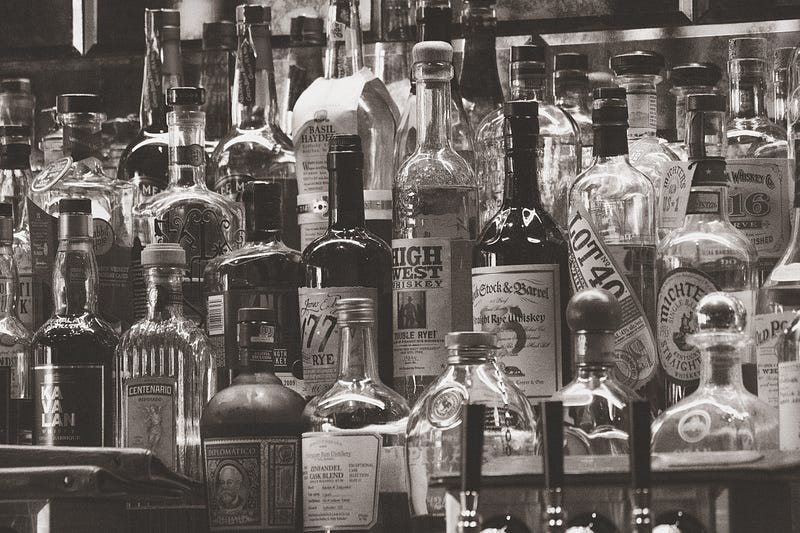
“Evening, what y’all drinking?” Asked the bartender.
“I’ll have a pint of ale,” said the pun.
“A beer,” said the joke.
“A vodka martini. Shaken, not stirred,” said the word-play.
“Bourbon, please,” said the satirical story.
They started debating who was the funniest amongst them.
The pun declared, “I am the funniest one here. My comedy is by far the punniest.”
The joke spoke next. “I’m the funniest. I can be short or long, complex or simple. I am flexible. That is what makes me the funniest.”
The word-play stepped forward. Gesticulating in a dramatic fashion. He extended an arm up and pointed at the joke. “You,” he exclaimed, “are not funny at all. I am a critically-acclaimed thespian!” The word-play’s voice went up an octave with each sentence; “I have trodden the boards at the Globe! Last week I was playing Lear for the RSC! I once got propositioned by Kevin Spacey! Now I find myself in the company of imbeciles! How dare you…”
A deep, husky voice interrupted. “Right, first of all, I like your style. Some consider the use of puns as lazy. You carry on. And don’t you stop.”
The voice belonged to the satirical story, who was puffing on a cigarette and nodding to the bartender.
The others appeared dumbstruck. Apart from the bartender, who was pouring a bourbon.
The satirical story then turned to the joke. “Flexibility should never equate to prowess. No one likes a walkover.”
The satirical story nodded at the word-play. “You claim that success is measured by who or what someone knows, not the strength of their character.”
The satirical story then put his cigarette out in the ashtray, stood up and walked out.
The pun, joke and word-play all stood there aghast. None of them could believe how the satirical story always got away with such behaviour. They could not fathom how ridicule, irony and exaggeration were used to criticize the stupidity and immoralities of others. And not for personal gain, but for social change.
It was now closing time at the bar.
Is love really a dog from hell?
What’s it matter? And can we even tell?
Be you a pun, or a joke,
There’s nothing as queer as folk.
Be you a word-play, or a story,
I have no interest in false glory.
Treat everyone as an equal,
And never forget how to rhyme.
The above story is in response to the following prompt:
Related stories by Lee Serpa Azevado:


