
MUSINGS
A Portrait of a Dysfunctional Family
Dysfunction isn’t always drunken rages and emotional chaos.
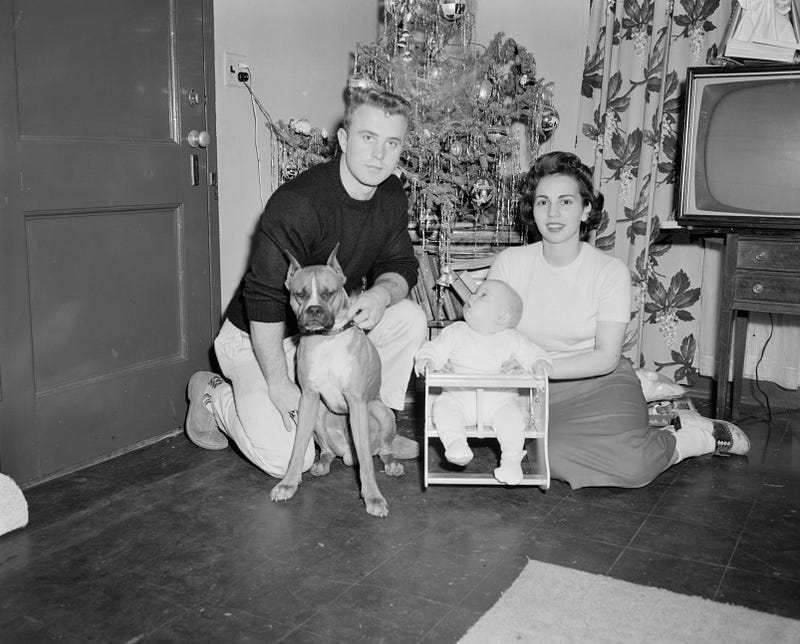
This is what my sponsor told me at Starbucks.
We have an image of what family dysfunction looks like in our mind of drunken rages, objects thrown and domestic violence. But dysfunction can just as easily be covert and hidden as chaos of a drunken parent inflicting emotional abuse.
I sipped my latte and thought about my family.
Invisible Dysfunction
Looking back on my childhood, there were no outward signs of dysfunction in our home, no drug addiction or alcoholism, and my parents rarely ever argued, but this doesn’t mean there was no dysfunction in my family as a child.
My family moved around every three or four years as my dad climbed up the administrative ladder at different colleges. We moved from Washington D.C. to New York and Kentucky to South Dakota before we settled in California.
My dad loved sports. One of the highlights of my childhood was going to basketball games, home and away games, as a family (I have an older brother) at the colleges my dad worked.
I was an extremely shy kid who rarely talked.
But I made friends through playing sports. My parents supported me by going to all my Little League or youth basketball games. My dad even once created a soccer league when we moved to Murray, Kentucky that didn’t have one.
My dad was a good dad. He coached my youth soccer and basketball teams, but he passed something on to me besides a love of sports.
He died from a heart attack in my senior year of high school. My mom told me something I never knew about my dad after his death. Both his parents died before my dad turned five and it took me years to see how this related to me.
His dad died from complications donating blood when he was three and, a year later, his mom died from cancer. When his mom got cancer she stayed in her bedroom with the door closed and she didn’t allow her son to go in and to see her.
That’s how his mom dealt with her emotions.
Behavioral Patterns Get Passed On
When his mom died, my dad found out she died from a friend while they were playing outside his home. No one in his family told him that his mom had died. This was how his family dealt with painful emotions. Bury it. Suppress it.
Hope the pain will magically go away.
This is what I’ve been doing my entire life and I believe it was subconsciously passed on from my dad’s mom to my dad and then onto me and I hope to break this pattern of avoiding hurts.
After his parents died my dad was raised by his three aunts. I remember visiting his aunts in Portland, Maine, one summer when I was six, and it never occurred to me to ask my dad why we were visiting his aunts and not his parents.
Now I realize it’s because my dad never healed from his loss as a kid from losing his parents.
When I was six my mom told my brother and me that my dad had two other children, a boy and girl, from a previous marriage. She said the boy, who was twelve at the time, would be coming to visit us and be staying at our house.
My half-brother stayed with us a week and then my parents never talked about him after he left. It was like my dad’s hurts had been taken out of a closet, but since he didn’t know how to deal with them they were put back into the closet.
My dad wasn’t an alcoholic, but I think he dealt with his hurts by being a workaholic. I read in a newspaper article that he never missed a day of school or work in his life. He found his groove in work since it didn’t involve painful emotions.
Denial
I learned there is a name for avoiding our hurts when I began attending a recovery group that met at our church. It is called denial and my wife had told me for years that the truth could be in front of my face, but I couldn’t see it.
That’s because I suppressed painful emotions and buried them deep inside me like my dad. But you can’t heal from wounds in your life if you don’t deal with them and that’s why it took me a while to acknowledge I had an addiction.
I couldn’t see my hurts because I avoided dealing with them.
I am not going to lie. It felt a little weird in the beginning during open shares in my recovery group. I wasn’t used to hearing everyone being so honest about the hurts in their lives, but it was the kind of place I needed in my life.
It was refreshing to have a place to talk about my struggles in my life rather than pretending they didn’t exist and this helped me step out of denial and begin to finally deal with the underlying root issues behind my addiction.
In the beginning of my recovery, one scripture I heard frequently in recovery lessons and in our Step Study Guides was James 5:17. It says:
“Therefore, confess your sins to each other, and pray for each other, so that you may be healed.”
Confessing my wrongs
The word “confess” means to agree with God, and that’s one of the elements in my life that was most missing during my addiction. I had become good at rationalizing my addiction that I couldn’t see or admit that I had an addiction.
I love the twelve steps of recovery. They all work together like instruments in a symphony, but the step that has been the most helpful to me in my recovery is Step Two: Earnestly believe that God exists, that I matter to Him and that He has the power to help me recover.
I didn’t understand the meaning of this step at first. Of course, I believe that God exists, and as a Christian, I believe that He loves me. It was the last phrase of Step Two that was hard for me, that I matter to God, because I had always kept my hurts separate from God — by stuffing them.
By keeping my hurts separate I was locking God out of painful parts of my life. The scripture for Step Two was also confusing to me. It was from Jesus’ teaching called the Beatitudes, “Blessed are those who mourn, for they shall be comforted.” I had no idea how this related to overcoming my addiction.
But the way I have come to interpret this verse is that I have to openly acknowledge my hurts by experiencing them and letting God comfort me.
So whenever I experience a new hurt I “mourn” my hurt by feeling the sting and pain of the hurt rather than avoiding it as I’ve done all my life. I then share what I am feeling with God, telling Him how I’m feeling and I follow his command to forgive and let go of the hurt to avoid it becoming resentment.
This is how I’ve learned to deal with my hurts in God’s way. Of course, I also mourn the wrongs in my life by asking God for His forgiveness. I also recognize that I am a perpetrator of hurts as well as a recipient, and this helps me to forgive others.
Thank You
Thank you for letting me share this portrait of my family with you. I hope you saw dysfunction in a family can just as easily be covert and hidden in the way people avoid dealing with their hurts as it can be drunken rages, abuse, obscenities, and chaos as is often the myth regarding family dysfunction.
I encourage you to think about the portrait of the dysfunction in your own family (just look back one week to Thanksgiving) and to think about any behavior patterns that may have been subconsciously passed on from one generation to the next that are related to how you deal with the hurts in your life.
I wouldn’t be where I am today without doing this hard work of recovery and I encourage you to spend time looking at your family’s dysfunction so that you will be able to break free from the patterns that lead you into an addiction.
Below is my story on how my mom ruined my family’s Thanksgiving, so you can see how family dysfunction is still alive in my family. But I am learning to deal with it.
I love reading articles and writing on Medium.
If you are not a Medium member yet and would like and would like to receive unlimited access to all Medium content, you can sign up here. It’s just $5 a month. I will receive a small referral bonus, at no additional cost to you, when you sign up using my link.


