avatarJeremy Roberts

Free AI web copilot to create summaries, insights and extended knowledge, download it at here

7932

Abstract

vas-man Guinn “Big Boy” Williams, was really great to me. It’s currently on Antenna TV.</p><p id="15bf">My mom eventually became my business manager, thank goodness. I appointed her to the role because I didn’t have anybody else. Of course, I couldn’t have done it all at the time. That would have been impossible. She ran the shop for me for years and years, watching my money and everything. She was integral. By the way, my grandmother was doing my fan club [laughs]. She really cared about those kids, and I consider her to be my biggest fan.</p><p id="20a7"><b>Who are some of your musical influences?</b></p><p id="38bf">Chuck Berry, Little Richard, Fats Domino, Jerry Lee Lewis — the real rock and rollers. In fact, my audition piece for <i>The Monkees</i> television show was “Johnny B. Goode” by Chuck Berry. I recorded a cover version for my solo album <i>Remember</i> [2012]<i> </i>which I’m very proud of. The arrangement is very different than Chuck’s original. I did that with quite a few of the songs on the album.</p><p id="fe0d">I also liked Elvis Presley’s early rock ’n’ roll material. When he skyrocketed to fame in 1956, I was about 11 years old and just beginning <i>Circus Boy</i>. “Hound Dog” is a personal favorite. But I must level with you — I was not an Elvis fan after he returned from the Army and largely abandoned rock ’n’ roll.</p><figure id="8885"><img src="https://cdn-images-1.readmedium.com/v2/resize:fit:800/1*G66eFe7oTsWmhDP96Y-cpg.jpeg"><figcaption><b>On July 13, 1956, RCA Victor distributed a monster 45 single coupling Elvis Presley’s “Don’t Be Cruel” with B-side “Hound Dog.” Certified quadruple platinum by the RIAA, both rockers climbed to number one on Billboard. The cover shot was taken by Alfred Wertheimer on July 1, 1956, when Presley and band mates Scotty Moore, Bill Black, D.J. Fontana, and the Jordanaires made their sole ill-advised appearance on NBC’s variety series “The Steve Allen Show” at the Hudson Theater in New York City. Presley was quite angered and embarrassed when the comic asked him to dress up in a tuxedo and sing Leiber and Stoller’s “Hound Dog” to an actual basset hound sporting a top hat and black bow tie, but he complied anyway. Photography by Alfred Wertheimer / Sony Music Entertainment / 45Cat user BandBox244</b></figcaption></figure><p id="e851"><b>Is it true that guitar is your first instrument of choice?</b></p><p id="e71b">It’s absolutely true, and lots of people may not realize that it still is to a great degree. I think I was already noodling about on the guitar during the <i>Circus Boy</i> period. While my dad didn’t teach me how to play guitar, he did play me an Andrés Segovia record once.</p><p id="47b4">Segovia is considered to be the father of modern classical guitar. Beginning in the 1920s, he made the instrument internationally popular. I just could not believe that there was one set of hands playing this stuff. It was just phenomenal, and I couldn’t get over it. Consequently, my dad started me on classical guitar lessons.</p><p id="354b">I play guitar on quite a few tunes when I’m on my solo show because people like to see me downstage. I’ve always performed “Johnny B. Goode”. However, I usually stick with Berry’s original version. I’ve finally started incorporating the re-arranged <i>Remember</i> version. “Sugar Sugar” is another.</p><p id="1ee5">I always tell the story of why I’m doing these tunes, because I find that if I don’t do an original Monkees tune, the fans like to know why I’m singing that particular song. When you think about it, it’s kind of a behind the music type scenario [laughs]. Now that I’m touring again with Peter and Mike, I get up on the drums considerably more on songs like “Randy Scouse Git.” It remains my most famous songwriting composition.</p><figure id="5598"><img src="https://cdn-images-1.readmedium.com/v2/resize:fit:800/1*0sGkJFhImrkdcPJjV6y7lA.jpeg"><figcaption><b>Micky Dolenz insists he must have had a great time during the swingin’ ’60s in a still featured in the CD booklet for his fifth studio album entitled “Remember,” distributed on October 2, 2012. Photography by Christopher Voelker / Robo Records / Coveralia user <a href="http://www.coveralia.com/usuarios/Malefecia.php">Malefecia</a></b></figcaption></figure><p id="567e"><b>“Quiet Desperation” is an effective country-tinged ballad on <i>Remember</i> which happens to be your first songwriting credit on record since the Monkees’ <i>Justus</i> album in 1996. How do you approach songwriting?</b></p><p id="c5db">“Quiet Desperation” is my old country influence from my mom, who was from Austin, Texas. I still remember hearing Tennessee Ernie Ford and the Sons of the Pioneers when I was growing up. But we always had a variety of music around the house, even classical and light opera, since my dad was a singer, too.</p><p id="e824">I usually write based on an immediate experience — something that inspires me. Maybe a title, lyric, or medley comes to me, and before you know it you’ve got a song. A lot of my songs over the years are related to relationships, which is true with most writers obviously. Most of the songs that I’ve written over my life are country tunes. That might surprise many of my fans.</p><p id="8475">I’m not a very prolific writer. I wish I could at times be the kind of writer that sits down at 10 o’clock in the morning and starts writing [laughs]. But I’ve just never been that kind of writer. As far as unreleased music, I’ve probably had a few songs that have not been recorded or maybe have never appeared on a proper album, but not too many.</p><figure id="e3d3"><img src="https://cdn-images-1.readmedium.com/v2/resize:fit:800/1*3X6QLv3m7Zp1F6C7ef9eCg.jpeg"><figcaption><b>An imaginative Turkish 45 single sleeve couples the Monkees’ “Good Clean Fun” with “Mommy and Daddy,” unleashed by Colgems on September 3, 1969. In a defiant move that would cause their detractors loads of embarrassment, Micky Dolenz wrote, played drums and piano, and provided an array of stacked harmony vocals for the orchestrated protest anthem which briefly bubbled under on the Billboard Hot 100 at No. 109. Sleeve art designed by Betul Atli / 45Cat user JDistheone</b></figcaption></figure><p id="bc5d"><b>Largely undiscovered by the general record buying public, “Mommy and Daddy” presents a biting, ominous commentary on what can happen when teens confront their parents about social injustice. Why have you omitted performing it live?</b></p><p id="7e78">I love that song. I wrote it on my mom’s old piano at my little house up in Laurel Canyon. I don’t remember what exactly inspired me. I am part Native American Indian on my mom’s side. I was supporting their cause in the late ’60s, which might have had something to do with it. It’s kind of a musical cousin to “Randy Scouse Git” in terms of the protest angle.</p><p id="60ac">Besides my vocals, I played drums and piano on the song [August 1968] and intended to include it on <i>Instant Replay</i>, our first album released after Peter left the band. However, Screen Gems music coordinator Lester Sill deemed my lyrics [e.g. “Ask your mommy and daddy who really killed J.F.K. / Ask your mommy if she really gets off on all her pills”] too controversial for our teenage audience. These days it’s not so shocking.</p><p id="b073">I’m eternally grateful that Mike encouraged me not to abandon the song, so I eventually rewrote it. The record label decided that it was acceptable, and it was finally released on our penultimate Colgems album, <i>The Monkees Present</i> [October 1969] in addition to being the B-side of Mike’s “Good Clean Fun.” The original, unedited version appeared decades later on the reissue of <i>Monkees Present </i>[a lavish three-CD deluxe set chronicling the album sessions is also available].</p><p id="e045">I’ve sang it a few times in concert, but that would have been a long, long time ago. I haven’t perform

Options

ed it recently. But never say never [laughs]. I always thought “Mommy and Daddy” was one of my best [<i>Author’s</i> <i>Note</i>: Hang tight for a comprehensive interview with Dolenz’s “lovable dummy” chum entitled “<a href="https://readmedium.com/for-petes-sake-in-this-generation-with-monkee-multi-instrumentalist-peter-tork-4b676ad7a739">For Pete’s Sake: In This Generation with Multi-Faceted Monkee Peter Tork</a>”].</p><figure id="17c1"><img src="https://cdn-images-1.readmedium.com/v2/resize:fit:800/1*wQVKtInR7tmGgMZEH488uQ.jpeg"><figcaption><b>On tour, Micky Dolenz goes all rock star as he pauses for a moment after departing the Monkees’ custom airplane to soak in the band’s incredible success during 1967’s much-ballyhooed Summer of Love. Image Credit: The Monkees Live Almanac</b></figcaption></figure><blockquote id="f698"><p><b>DON’T GO ANYWHERE YET!</b></p></blockquote><blockquote id="3157"><p><b>Exclusive Interview: </b><i>Dubbed the resident Monkees genius, Michael Nesmith knew he wanted to play music while biding his time at San Antonio Community College. The son of the inventor of liquid paper, Papa Nez observed Monkee pandemonium a little too close for comfort, finding that his heart lay in songwriting. After composing Linda Ronstadt’s first hit, “Different Drum,” Nesmith vacated the band that made him a household name and ventured into the uncharted waters of country rock with the First National Band. The cosmically conscious musician surprised fans by rejoining the Monkees on the road in the twenty-tens and agreed to spend some time with this writer on his musical back-pages, Elvis Presley, some tunes worthy of rediscovery, and the unimagined joy of touring again. Visit “<a href="https://readmedium.com/still-rollin-with-the-flow-twists-and-turns-with-smart-monkee-michael-nesmith-29f46b206dd2">Still Rollin’ with the Flow: Twists and Turns with ‘Smart Monkee’ Michael Nesmith</a>” for the juicy enchilada.</i></p></blockquote><blockquote id="5574"><p><b>Exclusive Interview №2: <i>“</i></b><i>Had I focused on worry or resentment every time I had a setback, or on anger toward those I perceived were responsible for my woes, it seems clear to me now that I would have only gotten better at worry, resentment, and anger.” In a <a href="https://readmedium.com/last-train-to-clarksville-writer-bobby-hart-unleashes-psychedelic-bubble-gum-ac00a77a569b">hybrid interview-review</a> conducted with Bobby Hart, the songwriter examines his debut memoir, </i>Psychedelic Bubble Gum: Boyce & Hart, The Monkees, and Turning Mayhem into Miracles<i> and partnership with the late, effervescent Tommy Boyce. Responsible for an astonishing 25 contributions to the Monkees’ songography like the iconic “Last Train to Clarksville,” “(Theme From) The Monkees,” “(I’m Not Your) Steppin’ Stone”, “She,” “Words”, and “Valleri,” Boyce and Hart’s Monkees collaboration lit a chain reaction to a lucrative solo career on late ’60s pop-rock radio.</i></p></blockquote><blockquote id="af22"><p><b>Exclusive Interview №3:</b> <i>Mark Lindsay, the ferocious former lead singer of ’60s garage rockers Paul Revere and the Raiders, left home at the tender age of 15 to pursue a rockabilly career in southern Idaho. Lying about his age so he could play seedy nightclubs, Lindsay ultimately met the King of Rock ’n’ Roll during the filming of the iconic </i>’68 Comeback Special<i>. When personnel changes threatened to derail the band’s appearance on </i>The Ed Sullivan Show <i>in 1967, Lindsay and Revere acted immediately and planted the seeds for a swampier, more organic band incarnation perhaps best exemplified on their first gold-selling single, “Let Me.” Dubbed the Rebel Raiders, Lindsay has rarely explored this criminally ignored band era in-depth. <a href="https://festivalpeak.com/uncovering-mark-lindsays-musical-odyssey-to-the-rebel-raiders-and-beyond-48e7f73b3b">That is, until now</a>. You can currently catch him and Micky Dolenz together on the once in a lifetime <a href="http://www.monkeeslivealmanac.com/blog/tour-dates-ticket-links-50-summers-of-love">50 Summers of Love</a> tour.</i></p></blockquote> <figure id="a651"> <div> <div> <img class="ratio" src="http://placehold.it/16x9"> <iframe class="" src="https://cdn.embedly.com/widgets/media.html?src=https%3A%2F%2Fwww.youtube.com%2Fembed%2F6AW8x8Dbrzc%3Ffeature%3Doembed&amp;url=http%3A%2F%2Fwww.youtube.com%2Fwatch%3Fv%3D6AW8x8Dbrzc&amp;image=https%3A%2F%2Fi.ytimg.com%2Fvi%2F6AW8x8Dbrzc%2Fhqdefault.jpg&amp;key=a19fcc184b9711e1b4764040d3dc5c07&amp;type=text%2Fhtml&amp;schema=youtube" allowfullscreen="" frameborder="0" height="480" width="854"> </div> </div> </figure></iframe></div></div></figure> <figure id="4d54"> <div> <div> <img class="ratio" src="http://placehold.it/16x9"> <iframe class="" src="https://cdn.embedly.com/widgets/media.html?src=https%3A%2F%2Fwww.youtube.com%2Fembed%2FQM-Hh6VWf9s%3Ffeature%3Doembed&amp;url=http%3A%2F%2Fwww.youtube.com%2Fwatch%3Fv%3DQM-Hh6VWf9s&amp;image=https%3A%2F%2Fi.ytimg.com%2Fvi%2FQM-Hh6VWf9s%2Fhqdefault.jpg&amp;key=a19fcc184b9711e1b4764040d3dc5c07&amp;type=text%2Fhtml&amp;schema=youtube" allowfullscreen="" frameborder="0" height="480" width="854"> </div> </div> </figure></iframe></div></div></figure> <figure id="5df7"> <div> <div> <img class="ratio" src="http://placehold.it/16x9"> <iframe class="" src="https://cdn.embedly.com/widgets/media.html?src=https%3A%2F%2Fwww.youtube.com%2Fembed%2FwBFwFYCHATY%3Ffeature%3Doembed&amp;display_name=YouTube&amp;url=https%3A%2F%2Fwww.youtube.com%2Fwatch%3Fv%3DwBFwFYCHATY&amp;image=https%3A%2F%2Fi.ytimg.com%2Fvi%2FwBFwFYCHATY%2Fhqdefault.jpg&amp;key=a19fcc184b9711e1b4764040d3dc5c07&amp;type=text%2Fhtml&amp;schema=youtube" allowfullscreen="" frameborder="0" height="480" width="640"> </div> </div> </figure></iframe></div></div></figure><div id="0795" class="link-block"> <a href="https://readmedium.com/you-dont-need-love-to-love-insists-monkees-heartthrob-davy-jones-ecc2479051b1"> <div> <div> <h2>You don’t need love to love insists Monkees heartthrob Davy Jones</h2> <div><h3>“You gotta have love to love, they all say it works that way, but if it’s true, why do I love you?” “Love to Love” was…</h3></div> <div><p>medium.com</p></div> </div> <div> <div style="background-image: url(https://miro.readmedium.com/v2/resize:fit:320/1*o7BORTUFirHCDSbQytXdFQ.jpeg)"></div> </div> </div> </a> </div><div id="a552" class="link-block"> <a href="https://readmedium.com/monkee-micky-dolenz-promises-piston-power-in-a-city-near-you-d6ff96e302a5"> <div> <div> <h2>Monkee Micky Dolenz promises piston power in a city near you</h2> <div><h3>Oddball Gretsch drummer Micky Dolenz tallied 12 Top 40 A-sides on Billboard’s Hot 100 with the Monkees, still the most…</h3></div> <div><p>medium.com</p></div> </div> <div> <div style="background-image: url(https://miro.readmedium.com/v2/resize:fit:320/1*uV-7hk5Nl88rAysjXEKhOQ.jpeg)"></div> </div> </div> </a> </div><p id="c15e"><i>© Jeremy Roberts, 2013, 2017. All rights reserved. To touch base, email <a href="mailto:[email protected]"></a></i><a href="mailto:[email protected]">[email protected]<i></i></a><i> and mention which story led you my way. I sincerely appreciate it sincerely.</i></p></article></body>

A piercing ‘Mommy and Daddy’ heart-to-heart chat with Monkee Micky Dolenz
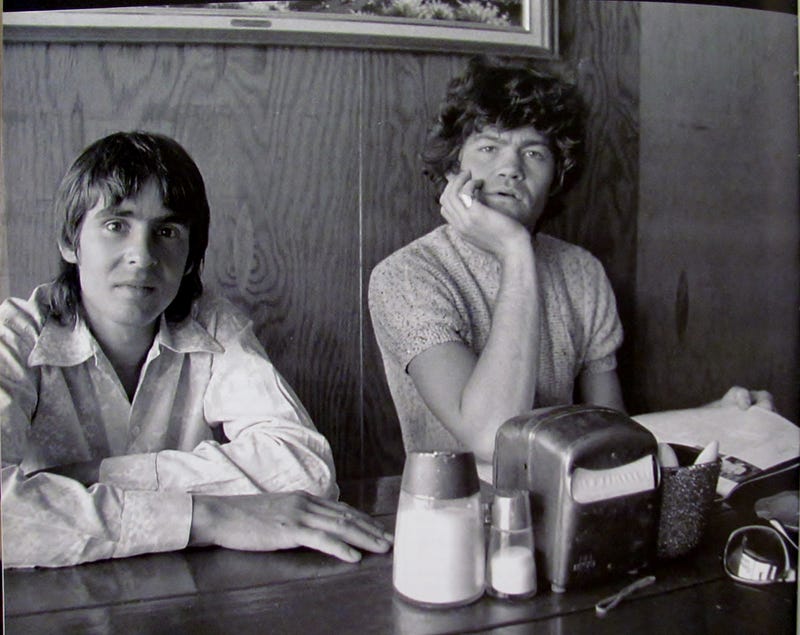
Songwriting, guitars, country music, Elvis Presley, comedy, and family permeate an intimate, exclusive interview with Monkees co-frontman Micky Dolenz. In this rare still taken sometime in late 1970 in a roadside cafe Davy Jones and Dolenz are the only Monkees left sitting. Pondering the band’s uncertain future — dismal reviews and middling sales had greeted “Changes,” the ninth and final album distributed during the Monkees’ original incarnation — hopefully the duo licked their chops with a delicious meal. Photography by Henry Diltz / appears in “The Monkees: The Day-By-Day Story of the ‘60s TV Pop Sensation” by Andrew Sandoval

In a mind-boggling 64 years and counting entertainment career, future Monkees drummer extraordinaire Micky Dolenz first became a viable presence at the tender age of 11 when he was tapped to headline the adventure drama Circus Boy.

Once the family-oriented show was unceremoniously yanked from ABC’s primetime lineup after its second season aired in 1958, obscurity was well within grasp but Dolenz maintained a firm desire to pursue the business of show.

Studying architecture at Los Angeles Valley College and moonlighting as the troubadour of local rockers Micky and the One-Nighters, in the nick of time an innovative musical comedy series came knocking on his door in 1965.

The brainchild of future Hollywood heavyweight producers Bob Rafelson and Bert Schneider [e.g. Easy Rider], the Monkees was pretty much the biggest pop culture phenomenon of the late ’60s besides their primary rival, the Beatles.

Dolenz’s wacky persona helped cement the series as a strong Monday evening contender initially up against Gilligan’s Island and Dale Robertson’s The Iron Horse, exemplified by a shocking but well-deserved Emmy for Outstanding Comedy Series in 1967.

The musician almost immediately found himself being forced to relinquish acoustic guitar, his instrument of first choice, for a cumbersome drum set which he had to learn how to play from scratch. He somehow found the time to share vocal chores with the “Manchester Cowboy” himself, Davy Jones.

Fortunately for us, Dolenz had no trouble in the vocal department, helping his band attain 12 Top 40 singles on Billboard’s Hot 100. Dolenz’s importance to the group’s success can be measured by the fact that he sang lead on two-thirds of those hit songs, including sunshine pop standards like “Last Train to Clarksville”, “I’m a Believer”, “[I’m Not Your] Stepping Stone,” “Pleasant Valley Sunday,” and a duet with Peter Tork on the adrenaline-inducing “Words” [go here to experience “For Pete’s Sake: In This Generation with Multi-Faceted Monkee Peter Tork”]. Dolenz’s remarkable, underrated vocal range — in part fortified on Broadway — should keep his rock contemporaries envious.

In the meantime, sit back and prepare for an engaging ride. Dolenz waxes poetic on such diverse subjects as his parents, sense of humor, musical and comedy influences, country music, Elvis Presley, and an inability to write prolifically. And you won’t believe which Monkee encouraged him to never give up on completing his quintessential protest anthem “Mommy and Daddy.”
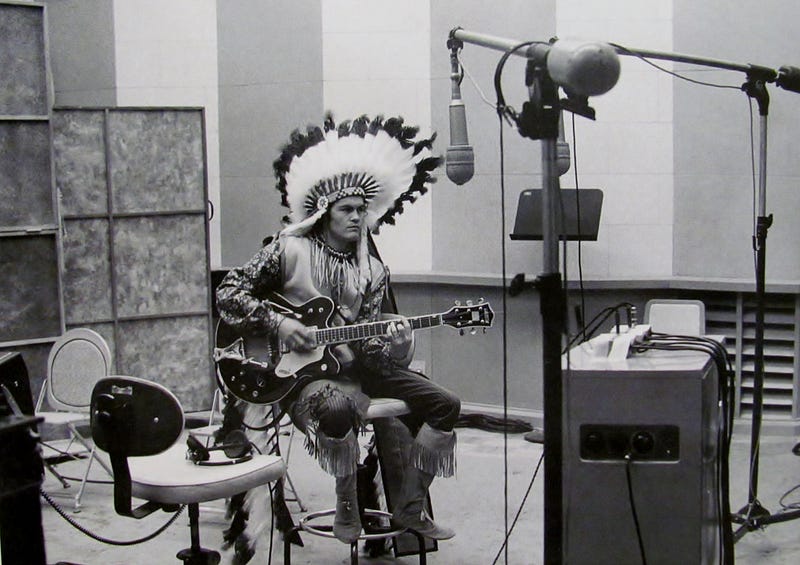
In a precursor to his later “Mommy and Daddy” recording, Micky Dolenz pays tribute to his roots in full Native American chief regalia and feathered war bonnet while playing a gorgeous Gretsch Viking electric guitar, possibly inside RCA Victor Studios, Hollywood. Dolenz donned a similar outfit, perhaps the same one, to the Monterey Pop Festival that same summer of 1967. Photography by Henry Diltz / appears in “The Monkees: The Day-By-Day Story of the ‘60s TV Pop Sensation” by Andrew Sandoval

The Micky Dolenz Interview

Where did your sense of humor originate?

Oh boy, good question. Where does anybody’s sense of humor come from? To some degree, everybody is born with or without a sense of humor. Ancient Greek philosophers theorized that there were four humors in the body related to bodily characteristics like dry, wet, cold, and hot.

In other words, you can sense what a person is like. When you shake a person’s hand, it’s always wet and clammy. A lanky individual might have a very dry handshake which could indicate they are volatile with a quick temper. Basically, having a sense of humor is being able to laugh at yourself and at life in general.

A lot of my humor came naturally. I never took any improv or comedy classes. In the early days of The Monkees television show, I suppose that’s one of the reasons the producers hired me in the first place.

My parents, George and Janelle, were both in the business, and just being around it for so many years influenced me, too. I was influenced enormously by actor-comedians such as Donald O’Connor, Danny Kaye, Milton Berle, Red Skelton, Art Carney, Jonathan Winters, and Bill Cosby.

My mom was funnier than my dad. She had done musical theater in her time. Dad was more serious, perhaps a more dramatic actor. I’m not saying he was dour or miserable. He did do some movies where he portrayed funny comedy characters [e.g. the classic 1953 Dean Martin and Jerry Lewis outing, Scared Stiff, and The Sad Sack, a solo 1957 Lewis vehicle].

Neither of them were wacky comics, but neither was I. In The Monkees I was playing the part of the wacky drummer. I don’t run around all day long making wacky jokes and doing funny voices [laughs].
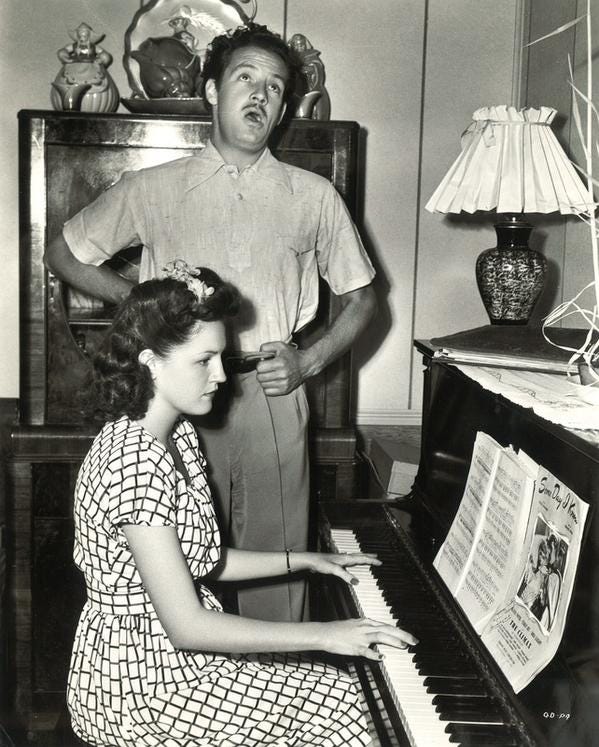
George Dolenz mugs for the camera while former singer-actress Janelle Johnson intently tickles the ivories in the time frame of Micky Dolenz’s birth [March 8, 1945]. A master of European dialects discovered by oddball millionaire Howard Hughes, George acted prolifically starting in 1941 all the way to his premature passing in 1963 of a massive heart attack. His final screen credit was “Marie, My Love,” a season four episode of television’s iconic “Bonanza” western broadcast two days after his death on February 10, 1963. Image Credit: Monkees Live Almanac

How did your parents react when you joined the Monkees?

I’ve often wondered what my dad would have thought about the Monkees [laughs]. Unfortunately, he passed away from a sudden heart attack at age 55. I was just 17 when it happened, only two years before the series began.

My mom was certainly thrilled for me. She was trying to keep my feet on the ground, which was no easy task given the whirlwind circumstances. But I had also been through some level of showbiz and fame when I was a kid. I had done a series called Circus Boy on NBC and later ABC [1956–1958]. I had a fan club, and kids would ask for my autograph.

Incidentally, the great Western character actor Noah Beery, Jr., was one of my co-stars on Circus Boy. He was just a kind, funny, and loving guy. He was always very, very gentle and good to me. Everybody on that show, including circus owner Robert Lowery and head canvas-man Guinn “Big Boy” Williams, was really great to me. It’s currently on Antenna TV.

My mom eventually became my business manager, thank goodness. I appointed her to the role because I didn’t have anybody else. Of course, I couldn’t have done it all at the time. That would have been impossible. She ran the shop for me for years and years, watching my money and everything. She was integral. By the way, my grandmother was doing my fan club [laughs]. She really cared about those kids, and I consider her to be my biggest fan.

Who are some of your musical influences?

Chuck Berry, Little Richard, Fats Domino, Jerry Lee Lewis — the real rock and rollers. In fact, my audition piece for The Monkees television show was “Johnny B. Goode” by Chuck Berry. I recorded a cover version for my solo album Remember [2012] which I’m very proud of. The arrangement is very different than Chuck’s original. I did that with quite a few of the songs on the album.

I also liked Elvis Presley’s early rock ’n’ roll material. When he skyrocketed to fame in 1956, I was about 11 years old and just beginning Circus Boy. “Hound Dog” is a personal favorite. But I must level with you — I was not an Elvis fan after he returned from the Army and largely abandoned rock ’n’ roll.
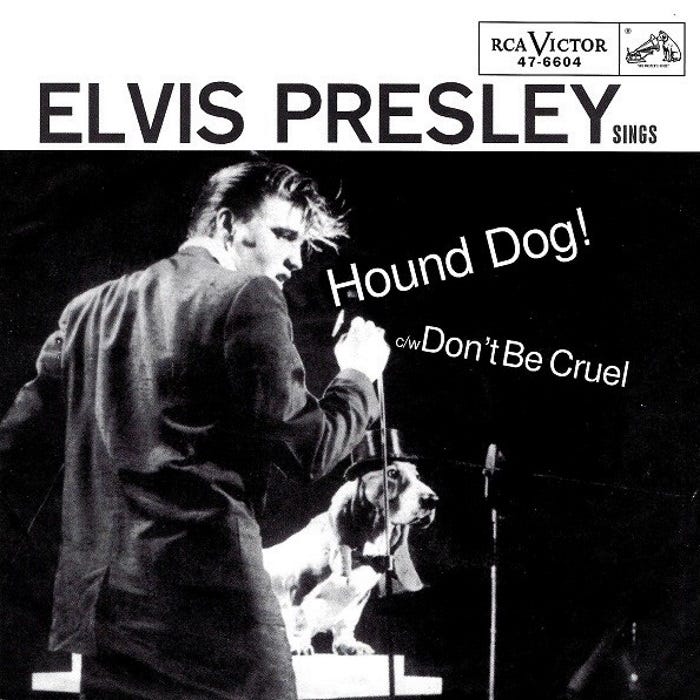
On July 13, 1956, RCA Victor distributed a monster 45 single coupling Elvis Presley’s “Don’t Be Cruel” with B-side “Hound Dog.” Certified quadruple platinum by the RIAA, both rockers climbed to number one on Billboard. The cover shot was taken by Alfred Wertheimer on July 1, 1956, when Presley and band mates Scotty Moore, Bill Black, D.J. Fontana, and the Jordanaires made their sole ill-advised appearance on NBC’s variety series “The Steve Allen Show” at the Hudson Theater in New York City. Presley was quite angered and embarrassed when the comic asked him to dress up in a tuxedo and sing Leiber and Stoller’s “Hound Dog” to an actual basset hound sporting a top hat and black bow tie, but he complied anyway. Photography by Alfred Wertheimer / Sony Music Entertainment / 45Cat user BandBox244

Is it true that guitar is your first instrument of choice?

It’s absolutely true, and lots of people may not realize that it still is to a great degree. I think I was already noodling about on the guitar during the Circus Boy period. While my dad didn’t teach me how to play guitar, he did play me an Andrés Segovia record once.

Segovia is considered to be the father of modern classical guitar. Beginning in the 1920s, he made the instrument internationally popular. I just could not believe that there was one set of hands playing this stuff. It was just phenomenal, and I couldn’t get over it. Consequently, my dad started me on classical guitar lessons.

I play guitar on quite a few tunes when I’m on my solo show because people like to see me downstage. I’ve always performed “Johnny B. Goode”. However, I usually stick with Berry’s original version. I’ve finally started incorporating the re-arranged Remember version. “Sugar Sugar” is another.

I always tell the story of why I’m doing these tunes, because I find that if I don’t do an original Monkees tune, the fans like to know why I’m singing that particular song. When you think about it, it’s kind of a behind the music type scenario [laughs]. Now that I’m touring again with Peter and Mike, I get up on the drums considerably more on songs like “Randy Scouse Git.” It remains my most famous songwriting composition.
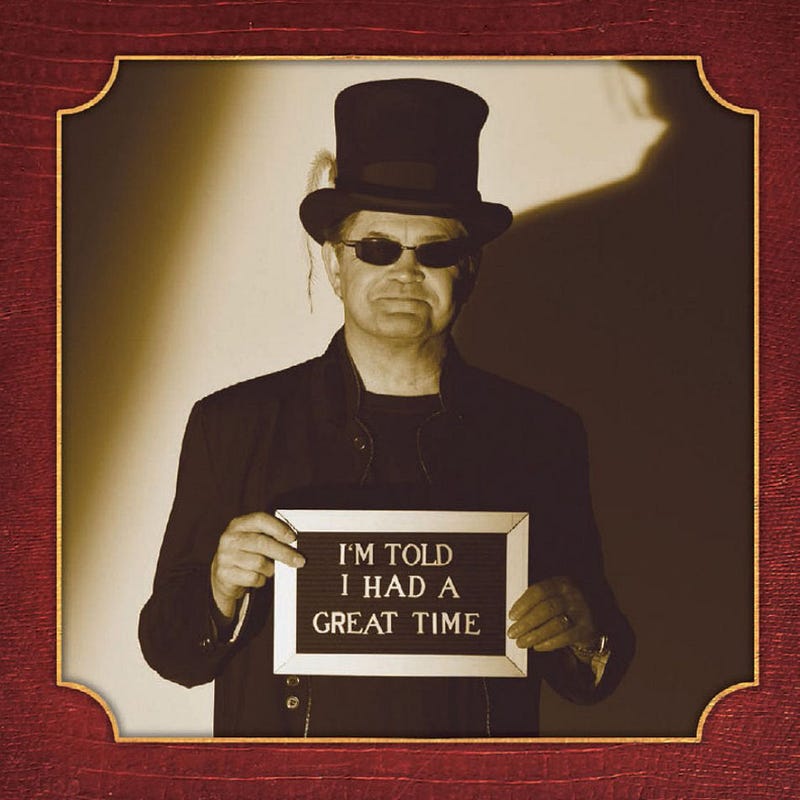
Micky Dolenz insists he must have had a great time during the swingin’ ’60s in a still featured in the CD booklet for his fifth studio album entitled “Remember,” distributed on October 2, 2012. Photography by Christopher Voelker / Robo Records / Coveralia user Malefecia

“Quiet Desperation” is an effective country-tinged ballad on Remember which happens to be your first songwriting credit on record since the Monkees’ Justus album in 1996. How do you approach songwriting?

“Quiet Desperation” is my old country influence from my mom, who was from Austin, Texas. I still remember hearing Tennessee Ernie Ford and the Sons of the Pioneers when I was growing up. But we always had a variety of music around the house, even classical and light opera, since my dad was a singer, too.

I usually write based on an immediate experience — something that inspires me. Maybe a title, lyric, or medley comes to me, and before you know it you’ve got a song. A lot of my songs over the years are related to relationships, which is true with most writers obviously. Most of the songs that I’ve written over my life are country tunes. That might surprise many of my fans.

I’m not a very prolific writer. I wish I could at times be the kind of writer that sits down at 10 o’clock in the morning and starts writing [laughs]. But I’ve just never been that kind of writer. As far as unreleased music, I’ve probably had a few songs that have not been recorded or maybe have never appeared on a proper album, but not too many.
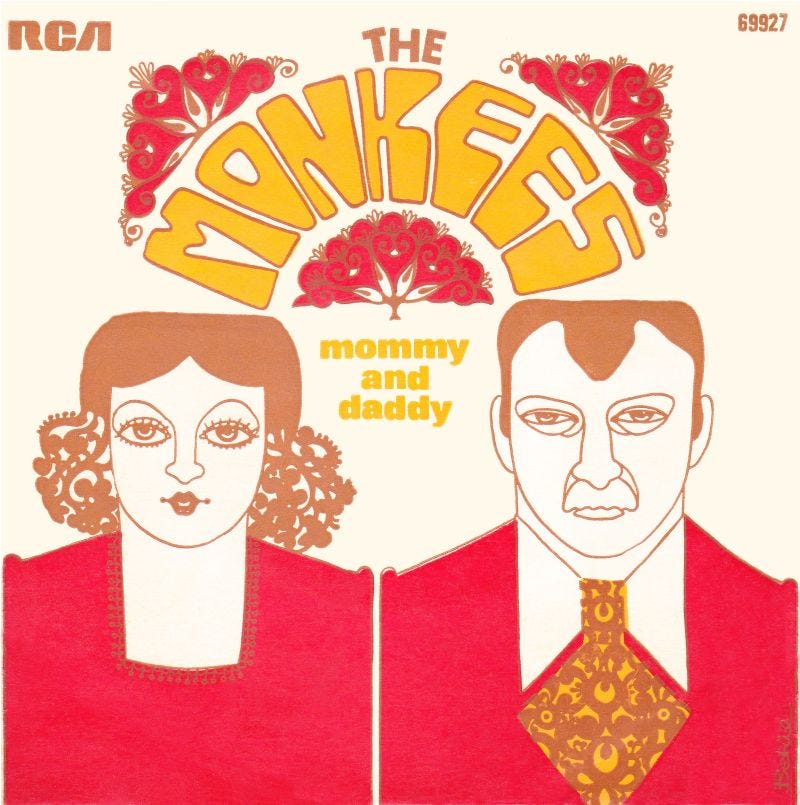
An imaginative Turkish 45 single sleeve couples the Monkees’ “Good Clean Fun” with “Mommy and Daddy,” unleashed by Colgems on September 3, 1969. In a defiant move that would cause their detractors loads of embarrassment, Micky Dolenz wrote, played drums and piano, and provided an array of stacked harmony vocals for the orchestrated protest anthem which briefly bubbled under on the Billboard Hot 100 at No. 109. Sleeve art designed by Betul Atli / 45Cat user JDistheone

Largely undiscovered by the general record buying public, “Mommy and Daddy” presents a biting, ominous commentary on what can happen when teens confront their parents about social injustice. Why have you omitted performing it live?

I love that song. I wrote it on my mom’s old piano at my little house up in Laurel Canyon. I don’t remember what exactly inspired me. I am part Native American Indian on my mom’s side. I was supporting their cause in the late ’60s, which might have had something to do with it. It’s kind of a musical cousin to “Randy Scouse Git” in terms of the protest angle.

Besides my vocals, I played drums and piano on the song [August 1968] and intended to include it on Instant Replay, our first album released after Peter left the band. However, Screen Gems music coordinator Lester Sill deemed my lyrics [e.g. “Ask your mommy and daddy who really killed J.F.K. / Ask your mommy if she really gets off on all her pills”] too controversial for our teenage audience. These days it’s not so shocking.

I’m eternally grateful that Mike encouraged me not to abandon the song, so I eventually rewrote it. The record label decided that it was acceptable, and it was finally released on our penultimate Colgems album, The Monkees Present [October 1969] in addition to being the B-side of Mike’s “Good Clean Fun.” The original, unedited version appeared decades later on the reissue of Monkees Present [a lavish three-CD deluxe set chronicling the album sessions is also available].

I’ve sang it a few times in concert, but that would have been a long, long time ago. I haven’t performed it recently. But never say never [laughs]. I always thought “Mommy and Daddy” was one of my best [Author’s Note: Hang tight for a comprehensive interview with Dolenz’s “lovable dummy” chum entitled “For Pete’s Sake: In This Generation with Multi-Faceted Monkee Peter Tork”].
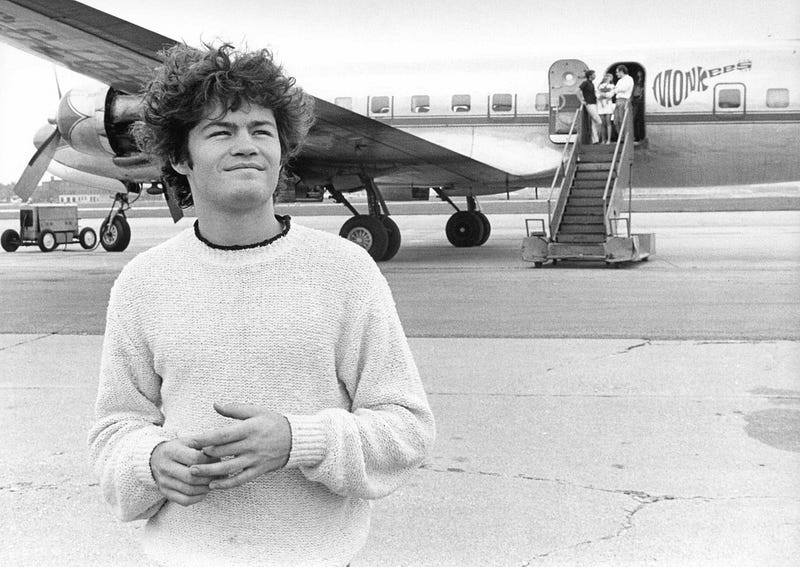
On tour, Micky Dolenz goes all rock star as he pauses for a moment after departing the Monkees’ custom airplane to soak in the band’s incredible success during 1967’s much-ballyhooed Summer of Love. Image Credit: The Monkees Live Almanac

*******************DON’T GO ANYWHERE YET!*******************

Exclusive Interview: Dubbed the resident Monkees genius, Michael Nesmith knew he wanted to play music while biding his time at San Antonio Community College. The son of the inventor of liquid paper, Papa Nez observed Monkee pandemonium a little too close for comfort, finding that his heart lay in songwriting. After composing Linda Ronstadt’s first hit, “Different Drum,” Nesmith vacated the band that made him a household name and ventured into the uncharted waters of country rock with the First National Band. The cosmically conscious musician surprised fans by rejoining the Monkees on the road in the twenty-tens and agreed to spend some time with this writer on his musical back-pages, Elvis Presley, some tunes worthy of rediscovery, and the unimagined joy of touring again. Visit “Still Rollin’ with the Flow: Twists and Turns with ‘Smart Monkee’ Michael Nesmith” for the juicy enchilada.

Exclusive Interview №2: “Had I focused on worry or resentment every time I had a setback, or on anger toward those I perceived were responsible for my woes, it seems clear to me now that I would have only gotten better at worry, resentment, and anger.” In a hybrid interview-review conducted with Bobby Hart, the songwriter examines his debut memoir, Psychedelic Bubble Gum: Boyce & Hart, The Monkees, and Turning Mayhem into Miracles and partnership with the late, effervescent Tommy Boyce. Responsible for an astonishing 25 contributions to the Monkees’ songography like the iconic “Last Train to Clarksville,” “(Theme From) The Monkees,” “(I’m Not Your) Steppin’ Stone”, “She,” “Words”, and “Valleri,” Boyce and Hart’s Monkees collaboration lit a chain reaction to a lucrative solo career on late ’60s pop-rock radio.

Exclusive Interview №3: Mark Lindsay, the ferocious former lead singer of ’60s garage rockers Paul Revere and the Raiders, left home at the tender age of 15 to pursue a rockabilly career in southern Idaho. Lying about his age so he could play seedy nightclubs, Lindsay ultimately met the King of Rock ’n’ Roll during the filming of the iconic ’68 Comeback Special. When personnel changes threatened to derail the band’s appearance on The Ed Sullivan Show in 1967, Lindsay and Revere acted immediately and planted the seeds for a swampier, more organic band incarnation perhaps best exemplified on their first gold-selling single, “Let Me.” Dubbed the Rebel Raiders, Lindsay has rarely explored this criminally ignored band era in-depth. That is, until now. You can currently catch him and Micky Dolenz together on the once in a lifetime 50 Summers of Love tour.

© Jeremy Roberts, 2013, 2017. All rights reserved. To touch base, email [email protected] and mention which story led you my way. I sincerely appreciate it sincerely.

Music
Monkees
Interview
Humor
Television
Recommended from ReadMedium