avatarJeremy Roberts

Free AI web copilot to create summaries, insights and extended knowledge, download it at here

6528

Abstract

’s Note</i>: Nesmith playfully encourages Burton, drawling “Aw, pick it, Luther” midway through the renowned chicken pickin’ guitar solo in a nod to Johnny Cash’s original lead guitarist Luther Perkins.] James also led me to the Wrecking Crew. I didn’t follow Rick’s work at all.</p><figure id="4ccf"><img src="https://cdn-images-1.readmedium.com/v2/resize:fit:800/1*HZDCimzchmzc8JS_zl2T7A.jpeg"><figcaption><b>Twenty-four-year-old newly married rocker Rick Nelson shields his eyes from an unrelenting sun for the album cover of “The Very Thought of You,” dropped with little notice during the onslaught of the British Invasion on August 3, 1964, via Decca Records. The bouncy title cut, a clever reimagining of a pop standard written in the 1930s and cut by Bing Crosby, was nearly Nelson’s final Top 30 single until the iconic “Garden Party” literally arrived outta nowhere eight years later. Image Credit: 45Worlds user Vidman45 / Universal Music Group</b></figcaption></figure><p id="971d"><b>In hindsight, was RCA Victor the best label to launch your solo career?</b></p><p id="85d1">It was the only option I had. By that time the Monkees were a pariah among the show business and creative community — and the Monkees fans were confused by this. My venture into my solo efforts was not well received in 1969 but I think the RCA execs thought they could market my music on the back of my Monkees celebrity in a way no other record company could.</p><p id="8c03">However as time went on they actually became interested in the songwriting and Felton Jarvis and Chet Atkins took notice — but no one — not even them — from the record company got too close. They didn’t know what to make of the Monkees backlash and so they sat on the sidelines well clear of me to see how it would all shake out. I can hardly blame them. Those were rough seas.</p><figure id="d8dd"><img src="https://cdn-images-1.readmedium.com/v2/resize:fit:800/1*ZWYt0CPTl7Cb45nTTqnJeQ.jpeg"><figcaption><b>Pedal steel guitarist Red Rhodes, bassist John London, partially obscured drummer John Ware, and Michael “Papa Nez” Nesmith constitute the First National Band in this revealing 1970 candid, possibly taken during a television taping due to the confined stage area. Image Credit: The Dana Harris Rhodes Collection</b></figcaption></figure><p id="573b"><b>The B-side to “Silver Moon” was “Lady of the Valley”, both ultimately included on <i>Loose Salute</i> in December 1970. Red Rhodes has a memorable pedal steel solo, the rhythm section is locked in tight on a Latin-influenced groove, and your multilayered vocals have a soothing, ethereal effect, particularly on the following couplet: “Days, sleeping days, waves, gentle waves, join in the rhyme…” Can you recall your inspiration for the song?</b></p><p id="51aa">“Lady of the Valley” was one of those songs that Red propelled. The sonics of his steel and the way he played it seemed to make the song appear in my head almost complete. I think I recall sitting in rehearsal one day and starting to play the song and it came out almost all in one piece.</p><p id="32fc"><b>In listening to your effective covers of “Tumbling Tumbleweeds” [<i>Nevada Fighter</i>, May 1971] and “Prairie Lullaby” [<i>Pretty Much Your Standard Ranch Stash</i>, October 1973]</b>, <b>I am reminded of the B-western singing cowboy phenomenon of the late ’30s thru early ’50s, an era when the Sons of the Pioneers, Roy Rogers, Gene Autry, and Tex Ritter captured the hearts of many adolescents and adults alike. In fact, ”Tumbling Tumbleweeds” made its official debut in the 1935 Autry film of the same name. As a young boy growing up in Texas, did you attend Saturday matinees and possibly develop an admiration for any of the singing cowboys?</b></p><p id="0af7">I was never very interested in singing cowboys. I didn’t understand the creative dynamic. It was more a source of puzzlement than inspiration. So I did not go to the movies or buy the outfits. Some adults would give me hats or cap pistols — but I never used them.</p><figure id="4057"><img src="https://cdn-images-1.readmedium.com/v2/resize:fit:800/1*jgPXhlIdlABMwhqeZEE-tQ.jpeg"><figcaption><b><i>Papa Nez tackles a guitar riff on his ubiquitous Black Beauty Gibson Les Paul at the RCA Music Center of the World recording studio in Hollywood circa 1971. Image Credit: Videoranch3D</i></b></figcaption></figure><p id="de65"><b>“Mama Rocker” contains one of your best rock ’n’ roll vocals alongside some dynamic, fuzz-drenched guitars recorded with the short-lived Second National Band. Where did you get the idea for the song?</b></p><p id="a686">The band was a lifeboat band when the First National Band disassembled. Mike Cohen [keyboards, Moog synthesizer] and drummer Jack Ranelli were advanced musicians and opened some doors for me I don’t think I could have gone through otherwise.</p><p id="2e98">“Mama Rocker”, the lead-off track on <i>Tantamount to Treason</i> [February 1972] was one of them — although I don’t know if they ever got the connection between the inspiration for that and their jazz chops.</p><p id="97d6"><b>Does “Roll with the Flow”, a tale of an individualist’s encounter with a lackluster lover who tries to convince him to build a relationship and a didactic minister who wants to convert him to Christianity, accurately reflect your life philosophy? The applicable final verse, “In the final analysis it’s foolish if you resist the changes that come into your everyday life, there might be some trepidation but don’t let hesitation deprive you of hope and try to replace it with fear…”, demonstrates that the song is worthy of rediscovery. The chorus has a sing-along vibe that appears to be tailor-made for a live setting.</b></p><p id="8e4c">The last song on <i>And the Hits Just Keep on Comin’</i> [August 1972], it has some of the early notions of my present thought about things — constant change has a familiar ring to all of us — but the song is not so much about that. It is more Taoist than anything, although I hate to saddle a tune like “Roll with the Flow” with such weight.</p><p id="02f4">I thought it might flourish at the hands of some hard rockers but I have no clue who that might be — and the rhyme and meter don’t seem to be natural to contemporary music. The most notable aspect of the song in my life was that my Uncle Chick asked me to play it several times whenever I visited him.</p><figure id="411d"><img src="https://cdn-images-1.readmedium.com/v2/resize:fit:800/1*pBIQ-DenOFyozrZclV2lZA.jpeg"><figcaptio

Options

n><b>Papa Nez embraces his inner cowboy as he defiantly wears a psychedelically inspired Nudie suit circa 1972, actually also worn to the premiere of the Monkees’ commercially underwhelming “Head” film in November 1968. The image also appears on the European CD reissue coupling “Magnetic South” and “Loose Salute.” <i>Image Credit: Camden International / Sony Music Entertainment</i></b></figcaption></figure><p id="573f"><b>In the early twenty-tens you toured significantly compared to the previous 30 years. Did it have an adverse or positive effect on your writing?</b></p><p id="06b8">Very positive in terms of making me want to do more performing — but I haven’t started “writing to the band” yet. I am comfortable with Paul Leim and bassist Joe Chemay but Chris Scruggs [mandolin, steel guitar, six-string guitar] and keyboardist Boh Cooper are discoveries for me and I am excited by what they are teaching me.</p><p id="58b3">I have more to learn before I start writing here. Just the thrill of playing the tunes I have written over 50 years with this group is about as much fun as I can stand right now — and it takes all my time. I am so glad I decided to do this. It has been an unimagined joy [<i>Author’s Note:</i> Much to fans’ consternation, Nesmith bowed out of the Monkees’ highly publicized 50th Anniversary Tour in 2016 to complete his debut memoir, <a href="http://www.videoranch3d.com/infinite-tuesday.html"><i>Infinite Tuesday: An Autobiographical Riff</i></a>, although he was thoroughly involved in their Top 20 comeback record, <i>Good Times!, </i>circulated earlier that summer].</p><figure id="6e56"><img src="https://cdn-images-1.readmedium.com/v2/resize:fit:800/1*UkF-Aea5pSeB2ktQAW2lJQ.jpeg"><figcaption><b>On August 5, 2016, Michael Nesmith mischievously clutches a pair of mustard yellow Converse sneakers backstage during a rare guest appearance on the Monkees’ 50th Anniversary Tour at the Golden State Theater in Monterey, California. Photography by Gemma “Coco” Dolenz [younger sister of Micky Dolenz]</b></figcaption></figure> <figure id="d3dc"> <div> <div> <img class="ratio" src="http://placehold.it/16x9"> <iframe class="" src="https://cdn.embedly.com/widgets/media.html?src=https%3A%2F%2Fwww.youtube.com%2Fembed%2FsdiEMIbqkBg%3Ffeature%3Doembed&amp;url=http%3A%2F%2Fwww.youtube.com%2Fwatch%3Fv%3DsdiEMIbqkBg&amp;image=https%3A%2F%2Fi.ytimg.com%2Fvi%2FsdiEMIbqkBg%2Fhqdefault.jpg&amp;key=a19fcc184b9711e1b4764040d3dc5c07&amp;type=text%2Fhtml&amp;schema=youtube" allowfullscreen="" frameborder="0" height="480" width="640"> </div> </div> </figure></iframe></div></div></figure> <figure id="9ec0"> <div> <div> <img class="ratio" src="http://placehold.it/16x9"> <iframe class="" src="https://cdn.embedly.com/widgets/media.html?src=https%3A%2F%2Fwww.youtube.com%2Fembed%2FbTEz-7QjsyI%3Ffeature%3Doembed&amp;url=http%3A%2F%2Fwww.youtube.com%2Fwatch%3Fv%3DbTEz-7QjsyI&amp;image=https%3A%2F%2Fi.ytimg.com%2Fvi%2FbTEz-7QjsyI%2Fhqdefault.jpg&amp;key=d04bfffea46d4aeda930ec88cc64b87c&amp;type=text%2Fhtml&amp;schema=youtube" allowfullscreen="" frameborder="0" height="480" width="854"> </div> </div> </figure></iframe></div></div></figure> <figure id="c456"> <div> <div> <img class="ratio" src="http://placehold.it/16x9"> <iframe class="" src="https://cdn.embedly.com/widgets/media.html?src=https%3A%2F%2Fwww.youtube.com%2Fembed%2FDEUM5cUhLfM%3Ffeature%3Doembed&amp;url=http%3A%2F%2Fwww.youtube.com%2Fwatch%3Fv%3DDEUM5cUhLfM&amp;image=https%3A%2F%2Fi.ytimg.com%2Fvi%2FDEUM5cUhLfM%2Fhqdefault.jpg&amp;key=a19fcc184b9711e1b4764040d3dc5c07&amp;type=text%2Fhtml&amp;schema=youtube" allowfullscreen="" frameborder="0" height="480" width="640"> </div> </div> </figure></iframe></div></div></figure><div id="1119" class="link-block"> <a href="https://readmedium.com/monkee-micky-dolenz-promises-piston-power-in-a-city-near-you-d6ff96e302a5"> <div> <div> <h2>Monkee Micky Dolenz promises piston power in a city near you</h2> <div><h3>Oddball Gretsch drummer Micky Dolenz tallied 12 Top 40 A-sides on Billboard’s Hot 100 with the Monkees, still the most…</h3></div> <div><p>medium.com</p></div> </div> <div> <div style="background-image: url(https://miro.readmedium.com/v2/resize:fit:320/1*uV-7hk5Nl88rAysjXEKhOQ.jpeg)"></div> </div> </div> </a> </div><div id="398c" class="link-block"> <a href="https://readmedium.com/you-dont-need-love-to-love-insists-monkees-heartthrob-davy-jones-ecc2479051b1"> <div> <div> <h2>You don’t need love to love insists Monkees heartthrob Davy Jones</h2> <div><h3>“You gotta have love to love, they all say it works that way, but if it’s true, why do I love you?” “Love to Love” was…</h3></div> <div><p>medium.com</p></div> </div> <div> <div style="background-image: url(https://miro.readmedium.com/v2/resize:fit:320/1*o7BORTUFirHCDSbQytXdFQ.jpeg)"></div> </div> </div> </a> </div><div id="12a8" class="link-block"> <a href="https://readmedium.com/listen-to-the-band-when-the-monkees-slayed-jacksonville-s-florida-theatre-97ec1e5616dd"> <div> <div> <h2>‘Listen to the Band!’ When the Monkees slayed Jacksonville’s Florida Theatre</h2> <div><h3>The Monkees performed a dose of good clean fun on June 6, 2011, at the historic Florida Theatre in Jacksonville…</h3></div> <div><p>medium.com</p></div> </div> <div> <div style="background-image: url(https://miro.readmedium.com/v2/resize:fit:320/1*Pi2b3hFJLZcUNh0FB1n3gw.jpeg)"></div> </div> </div> </a> </div><p id="6a2f"><i>© Jeremy Roberts, 2013, 2017. All rights reserved. To touch base, email <a href="mailto:[email protected]"></a></i><a href="mailto:[email protected]">[email protected]<i></i></a><i> and mention which story led you my way. I appreciate it sincerely.</i></p></article></body>

Still rollin’ with the flow: Twists and turns with ‘smart Monkee’ Michael Nesmith
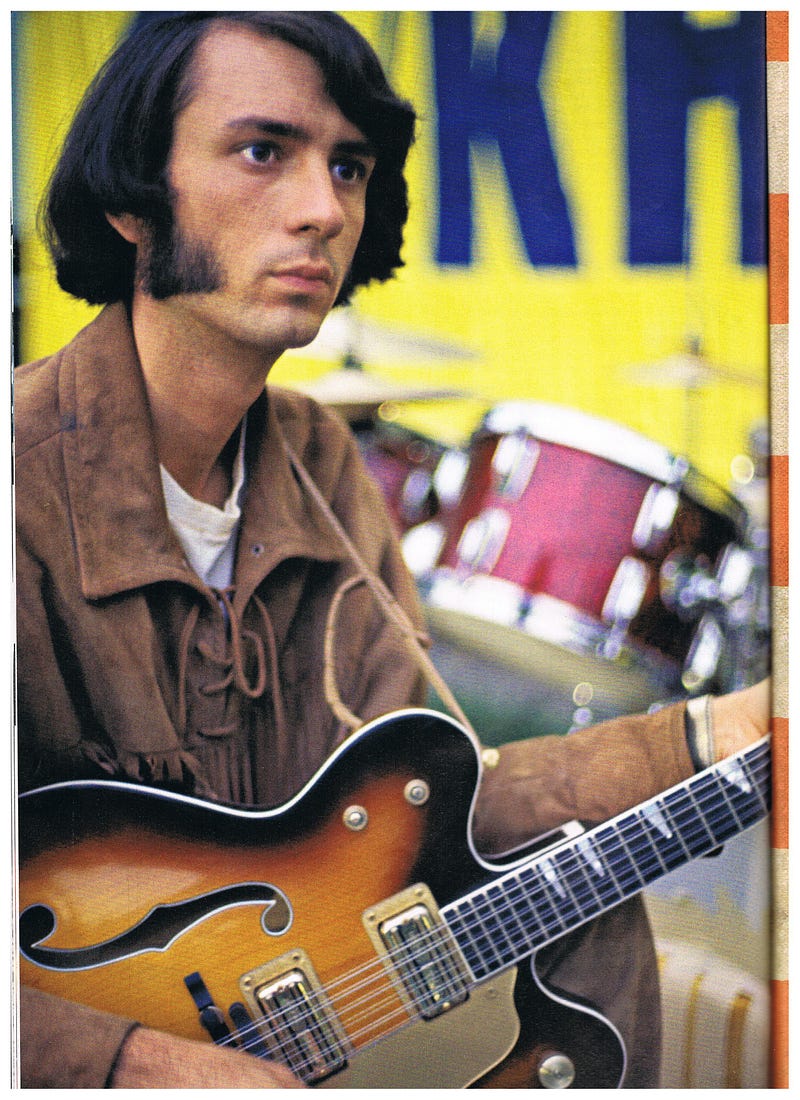
Michael Nesmith strums a 12-string Sunburst Gretsch electric guitar and may be on the brink of running from the grand ennui in this pensive moment captured while the Pre-Fab Four were sound checking at the Hollywood Bowl on June 9, 1967. Image Credit: Monkees.net / Rhino Entertainment

Michael Nesmith, best known as the lead guitarist and resident genius songwriter of the Monkees and later for his trailblazing recordings with the First National Band in the nascent country rock oeuvre, was concluding his stint at San Antonio College on a tragic November afternoon when America experienced the senseless assassination of President John F. Kennedy. Actually raised in Dallas, Nesmith found college life to be generally non-stimulating, except those opportunities when he could write poetry or busk as a burgeoning folk singer.

Incredulously, Nesmith toured substantially both solo and with his “other band” in the early twenty-tens, especially noteworthy given the fact that fans can count on their fingers the number of times the venerable, decidedly mercurial songwriter has performed in the previous 30-odd years and still have a few remaining digits.

Cosmically dubbed “Movies of the Mind”, a 19-city late fall 2013 tour proved a most ambitious unveiling for Nesmith’s post-Monkees repertoire. Each date was documented professionally for archival purposes. A limited edition live album, the songwriter’s first since 1991’s Live at the Britt Festival, cherry-picked the best gems from each show.

The “Listen to the Band” emphatic wordsmith graciously agreed to an exclusive email interview plugging end of the trek stops in Chicago and Milwaukee. Initially limited to eight questions by Nesmith’s publicist, the vocalist obligingly answered an addendum. Rest assured that the back-pages covered are well worth the ride.

Roll with the flow as Nesmith discusses his fascinating kinship with Elvis Presley, musical influences, admiration for legendary guitarist James Burton, establishing a solo career amidst the torrential ruin of the Monkees’ fame monster, juicy anecdotes behind some of his compositions worthy of rediscovery, and the unimagined joy of touring again.

“See the lazy windmills slowly turning, cutting up the marble canyons of the sky:” A self-assured, 74-year-old Michael Nesmith promotes his debut memoir, “Infinite Tuesday: An Autobiographical Riff,” circa late March 2017. Fun fact: shortly after the stalemate of the Korean War, Nesmith’s mother Bette McMurray invented Liquid Paper. Decades later her savvy entrepreneur-inclined son pioneered music videos and has often been credited for jump-starting MTV. Photography by Myung J. Chun / The Los Angeles Times

The Michael Nesmith Interview

Where were you when John F. Kennedy was assassinated, and did any of his core beliefs resonate?

I was walking across the plaza of San Antonio College from the Student Union to a class in theater. I suppose his was the first glimpse of politics I took seriously but it has taken many years and twists and turns for me to get any useful sense where politics fits in the Universal Order — not to get too cosmic on you [laughs].

Elvis Presley criss-crossed Texas during his diminutive days on Sam Phillips’ Memphis-based Sun Records. You would have been roughly 13 years old when Presley was unleashed nationwide in 1956 on the strength of “Heartbreak Hotel.” Presley TCB Band alumni James Burton, pianist Glen D. Hardin, drummer Ronnie Tutt, and bassist Jerry Scheff played on the Monkees’ records as well as your solo material. Paul Leim, who substituted for Tutt on the innovative Elvis: The Concert worldwide trek, is now a member of your band. Presley’s last record producer, Felton Jarvis, signed you to RCA Victor, the entertainer’s longtime label. And the “Surrender” balladeer had a deep appreciation for country music, tackling the genre near exclusively in the 1970s. So, did he influence you in any aspect?

Of course the Elvis connection is not lost on me — and all those you mention were very active in my songwriting and recording life as you say. Nevertheless, I was a little young to appreciate Elvis. He was a bit beyond me.

My first solid musical connection came from Bo Diddley when I saw him perform at Louann’s nightclub in Dallas. I saw him three times. That was a life changer for me. I walked in the door with Hank Williams and to a lesser degree Carl Perkins and walked out with Bo Diddley and Jimmy Reed. It made for a nice stew and lasted for a long time — even to this day.
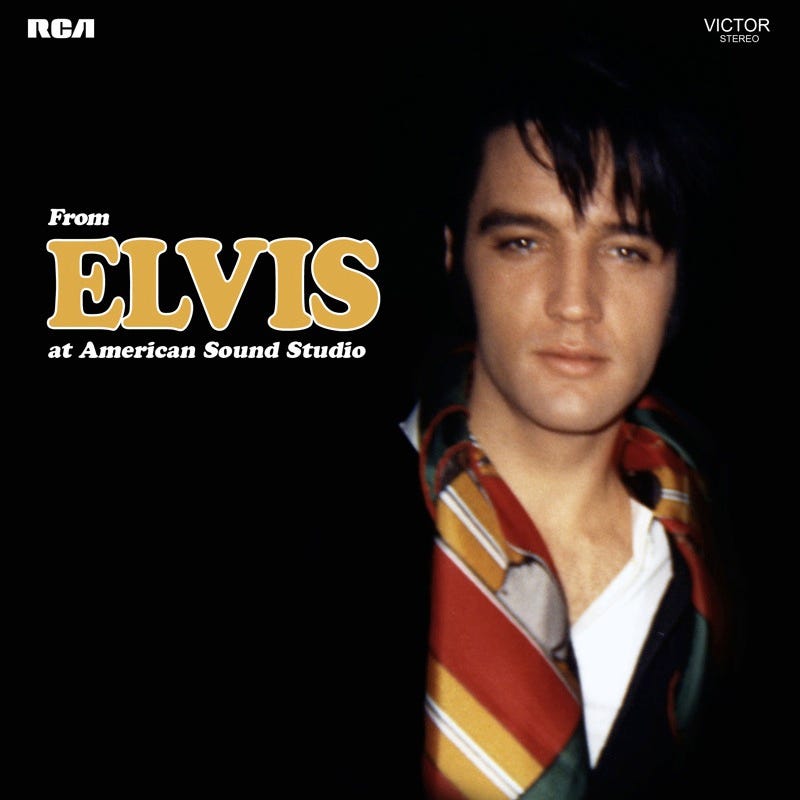
Circa November 11, 1968, a casually dressed, 33-year-old Elvis Presley signs autographs outside his 1174 Hillcrest home in Beverly Hills, California, probably not long after departing Metro-Goldwyn-Mayer Studios where he was shooting “The Trouble With Girls.” Forty-five years later the provocative shot — incidentally a female admirer was airbrushed out — graced the cover of “From Elvis at American Sound Studio,” an album distributed by the late rhythm guitarist’s officially sanctioned collectors’ label, Follow That Dream Records. Photography by Sandi Miller / Sony Music Entertainment

Rick Nelson was also exposed early to television fame, appearing alongside his family and usually expected to sing on The Adventures of Ozzie and Harriet for the teenyboppers. Did you have an opportunity to meet your fellow country rock pioneer?

I did not meet Rick but it was the guitar solo on his “Hello Mary Lou” that sent me to find James Burton when I started producing for the Monkees. James was on “Papa Gene’s Blues,” my first composition to appear on a Monkees album.

[Author’s Note: Nesmith playfully encourages Burton, drawling “Aw, pick it, Luther” midway through the renowned chicken pickin’ guitar solo in a nod to Johnny Cash’s original lead guitarist Luther Perkins.] James also led me to the Wrecking Crew. I didn’t follow Rick’s work at all.
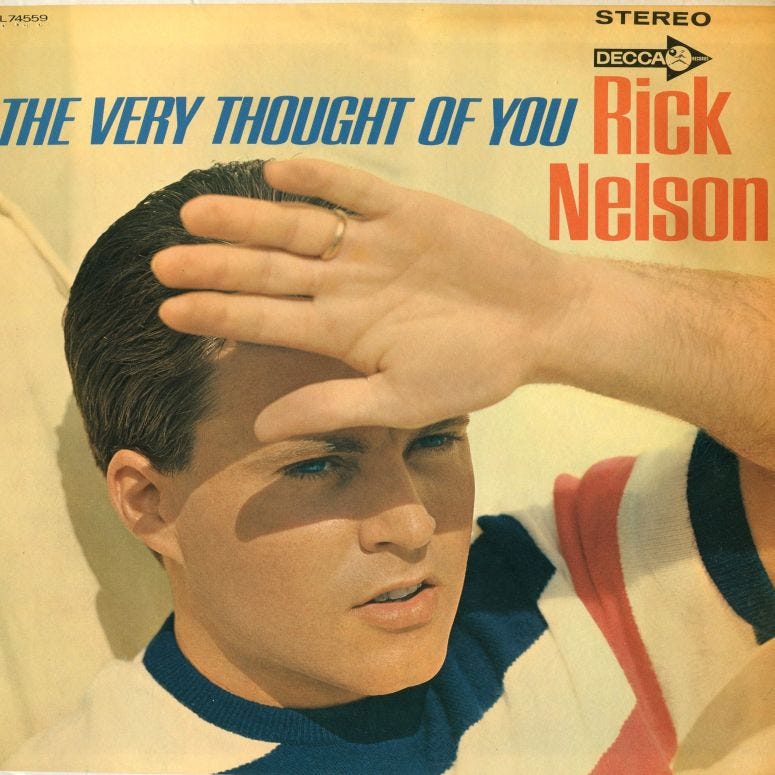
Twenty-four-year-old newly married rocker Rick Nelson shields his eyes from an unrelenting sun for the album cover of “The Very Thought of You,” dropped with little notice during the onslaught of the British Invasion on August 3, 1964, via Decca Records. The bouncy title cut, a clever reimagining of a pop standard written in the 1930s and cut by Bing Crosby, was nearly Nelson’s final Top 30 single until the iconic “Garden Party” literally arrived outta nowhere eight years later. Image Credit: 45Worlds user Vidman45 / Universal Music Group

In hindsight, was RCA Victor the best label to launch your solo career?

It was the only option I had. By that time the Monkees were a pariah among the show business and creative community — and the Monkees fans were confused by this. My venture into my solo efforts was not well received in 1969 but I think the RCA execs thought they could market my music on the back of my Monkees celebrity in a way no other record company could.

However as time went on they actually became interested in the songwriting and Felton Jarvis and Chet Atkins took notice — but no one — not even them — from the record company got too close. They didn’t know what to make of the Monkees backlash and so they sat on the sidelines well clear of me to see how it would all shake out. I can hardly blame them. Those were rough seas.
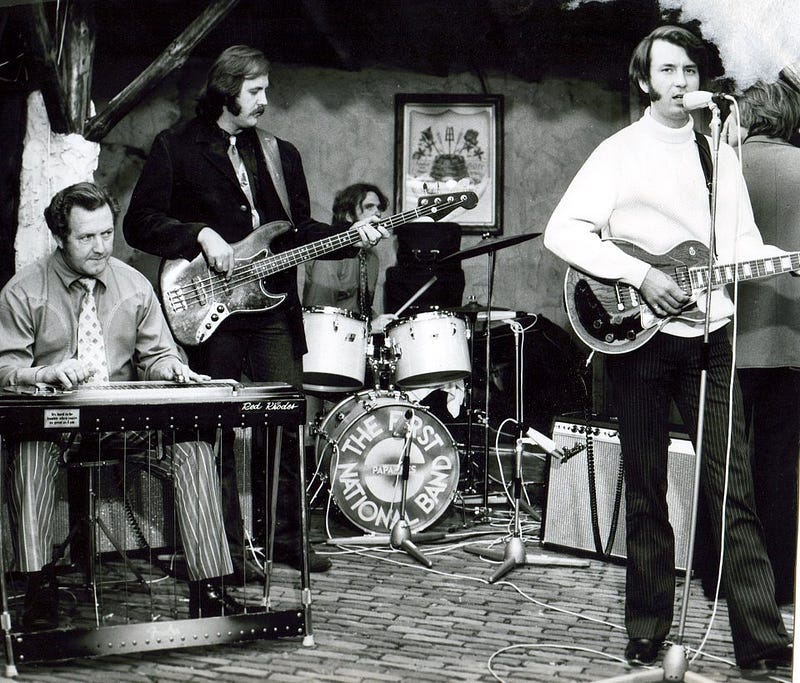
Pedal steel guitarist Red Rhodes, bassist John London, partially obscured drummer John Ware, and Michael “Papa Nez” Nesmith constitute the First National Band in this revealing 1970 candid, possibly taken during a television taping due to the confined stage area. Image Credit: The Dana Harris Rhodes Collection

The B-side to “Silver Moon” was “Lady of the Valley”, both ultimately included on Loose Salute in December 1970. Red Rhodes has a memorable pedal steel solo, the rhythm section is locked in tight on a Latin-influenced groove, and your multilayered vocals have a soothing, ethereal effect, particularly on the following couplet: “Days, sleeping days, waves, gentle waves, join in the rhyme…” Can you recall your inspiration for the song?

“Lady of the Valley” was one of those songs that Red propelled. The sonics of his steel and the way he played it seemed to make the song appear in my head almost complete. I think I recall sitting in rehearsal one day and starting to play the song and it came out almost all in one piece.

In listening to your effective covers of “Tumbling Tumbleweeds” [Nevada Fighter, May 1971] and “Prairie Lullaby” [Pretty Much Your Standard Ranch Stash, October 1973], I am reminded of the B-western singing cowboy phenomenon of the late ’30s thru early ’50s, an era when the Sons of the Pioneers, Roy Rogers, Gene Autry, and Tex Ritter captured the hearts of many adolescents and adults alike. In fact, ”Tumbling Tumbleweeds” made its official debut in the 1935 Autry film of the same name. As a young boy growing up in Texas, did you attend Saturday matinees and possibly develop an admiration for any of the singing cowboys?

I was never very interested in singing cowboys. I didn’t understand the creative dynamic. It was more a source of puzzlement than inspiration. So I did not go to the movies or buy the outfits. Some adults would give me hats or cap pistols — but I never used them.
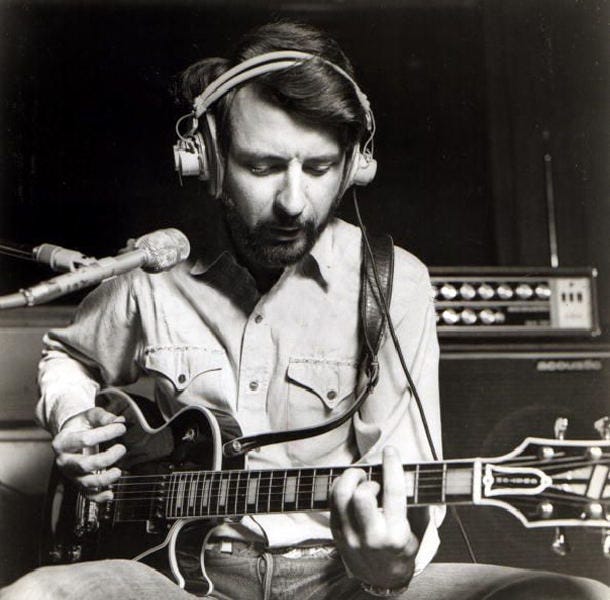
Papa Nez tackles a guitar riff on his ubiquitous Black Beauty Gibson Les Paul at the RCA Music Center of the World recording studio in Hollywood circa 1971. Image Credit: Videoranch3D

“Mama Rocker” contains one of your best rock ’n’ roll vocals alongside some dynamic, fuzz-drenched guitars recorded with the short-lived Second National Band. Where did you get the idea for the song?

The band was a lifeboat band when the First National Band disassembled. Mike Cohen [keyboards, Moog synthesizer] and drummer Jack Ranelli were advanced musicians and opened some doors for me I don’t think I could have gone through otherwise.

“Mama Rocker”, the lead-off track on Tantamount to Treason [February 1972] was one of them — although I don’t know if they ever got the connection between the inspiration for that and their jazz chops.

Does “Roll with the Flow”, a tale of an individualist’s encounter with a lackluster lover who tries to convince him to build a relationship and a didactic minister who wants to convert him to Christianity, accurately reflect your life philosophy? The applicable final verse, “In the final analysis it’s foolish if you resist the changes that come into your everyday life, there might be some trepidation but don’t let hesitation deprive you of hope and try to replace it with fear…”, demonstrates that the song is worthy of rediscovery. The chorus has a sing-along vibe that appears to be tailor-made for a live setting.

The last song on And the Hits Just Keep on Comin’ [August 1972], it has some of the early notions of my present thought about things — constant change has a familiar ring to all of us — but the song is not so much about that. It is more Taoist than anything, although I hate to saddle a tune like “Roll with the Flow” with such weight.

I thought it might flourish at the hands of some hard rockers but I have no clue who that might be — and the rhyme and meter don’t seem to be natural to contemporary music. The most notable aspect of the song in my life was that my Uncle Chick asked me to play it several times whenever I visited him.
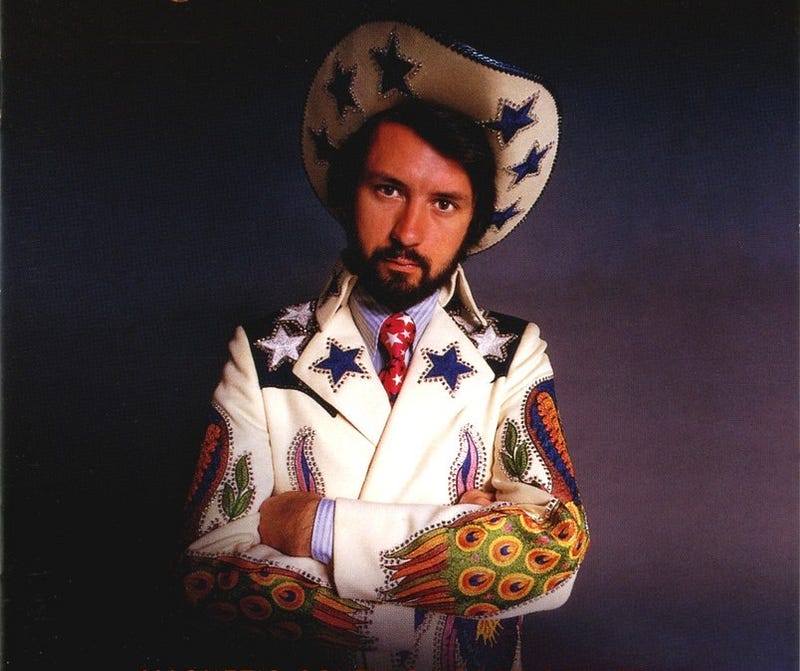
Papa Nez embraces his inner cowboy as he defiantly wears a psychedelically inspired Nudie suit circa 1972, actually also worn to the premiere of the Monkees’ commercially underwhelming “Head” film in November 1968. The image also appears on the European CD reissue coupling “Magnetic South” and “Loose Salute.” Image Credit: Camden International / Sony Music Entertainment

In the early twenty-tens you toured significantly compared to the previous 30 years. Did it have an adverse or positive effect on your writing?

Very positive in terms of making me want to do more performing — but I haven’t started “writing to the band” yet. I am comfortable with Paul Leim and bassist Joe Chemay but Chris Scruggs [mandolin, steel guitar, six-string guitar] and keyboardist Boh Cooper are discoveries for me and I am excited by what they are teaching me.

I have more to learn before I start writing here. Just the thrill of playing the tunes I have written over 50 years with this group is about as much fun as I can stand right now — and it takes all my time. I am so glad I decided to do this. It has been an unimagined joy [Author’s Note: Much to fans’ consternation, Nesmith bowed out of the Monkees’ highly publicized 50th Anniversary Tour in 2016 to complete his debut memoir, Infinite Tuesday: An Autobiographical Riff, although he was thoroughly involved in their Top 20 comeback record, Good Times!, circulated earlier that summer].
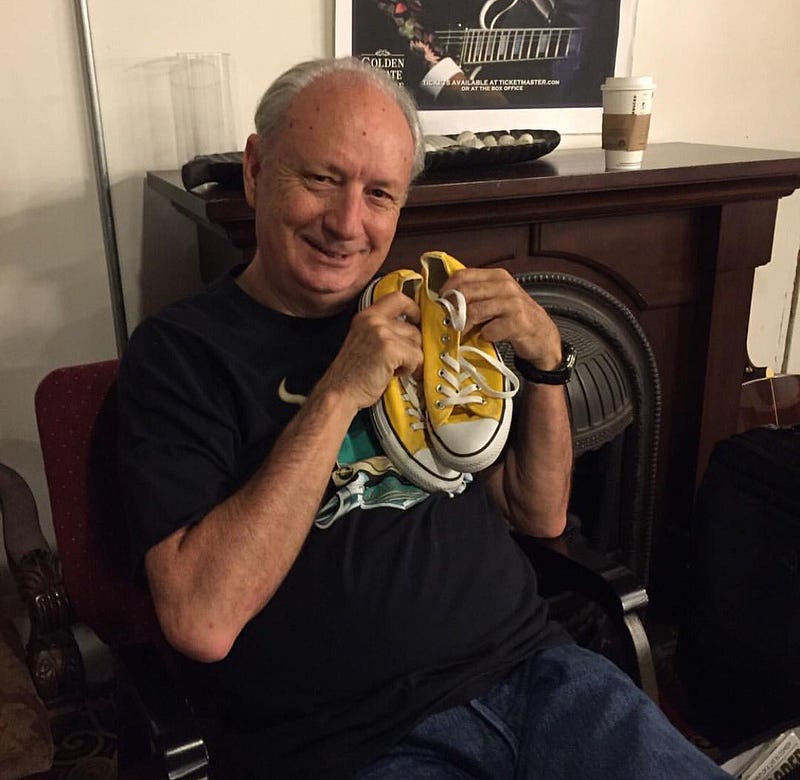
On August 5, 2016, Michael Nesmith mischievously clutches a pair of mustard yellow Converse sneakers backstage during a rare guest appearance on the Monkees’ 50th Anniversary Tour at the Golden State Theater in Monterey, California. Photography by Gemma “Coco” Dolenz [younger sister of Micky Dolenz]

© Jeremy Roberts, 2013, 2017. All rights reserved. To touch base, email [email protected] and mention which story led you my way. I appreciate it sincerely.

Music
Rock
Monkees
Interview
Michael Nesmith
Recommended from ReadMedium