Reptiles, Amphibians, Wildlife, and Photography
A Nesting Common Snapping Turtle
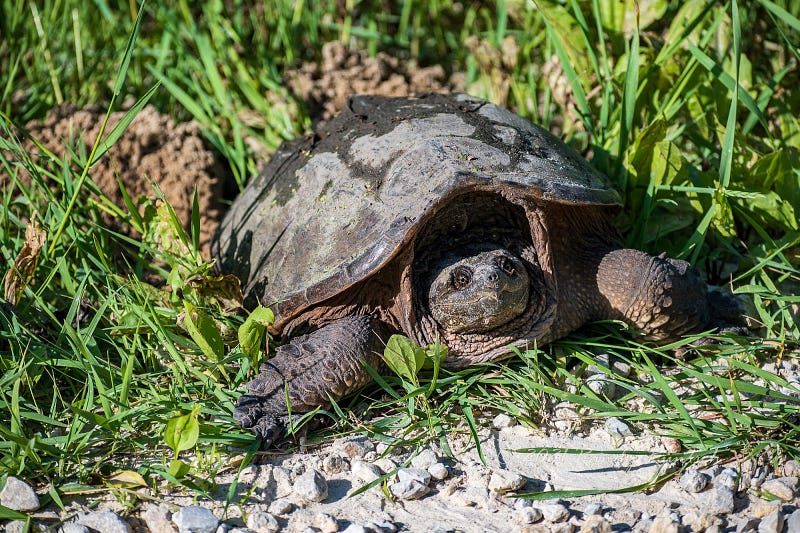
Common snapping turtles can be aggressive out of water. But this mother was too busy laying her clutch of eggs to concern herself with me.
Perhaps I am the turtle, able to live simply anywhere, even underwater for short periods, with my home on my back. — Kurt Vonnegut
Whitewater State Wildlife Management Area is my favorite place to view and photograph birds. This morning, as I drove through the large preserve, I spotted a common snapping turtle in the grass on the side of the road.
I parked the car and walked toward the turtle. But it didn’t budge.
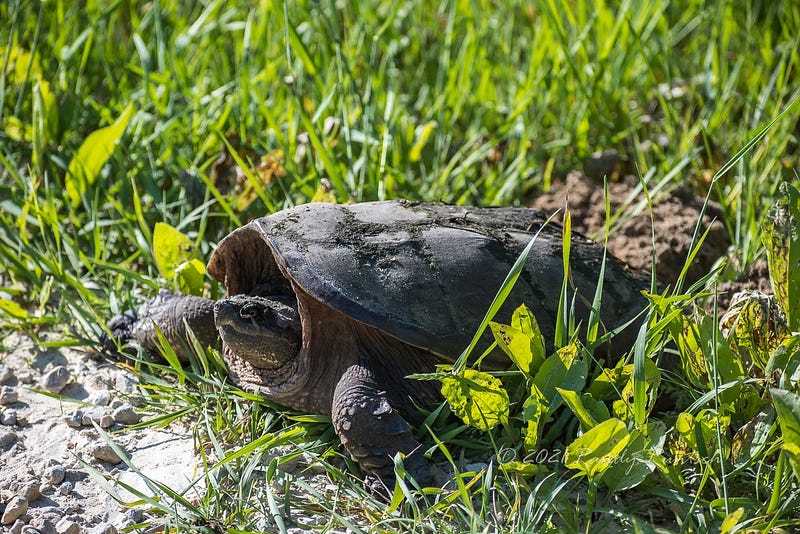
The turtle had dug a hole and was depositing her eggs into the cavity. Its body, head, feet, tail, and eyes remained still as I photographed it from several angles.
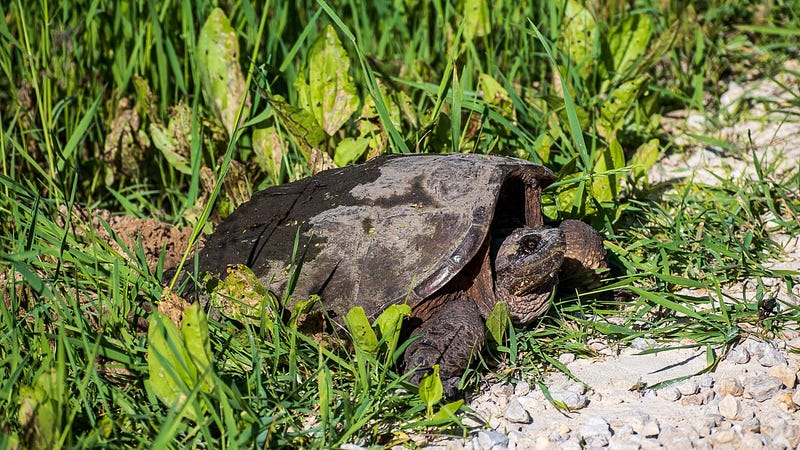
I quickly took my photos and smiled on my way to the car. I didn’t want to stay too long and bother the turtle as she completed her important work.
Most common snapping turtles are combative out of water. They can extend their long necks and sever fingers with their beak-like solid jaws. But today’s snapper was too busy laying eggs to be aggressive toward me.
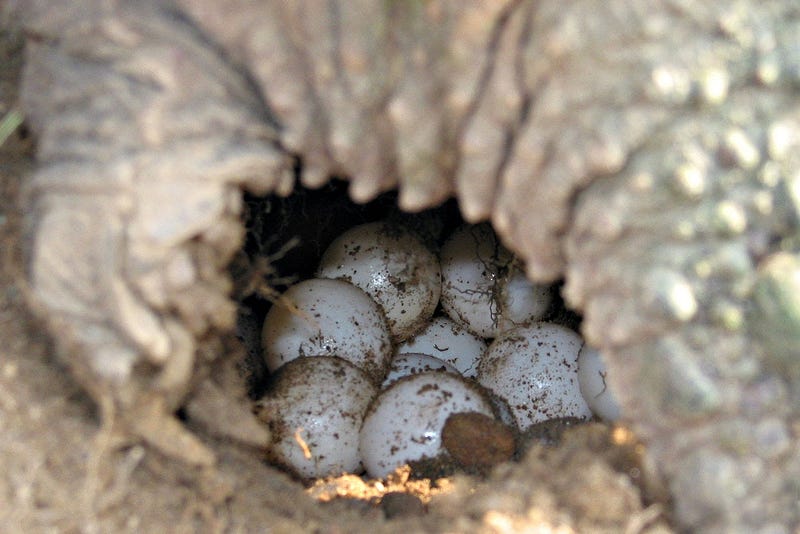
Common snapping turtles in the north country, where I live, reach maturity between 15 and 20 years and sometimes live for over 100 years. Their upper shell can reach a length of 20 inches (50 centimeters). The carapace (shell) of the turtle I saw today was between 16 and 18 inches long. So, it was likely an old specimen.
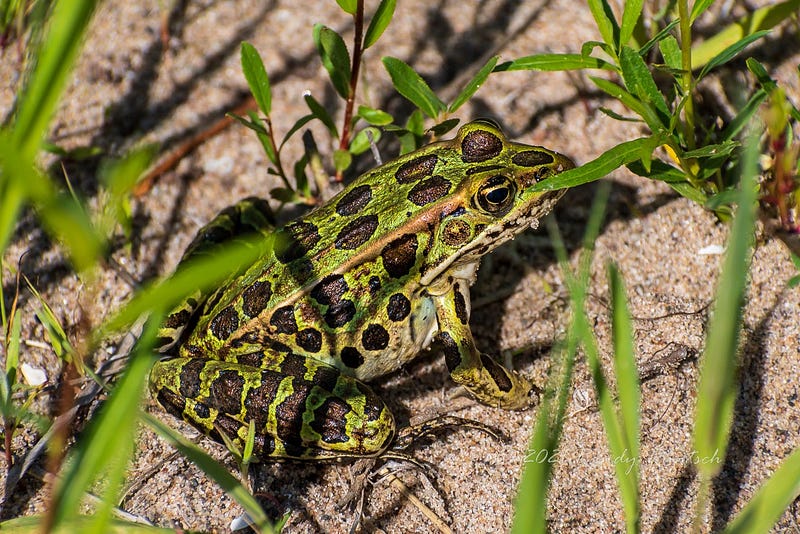
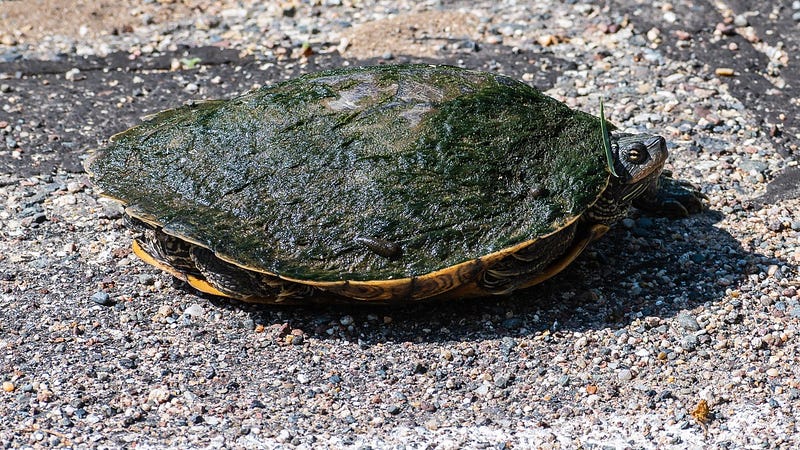
After I left the site of the snapping turtle, I observed a moss-covered painted turtle sunning itself on the blacktop road. During a hike, leopard frogs hopped around my feet, too.
Tomorrow, I will go canoeing and fishing in the Mississippi River backwaters, near where I watched the turtles and frogs. If I am lucky, I will catch some fish and spot another nesting common snapping turtle.
You feel mighty free and easy and comfortable on a raft. — Mark Twain (The author feels the same about a canoe in the Mississippi River backwaters.)