
A Mother’s Day Rumination About the Best Gift I Ever Gave My Mother
It made her last years happy and opened my heart. Lessons from a lifetime of attempting to see my mother as a person.
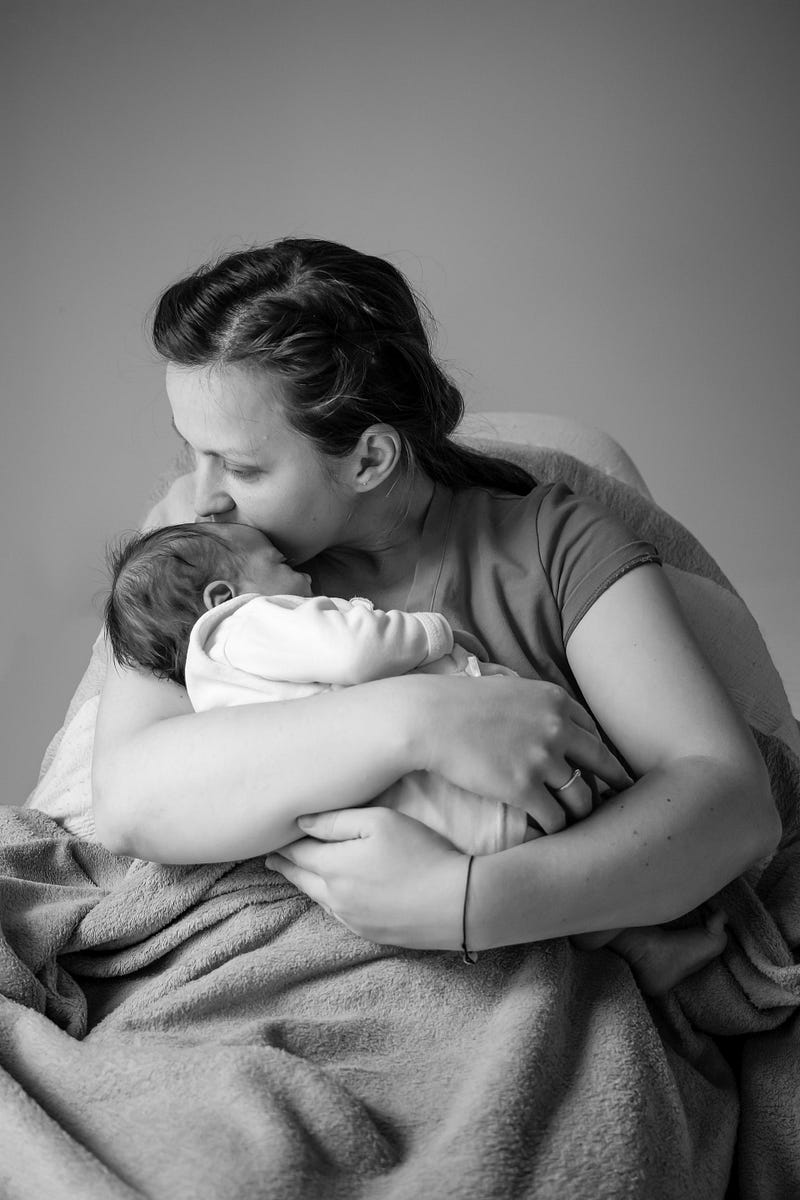
In 1993, decades after her death, in one of my “New Family” columns for Child, I wrote with pride about my mother’s relationship with my first born, Jen, then age 4.
…their few years together enriched both of their lives and transformed my mother….They glowed in each other’s presence, and Jennifer, now 24, still talks about her. ”
It would take me several more decades of distance — and my own aging — to understand how I had also “transformed” during that time.
I Marry. My Parents Divorce.
Mother’s Day inevitably invites memories of Henrietta, my mother. When I was in high school, my father was planning to leave her for Shirley, the buxom red-head across the street. (Later, I’d tell friends to imagine Jessica Rabbit.)

My father promised he wouldn’t leave until until I got married. Let’s set aside that he confided all this to a mere teenager, including the name of the motel in New Jersey where the two of them met.
Let’s focus instead on the reason he gave for staying with my mother, which I suppose made sense to him in the late 1950s: “I don’t want you to come from a broken home.”
My father left my mother on the night of my wedding in 1966. (This, folks, is why I write non-fiction!)
When I return from my honeymoon, my mother — understandably — is in a rage. At subsequent family occasions, she and my father (now with Shirley in tow) are seated on opposite sides of the room. But no space is big enough to contain them.
I keep my distance from both parents. (Eventually, I stop talking to my father altogether, but that’s another story.)
My mother’s life shrinks. Her unwanted transition from well-heeled lady of the house to bitter divorcee renders her a social pariah. She feels alone, betrayed, and robbed of her identity.
My much-older siblings and I are wrapped up in our own lives. I’m in my early twenties, starting a new life as an “adult.” My decade-older sister and brother are dealing with teenagers. Other than the dreaded milestone events, we see Mother mostly on holidays and her birthday. Even the grandchildren are busy.
My mother’s outsized emotions scare me, embarrass me. I can barely be empathic, because I’m so busy making excuses, pushing her away. I don’t want to be around her. And I don’t want to be like her.
Becoming a Mother
My mother already has three granddaughters and three grandsons when her seventh, my daughter Jennifer, is born. I am 25. I’m still uneasy about her erratic and wide-ranging emotions — not to mention my own guilt. However, allowing my mother to be with my young daughter starts to feel like a safe middle ground.
Nothing pleases Henrietta more than walking down the street with a talkative, easy-going, absolutely adorable tow-headed child. (Reading that description of Jen, my mother would accuse me of understatement!)
She has a friend who runs a modeling agency for children, but I draw the line at once-a-week outings with “Gamma Hennyetta.”
She and Jen often spend time in my mother’s one-bedroom apartment where they color, build, or play “restaurant. My mother is owner, cook, and waitress; Jen, her customer.
Henrietta delights in sharing the details: “She finished the whole hamburger.” Describing Jen on the way home, eating ice cream, she proudly adds, “…and she didn’t spill a drop or get anything on her clothes.”
Invariably, my mother ends her report with her greatest pleasure: “People stop me on the street to say how beautiful she is.”
Transformation
Jen adores her — and I am astounded by the mother I now see. Eventually, I don’t dread her visits. I don’t bark at her, even when she arrives unannounced.
It happened by accident. I was following the script (and dream) of my generation — find a good husband and have a healthy kid. And in doing so, I inadvertently gave my mother the greatest gift: hope. With Jen in her life, she has a reason to plan and to eagerly anticipate — to live.
My mother inadvertently gave me a gift, too. She allowed a different persona to emerge — the cuddly, patient grandmother. I begin to see her in a new light.
Growing up, I knew my mother loved me and was proud of me. But she was neither hands-on nor particularly affectionate. She seemed similarly distant with with my sister’s and brother’s kids who lived with us in the summer.
Presumably, she had a big life then and no time or patience for toddlers. She also struck me as a woman who’d rather read a book or play Mah Jong than get down on the carpet with a little kid.
In retrospect, my mother’s metamorphosis was one of those unsung gifts of change — even unwelcome change. You can’t go back, so you have to move ahead. You take a step in some direction. You adapt. If you can’t, you try another direction.
You “look for the good,” as my old lady Zelda would remind. And you keep looking. The act of not-giving-up keeps you going. My mother’s “good” was my daughter.
Though I know my mother cherished her time with my daughter, I doubt any of that was in her mind. That generation was not into self-examination!
It certainly wasn’t in my twentysomething psyche. I lacked the consciousness and the courage to ask questions or to go deeper. We weren’t “close,” as I now know some of my contemporaries are/were with their mothers. But thanks to Jen, my mother wasn’t the only one who morphed into something different.
Sadly, my mother died of bone cancer when Jen was only four — luckily, old enough to have solid memories of her grandmother.
At least once a day in the weeks after my mother died, Jen and I played “Let’s bury grandma” behind the couch — our “cemetery.” I’d lie on the floor — I was Grandma Henrietta. Jen knelt beside me, air-shoveling dirt onto an imaginary grave: “Bye-bye, Gamma. We’ll miss you. Have a good time in heaven.”
I wept openly, crying for the mother I was just getting to know. Jen, a kid who was labeled “empathic” in preschool, knew I was sad because I missed my mommy. It helped us both.
The Motherhood Union
Cut to 2002, Jen is pregnant with her first child. When he arrives, to my surprise, I discover that I can sit with him in my arms and just be. I stare at him, in awe. So this was what it meant to be a grandmother!
Jen and I are closer and more alike than my mother and me ever were or could be. We read the same books, watch the same TV shows, shop in the same stores. And once we change seats at the generational table, it’s like we’re in the same “club.”
Jen dubs it “the Motherhood Union.” We launch a website, interview other mothers and daughters, and eventually write an article together about “generation overlap.”
Jen’s firstborn is now 19 and counting. Every review of the past is informed by its temporal distance. Enough time has passed for me to fully allow myself to imagine my mother’s path and her pain without filtering it through my own needs and experience. Without judging. Without guilt. With empathy.
That, as Martha Stuart might say, is a good thing. The mother/daughter bond, for better and worse, is complex, mystifying, fragile, invasive, and deep. It changes with the times — being a mother in the fifties is vastly different from being one now — and it is changed by time. Arguably, the biggest shift occurs between mother and daughter when both women join the Motherhood Union.
Adopting a child or having one gives a woman (maybe a man, too, but I can’t speak to that) a second chance with her own mother — an opportunity to see through differently-informed eyes, to filter her choices through knowledge of history and all you’ve been through yourself.
As the late Paula Caplan, a psychologist and activist I knew and respected, advised in her still-relevant 1990 book, Don’t Blame Mother: Healing the Mother-Daughter Relationship:
Humanize your image of your mother; whether you discuss your problems with her or just try to think in new ways about them, you need to see the real woman behind the mother-myths.
To this day, I don’t want to be like my mother. That ship has sailed anyway! And while I don’t always like the memories that reemerge when I think of her, I wish I remembered more. All in all, I find peace in understanding the real woman. Every year, often on Mother’s Day, I understand a little more. I see that she is in me.
My Hope for This Mother’s Day:
Last year, I wrote humor for Mother’s Day; in the past, a how-to. This year, perhaps because the world itself begs for love and understanding, I got serious — and personal.
The mother/daughter bond is profound and ever-changing. It keeps revealing itself. It’s good to keep checking in.
Especially if you have children of your own, do yourself a favor and take another look at your mother. Here are some ways you might continue to review who she is — and was.
- Ask your mother to tell you something she’s never shared. To get the ball rolling, you can reveal something new, too. Be a little vulnerable. Be honest. Listen. So often, mothers and daughter go on autopilot. They talk about what the kids are up to, and not about the mother/daughter “We” — a bond that can outlast marriage, even mortality.
- If your mother is no longer here, hold a familiar memory in your mind and see it through the prism of your adult self. Be objective. Gather information from family members on your mother’s side. When you think about that memory now, factor in the setting, the circumstances, and the various characters in your mother’s drama that influenced her choices. You might start to see it differently.
- Complain about your mother to your female friends. Oh, that’s right: You already do! But here’s the scoop: Your friends might nod in agreement, even trot out a bad-mother story of their own. Secretly they think your mother is the best!. She’s not their mother. Try this instead: Talk to friends about the good things your mother modeled, the strengths you got from her, what you’ll pass on. You’ll be surprised at how happy that will make you!
- Get help if you’re “stuck” in old thinking about your mother. Read a book about healing the mother-daughter bond. Understand the so-called toxic patterns that might already be entrenched. Attend a mother/daughter workshop. See a therapist if necessary.
The point of having your adult self look back at your mother, says Judith Ruskay Rabinor, Ph.D. in Girl in the Red Boots: Making Peace With My Mother is to “revise the narrative.” We freeze our loved ones in time. In writing the book, which features guided meditations to spark memory and insight, Dr. Rabinor turned her own “Story of a Disappointed Daughter” into a “Story of a Grateful Daughter.”
My resentments have not evaporated but are now rebalanced with my sense of admiration for my imperfect mother.
Happy Mother’s Day!
All mothers deserve a break — and kudos for doing one of the hardest jobs in the world.
If you enjoy reading me, thanks. You also might want to…
Click here to get an email when I publish. Even better, join Medium. Click here and tell ’em I sent you!
Follow me on social media via LinkTree.


