
Photography Tips, Travel, Nature
A Macrophotography Walk through El Morro Canyon
A late summer day and a 50 mm macro lens
On a recent hot, late-summer day in Southern California, I took a stroll through El Morro Canyon. A hilly, golden haven of dried grasses, the canyon drew me in because of the occasional cool breezes venting in and up from the nearby ocean.
I had just purchased the new Nikon 50 mm (2.8) macro lens and I wanted to test it out. The nifty thing about this new lens is that, with the flip of a switch, it can adjust from the macro setting to a full 50 mm lens. So, it’s like getting two lenses in one.
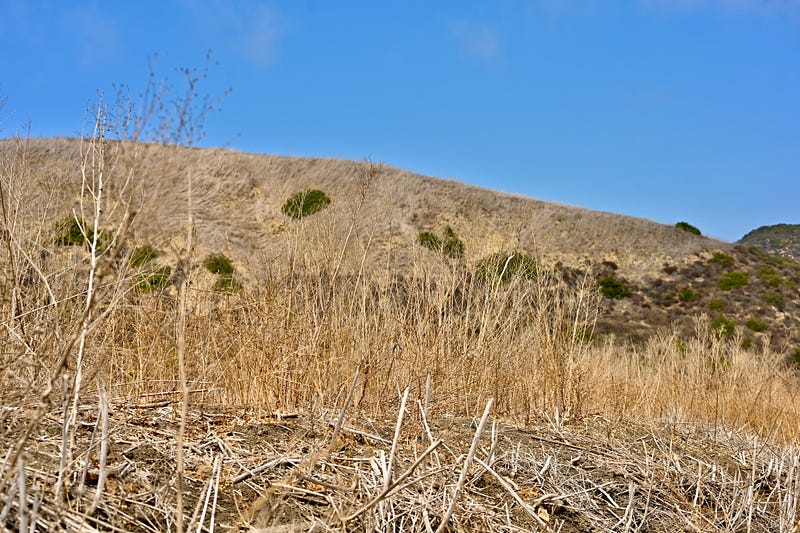
We’ve had virtually no rain this summer, and the mustard, which towered higher than my head this spring, has desiccated itself into hollow skeletons of its former self. The spring wildflowers now look like something pressed between the pages of your grandmother’s old poetry book. In the photos below (taken as a full 50 mm), you can see how parched the landscape is.
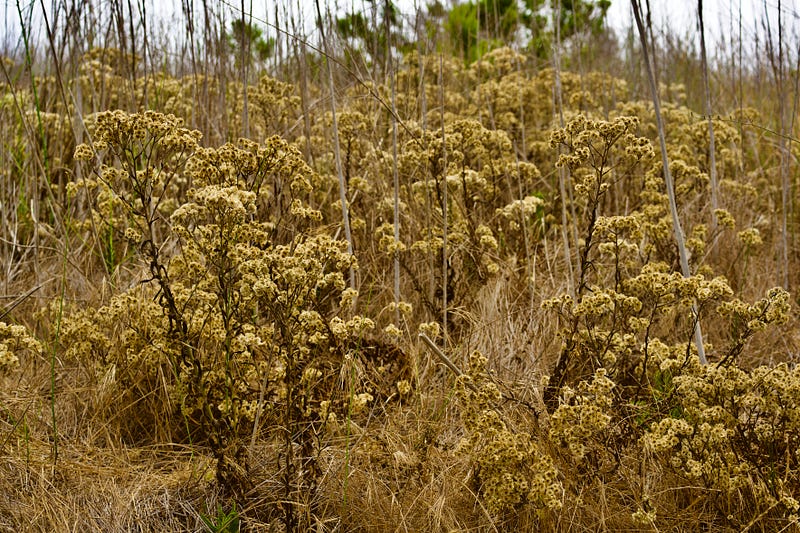
But, inevitably, just as in life, when you look a little closer with a camera lens, you can often find beauty hidden within the details.
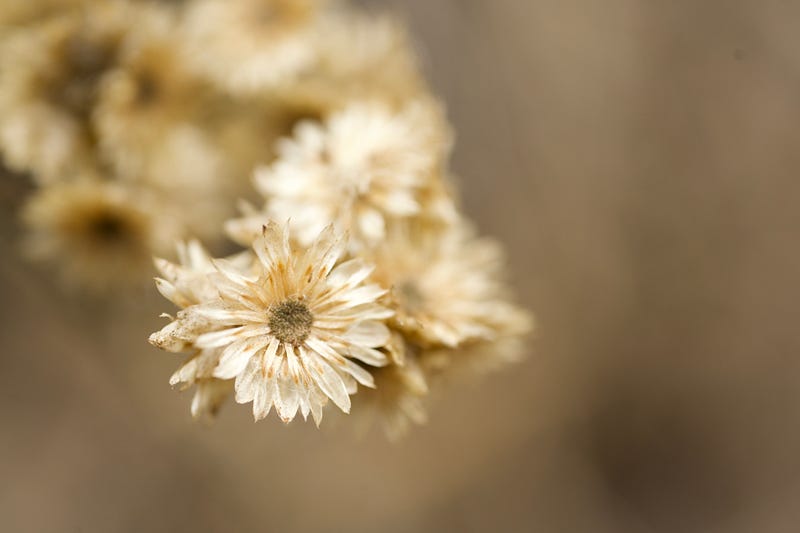
Those dried flowers, they hold an ethereal beauty, a ghostly remnant of their former glory.
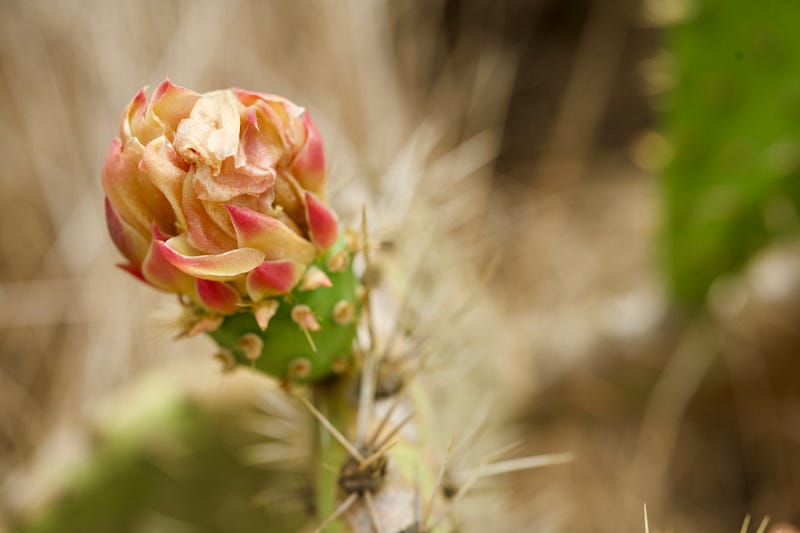
The prickly pear cacti (top photo), oblong pads of fleshy pulp encased in green skin, are designed to hold onto water for months on end. They were just beginning to flower while I was there. Once the flower finishes, a reddish fruit emerges. Full of prickles, it’s difficult to eat, but the animals find a way. I remember, as kid, in Tucson, Arizona, my sister had to make prickly pear jam as a school project. It was pretty awful. But, in a dry and hostile environment, you have to appreciate the value of that source of life-giving moisture.
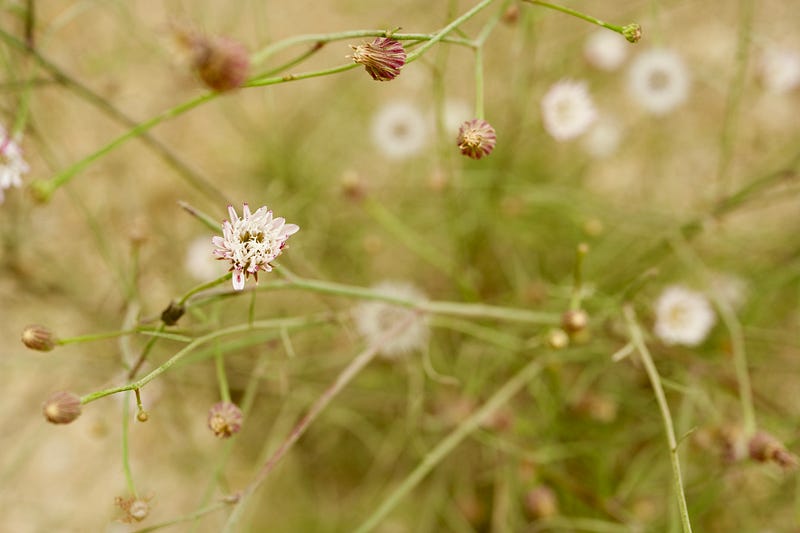
And, here and there, pockets of green, spindled with delicate pink petals spring from the earth.
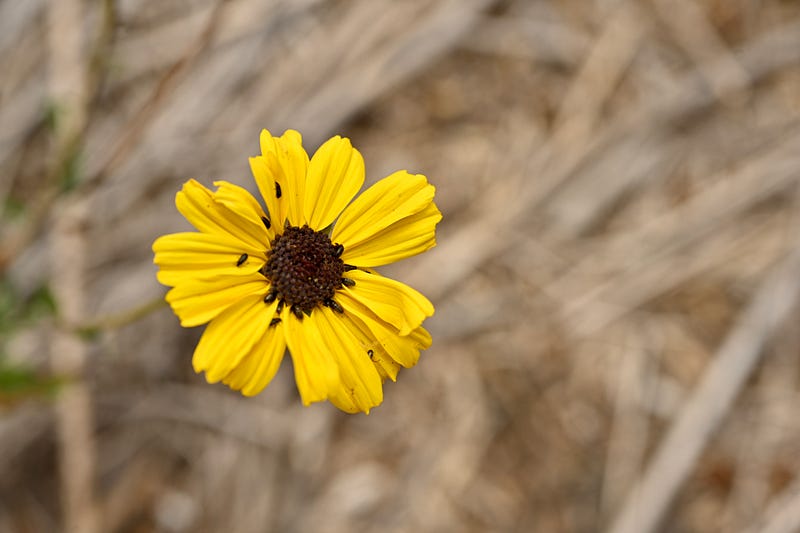
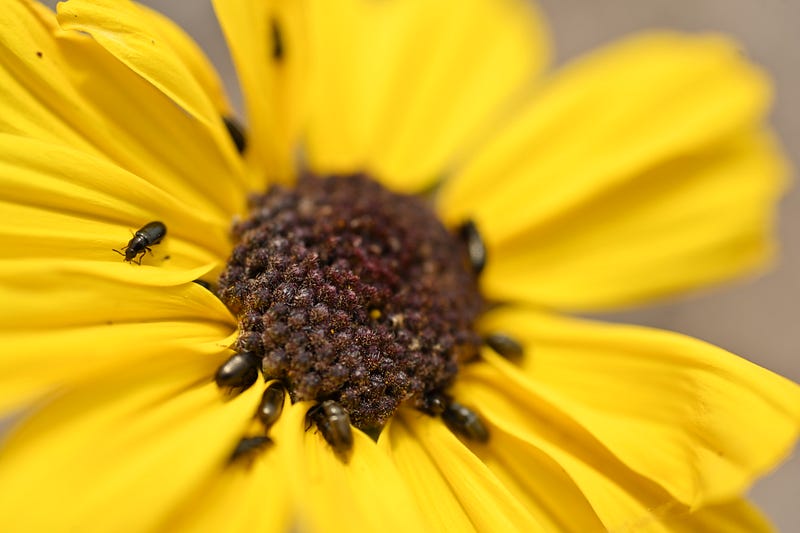
I spotted this lone yellow flower and played with different focal distances. The new lens can either be set on “full” or on 0.3–0.5mm, meaning it will focus on its subject from very close up. I was surprised to see all of the little bugs, which I had not initially noticed, when I set the lens on the close-up macro setting.
There’s a spot on the trail where it dips down into a slight ravine fed by a hidden spring. It’s like a little oasis and it hosts quite a variety of plant life.
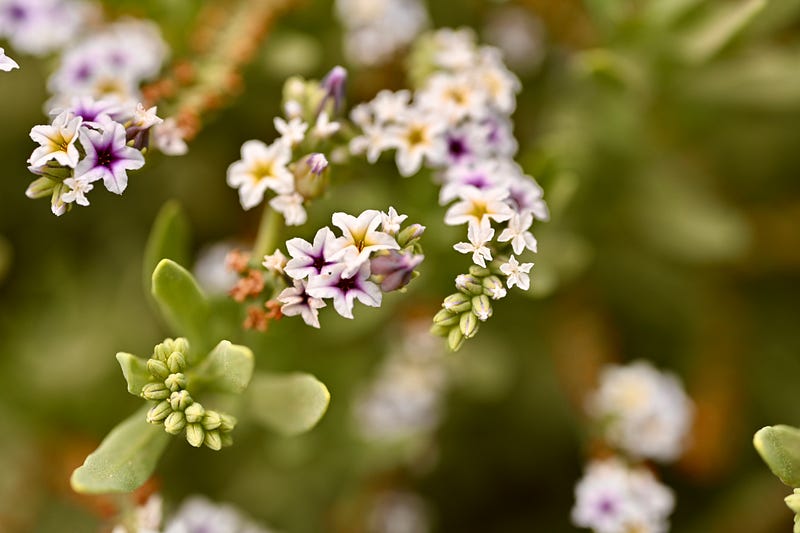
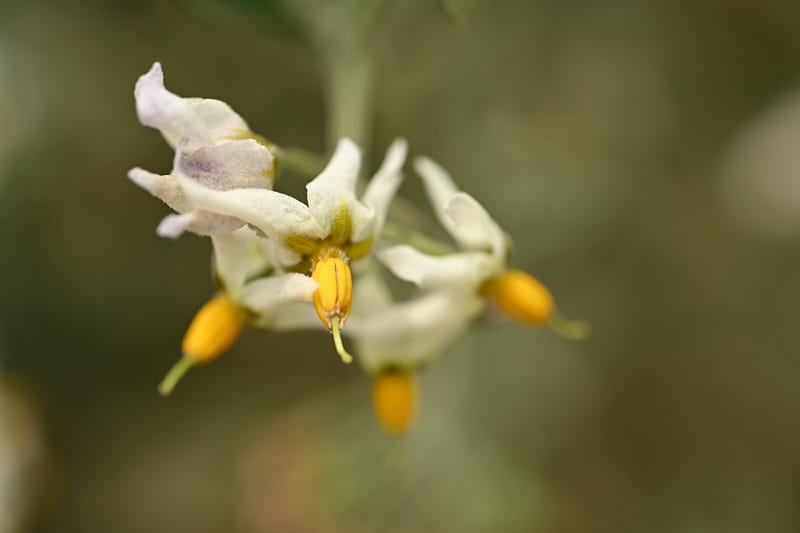
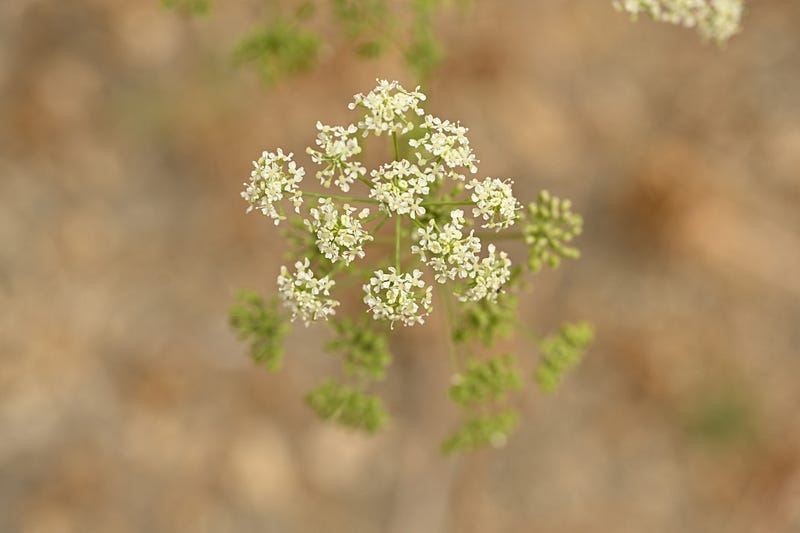
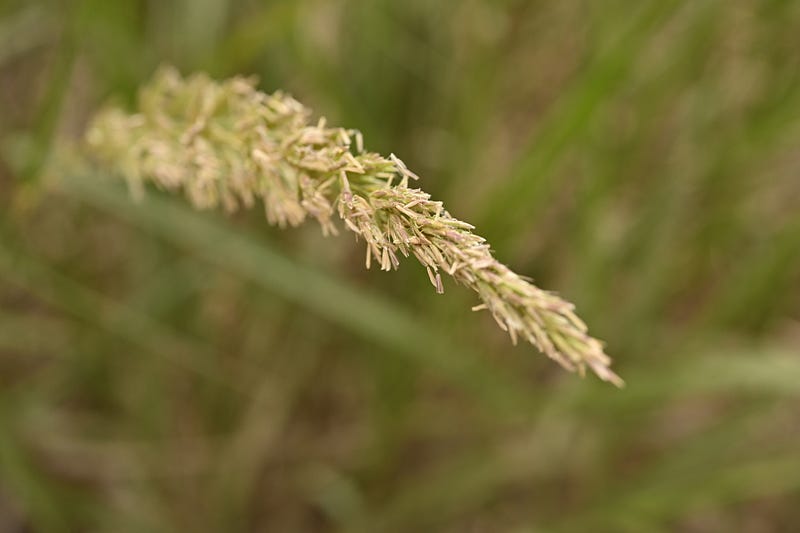
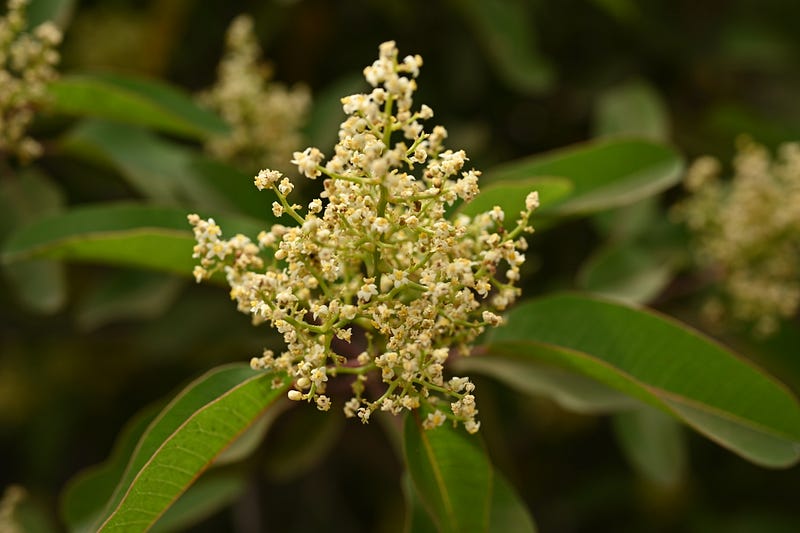
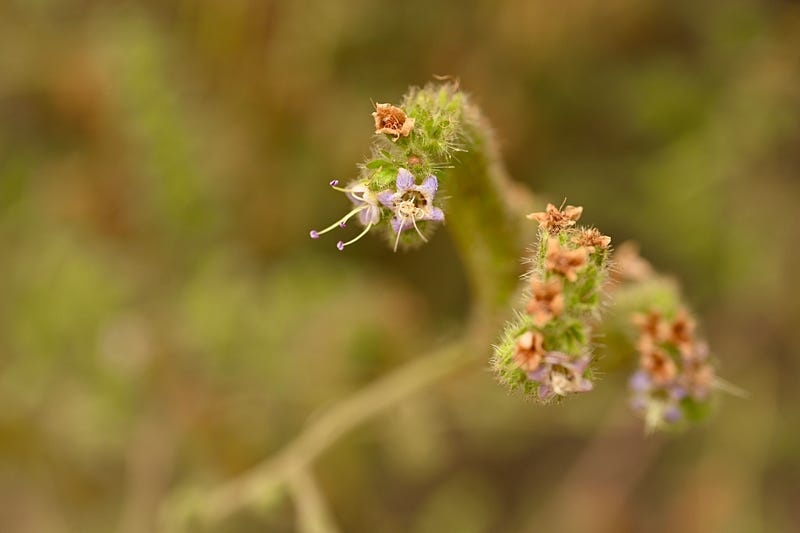
I frequent these hills every few weeks, mostly on my mountain bike. So it was nice to slow down and see it on foot, when you can stop and bend over to inspect the tiny details.
Fall is arriving now. We’ve had our first rain, and many mornings are moist with fog. Soon, the hills will green back up a bit and show more signs of life. But there is a quiet beauty in the dry time, a sense of dormancy, and of survival. And to witness that tenacity is to understand more intimately the cycle of life.
Erika Burkhalter is a yogi, neurophilosopher, cat-mom, photographer, and lover of travel and nature, spreading her love and amazement for Mother Earth’s glories, one photo, poem, or story at a time. (MS Neuropsychology, MA Yoga Studies).
Thank you for reading. I hope that you enjoyed my photos and musings.
You might have noticed that this piece is published in my new pub, “Butterfly Dreams,” which I created to showcase some of my photos, poems and musings. If you’d like to see more pieces like this, you can “follow” the publication.
Photos, poem and story ©Erika Burkhalter. All rights reserved.


