
A Look At Life After The Throne For The Final Rulers Of Five Empires
Life goes on; even after you’ve abdicated the throne. Here’s how these five rulers spent the rest of their lives
There is a heavy burden in being a sovereign. You are responsible for continuing the dynasty first set up by your more famous ancestors, while the eyes of your entire country and other world leaders judge your every action.
Sometimes, however — fate has a very different path in store for you than the one envisioned for you by your forefathers.
Below we look at five rulers who ended the monarchy with their abdication; and how they lived out the rest of their days after leaving the palace.
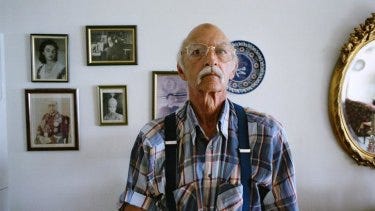
#5: Mukarram Jah — Last Nizam of Hyderabad
Of the ~560 princely states which joined India, Hyderabad was the wealthiest and highest “ranking”.
Whilst India gained independence in 1947 — with the various princely states joining the union soon after; the erstwhile rulers of these princely states kept their titles, a privy purse, and many other privileges that set them apart from the ordinary citizenry.
Mukarram Jah inherited the title of Nizam of Hyderabad from his grandfather in the late 60s but lost his position (along with all the other princes across India) in 1971 when the government of India abolished the privy purse.
Fed up, he bought a 350,000-acre sheep station in outback Australia, and moved there. In doing so, he had to divorce his wife (as she, understandable, didn’t want to live in the middle of no-where).
He was not single for long however as he went on to marry an Australian air hostess, Helen Simmons. She in turn eventually died of an AIDS-related illness which she contracted after having an affair with a bisexual man. Understandably, it was fodder for the tabloids at the time.
With an accumulating number of ex-wives (and thus alimony payments), as well as mismanagement of his fortune back in Hyderbad, he eventually went broke.
He now lives in a two-bedroom apartment in Turkey.
#4: Mehmed VI — Last Sultan of the Ottoman Empire
For 600 years, the Ottoman Empire hammered Christendom; acting as the pre-eminent Saracen power.
After a devastating defeat in World War I, the Turkish nationalist Kemal Ataturk took control of the government, abolished the sultanate and expelled Mehmed from Istanbul.
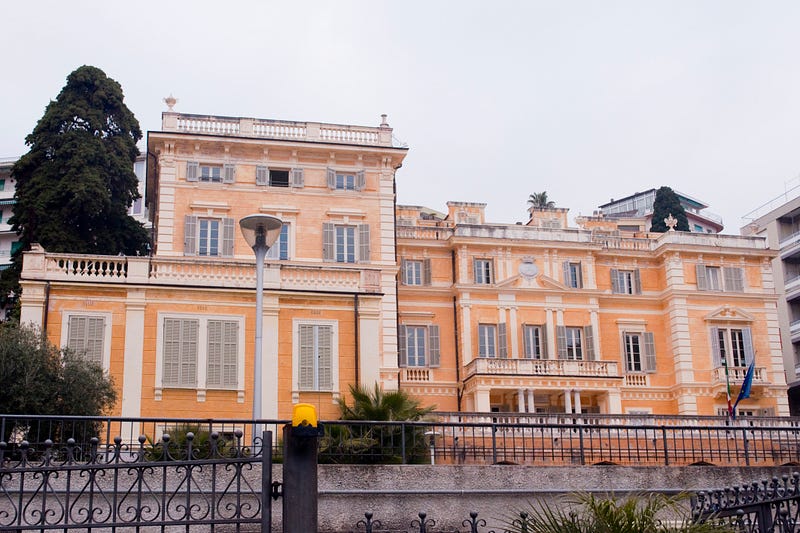
He marked his “retirement” with a move to San Remo on the Italian Riveria, in 1923.
Staying at the magnificent Villa Magnolie — he cavorted with Mussolini, the Italian king Victor Emmanuel III, and fellow deposed monarch: Mohammed Ali Qajar, the erstwhile Shah of Persia.
He was also a talk of the town due to his gambling in the nearby casino, as well as his many wives who lived here with him.
Alas, retirement was short as he passed away just three years later, after eating an apple compote — thought to be spiked.
#3: Pedro II — Last Emperor of Brazil
Pedro has the singular distinction of still being hugely popular at the end of his reign and not being particularly being fussed about being deposed.
He effectively took no action against coup attempts by the republicans; going so far as to say: “If it is so, it will be my retirement. I have worked too hard and I am tired. I will go rest then.”
And so he went to Europe. Being elderly and in ill-health, he spent his time reading, discussing non-political topics, and teaching his grandsons (he had often remarked that were he not a monarch, he’d have loved to have been a teacher).
He died a mere two years later in 1891 in Paris.
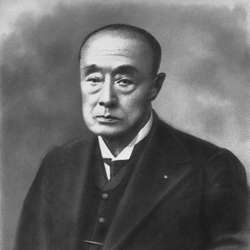
#2: Tokugawa Yoshinobu — Last Shogun of Japan
While Japan is titularly ruled by an Emperor; the real source of power for 700 centuries was the Shogun.
The Meiji Restoration in 1867 removed the last Shogan, Tokugawa Yoshinobu, from power.
He was still a young man of 32 at the time; and spent the next few years quietly partaking in activities typical of the nobility for centuries such as writing poetry, painting, archery, falconry, horse riding and hunting; but also indulging in more modern pursuits things like photography, cycling and baking.
In the late 1890s, he returned to Tokyo and re-established ties with the emperor. He made himself available to many historians, journalists, authors and others who wished to chronicle the historic transition of Japan a generation earlier.
Eventually in 1902 — he was awarded the noble rank of Prince for his service to the country, allowed to re-establish his family as a branch of the Tokugawa, and take a seat in the upper house of the Japanese parliament (akin to the Senate or the British House of Lords).
He eventually passed away in 1913, with media coverage at the time depicting him favorably — as someone who made way to restore imperial power.
#1: Puyi — Last Emperor of China
And so we come to the granddaddy of them all — China.
Being unified over two millennia ago — China was both one of the largest and longest-ruling monarchies in the world (albeit under different dynasties).
Revolutionary fervor reached fever-pitch in 1911 however — wherein the then six-year-old was forced to abdicate the throne and end two thousand years of imperial rule.
Unlike most others who abdicate the throne, being so young at the time meant that he went on to live another 55 years.
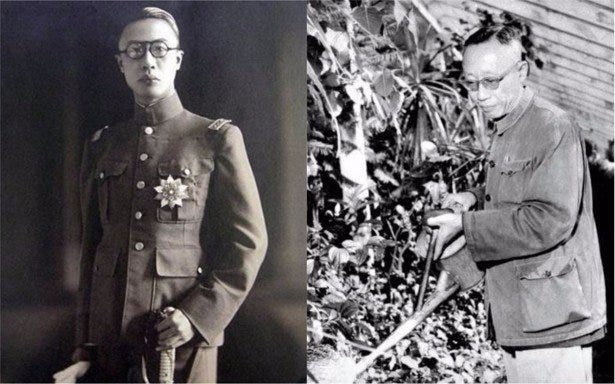
While he stayed on at the Imperial Palace in Beijing, living the lifestyle of a playboy, he eventually became the puppet emperor for the Japanese in Manchukuo during most of World War II.
After the Communist revolution, he underwent “re-education”. Learning how to tie his own shoelaces as well as dress and groom himself — thus becoming a regular citizen.
Following this, he married his fifth wife (a nurse), spent time as a street sweeper, before becoming a gardener and handyman at the Beijing Botanical Gardens.
He would often visit his former palace and act as an impromptu tour guide.
He died a fairly unremarkable death — from kidney cancer in 1967.
Do you know of any other monarchs who went on to live interesting lives after “retirement”?
Let me know in the comments below.
You may also like: