
A Lesson on Fear and Scarcity from My Iranian Mother
Could the United States be headed for a revolution?
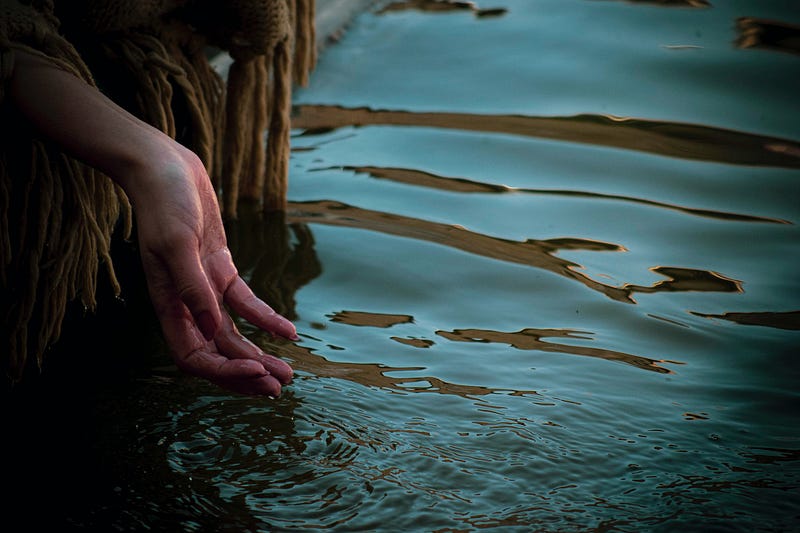
As the coronavirus crept into Pennsylvania, my mom insisted, “Mae Mae Joon, make sure you have enough water.”
“This reminds me of home,” she continued. “I remember when we had a curfew,” comparing her native Iran with our neighboring New Jersey.
Why water?
When the Islamic Revolution boiled over Iran, my grandfather also summoned my mom, “Quick, Boori Joon. Fill these buckets with water.”
That was in 1979. He had lived through a previous regime change when the Qajar Dynasty came to an end and the Pahlavi Dynasty rose to power. Water was already scarce throughout the land. Wells brought groundwater to the people faster and soon overexploited it. Moving forward, the Shah transformed Iran into a more progressive state and created many dams to make this precious resource more available.
As a result, my mom grew up with clean drinking water, and in 1979, she braved the country’s next massive shift in power. While pictures of Ayatollah Khomeini flooded the streets, my grandmother, the strong pillar of this family of eight, urged my mom to leave. It wasn’t “fleeing the country.” It wasn’t supposed to be “goodbye.” But on the day of my mom’s flight, a solemn vibration rumbled on that front step. A mother hugged her daughter for the last time.
Now, Iran still combats severe water scarcity. Bubbling under the surface of their coronavirus outbreak is an impending water crisis that could force 50 million people to emigrate in two decades.
Fixated on the pandemic, we are jolted to the urgent present. In the wake of the U.S. State of Emergency, I became a third generation to fill my vessels with the main ingredient that keeps the human race afloat. I dusted all my decorative pitchers and let the faucet run until they were full.
I am just one person. I’m the daughter of an immigrant mother and an American father. Our family is one of millions in the United States who haven’t eaten dinner together since mid-March when I had stayed the night at their house and indulged in her Turmeric chicken stew. The morning after, we had lounged in the living room entranced by the ever-changing maps, one showing the results of the Democratic Primary and the other revealing the first coronavirus case in our Northampton County.
On our TV, medical professionals earnestly repeated the call to action, for Americans to make sure they had enough food to last two weeks. Fortunately, I am the granddaughter of the man who said: “Quick, fill your buckets with water.” I’d already done my shopping.
As usual, my mom and dad sent me home to my one-bedroom apartment with leftovers. And this mother hugged her daughter for the last time in March 2020.
Next, the panic shopping frenzy ensued. I watched my community on screen hoarding bleach and toilet paper.
We all have that go-to-product we panic for. For my mom, it’s water. For my dad, it’s clay. Once I stocked my fridge, I immediately ordered bags of garden soil to grow food from seed.
We all face the common challenge of balancing patience with urgency — of sooner versus later. For the sake of survival, when should we wait and when should we act?
My mother survived a revolution, so perhaps she can survive anything. Yet there is no escaping the virus. The only safe place to flee is home. Both my parents are in their 70s, and my dad has stage four prostate cancer. Since his dual diagnosis of cancer and glaucoma, my mother has done an incredible job driving him to all his appointments.
I have offered to do their grocery shopping, but they are too proud. They still leave pomegranate chicken and turmeric spiced soups on my doorstep. Before others mourned Easter Sunday, we celebrated the Persian New Year on Skype, hearts together, mere miles apart.
Hugs and kisses are particularly ingrained in Persian culture. Physical touch is essential for all human connection, a kind I am craving as the weeks turn to months. Until we hug again, the best thing I can do is keep my distance.
No matter how many provisions I mail to them, it never feels like enough. My dad first laughed at the gloves and masks, my mom did too. I felt like I was parenting two very wise children. Since Pennsylvania is required to wear masks to the store, the worry has become real for all three of us.
Maybe I hoarded too many gloves, and for that I am sorry. Our so-called civilized society is so dependent on having needs met in the moment. Now, we are forced to wait and speculate how such seemingly plentiful resources could become scarce.
While I trust our tap water will continue to flow, I’m left with countless questions. We are at war with something out of our control. Could we be headed for a revolution?
Thinking long-term isn’t a luxury many of us have. When one falls, we all do. My dad’s three-to-five-year life sentence has become contagious. It could only be a matter of time before my mom catches the virus and passes it along to my dad. Or perhaps I am asymptomatic and powerless to find out.
My mom left her home country when she was 32. I turn the same age next October. I’m tempted to wonder if history could repeat itself.
Today, I’m eager for an answer to a more pressing question: When can I hug my mom again? And when I do, will it be too late?