
You Won’t Fool This Child of a Revolution
Decades before BLM chanted “Death to America,” this political slogan sparked the Islamic Iranian Revolution in 1979.

“If I have one message to give to the secular American people, it’s that the world is not divided into countries. The world is not divided between East and West. You are American, I am Iranian, we don’t know each other, but we talk together and we understand each other perfectly. The difference between you and your government is much bigger than the difference between you and me. And the difference between me and my government is much bigger than the difference between me and you. And our governments are very much the same.”
-Marjane Satrapi, Iranian-born French graphic novelist, cartoonist, illustrator, film director and children’s book author
How did “Death to America” become a political slogan?
I am a child of a revolution and through that lens, while some fear the world is ending in 2020, to me it feels like it’s gestating — nearly ready to be born.
I am of mixed ethnicity. Born to a mother from Tehran and a father from Tulsa, I entered this world a furry, fair redheaded Iranian American baby. Or as my free-spirited artist parents would say: a baby.
The revolutionary history that brought my mother to this country has a lot to teach us about the United States today. Communication, faith, and freedom can all play a role in the birth of a revolution.
Decades before BLM rioters chanted “Death to America” in Oakland on Monday night, this political slogan sparked the Islamic Iranian Revolution in 1979.
How forced “freedom” birthed renewal and downfall in Iran
Here’s some backstory. Before my mom was even born, Iran was ruled by Reza Shah Pahlavi in the 1930s — a modern time of sorts. He idolized the west. His most famous decree was to ban the veil, instructing the police to rip them off the mullahs’ wives in the street. He is remembered, by many, as aggressively progressive. Women who felt free while wearing a veil were then afraid to go out in daylight. Forced “freedom” for some. Forced oppression for others.
Fast forward to 1941. His son, Mohammad Reza, then rose to reign as the new monarch. He is known as “The Shah” because he was the last king of Iran. The Shah’s platform was centered around the ancient Persian traditions of Cyrus the Great. (Cyrus allegedly freed the Jews from Babylon. The Cyrus Cylinder, known as the first declaration of human rights, inspired Thomas Jefferson.)
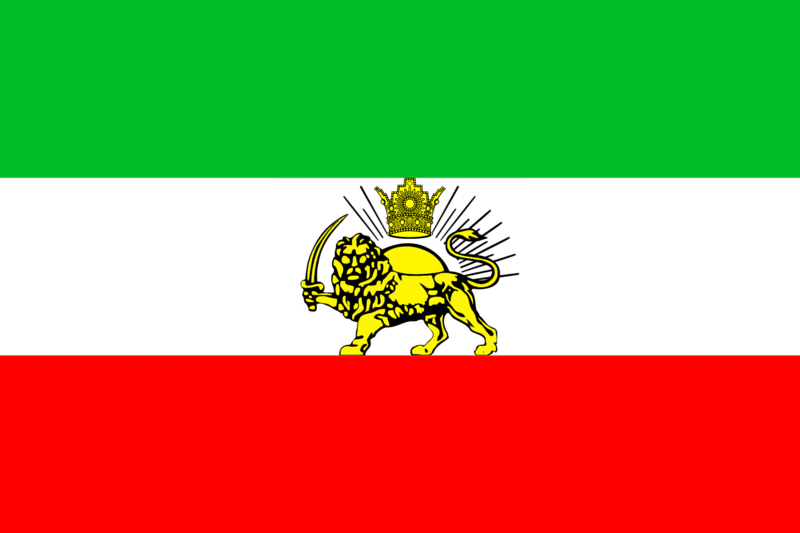
Based on such rich history, this young, naïve monarch sought to make Iran great. The royal family dripped of jewels and joy, celebrating the ancient firey Zoroastrian traditions and the flourishing renewal of spring every Persian New Year. Overall, like Cyrus, The Shah wanted to let the people worship however they wanted to. Freedom at last (or so it seemed).
Enter: Mohammad Mosaddegh. Under his rule as the 35th Prime Minister, he led Iran to the closest it had ever gotten to democracy. He briefly led the nationalization of the British owned oil industry from 1951 to 1953. Despite his obvious disgust of communism, the United States and the United Kingdom worried that Iran could become dependent on the pro-Soviet Tudeh Party and turn communist.
Why was this of any consequence to the West? The threat to cheap oil supply, of course. So the US Central Intelligence Agency (CIA) and the UK’s Secret Intelligence Service (SIS) orchestrated an elaborate Iranian coup d’état to overthrow the government from the inside. The plot depended on The Shah to dismiss Mossadegh as prime minister and replace him with the man chosen by the British and the Americans, General Fazlooah Zahedi. This was known as Operation Ajax. Countless bribes later, the overthrow was successful.
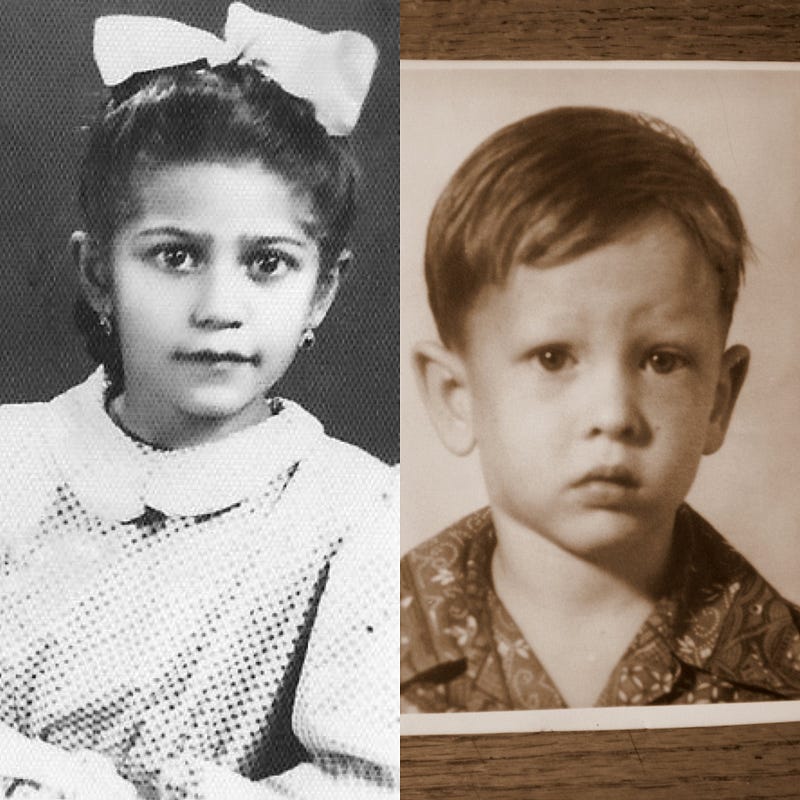
Meanwhile, my dad was growing up Baptist in Tulsa and my mom was growing up Baha’i in the Tehran metropolis. As members of the Baha’i Faith, my mom’s family were religious minorities among a Muslim majority.
Some see progressive unity, others see prejudice
The Shah, like his father, also pioneered for progress. In the 1960s and 70s, he balanced the power between the elites and the poor, helping more than four million small farmers. He started the “Free Nourishment” program for school kids. He brought suffrage for women. He showed kindness to religious minorities.
Much of the country loved him. Much of the country hated him. Shi’a clergy and some of the working class grew increasingly frustrated with his secular ideology.
That didn’t stop The Shah from going further. He became fascinated by the nationalism of Europe and Turkey where colonial achievement equated language with ethnicity. One such ideology was Aryanism. The Indo-European language tree (which includes Sanskrit, Persian, and most European languages) mapped the migration of an imaginary Aryan nation out of India, through Persia, and into Europe.
The word Aryan means “noble” in Sanskrit. Perhaps sacrificing the noble purity of the spirit for the sake of the ego, the word was twisted into something increasingly divisive and eventually horrific.
Through the theory at the time, Europe symbolized the top of the racial hierarchy as Indian and Persian civilizations were just a few steps behind. The Shah became enamored with this idea. Happily propelling Iran to this higher place on the hierarchy of civilization, he declared the country a nation of “Aryans.”
Suddenly, The People all became Persian. In the schools where he gave kids free lunches, The Shah took away the use of any other languages except Persian. All schools were Persian-only. All media was Persian-only. (Non-Indo European tongues like Azeri Turkish and Semitic Arabic, and even Indo-European Kurdish, were forbidden in any official use.)
My mom’s family were among those who benefitted from this change, which allowed religious minorities like Baha’is, as well as Jews, Christians, Zoroastrians, and atheists, to join in on the new secular national identity of how Persian they were.
A silent majority boiled beneath, feeling frustrated and tossed aside
However, 49% of Iranians had to forfeit their heritage or live quietly in the margins. While I am grateful for the safe space it gave my family, I must admit, … 49% is a big margin. It was a growing silent majority.
The Shah had given his people seemingly everything except freedom of speech. His secret police captured anyone who spoke against his rule; these people simply disappeared and, out of thin air, sometimes reappeared into the streets of the modern girls donning miniskirts and carrying textbooks.
As the Islamic revolution brewed, the silenced faction implied: Freedom for whom?
“There is more than one kind of freedom…Freedom to and freedom from. In the days of anarchy, it was freedom to. Now you are being given freedom from.” -The Handmaid’s Tale, by Margaret Atwood
By 1978, this tension transformed into bloody civil unrest and eventually triggered The Shah to invoke martial law. Hordes of people chanted in the streets: “Death to America, Death to America, Marg bar Emrika…”
Why “Death to America”? The way my mom describes it, the majority of Iranians did not despise Americans as people. This threat was towards The Shah who had allowed the American government to halt their progress toward democracy. The rioters and their supporters couldn’t forgive or live freely. Iran had so much oil wealth but they weren’t seeing any of it.
So were they saying “death” to a democracy because they couldn’t have a democracy of their own?
The Shah’s minister of information Daryoush Homayoun told the public: “If the leftists or Islamists take over, you won’t be as free as you are now; they are totalitarians and we are not. Now is the time to choose.”
It’s curious. At the time, my friend’s grandfather was curious, too, about a local protest in his town, and as the violence boiled over, he fell in the sewer and got trampled by raging rioters. It was beyond tragic. This is not what we see in the history books. We don’t see an everyday man doing the best he can. We see the result: That the revolution overthrew the monarchy and Ayatollah Khomeini declared the country an Islamic Republic in 1979. On the flag, the word “Allah” in the form of a tulip soon replaced the lion and the sun.
Grasping a handful of the country’s soil, The Shah left. He found fleeting refuge in the Bahamas and then was treated by doctors in Mexico for his chronic leukemia. Many begged him to find a doctor in the United States, to which he replied:
“How could I go to a place [USA] that had undone me?”
He did give in and travel to the U.S. for treatment. Next, in Panama, one of Khomeini’s close advisors demanded that the CIA come and kill The Shah.
Terrified, The Shah acted quickly and was granted asylum in Egypt. As this ardent nationalist lay in yet another hospital, he quietly chanted: “Iran is Iran.”
Under his death bed, The Shah kept that bag of Iranian soil. He fell into a coma and passed on July 27, 1980 at age 60.
Revolution roaring, lovingly, in our living rooms
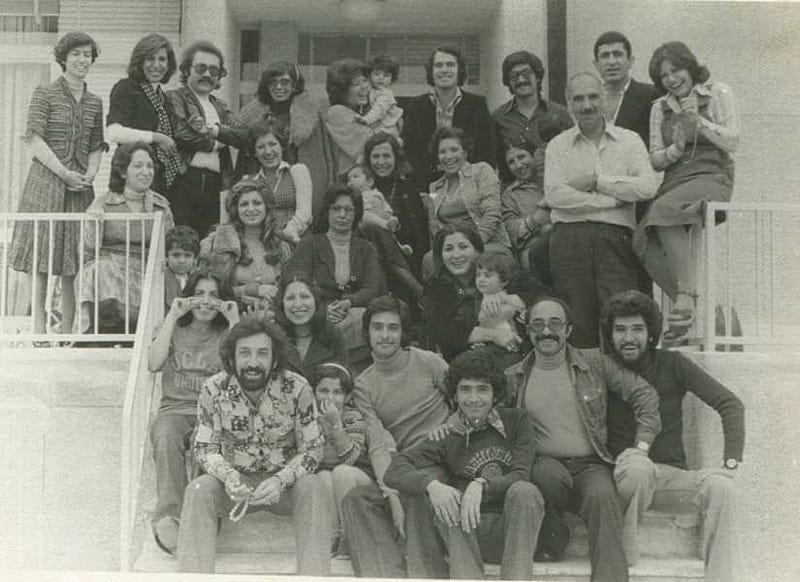
Meanwhile, my grandmother, the strong pillar of this family of eight, urged my mom to leave too. It wasn’t “fleeing the country.” It wasn’t supposed to be “goodbye.” But on the day of my mom’s flight, a solemn vibration rumbled on that front step. A mother hugged her daughter for the last time.
The family was divided by those who stayed and those who left, but as my cousin Sina says: “It’s important for hearts to be together.”
Sina had been imprisoned under Khomeini for being a Baha’i. Because Iran bars Baha’is from attending university, the community has gotten creative underground and online with the Education is Not A Crime movement. And in a strange twist of events, there is poetic justice by the rise of fanatic Islam in Iran. Now, a higher percentage of Muslim women attend university because they feel free to wear veils.
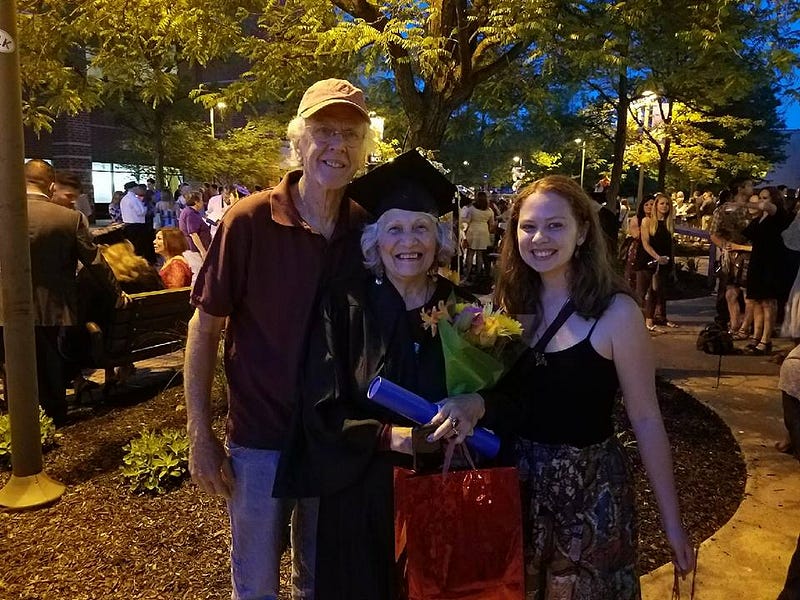
Many children were born in the aftermath of the Iranian Revolution all around the world, some like my cousins in Iran and Australia, some like me in the United States. Today, these children of a revolution are adults facing 2020.
If we look back far enough, we have all come from war and revolution. My own identity comes from the rising. I came to know The Shah’s face as a kind one and know Khomeini as a villain. Really though, any face is but a mirror to myself— a gem I have garnered from Persian Poetry and Mystical Islam.
When Black Lives Matter is Chanting “Death to America…”
“I refuse to see the world as a binary of good and evil.” -Holiday Phillips
In 2020, metaphor keeps me sane while there’s another revolution in my living room. From my small square on the chessboard, I’m seeing parallels between the Iranian Revolution and the rebirthing dissent in the United States today.
The morning after I drafted this essay, I awakened to the video of Oakland BLM rioters chanting “Death to America.”
I shivered. I feared. I was confused, invigorated, and angry. I still am.
Having said that, I would hope not all those protestors and rioters hate the United States as a whole. It’s not that simple. They are fighting against systematic racism from a place of society where they feel othered, silenced, tossed aside. And that is not okay either.
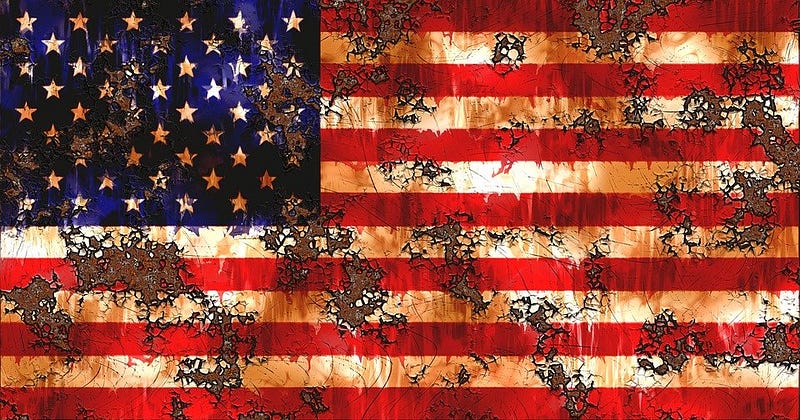
Society in the United States is based on freedom — even religious freedom through the separation of church and state. But should we have a Bible in the courtroom?
That is a question we are free to discuss and debate. We have freedom of speech, though increasingly I feel like a writer who is afraid to wield her pen. When one’s freedom to peacefully assemble becomes another’s freedom to riot, I can’t help but have mixed feelings.
Where can my fluid thought flutter in a country of extremes? On the surface, it’s either one party or the other party. It’s either a villain or a savior. It’s either right or wrong. Jesus or Judas. Nothing in between.
Race is not binary. Morality is not binary. The richest stories are not binary.
You won’t fool this child of a revolution. I refuse to see the United States as a binary of good and evil. I will do my part to keep my country safe by actively listening to perspectives other than my own, to soften the rage and bring the calm.
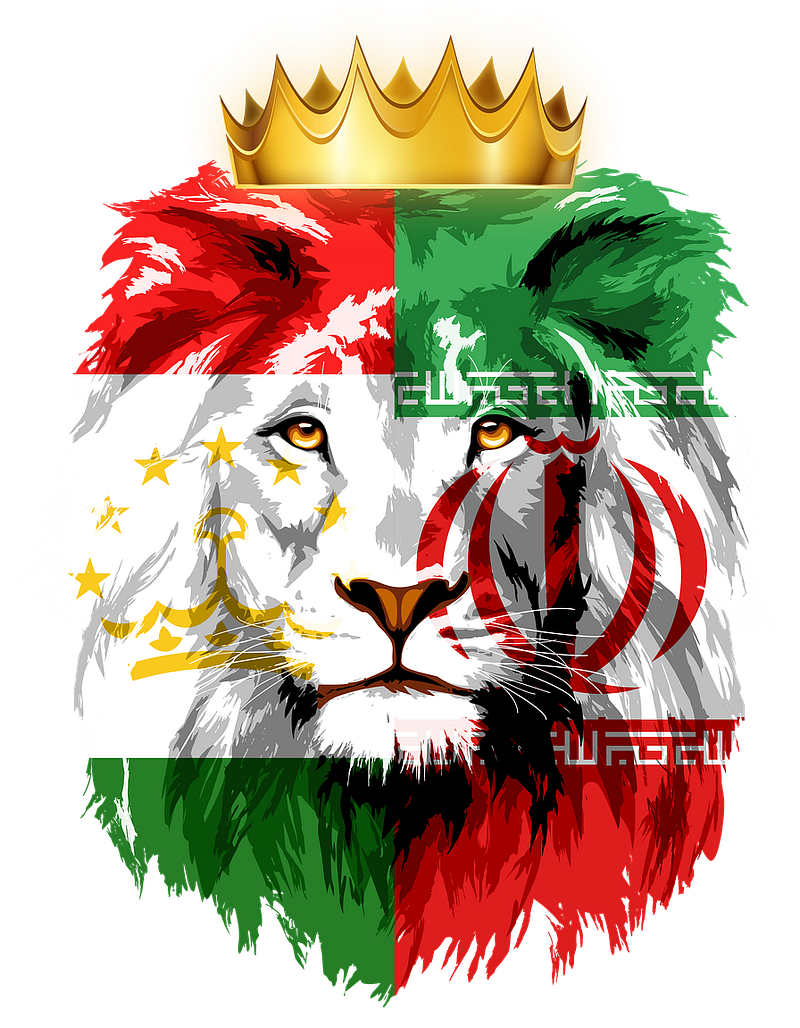
Despite any hardship, I vow to follow the advice passed down to me by my mother: “Shirzan Baash. Be a Lionness.”
“All the viruses are on stage in plain daylight. Humanity has lots of growing up to do, and we all have to learn to listen to each other and work for a more just, fair, and loving society.” -Bahereh Khodadoost, my mom
The love is so wide. The grief is so wide. Beneath anger simmers grief and fear. I’m afraid, too, that we are losing our freedom to live fully in a country that is but a Child of the American Revolution.
The way I see it, Iran’s “Death to America” roared an inner purge of western meddling…and America’s “Death to America” could be the prelude to an even more complex, collective ego death.
I do not advocate for violence, and in some ways, this violence is silencing. What about the minorities who lean more conservative? When I, as a white liberal, have pushed an agenda in an effort to help them, is that just another form of white supremacy?
These are just questions. If we are to release the self and come together as a collective, I must caution that “Death to America” could mean rebirth for some and catastrophic destruction for others. Chanting it invokes the reaction of each participant and viewer on this already thorny road. And for those who aren’t ready for this country to die and be reborn, what does it mean for our fellow people? Death to the naysayers?


