
African Eyes are Weeping
A Journal of the Plague Year, Day 79
I am not black. But I am wife to a black husband. Step mother to a young black woman. Mother to a mixed race girl child. Before they all became part of my life, I genuinely believed that the UK was not a racist country. I have lived in societies overtly constructed around racism — apartheid-era South Africa and Israel to name a couple. Our racism is more covert, less honest. It permits us the delusion of self righteousness and denial. But by living this country through the eyes of my family, I have had to accept that it is racist none the less. With a racism that is cowardly, draining, insidious, infuriating and so wasteful. Now feels like a time when we all have a responsibility to bear witness. To listen. To acknowledge the barriers that we place in the path of our non white compatriots, or at least the barriers that we fail to dismantle. And a time to think about what each one of us must do to make change. So here are some disjointed thoughts.
Last week my tough as elephant hide war-scarred husband sat in tears in front of the TV as he watched the news from America.
Most years he makes a pilgrimage to the Museum of Slavery up the road in Liverpool, and he weeps there too.
He never normally cries.
He is crying for all of the closed doors, cheap insults and dehumanising dismissals that have reduced his life and destroyed his hopes since coming to the UK. But he is also weeping for the centuries of horror visited on his ancestors by the racist doctrine that justified pillage and brutality on the basis of white superiority.
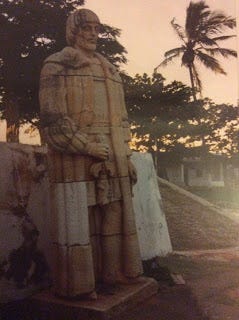
The first Portuguese mariners arrived in Angola in 1575. The Portuguese colonial government didn’t leave again until 1974. They voyaged, from their arid corner of Europe, to a land of unimaginable riches. Seas and forests teeming with life. Vast plains, plunging escarpments. Gold, diamonds, copper and, later, oil. They appropriated everything they could and, as they finally and resentfully left four centuries later, destroyed anything that they couldn’t take with them. One of the key crops that they harvested from those bountiful shores was people. Millions upon millions of them. It is estimated that four million enslaved people were shipped from Angola to the Americas. By Independence the country’s population was only seven million. Today it is around 30 million. If the same percentage of people had been ripped from the UK we’d be talking, conservatively, about 10 million British slaves.
I’ll let that sink in.
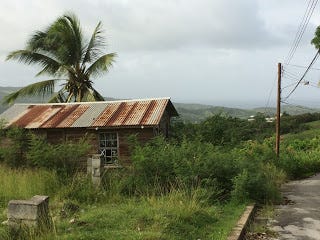
Last year, before Covid clipped all of our wings, we enjoyed a glorious family holiday in Barbados. That gentle, sparkling island’s name comes from the Portuguese, barbudos — bearded — apparently named by a Portuguese sea captain for its bearded fig trees. We learnt there that the very first slaves to arrive in Barbados were Angolans, washed up from a Portuguese ship wreck. We stayed in an elegant borrowed home, in the heart of the island, on the fringes of a village. My husband, as is his way, made friends with the local villagers and was invited to their parties, homes and churches. They seemed enthralled by the presence of an actual African in their midst. He was amazed to find customs, hierarchies, even dishes familiar from Angola. My parents accompanied us on our holiday so we also visited one of my father’s former clients — a sixth generation white sugar cane farmer who showed us around his estate. We all loved Barbados. But I could not shake the sickening realisation that every black person we encountered was descended from slaves. And every white person from slave owners. How can you ever heal that?
For the first 37 years of my husband’s life he was just a man. Defined and differentiated by his abilities and flaws and experiences. But never by the gene that determined his skin colour. Only when he moved to the UK to join me did he suddenly become a black man.
I wrote at length in April about the impact of this jolting shift on him and us — in Day 22 of this Journal:
I won’t repeat that here. The most powerful impact has been to make it impossible for him to realise his potential and find self-worth in this country. This is structural and ingrained and complicated. And for me completely unexpected and deeply disappointing. But this labelling also gives tacit permission to a kind of cheap, casual racism which bubbles up and bursts in our faces with depressing regularity.
For example — the gang of young lads, maybe 12 or 13 years old, who biked past our house last year making monkey noises at my husband.
The two men two years ago who threw beer on him as he walked past our local pub and told him to “go back to where he came from”.
Or the four men in a slick blue BMW last week who again, wound down the windows, and hurled beer and the N word at him.
I tweeted about that last one and, almost immediately, a local friend texted me to express his horror and remorse. The most striking thing for me about his reaction was how shocking he found something that I’ve come to regard as routine. I realised that I should have been far more shocked than I was. But now I’m just resigned to these happenings. Because they happen all the time. They’re why my husband has given up all hope of rekindling his lost career in this country.
My daughter, a few years back, became desperate to straighten her gorgeous ringlets because of jibes at school. She felt compelled to make excuses for the friend who said she looked “jaundiced”. “She didn’t mean to be racist mummy”. And last year she was rightfully hurt and indignant when another girl in her class thought it was funny and clever to incite other children to help her complete the word Vinegar. “I say Vi, you say….” Yes. That.
And so, inevitably, my family are forced to see the world through black eyes, through black lives. I try to do what I can to help, to confront the barriers placed in their paths. But in many ways that makes things worse. It cements the privilege of my colour, the disadvantage of theirs.
Driving passed the bars and restaurants on our (very white) local high street aged only about seven, my daughter presciently asked,
“Why are all the security guards black mummy?”
“Because those are probably the only jobs they can get.” I am forced to reply.
“But why?”
Good question. And now we find, unsurprisingly, that per capita more of those same security guards have been dying from Covid 19 than any other segment of our society. Due to the very same reasons of structural discrimination.
My step daughter, on the phone last week, was incandescent at the racism of her Angolan relatives towards her Nigerian boyfriend.
“It’s so stupid Anna. They say things like “You shouldn’t go out with someone who is darker skinned than you — think about your children.” And all the while they’re bleaching themselves!”
We have even infected the subjects of our racism, with that same racism.
So what do we do about this? Beyond the protests, how do we make real change? I am no expert. There are lots of people with much better expertise and ideas than me. But these are a few of my thoughts.
We need to look at how we educate our children. At school and at home. What example and experience lead those boys on those bikes to think that it was ok to make monkey noises in the street? We need to give our children a much fuller picture of their history and their place in the world. When I was at school we studied the Tudors and Stuarts about five times. We didn’t learn a thing about the colonial history of Britain or any other country. The first time I heard about apartheid was at the cinema, watching Cry Freedom, and it changed my life.
We also, desperately, need to prioritise the teaching of other languages and cultures. I’ve never met an African who could only speak one language. In comparison to our European neighbours we Brits are uniquely useless at learning and teaching foreign languages. This is all about attitude, not aptitude. We are fundamentally brought up to believe that we don’t need to learn anyone else’s language because they will probably learn ours. This ignores all the other ways that our lives and thinking are enriched by exposure to other languages and cultures. It leaves us with an impoverished view of the world, and a narrow, misplaced sense of our own exclusivity. I was appalled, when doing the rounds of the open days at our local high schools, to discover that our closest one only features a single language — Spanish — on its curriculum. That, I suspect, is where the monkey boys go to school.
There is a saying that to speak a second language is to have a second soul. That is very much my experience. To speak and really understand in another language it is not enough merely to learn the vocabulary and translate word for word. That doesn’t work. You have to learn to think in a different way, to understand different constructs and logics. To speak another language well you have, to an extent, to become a different person, shaped by the linguistic tools at your disposal. That is a critical lesson in empathy which starts to unpick the superficial nonsense of racism. And beyond just being able to communicate, languages open up whole libraries of alternative music, books, film and TV, alternative views of the world. Consumption of culture from other countries and languages is, in my experience, far more common in France, or Germany, or Sudan or Brazil than it is in the UK. My husband is downstairs listening to French-Creole music from Martinique. Tonight he will probably indulge in a few episodes of a Mexican soap opera. Yet the culture that is consumed in this country is almost exclusively British and American. I can’t help wondering if this narrow field of reference, reinforcing a deluded sense of superiority, is a key reason why the UK has performed so very badly in controlling Covid 19. Has it made our government unable or unwilling to learn from the example of other countries?African countries, for example, have been far more successful in controlling the virus than the UK, and with far fewer resources at their disposal.
Fundamentally I believe that prejudice — of any kind — is a manifestation of ignorance and fear. If you get to know someone, speak with them and genuinely listen to them, you cease to see what they look like, you just sense who they are. We need to breed familiarity instead of contempt. To explore what we have in common, not what divides us. And we need new, creative ways of effecting that contact and rapprochement. It won’t happen on its own, particularly in the Britain of Brexit.
My daughter was born just a few weeks before Barack Obama was first elected. As I watched his election night speech, cradling my tiny beautiful baby, I felt jubilant. Surely this was the best time in history to be born to an African father and an Anglo-Saxon mother? But then we got Trump. And Johnson. Bolsonaro, Orban and Lukashenko. We now have a Prime Minister who thinks it’s acceptable to write about picaninnies and watermelon smiles, in spite of the fact that he’s unquestionably studied a lot of history and learnt a lot of languages. Who has written that Africa’s present is in no way the result of its colonised past. So the other thing that we badly need is wise, humble, honest leadership. Leaders whose motivation is to serve the public — of every shade — and to lead us by example to a more reflective and inclusive future.


