
A Journal of the Plague Year, Day 6: The Gift of Solidarity
25 March 2020
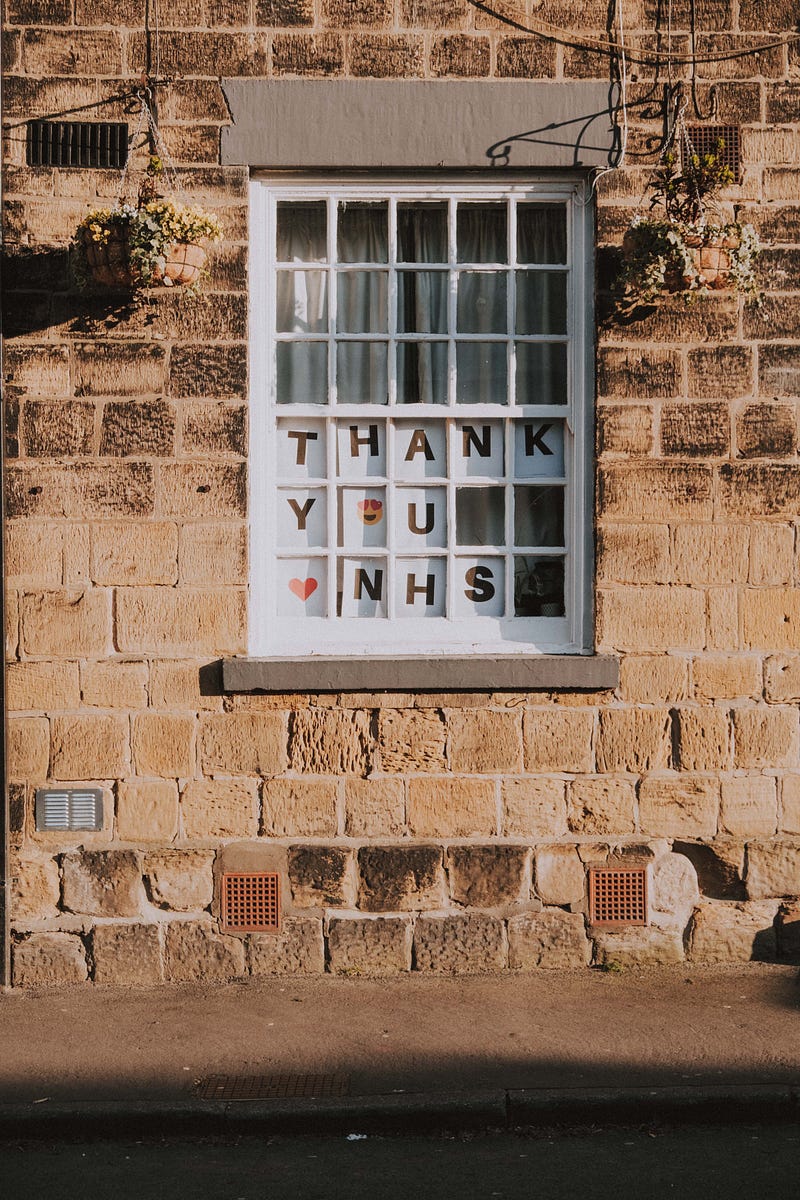
Well, we’re all in the same boat now. With our fellow countrymen. Our neighbours on the continent. And across all other continents. A third of the world’s population is now under some form of lockdown. The UK government has, belatedly, followed suit. Has there ever been a moment in human history when so many people had to follow the same advice and measures, for the greater good? I imagine not.
The only way we will halt the spread of this virus is if we all put self-interest aside and act in the interests of the most vulnerable in our societies. It does not discriminate by race, religion, geography, polity, and so nor should we. Prince Charles, Boris Johnson, Tom Hanks and Harvey Weinstein all have it. Covid-19 — the great leveller. And yet — as it permeates our highly polarised world and country, the relative impact of the virus will highlight starkly quite how unequal and selfish our world has become. I am waiting with horror for the death toll in Africa, in refugee camps and old people’s homes, amidst the 29 million uninsured in the USA. Systemic discrimination will be laid bare by this bug.
But there is opportunity here, if we choose to seize it. So many people in so many ways are responding with great creativity and generosity to this crisis. Universities are putting courses online for free. Museums and galleries are finding ways to share their collections remotely. Celebrities are sharing stories, music lessons and dance classes over the internet. Yesterday, along with 950,000 people from across the globe, I virtually joined a buff and bouffant Joe Wicks in his spartan living room to take part in a free daily PE lesson. Never mind that my daughter — for whom this class is intended — watched me with incredulity from beneath her bed covers. As he panted and exhorted us to jump like kangaroos and kick like Messi, Joe read out the locations of fellow participants — Zimbabwe, Singapore, Spain and Sunderland. We’re all in the same boat now.
The private sector are joining the solidarity movement too. Gin distillers have converted to making hand sanitisers. Zara are producing clinical scrubs for Spain’s struggling health workers. Decathlon have apparently turned scuba masks into ventilators (is that really true or just spam?).
A contagion of public service is spreading along with the virus. Here in the UK 12,000 retired NHS staff have signed up to return to work in our beleaguered hospitals. In just one day 400,000 volunteers have joined a “National Help Service” to support this NHS effort. The National Farmers’ Union are calling for a new land army — harking back to the second world war — to mobilise Brits to help plant and pick the food we’re all now panic buying. In recent decades we’ve relied on the EU either to supply us with this food, or send us the labour to cultivate it. Neither are now an option. British people have largely shunned this work, but now 9000 UK citizens have applied for jobs helping to harvest Kent’s hops. Teams of scientists across the world are collaborating to expedite the development of vaccines and treatments. Cuba is once again — as in the Cold War — despatching its superb medics to help out in other countries with weaker health systems.
We have two great national institutions in the UK that are — in their construct, funding and purpose — essentially socialist. The NHS, and the BBC. Our current Conservative government is viscerally uncomfortable with anything that smacks of socialism. They are suspected of wanting to privatise elements of the NHS, and have openly flouted their intention to emasculate the BBC. Yet now these institutions are at the heart of the national response to Covid-19, and our right wing government has hurriedly adopted a range of the most left wing policies ever seen in our country — unthinkable even a fortnight ago. Dedicating 15% of GDP to bail out companies. Rolling out benefits to far more people. Committing to pay up to 80% of salaries in what is, basically, a promise to provide a universal basic income. This is profoundly disorienting. I can only imagine how confused the Cabinet are feeling. Not three months ago a far milder version of these kinds of policies was roundly rejected at the ballot box as Boris and his promise to “Get Brexit Done” trounced the Labour party. Now they are rapturously received. Covid-19 — the great rebalancer.
If these policies are possible now, why are they not to some lesser extent both possible, and desirable, in calmer times? I am not a socialist. I believe in the value of the market economy as a catalyst for creativity, innovation and endeavour. As a reason to get out of bed in the morning. At the age of 16 I spent six weeks in the Soviet Union studying Russian — just months before the fall of the Berlin Wall. I was astounded by the stultifying effect that 60 years of communism had had on any form of initiative. The further you wanted to travel, the less likely a taxi driver was to take you. Why bother — they got paid the same regardless. Fully staffed restaurants didn’t bother to open — they got paid whether they served one customer or one hundred. Fully staffed shops spent the whole day selling nothing, as I discovered to my incredulity when I tried to buy an accordion. But there must be a better way, in a capitalist society, of balancing individual endeavour with a more supportive social safety net. Of narrowing the gap between the richest and poorest. Scandinavian countries seem to manage it. Inequality has flourished in our country in recent times, with distressing consequences. What would we have to sacrifice to carry our new found solidarity into the post-Corona world? Trident? HS2? Would that not be a reasonable price to pay to eliminate foodbanks, homelessness and hopelessness in the world’s fifth largest economy? Will we still feel inspired to act like we’re all in the same boat when this crisis has passed, or will we all go back to paddling our own canoes?
And what of “getting Brexit done” now? The deadline for negotiations must surely slip beyond the self imposed cliff edge of the end of this year. Will support for Brexit survive this crisis, or be challenged by it? Will the government still be minded to pursue a hard Brexit, or be caused — by financial or social adjustments — to consider a more conciliatory path? Brexit for me was the arch expression of the gaping inequality that has riven our dis-United Kingdom. Hard as I have tried, I cannot understand those who support it. Just as, I’m sure, they cannot understand why I find it so profoundly heartbreaking and retrograde. Will we shake off this virus, shake off our new found solidarity, and retreat back into our riven Brexit camps? Will we continue to hurtle towards Scottish Independence and Irish Reunification, all in the name of “taking back control”? Or will Covid-19 somehow demonstrate how vital collaboration is and, therefore, prove also to be the great reunifier?
For the next instalment, click here:


