
A Journal of the Plague year, Day 11: The gift of clean air, empty skies and the chance to connect with nature
1 April 2020
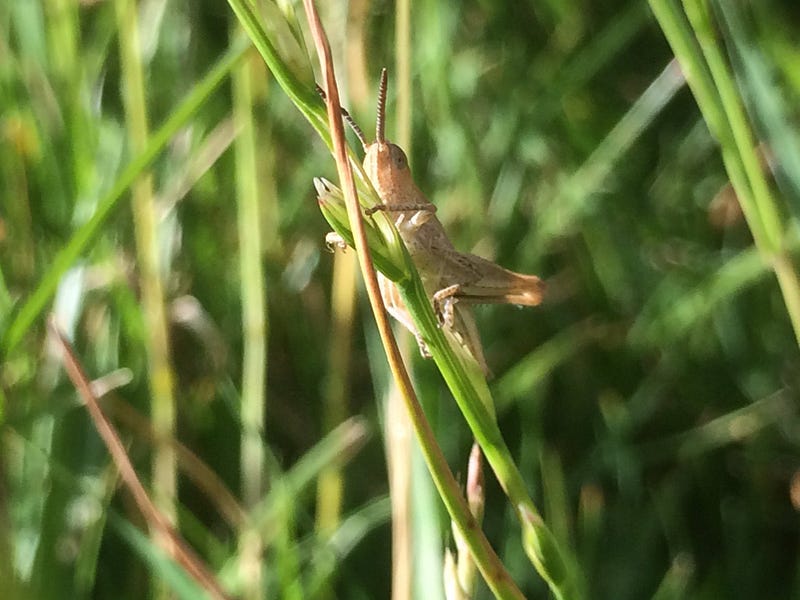
It’s dawn in my urban garden and the birds are striving to out sing each other. I can hear their trills and riffs from the large cherry that’s about to burst into gaudy pink blossom, from the ash trees on our street, and from the small woodland three roads away. Normally at this time I would be rushing to make packed lunches and locate matching socks. Normally the overriding sound would be the constant background rumble of the impatient nose to tail traffic on the heaving main road outside. Now there is just the occasional keyworker’s car, or delivery truck. The peace is striking. The birds can hear each other and they’re making the most of it to share the thrill of spring.
As our roads, skies and factories have fallen silent in recent weeks this drop in noise pollution has been matched by a precipitous drop in Nitrogen Dioxide and other forms of air pollution everywhere from China to Italy to the road outside. A disease that assaults our lungs has caused us drastically to curtail the self-inflicted toxins that have been assaulting our lungs for years. Reportedly, carbon dioxide levels over New York have dropped by 8–10% this month, and China’s CO2 emissions were 25% lower this February than last. I would love to know what cumulative impact this slow down will have on global warming this year. It’s facile to anthropomorphise the planet but it is hard to avoid the feeling that this is nature, via the medium of bats and pangolins, biting back.
Here in the UK, at least, we have a rare opportunity during our lock down to take the time to listen to the message that nature is sending us. Along with most workplaces, pubs, shopping centres and cinemas, all gyms, pools, football clubs and dance lessons are closed. Which means that the only option for our one permitted session of daily outdoor exercise is to walk, run or bike close to our homes. Abruptly many more of us are finally meeting the longstanding and long ignored public health advice to undertake 30 minutes of activity each day. And in so doing we are reconnecting with the nature on our doorsteps. Which is scientifically proven to be beneficial for our mental and physical health.
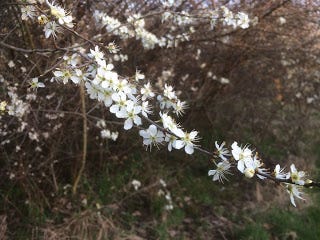
I’ve always known that being outside and, particularly, being surrounded by trees, makes me relax, breathe and think more clearly. This is partly nature and partly nurture. Both my grandfathers were farmers, among other things. My father works in horticulture. My mother was a nutritionist. My cousin runs a small holding and seed company. We definitely have plants in our genes. Most of my clearest childhood memories involve being outside — losing my wellies on muddy walks with my mum, visiting the Jersey calves and hiding in the hay bales at her cousin’s farm, playing in the river at the bottom of our garden, collecting my friend’s chickens’ eggs.
As an adult I initially took a different path — pursuing journalism and international development over agriculture or horticulture. For twenty years I worked in and on a variety of war zones across Africa and the Middle East. Even then I would try, where feasible, to find my way to some greenery as a respite from man’s cruelty to man. At the height of Angola’s civil war most of the interior was off limits due to the fighting and we were penned into a few sweaty, seething cities. But you could still drive some way inland from the capital Luanda, through miles of crowded musseques housing fugitives from the violence, and climb into the lush green hills where coffee used to grow. There, where the sandy coastal plain meets the foothills, there is a forest of bulbous, elephantine Baobab trees. Not just the customary one or two, standing sentinel above the bush, but a whole forest of them. The sight of them used to make me laugh out loud, and my shoulders drop with relief from the unrelenting horror of the war.
With the advent of children I could no longer spend my time in war zones with no phone signal, accessed only by sporadic UN flights. I ended up instead joining the team that moved the BBC to Salford. A wonderful experience and project. An opportunity to relocate to a part of the world that I have really grown to love. But a few years in I realised that I spent all my days moving from one glass walled space to another, sitting down, bombarded by strip lighting, staring at screens. Taking advantage of the hotdesking culture of BBC North I would always gravitate to the seats nearest to the outside world so I could gaze out on the Manchester Ship Canal and the distant Peak District. I tried to squeeze my nature fix around work and family — biking to work, and walking, camping and gardening at weekends.
After five years I decided that I couldn’t spend another 20+ years like this. We are not designed to be penned indoors, sitting down. So I started looking for an opportunity to move into the environmental sector. Long story short, I got very lucky. The Royal Horticultural Society decided to create their fifth garden, the first new one in 20 years, just 3 miles from my house. And I landed the opportunity to head up the project. Three years on I also took on a second big nature-based project — Northern Roots — a little further around the M60 in Oldham. For the last four years I have worn walking boots or wellies to work most days. I still spend a lot of time working at a computer, but this is interspersed with meetings held wandering in the woods. I no longer feel the frantic need to cram my outdoor time around my working day, it has become an integral part of that working day. I have realised that the physical nature of our work is just as critical as its content and purpose.
A key goal for me in setting up both RHS Garden Bridgewater and Northern Roots is the aspiration to give more people, from a wider range of backgrounds, the opportunity to reconnect with nature. In a way that helps to enhance both biodiversity and mental and physical health. According to one survey, more British children can now identify a dalek than a magpie. In setting up these projects I have also learnt a great deal about the science underpinning what I always instinctively knew — that time amidst plants and nature is essential for our physical, mental and societal health.
Experiments have proven that plants and trees can absorb different forms of air pollution, and negate noise pollution. They capture water, reducing flooding and improving water quality. They cool our overheated cities, and can insulate buildings against both heat and cold, reducing the need for heating or air conditioning. The more greenery there is in a street, the more house prices, footfall and spending in shops increase. The colour green is calming to humans. Which is why, in the USSR, the corridors of apartment blocks were painted a uniform, dingey green. The more natural a landscape, the greater its positive impact on our mood, reducing stress and depression. Research published over twenty years ago demonstrated that patients recovered faster, and better, from operations if their hospital bed had a view of plants. Over the last year I have set up and run a pilot “social prescribing” project at RHS Bridgewater, where patients have been referred by the local primary care sector to come for weekly sessions helping out in the garden. The results — captured and evaluated by Salford University — have been revelatory, showing striking improvements to participants’ mood and confidence. And of course, beyond the benefits that plants provide to us humans, they provide vital habitat for biodiversity, and help to capture the carbon that we pump into the atmosphere.
It would be a boon if, as a result of Covid-19, we all become more conscious of, connected to, and concerned for the nature on our doorsteps. If we start to take small steps to plant and nurture more, and destroy less. If we work more from home, holiday and shop closer to home, and choose to drive and fly less once this crisis is over. This is probably fanciful though. Emissions and pollution in China are already on the increase again, as the shut down there begins to ease.
For the next instalment, click here:


