
A hijab doesn’t mean you’re oppressed and a bikini doesn’t mean you’re free
When cultures collide and assumptions thrive
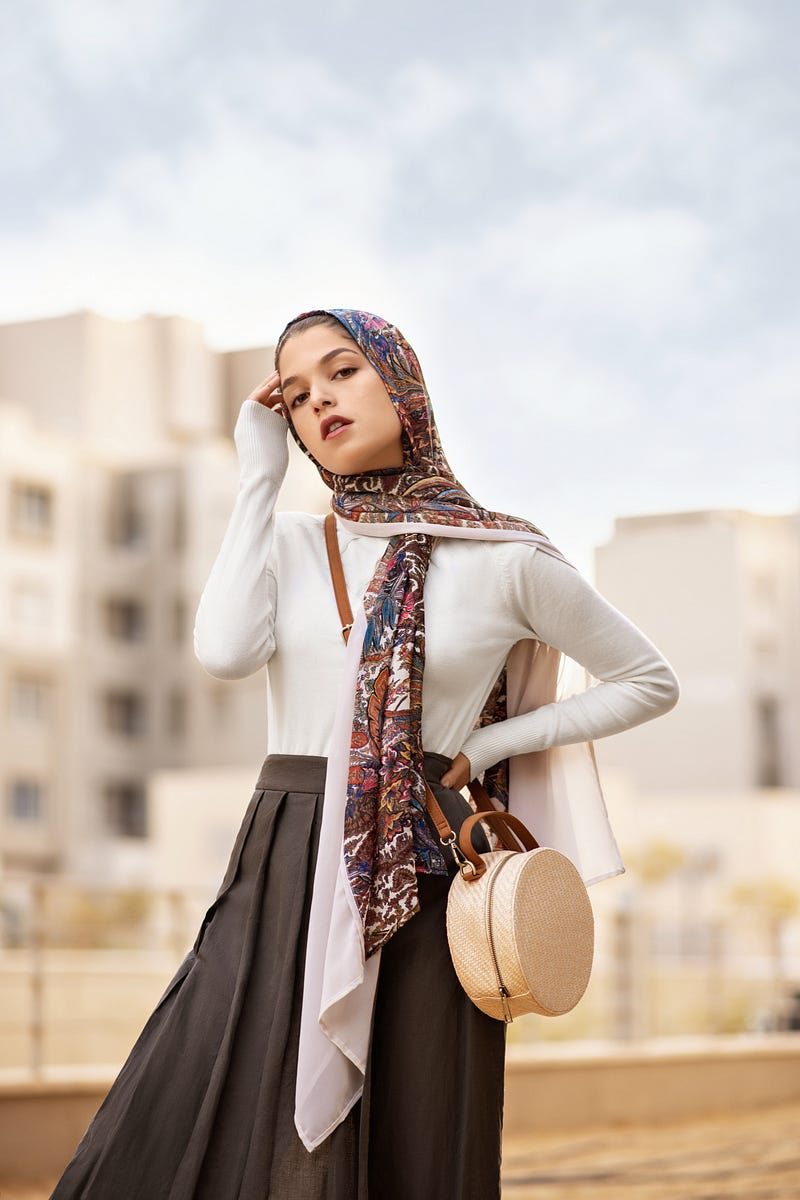
Admit it, seeing a woman in a hijab — be it the headscarf, the body-covering burqa, or the face-covering niqab, makes you uncomfortable.
Instinctively, without a moment’s hesitation, you pass your judgment: The woman is instantly stamped as oppressed!
This misconception is prevalent in the West, where dressing conservatively is commonly equated with oppression, a prominent example in recent years being France.
French President Nicolas Sarkozy, categorically stated veils were a sign of oppression and ‘not welcome’ in his country. In 2016 a controversial ban on the ‘burkini’, the full-bodied swimsuit, was instated in France.
It was later overruled, but I kept asking myself this question: why should anyone else decide what a woman feels comfortable wearing? How can an item of clothing be seen as a sign of oppression?
To me that argument is as flawed as ‘wearing a bikini or mini-skirt is a sign of emancipation’. How are the two related?
How is the amount of skin I display reflective of my thoughts and ideologies?
Interestingly, it isn’t just Muslim women or women from more conservative Eastern cultures, who are challenging and fighting these rigid restrictions rooted in western ideas of femininity.
Serena Williams, the world’s number one tennis player, daringly wore a black catsuit during the French Open in 2018. The French Tennis Federation cited it as ‘disrespectful’ to the game and later instituted a ban against it.
The Bikini debate:
Let’s turn our attention to the other side of the equation, which to my mind, is even more baffling!
How many of you remember the Norwegian women’s handball team being fined last year? The European Handball Federation levied a fine of €150 per player for wearing spandex shorts instead of the stipulated bikini bottoms.
While men wore tank tops and long shorts, the women were required to wear midriff-baring tops and bikini bottoms “with a close fit and cut on an upward angle toward the top of the leg.”
It reeked of double standards, allowing such blatant objectification of women’s bodies, while not subjecting the men to any such dress regulations.
After the global outrage it sparked, the International Handball Federation later did update its rules to remove the previous requirement of wearing bikini bottoms.
However, the mere fact, that even in 2021, women were being TOLD what they must or mustn’t wear is a clear sign of oppression. These are just more subtle forms of control.
The team’s coach told news reporters that the Norwegian players had been fighting for ‘several years’ to end this discriminatory sexualization of sport.
Apart from denying female athletes their basic right to choose what they prefer to wear, it also kept a lot of good players, especially from many Eastern countries, away, because of the excessively immodest uniform.
The gymnastics debate:
The trend continued to gather momentum, as soon thereafter the German gymnastics team at the Olympics followed suit:
Breaking the dress code conventions, they opted to wear full-length unitards, covering the legs right down to the ankles instead of the customary high-cut leotards worn by most female gymnasts.
Again, this was a statement against sexualization in gymnastics. According to the German Gymnastics Federation, the aim was “to present themselves aesthetically — without feeling uncomfortable.”
The gymnasts wanted people to focus on their sporting skills rather than serve as entertainment for the masses and a means of attracting larger audiences.
These developments are like a breath of fresh air, a much-needed step in the right direction for women to be able to choose whatever they feel comfortable wearing and not be dictated to.
Unfortunately in parallel, the controversy around the hijab continues: Most recently, in the Karnataka state of India, where a group of girls was denied entry into the classroom for wearing a hijab.
The crux of the matter is, be it female athletes or school girls honouring their culture, women should have agency and autonomy over how they choose to express themselves, including their choice of clothing, whether modest or liberal.
Liberating the hijab
What we need to understand and take into consideration is how communities are no longer isolated, defined by their own stories. Interdependence of cultures, the emergence of global networks, challenge previous forms of identity and authority.
I believe that in this age of globalisation, mass media & ease of international travel, the world is getting smaller and smaller, with societies no longer living in isolated homogeneity. Countries the world over need to show more tolerance and acceptance of values and beliefs other than their own.
It took over a hundred years for it to finally happen, but now two icons have been featured on the cover of the British Vogue, THE mainstream European magazine, wearing a headscarf.
Halima Aden, a hijabi supermodel and most recently, Malala Yousafzai, Nobel Laureate and untiring advocate of girls’ education.
Despite the dictates of fashion in mainstream Western society, they stayed true to their own culture and beliefs, serving as role models to so many. Their stance delivers the message, to stay true to one’s self and not give in to any societal pressures.
In the words of Malala:
“When we follow our traditional dress, we’re considered to be oppressed, voiceless, or living under patriarchy. I want to tell everyone that you can have your own voice within your culture, and you can have equality in your culture.”
So the next time you see a woman wearing a hijab, don’t be quick to judge and label her… she may just turn out to be the brightest, fiercest woman you know!
If you would like to know more about me and my story:
References:
1) https://www.cnn.com/2021/07/20/sport/norway-handball-shorts-fine-intl-scli-spt/index.html
2) https://www.washingtonpost.com/sports/olympics/2021/07/25/german-gymnastics-unitards-olympics/
3) https://www.bbc.com/news/world-europe-13038095
4) https://www.cnn.com/2022/02/10/india/hijab-karnataka-india-protest-intl-hnk/index.html
A version of this article was first published in the Elephant Journal. Revised and edited for Medium.
I would like to give a shoutout to Caitlin McColl, a seasoned writer, who has just started her own publication, ‘The Penny Press’ with the motto of a penny for your mindful thoughts. You can write about a wide range of topics covering the mind, body, life, and soul. Read on to know more about the pub and submission guidelines.