
Birds, Nature, Wildlife, and Photography
A Genuine Wild Goose Chase
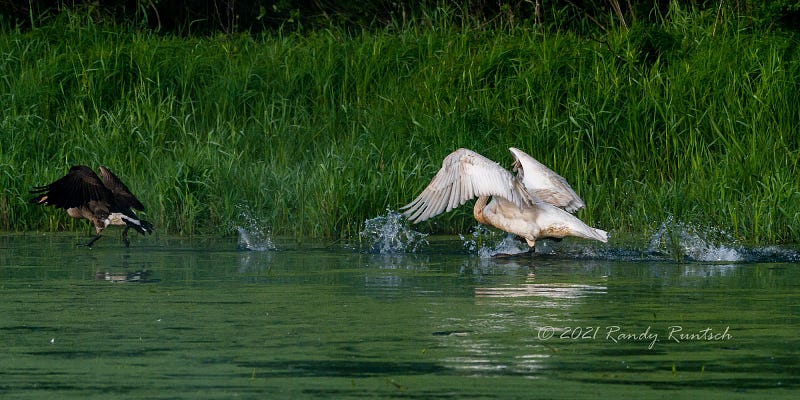
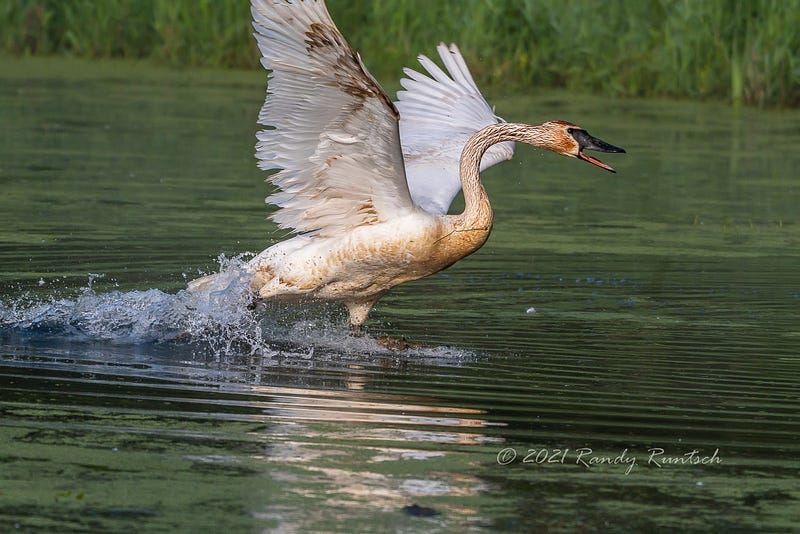
The idiom “wild goose chase” originated in the sixteenth century. In this real-life wild goose chase, an angry trumpeter swan chased a Canada goose and prevailed in the end.
We have all experienced the folly of a fruitless wild goose chase. We express the term after we have pursued a goal that does not exist, is unachievable, or is not worth its price in money, time, or effort.
The first use of the idiom wild goose chase was recorded in 1593 by English poet Gervais Markham in a book on horsemanship. A wild goose chase was a horse race where contestants chased an erratic lead horse. William Shakespeare used the term in his play Romeo and Juliet that premiered in 1597.
Recently, I toured Whitewater Wildlife Management Area on a warm spring day to view and photograph wildlife. As the blufftops basked in sunshine, fog bathed the Whitewater River valley below.
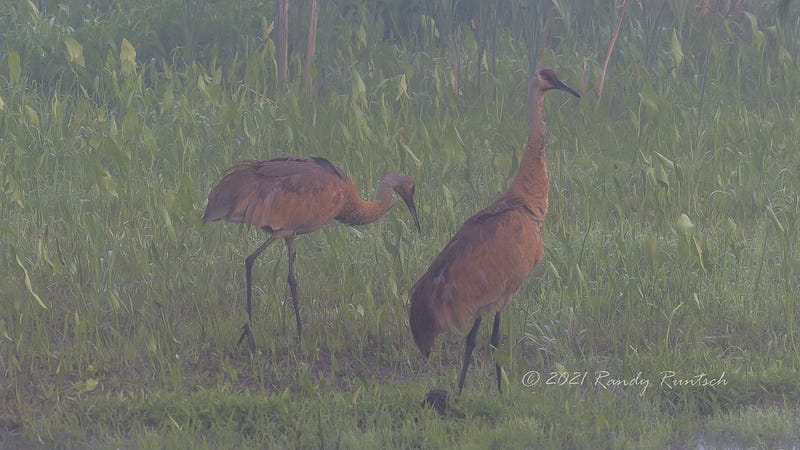
The thick fog obscured the view of a pair of sandhill cranes as they foraged for food in tall grass. I normally observe and photograph these birds as long as they allow. But on this day, I moved along.
Minutes later, I hiked to the end of a pond favored by trumpeter swans. As I arrived, the flapping of wings in the water alerted me to something unusual. I witnessed an actual wild goose chase.
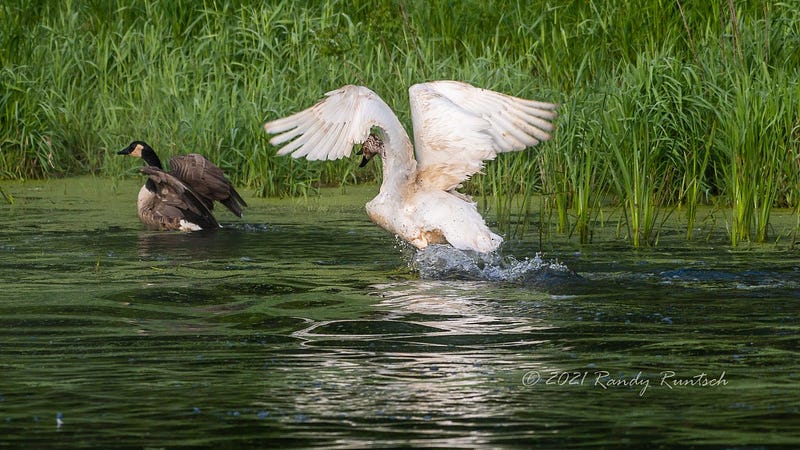
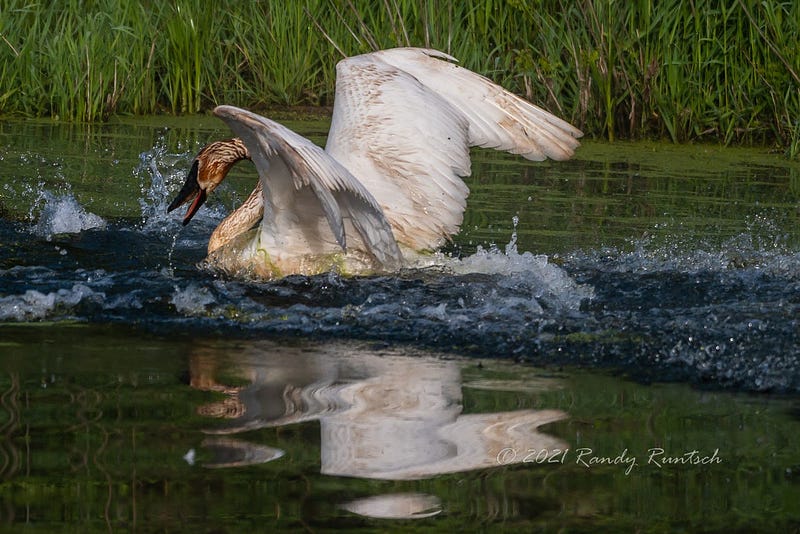
A trumpeter swan chased a Canada in the water and the air. Both birds flapped their wings violently as their feet pedaled and their wings smacked the pond’s surface.
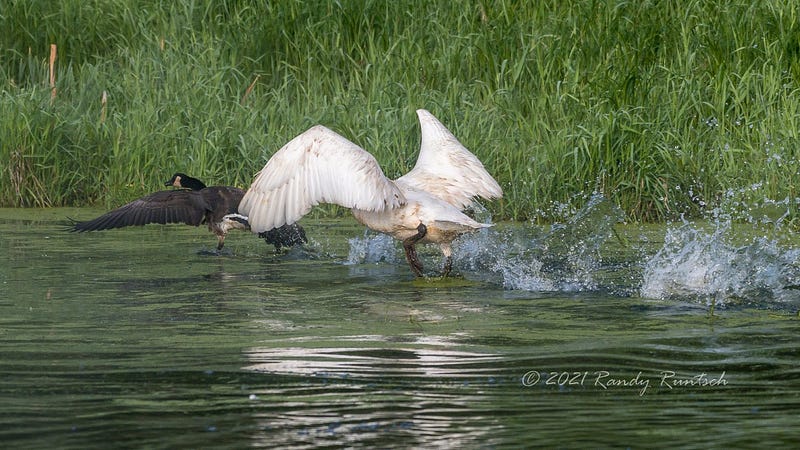
The swan was visibly angry. But it prevailed and the goose fled.
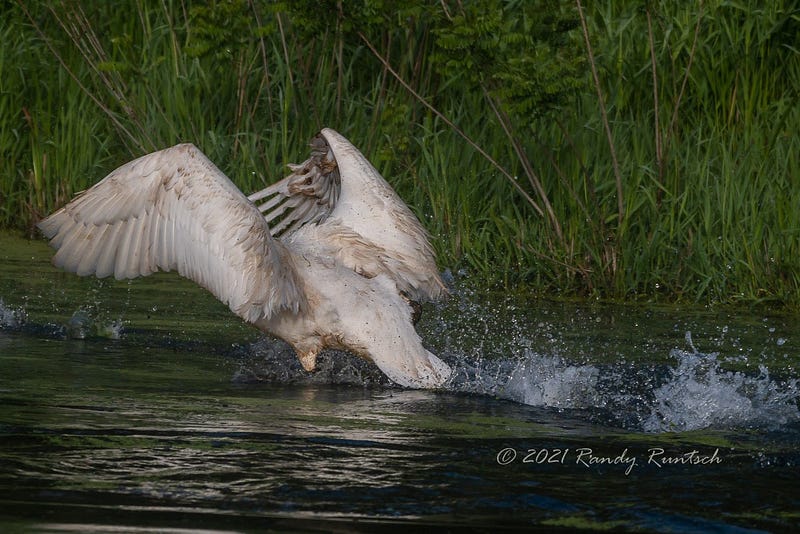
I wonder how the goose provoked the swan. It is breeding season, so maybe it bothered the swan’s nest, eggs, or chicks.
The fog lifted as I traveled on the Great River Road along the Mississippi River. My next stop was Trempealeau National Wildlife Refuge, another birdwatching and bird photography hotspot.
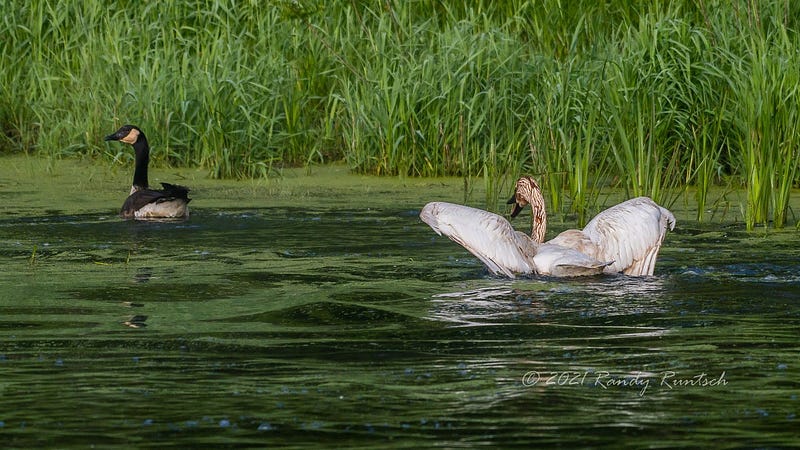
“Happiness in this world, when it comes, comes incidentally. Make it the object of pursuit, and it leads us a wild-goose chase, and is never attained. Follow some other object, and very possibly we may find that we have caught happiness without dreaming of it.”― Nathaniel Hawthorne