
A FILM TO REMEMBER: “SCARFACE” (1983)
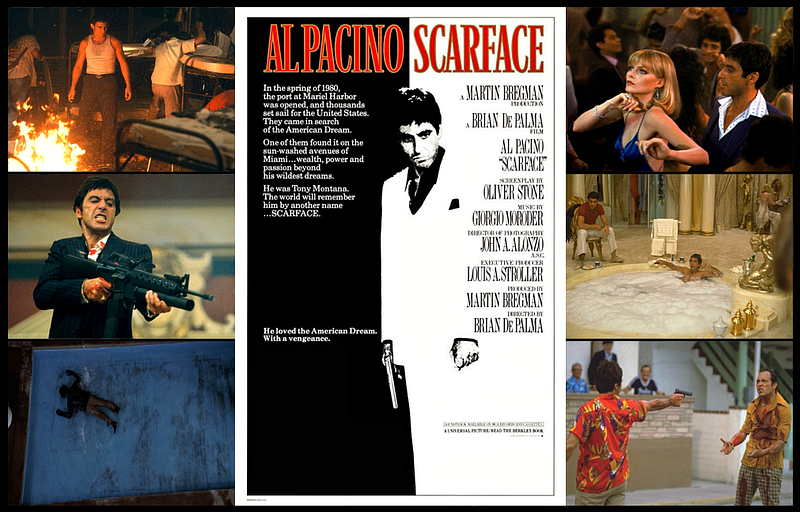
Before I get into this, I want to make mention “A FILM TO REMEMBER” will be a series about films that have reached a milestone anniversary since their origin in being culturally, historically, or aesthetically significant. The articles will contain the film’s plot outline, director, cast, a compilation of trivialities, various photos, movie trailer, critical reception and more. So, let’s start:
We are here to mark the celebration of the 35th Anniversary of Brian De Palma’s “Scarface”. Let’s take an inside look at the film.
PLOT OUTLINE:
In Miami in 1980, a determined Cuban immigrant takes over a drug cartel and succumbs to greed.
STUDIO:
Universal Pictures
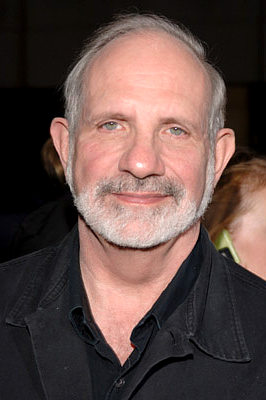
DIRECTOR:
Brian De Palma
CAST:
- Al Pacino … Tony Montana
- Steven Bauer … Manny Ribera
- Michelle Pfeiffer … Elvira Hancock
- Mary Elizabeth Mastrantonio … Gina Montana
- Paul Shenar … Alejandro Sosa
- Robert Loggia … Frank Lopez
- Míriam Colón … Mama Montana
- F. Murray Abraham … Omar Suárez
- Harris Yulin … Mel Bernstein
- Ángel Salazar … Chi-Chi
- Pepe Serna … Angel Fernandez
- Michael P. Moran … Nick the Pig
- Al Israel … Hector the Toad
- Mark Margolis … Alberto the Shadow
- Geno Silva … The Skull
- Dennis Holahan … Jerry
- Ted Beniades … Seidelbaum
- Gregg Henry … Charles Goodson
- Richard Belzer … Babylon Club M.C.
- Lana Clarkson … Manny’s Dance Partner
GENRE(S):
Crime | Drama
TAGLINE:
He was Tony Montana. The world will remember him by another name…SCARFACE.
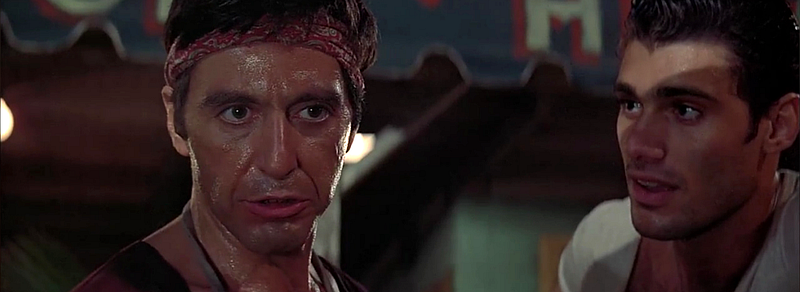
The film is known for having become a touchstone of pop culture, it’s the very definition of excess and over-the-top, with the argument being made that characterization and plot go out the window. But yet, against the odds, it doesn’t entirely sour a film that has become a garishly ghoulish, bleakly funny and compulsive template for modern-criminal deconstructions of the American Dream. Director Brian De Palma paints in exuberant, extravagant swaths of crimson red, taking this foolhardy gangster film as a thing of delirious grandeur driven by Al Pacino’s towering performance in this ultra-stylized, violent ’80s crime cult feature. The film is a remake of the 1932 film of the same name, its initial critical reception was negative and even had objections to the film’s portrayal of Cubans as criminals and drug traffickers. In the years that followed, the film has received reappraisal from critics and having been referenced extensively in pop culture, it has long since made it become a crime genre, cult classic.
Here’s what some of the critical receptions have been for the film over the years:
Richard Corliss from TIME Magazine says: “It is a serious, often hilarious peek under the rock where nightmares strut in $800 suits and Armageddon lies around the next twist of treason.”
Vincent Canby from New York Times says: “The dominant mood of the film is anything but funny. It is bleak and futile: What goes up must always come down. When it comes down in ‘Scarface,’ the crash is as terrifying as it is vivid and arresting.”
Gary Arnold from Washington Post says: “As stylized social realism gives way to wigged-out Faustian fantasy, the would-be devastating effects have an oddly slapstick effect.”
David Ansen from Newsweek says: “If ‘Scarface’ makes you shudder, it’s from what you think you see and from the accumulated tension of this feral landscape. It’s a grand, shallow, decadent entertainment, which like all good Hollywood gangster movies delivers the punch and counterpunch of glamour and disgust.”
Emanuel Levy from EmanuelLevy.com says: “Al Pacino gives a riveting performance in the lead in De Palma’s over-the-top but engaging modern version of the classic gangster.”
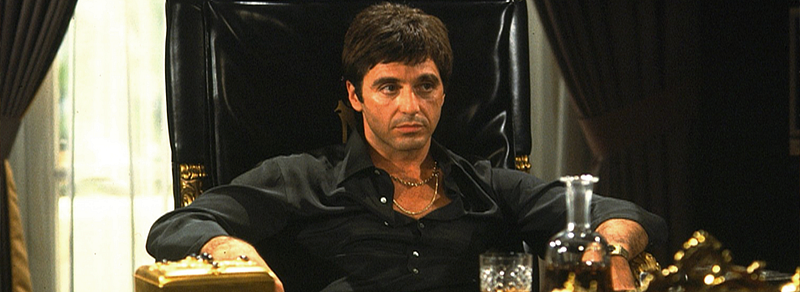
As you can tell by the critical reactions, the film was met with a negative critical response initially, that drew significant controversy regarding the over excessive violence, profanity and graphic drug usage with even some Cuban expatriates in Miami, Florida objecting to the film’s portrayal of Cubans. However, over the years, the film has received a reappraisal from critics despite its various shortcomings, as Pacino’s powerhouse maniac performance and De Palma’s love of blood and guts, has made this film become referenced as a coked-up B-movie version of “The Godfather” and “The Godfather: Part II” without a family to feel sympathy with. As this is very much a crime genre feature of the ‘80s in its portrayal, not of moral decline but of unstoppable ego-centrism with guns in this drug-crazed, bloodshot, vividly frantic, cult gangster classic. But I’ll let you decide…
So, to get a better look at the film, here’s a link to the movie trailer of Brian De Palma’s “Scarface”:
Here I have provided 12 interesting and intriguing trivia facts (I wanted to keep it limited) about “Scarface”:
- When director Brian De Palma submitted the film to the MPAA, they gave it an “X rating”. He then made some cuts and resubmitted it a second time; again the film was given an “X rating” (one of the reasons apparently being that Octavio the clown was shot too many times). He yet again made some further cuts and submitted it a third time; yet again it was given an “X”. De Palma refused to cut the film any further to qualify it for an R. He and producer Martin Bregman arranged a hearing with the MPAA. They brought in a panel of experts, including real narcotics officers, who stated that not only was the film an accurate portrayal of real life in the drug underworld, but ultimately it was an anti-drug film, and should be widely seen. This convinced the arbitrators that the third submitted cut of the film deserved an “R rating” by a vote of 18–2. However, De Palma surmised that if the third cut of the film was judged an “R” then the very first cut should have been an “R” as well. He asked the studio if he could release the first cut but was told that he couldn’t. However since the Studio execs really didn’t know the differences between the different cuts that had been submitted, De Palma released the first cut of the film to theaters anyway. It wasn’t until the film had been released on videocassette months later that he confessed that he had released his first unedited and intended version of the film.
- Al Pacino worked with experts in knife combat, trainers, and boxer Roberto Duran to attain the body type that he wanted for his role. Duran also helped inspire the character, who had “a certain lion in him”, according to Pacino. Steven Bauer and a dialect coach helped him learn aspects of the Cuban Spanish language and pronunciation. In the scene where Tony is in the bathtub watching TV, he says to Manny, “Look at dem pelicangs fly.” This line was what Pacino practiced with a language coach to get the Cuban accent right.
- The word “yeyo” is used by Tony Montana (Al Pacino) as a slang word for cocaine. This word was not in the script, and was ad-libbed by Pacino during the first drug deal scene (chainsaw scene), and Brian De Palma liked it enough to keep using it throughout the film. Pacino learned the word while learning the Cuban accent.
- In order to create the most accurate picture possible, screenwriter and filmmaker Oliver Stone spent time in Florida and the Caribbean interviewing people on both sides of the law for research. “It got hairy,” Stone admitted of the research process. “It gave me all this color. I wanted to do a sun-drenched, tropical Third World gangster, cigar, sexy Miami movie.” Unfortunately, while penning the screenplay, Stone was also dealing with his own cocaine habit, which gave him an insight into what the drug can do to users. Stone actually tried to kick his habit by leaving the country to complete the script so he could be far away from his access to the drug. “I moved to Paris and got out of the cocaine world too because that was another problem for me,” he said. “I was doing coke at the time, and I really regretted it. I got into a habit of it and I was an addictive personality. I did it, not to an extreme or to a place where I was as destructive as some people, but certainly to where I was going stale mentally. I moved out of L.A. with my wife at the time and moved back to France to try and get into another world and see the world differently. And I wrote the script totally f**king cold sober.”
- Though there has long been a myth that Al Pacino snorted real cocaine on camera, the “cocaine” used in the film was supposedly powdered milk (even if De Palma has never officially stated what the crew used as a drug stand-in). But whatever it was, it created problems for Pacino’s nasal passages. “For years after, I have had things up in there,” Pacino said in 2015. “I don’t know what happened to my nose, but it’s changed.”
- Filmmaker Steven Spielberg and Brian De Palma had been friends since the two began making studio movies in the mid-1970s, and they made a habit of visiting each other’s sets. Spielberg was on hand for one of the days of shooting the Colombians’ initial attack on Tony Montana’s house at the end of the movie, so De Palma let Spielberg direct the low-angle shot where the attackers first enter the house.
- During the scene where Tony and Elvira are sitting in the Cadillac at the car dealership, Al Pacino surreptitiously slips on the hat that Michelle Pfeiffer was wearing while she was looking away, which was not scripted. When she turns back and sees him wearing it, her amused reaction was genuine and to her credit, she stayed in character and ad-libbed a line. Brian De Palma decided to keep that unscripted exchange in the movie to show Elvira’s gradual warming up to Montana.
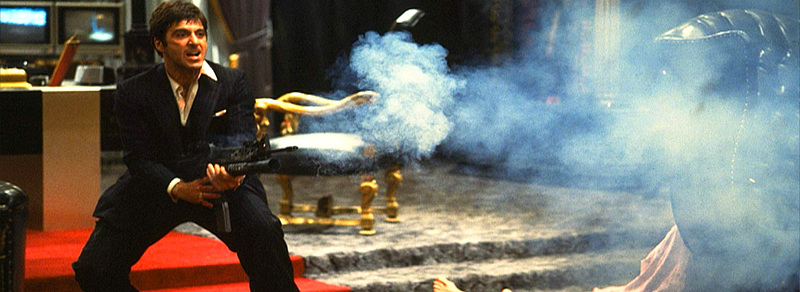
- In the final shootout sequence, Al Pacino grabs the gun by the barrel. Although only blanks were used, his hand was badly burned, and production had to be shut down for a few weeks. The production used that time to film the final gun battle sequence from numerous angles using numerous cameras.
- Producer Martin Bregman offered relative newcomer Oliver Stone a chance to overhaul the screenplay, but Stone — who was still reeling from the box office disappointment of his film, “The Hand” (1981), wasn’t interested. “I didn’t like the original movie that much,” Stone told Creative Screenwriting. “It didn’t really hit me at all and I had no desire to make another Italian gangster picture because so many had been done so well, there would be no point to it. The origin of it, according to Bregman, [was that] Al Pacino had seen the ’30s version on television, he loved it and expressed to Marty as his long-time mentor/partner that he’d like to do a role like that. So Marty presented it to me and I had no interest in doing a period piece.” Sidney Lumet was the first choice to direct this film, and it was his idea to make the characters Cuban and to include the 1980 Mariel harbor boat lift in the story. “Sidney Lumet came up with the idea of what’s happening today in Miami, and it inspired Bregman,” Pacino told Empire Magazine. “He and Oliver Stone got together and produced a script that had a lot of energy and was very well written. Stone was writing about stuff that was touching on things that were going on in the world, he was in touch with that energy and that rage and that underbelly.”“Sidney Lumet had stepped into the deal,” Stone said. “Sidney had a great idea to take the 1930s American prohibition gangster movie and make it into a modern immigrant gangster movie dealing with the same problems that we had then, that we’re prohibiting drugs instead of alcohol. There’s a prohibition against drugs that’s created the same criminal class as (prohibition of alcohol) created the Mafia. It was a remarkable idea.” Although Lumet’s involvement was what lured Stone into the project, when Bregman contacted Stone again about the project later, his opinion changed. According to Stone: “Sidney Lumet hated my script. I don’t know if he’d say that in public himself, I sound like a petulant screenwriter saying that, I’d rather not say that word. Let me say that Sidney did not understand my script, whereas Bregman wanted to continue in that direction with Al.” Eventually, Brian De Palma read and liked the script so much that he dropped out of directing “Flashdance” (1983) to helm this film.
- There was a huge controversy in the city of Miami, Florida during the making of the film over whether the producers should be allowed to shoot in the city. The Miami Tourist Board decided not to allow filming, as they were afraid the movie would discourage tourism to Miami, particularly as it showed Miami’s latest Cuban immigrants as gangsters and drug dealers. This led to the majority of the film was shot in Los Angeles, California, standing in for Miami, Florida. This was done because production would have been endangered by protests from angry Cuban-Americans over the film’s reported subject matter. Streets and buildings used for shooting were redressed by the art directors to have the “feel” of Miami.
- This film is dedicated to director Howard Hawks and screenwriter Ben Hecht of the original “Scarface” (1932). Brian De Palma’s film is a loose remake of the 1932 film, which is also about the rise and fall of an American immigrant gangster. The producer of the 1983 version, Martin Bregman, saw the original on late night TV and thought the idea could be modernized and still pay respect to the original film.
- Al Pacino has reportedly stated that Tony Montana was one of his favorites of all the characters he’s played throughout his career.
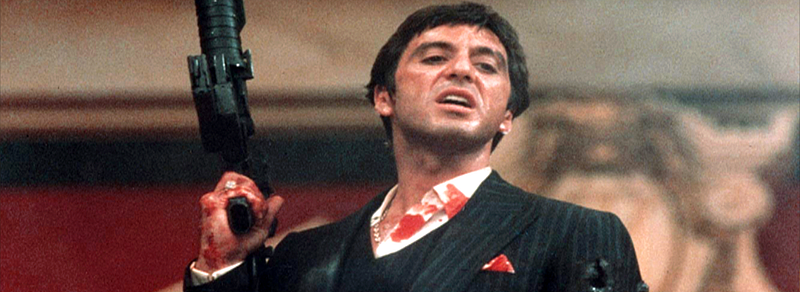
To conclude, Brian De Palma’s “Scarface” is a whole new spin on the immigrant story and the American Dream as an underworld nightmare taking it to the limit in this stylized, ultra-violent and eminently quotable gangster saga that walks a thin line between moral drama and celebratory excess. Brian De Palma establishes it as a blood-drenched thug opera, a mix of the graceful and the garish with Al Pacino’s guttural thug-in-a-suit, riveting performance, spitting out dialogue like broken glass in a harsh Cuban accent. The film makes no concessions to our sensibilities but just try turning your eyes away from this study in stylistic excessiveness in an unashamed scope of selfish, sadistic criminality of an urban shocker, pop-cultural staple of a gangster cult classic.
NOTE: The article contains sources from IMDb and Wikipedia.
Follow me and check out other articles of mine: