
A FILM TO REMEMBER: “HOW TO MARRY A MILLIONAIRE” (1953)
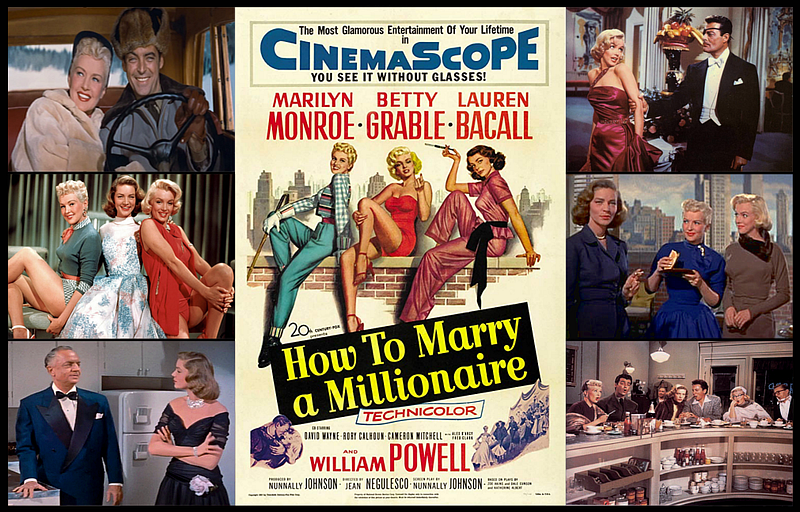
Before I get into this, I want to make mention “A FILM TO REMEMBER” will be a series about films that have reached a milestone anniversary since their origin in being culturally, historically, or aesthetically significant. The articles will contain the film’s plot outline, director, cast, a compilation of trivialities, various photos, movie trailer, critical reception and more. So, let’s start:
We are here to mark the celebration of the 65th Anniversary of Jean Negulesco’s “How to Marry a Millionaire”. Let’s take an inside look at the film:
PLOT OUTLINE:
Three New York models, set up in an exclusive apartment with a plan…tired of cheap men and a lack of money, they intend to use all their talents to trap and marry three millionaires. The trouble is that it’s not so easy to tell the rich men from the hucksters — and even when they can, is the money really worth it?
STUDIO
20th Century Fox Pictures
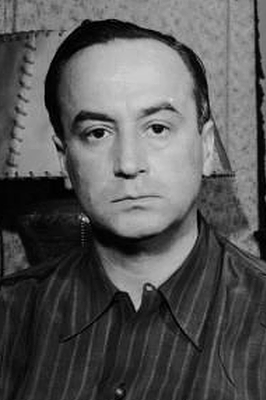
DIRECTOR:
Jean Negulesco
CAST:
- Betty Grable … Loco Dempsey
- Marilyn Monroe … Pola Debevoise
- Lauren Bacall … Schatze Page
- David Wayne … Freddie Denmark
- Rory Calhoun … Eben
- Cameron Mitchell … Tom Brookman
- Alex D’Arcy … J. Stewart Merrill
- Fred Clark … Waldo Brewster
- William Powell … J. D. Hanley
GENRE(S):
Comedy | Drama | Romance
TAGLINE:
The Most Glamorous Entertainment Of Your Lifetime in CinemaScope. You See It Without Glasses!
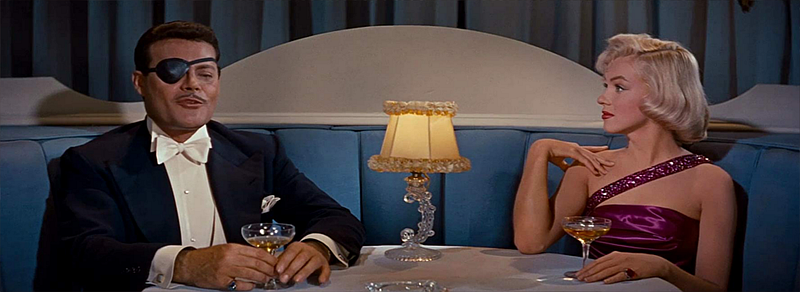
The film is known for being the second film ever to use the CinemaScope format as director Jean Negulesco’s keeps the antics moving at a brisk pace in all of it’s frothy and fun delight more so than for its premise and substance but its bolstered by an all-star cast that’s hitched with Marilyn Monroe, Betty Grable, Lauren Bacall and William Powell in this get rich quick, comedic gal pal fraternization. The film was based from Zoë Akins play “The Greeks Had a Word for It” and Dale Eunson and Katherine Albert’s play “Loco,” it had mostly a positive reception but did particular criticism but consensually it was generally perceived as an enjoyable escapist pick-up that mainly gets by because of the film’s standout cast of star power.
Here’s what some of the critical receptions have been for the film over the years:
Dave Kehr from Chicago Reader says: “The stars save this 1953 entry, through fruitful collision if not smooth collaboration.”
Adrian Turner from Time Out says: “[A] feeble little comedy, which hardly needed a wide screen and which just about gets by on star power.”
Variety Staff from Variety says: “A real standout among the other players is William Powell as the elderly Texas rancher who woos, wins and then gives up Bacall.”
Bosley Crowther from New York Times says: “The substance is still insufficient for the vast spread of screen which CinemaScope throws across the front of the theatre, and the impression it leaves is that of nonsense from a few people in a great big hall.”
TV Guide Staff from TV Guide says: “The CinemaScope process was well used here, with panoramic shots of Manhattan accompanied by Newman’s entire orchestra performing his composition Street Scene in prolog and epilog shots.”
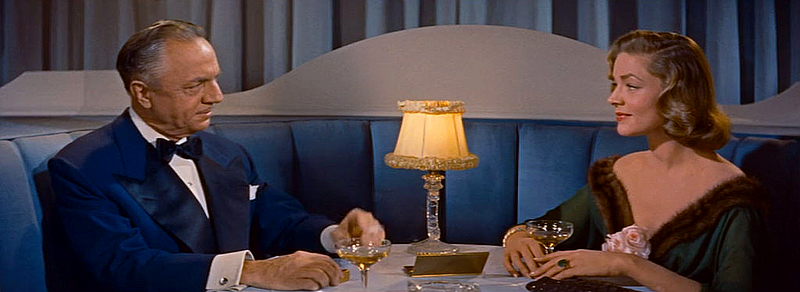
As you can tell by the critical reactions, the film was consensually liked overall thought it did have a few negatives towards it with its feeble material and its use of CinemaScope but this glossy delight established by Negulesco provides a witty and amusing entertainment experience in bringing the comedy to sparkle with its stars as Monroe is as charming and breathy as ever, Grable is accessible and funny, and Bacall successfully mixes haughtiness and vulnerability, and the added incomparable woos of Powell in this fun piece of a ‘50s fluff light romantic comedy escapade. But I’ll let you decide…
So, to get a better look at the film, here’s a link to the movie trailer of Jean Negulesco’s “How to Marry a Millionaire”:
Here I have provided 12 interesting and intriguing trivia facts (I wanted to keep it limited) about “The Producers”:
- This film was the first television program to exclusively broadcast post-1948 theatrical films on US network television, the first 1950s color and CinemaScope film ever telecast on “NBC Saturday Night at the Movies”, September 23, 1961, Several of them, like this one, had been filmed in CinemaScope, at its original 2.55:1 ratio, and so it had to be “formatted to fit your screen” — i.e., shown pan/scan in the conventional 4:3 TV ratio, losing nearly half of the image in the process, and literally destroying the composition of each scene. Viewers didn’t seem to mind, however. The idea proved so successful that NBC soon followed it up with another series with the identical format, “Monday Night at the Movies,” and it wasn’t long before the format was taken up by both CBS and ABC.
- 20th Century Fox started production on “The Robe” (1953) before it began production on “How to Marry a Millionaire,” although production on the latter was completed first. The studio chose to present “The Robe” as its first CinemaScope production in late September / early October 1953 because it saw this film as being more family-friendly and attracting a larger audience to introduce its widescreen process
- According to Lauren Bacall, Marilyn Monroe was a challenge to work with. It wasn’t because she was unpleasant, but rather her insecurity and total dependence on her personal acting coach Natasha Lytess for approval: “Betty Grable was a funny, outgoing woman, totally professional and easy. Marilyn was frightened, insecure — trusted only her coach and was always late. During our scenes she’d look at my forehead instead of my eyes; at the end of a take, look to her coach, standing behind Jean Negulesco, for approval. If the head shake was no, she’d insist on another take. A scene often went to 15 or more takes, which meant I’d have to be good in all of them as no one knew which one would be used. Not easy — often irritating. And yet I couldn’t dislike Marilyn. She had no meanness in her — no bitchery. She just had to concentrate on herself and the people who were there only for her.”
- While Betty Grable receives top billing as the credits roll — a contractual promise made to her by 20th Century-Fox — Marilyn Monroe was promoted to first place in the trailer and poster art.
- According to screenwriter Nunnally Johnson, Lauren Bacall (who was known as “Betty” to her friends) and Betty Grable became instant pals: “I don’t think Betty Bacall and Betty Grable had ever met before,” he said, “…but Betty Bacall fell in love with Grable and now thinks she’s the funniest clown she ever had the pleasure of knowing. Which is not far from true. Miss Grable is a real hooligan, and is a fine salty, bawdy girl, without an ounce of pretense about her. In addition, she’s giving a better performance than anything she ever did before.”
- Hollywood legend has it that Marilyn Monroe, who had already rocketed to major stardom in “Gentleman Prefer Blondes” (1953), was befriended during filming by Betty Grable, who offered her this encouragement: “Honey, I’ve had mine. Go get yours.”
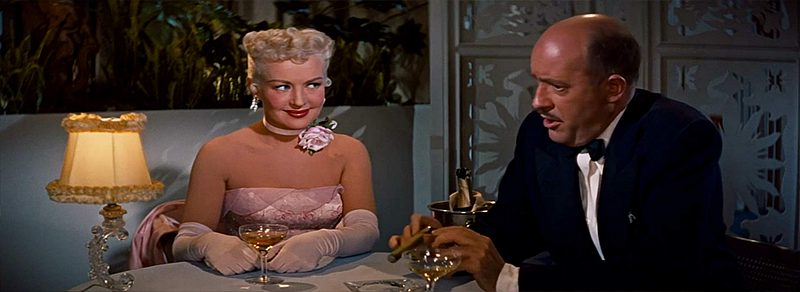
- By all accounts it was a happy set, which may have been a disappointment to those who were certain there would be infighting among its three glamorous stars. According to Nunnally Johnson, “The three girls are a good story. Everybody went around with their fingers in their ears blabbering about what temperament there would be on the set, and needless to say, the gossip columnists, those lice, have done everything possible to foment trouble for us. They’ve printed all kinds of mischievous rumors, quoting one against the other, and printing out fictitious privileges given to one above the other two, in the most desperate effort you ever saw to create feuds. But it hasn’t worked in the least.”
- This was one of the first films to have its musical score recorded in stereo.
- Signed to 20th Century-Fox since October 25, 1939, Betty Grable informed studio chief Darryl F. Zanuck during production that she would not commit to the remaining three years of her latest contract. On June 3, 1953, a studio press release announced the official split. Returning only once to Fox, Grable would star in “How to Be Very, Very Popular” (1955), a vehicle in which Marilyn Monroe refused to appear and was replaced by Sheree North. Two unfulfilled proposals to have Grable film again at Fox were the mother role (subsequently played by Ginger Rogers) in “Teenage Rebel” (1956) and then in another mom part in a project ultimately canceled called “High Heels” (1964).
- The success of the film made its impact in many ways. It helped make an auspicious introduction for Fox’s CinemaScope process to audiences and usher in a new era of widescreen entertainment. Lauren Bacall was able to prove that she could indeed play comedy with panache, and it opened a whole new avenue in her illustrious career that made her just as in demand for comedies on stage and screen as she was for drama. Betty Grable, Fox’s long-reigning Queen of the Lot, was able to leave the studio on a high note at the end of her long run, taking with her some of the best reviews of her life. She would return to make just one more film for Fox — this time as a free agent — in “How to Be Very, Very Popular” (1955).
- This film was the final box-office bonanza in Betty Grable’s 26-year movie career. According to a 1995 biography of her, “The Girl With the Million Dollar Legs,” written by Tom McGee, business would be fairly strong for her next picture, “Three for the Show” (1955), but her last feature, How to Be Very, Very Popular (1955), was tagged, in Betty’s own words, “a turkey.”
- According to Alexander D’Arcy, he noticed the destructive nature of Marilyn Monroe’s relationship with acting coach Natasha Lytess: “Natasha was really advising her badly, justifying her own presence on the set by requiring take after take and simply feeding on Monroe’s insecurity.”
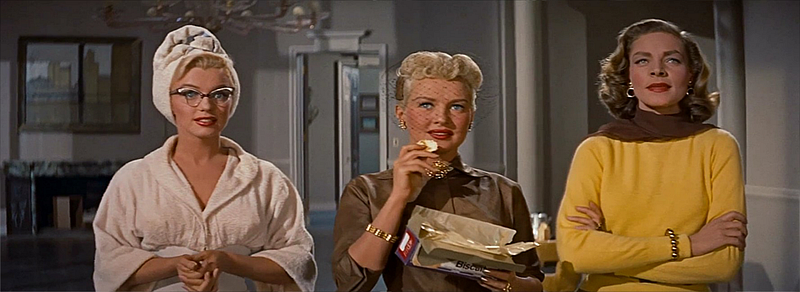
To conclude, Jean Negulesco’s “How to Marry a Millionaire” is a comedy about trying to land rich through marriage as Jean Negulesco directs with a lively and boisterous approach through the CinemaScope format in delivering a zestful and simmering, frolicsome romp that’s carried by the talents of it’s voluptuous and dishy starring ladies in Marilyn Monroe, Betty Grable and Lauren Bacall — with a little extra suave from William Powell as the film is perhaps not a classic film in the truest sense, but it provides a kick up one’s heels of an enjoyable escapist merry go round.
NOTE: The article contains sources from IMDb and Wikipedia.
Follow me and check out other articles of mine: