
A Fall Walk Inspired by a Vivarium
Focused on the forest floor
Where is Everyone?
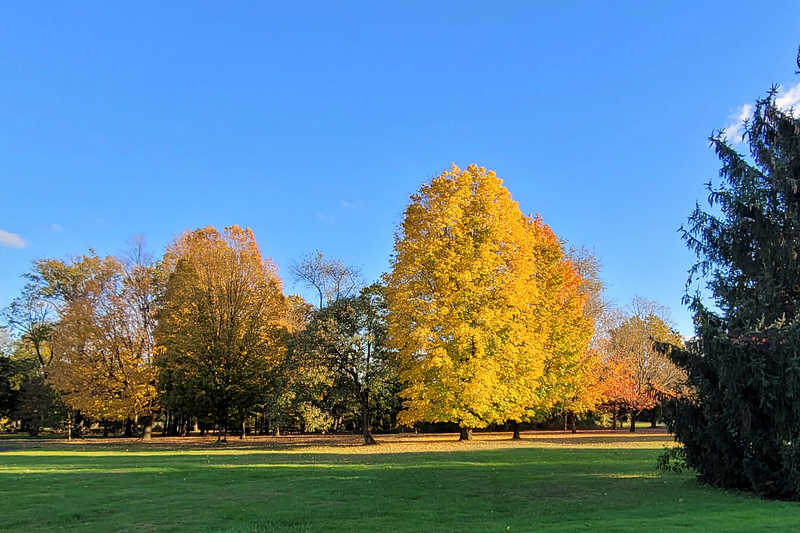
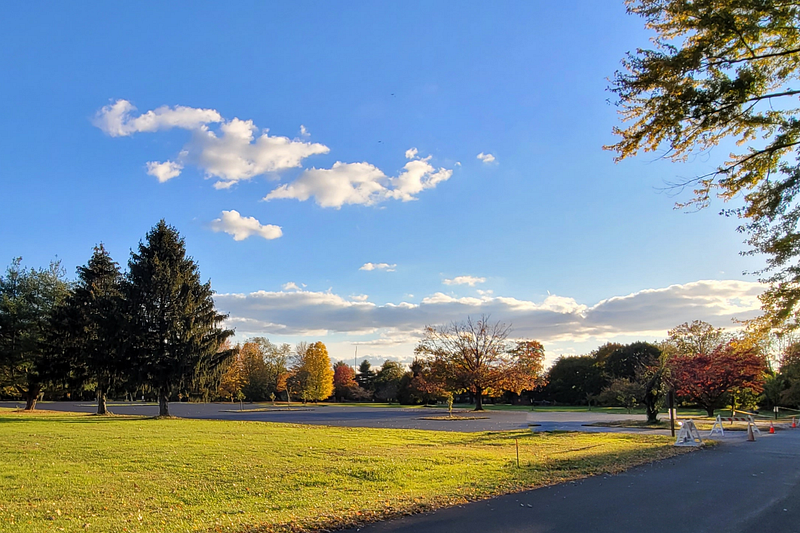
I was fearful that I was too late for a fall walk. Then, when I arrived at the park, I could see the colors glowing but the parking lot was empty. I thought I was going to have to go door to door throughout the town. This spectacular show of nature was not to be missed. Where was everyone?
I soon realized the first parking lot was empty due to resurfacing, the other parking lot was full. I was thankful that I and many others had the opportunity to witness this showcase.
Exploring the Forrest
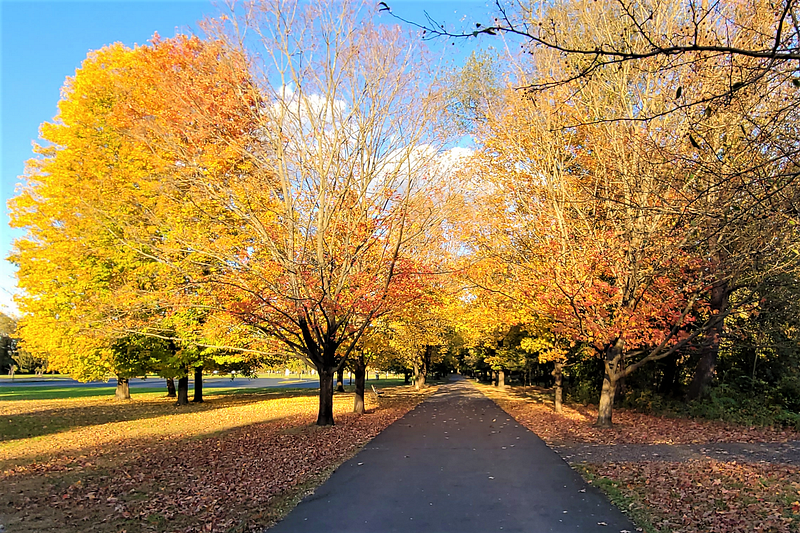
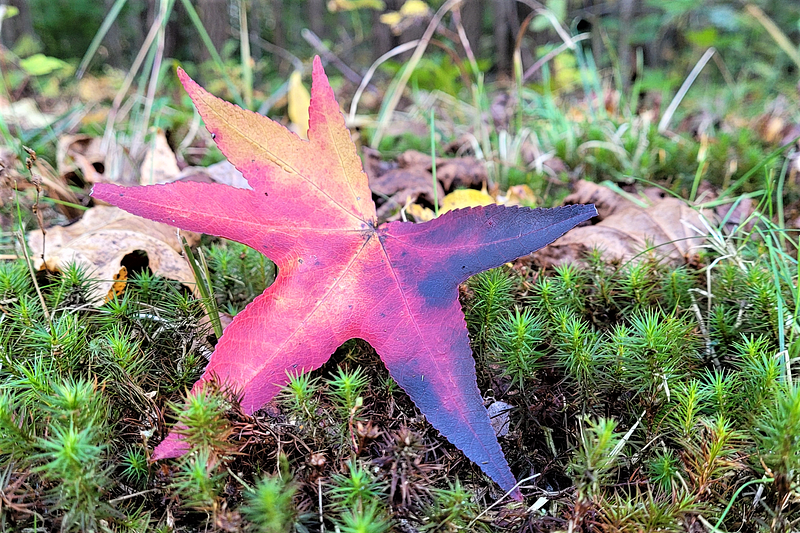
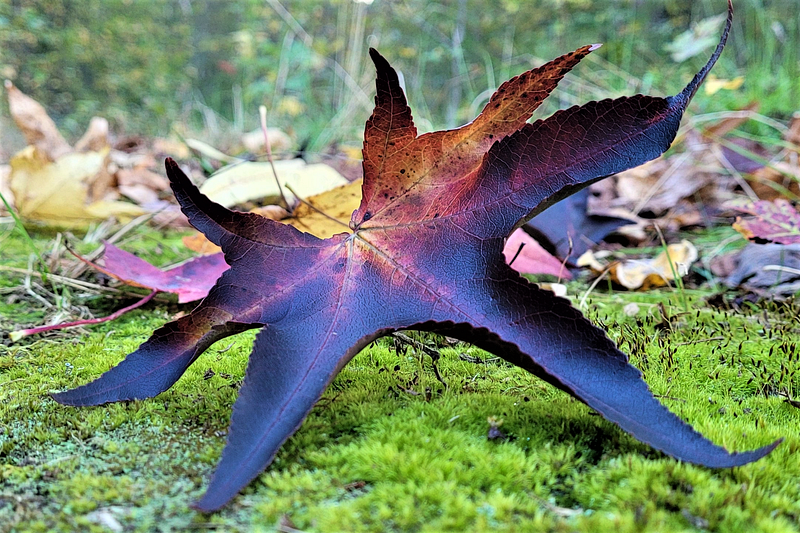
When I started my walk, I felt drawn to stop by some of my favorite spots to look up and enjoy the brightly colored leaves waving in the slightly brisk wind.
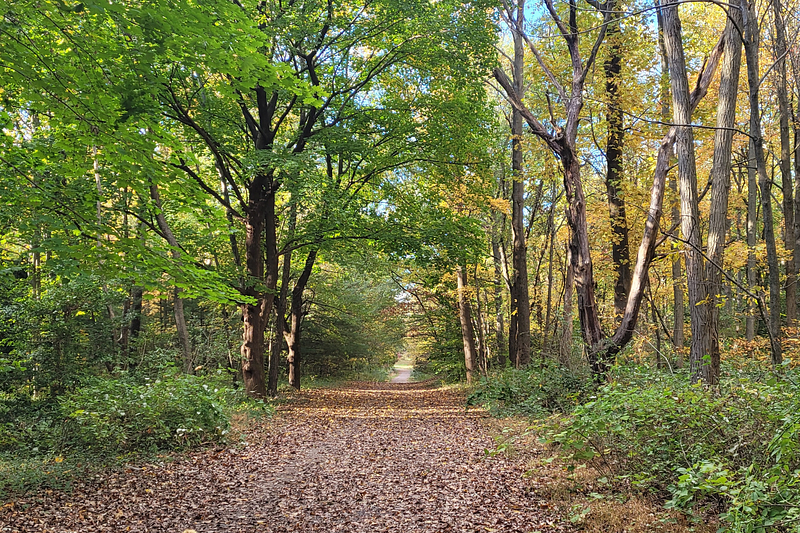
I then took several trails to get deeper into the forest, I wanted to look at the forest floor.
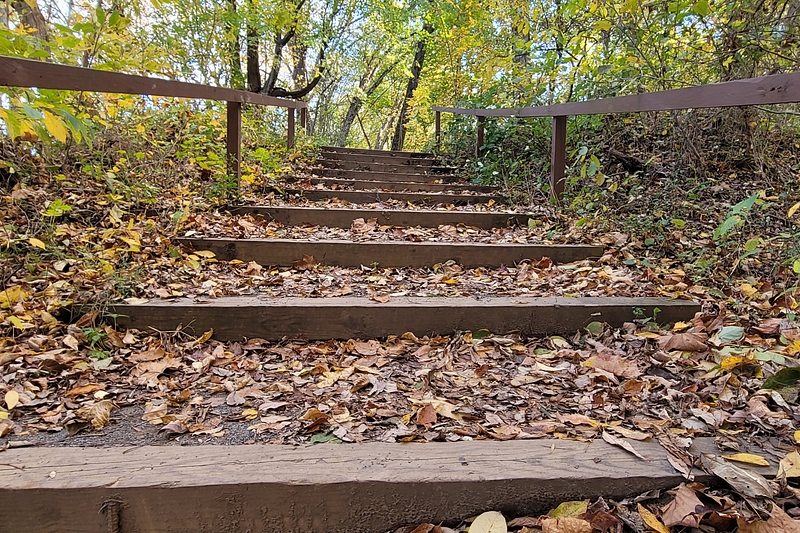
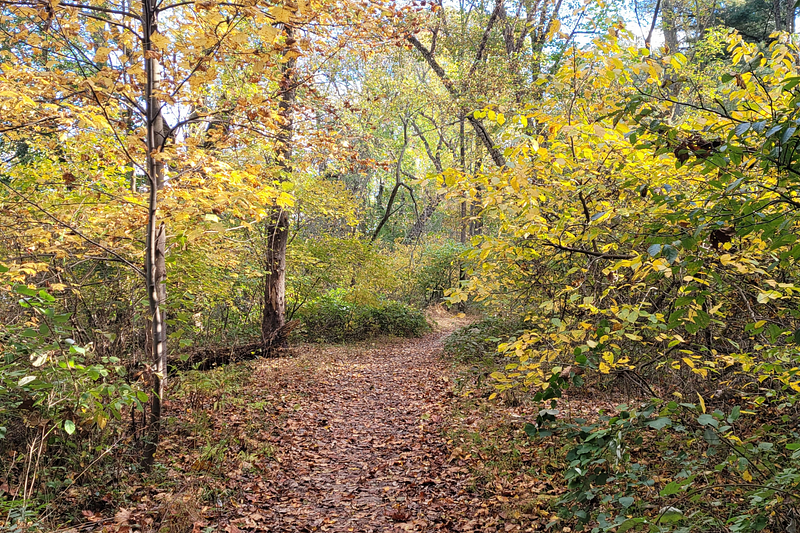
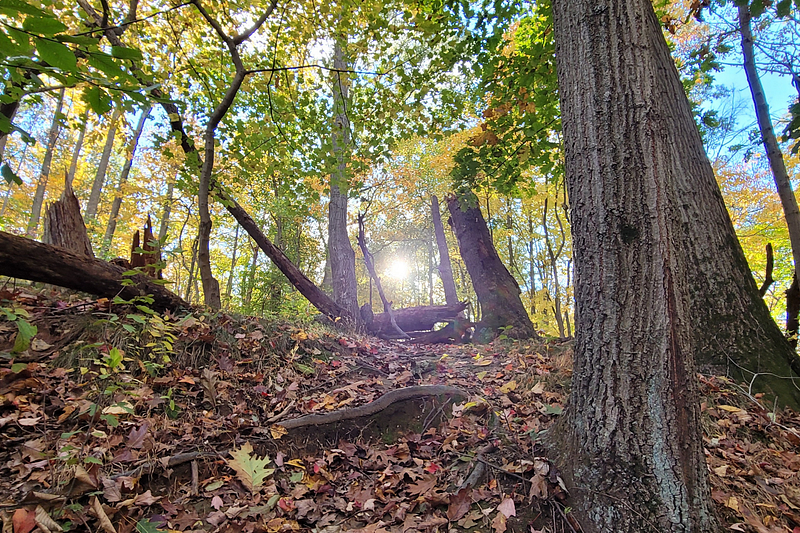
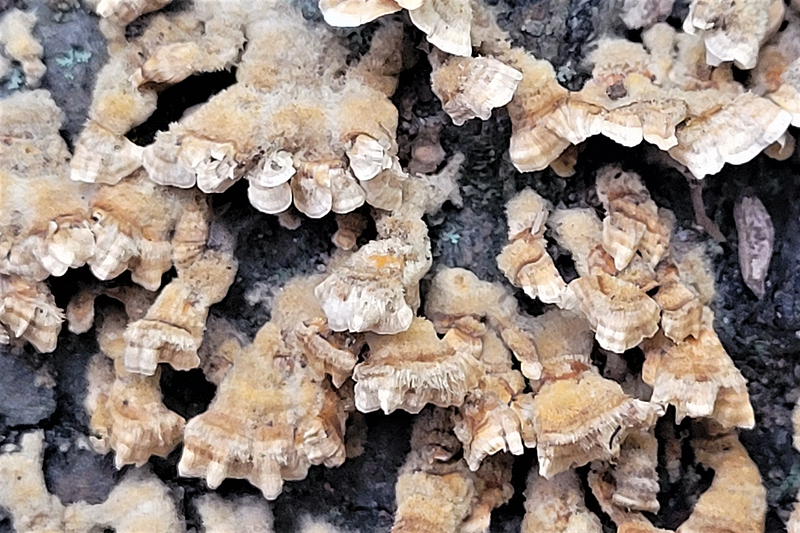
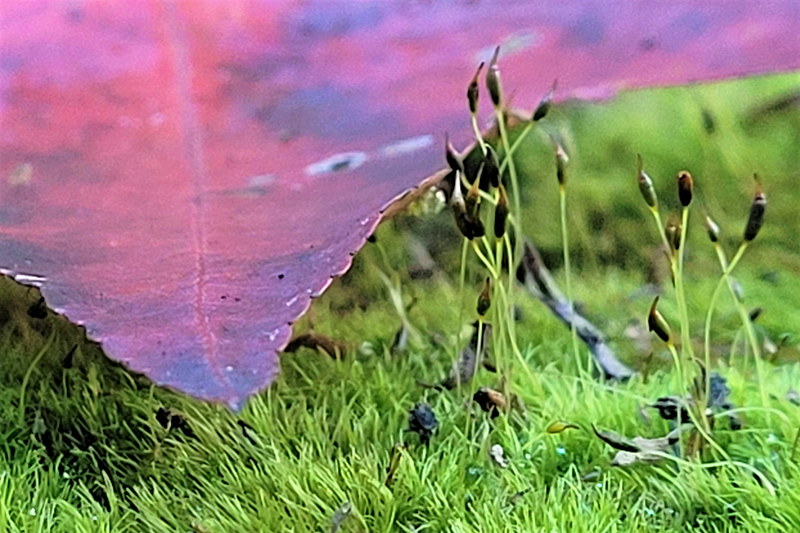
Once I felt like I was off the beaten path, I started capturing some of the logs in mid-fungi-assisted-decay.
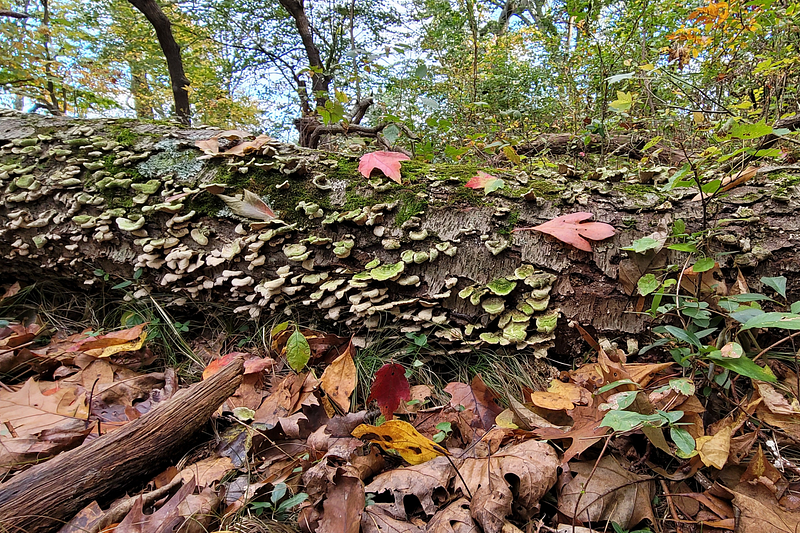
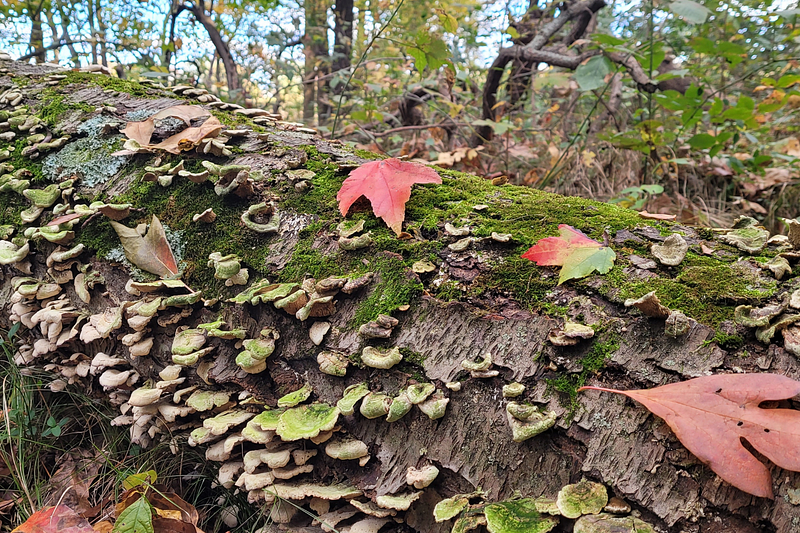
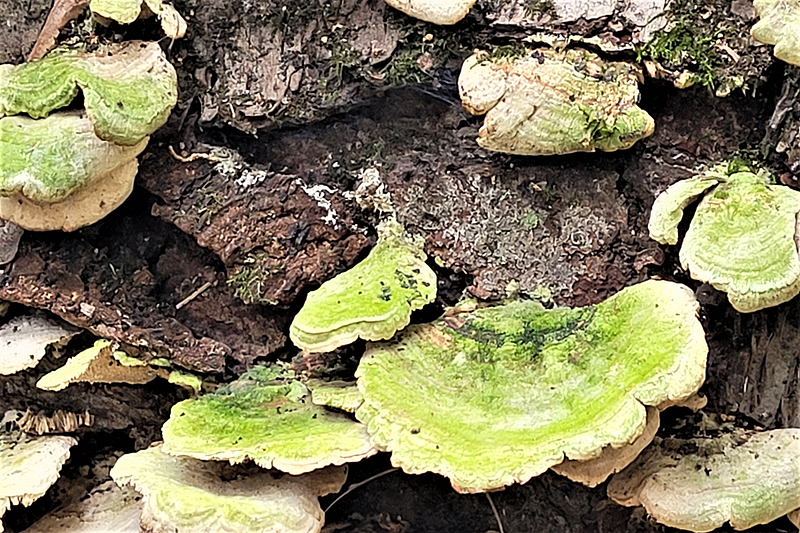
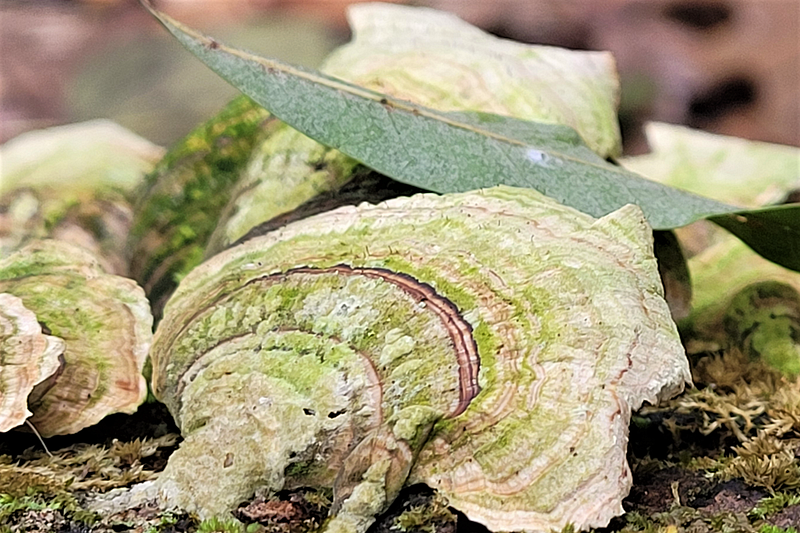
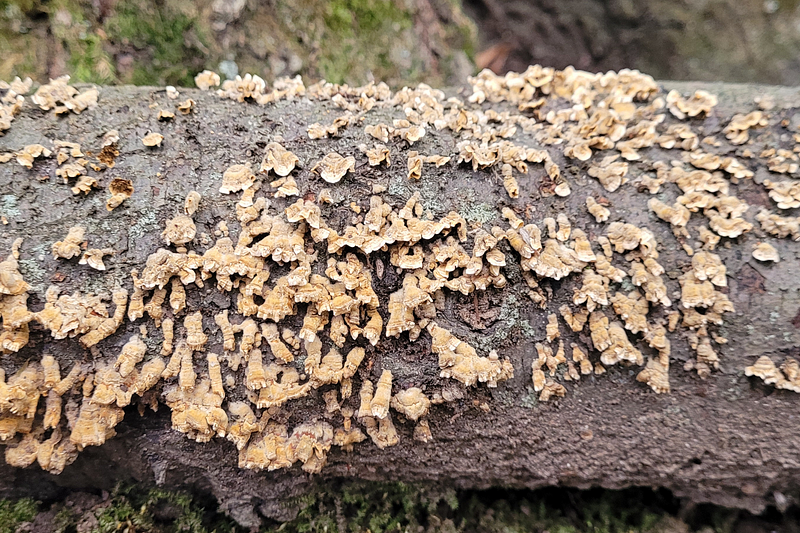
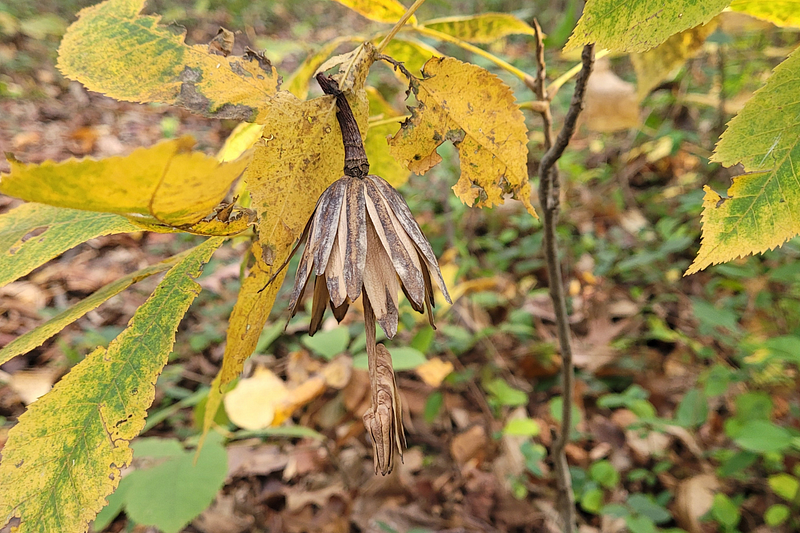
There were a few other interesting items scattered by the wind. This little seed pod was caught by a tiny tree, suspended, saved from its final decay for the time being.
The Vivarium
Why the obsession with the forest floor and decay? The American artist, My Mark Dion is the reason for my focus for this seasonal walk.
On a recent trip to Bartram’s Garden, the first botanical garden in the United States, I was reminded of a project my students and I particiapted in with Mark Dion. He retraced the travels of the Bartram’s as they collected specimens and seeds to grow their gardens. He gathered a collection from the trails as well and created an instialtion at the graden.
As I revisited this Bartram project, I also came across another project of his that highlighted how awemazing the decay cycle is in nature. I watched a documentary from Art21 about Mark Dion’s installation in the Olympic Sculpture Park.
This is no ordinary sculpture. It is said to be a hybrid work of sculpture, architecture, environmental education, and horticulture that connects art and science. It is indeed that, and more.
This project is called the Neukom Vivarium and it is in Seatle, Washington. A vivarium is something I had never heard of. I researched, and I was in awe.
Here is the gist of the story behind this installation:
A massive hemlock tree fell about forty-five miles outside of Seatle, on February 8, 1996.
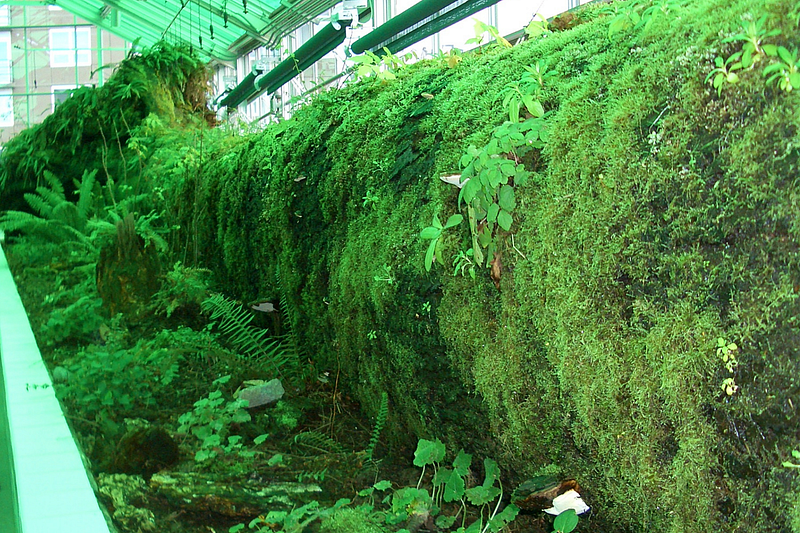
Mark Dion and his team moved this tree and the directly connected habitat into a greenhouse-like building that simulates the conditions of nature through many complex mechanicals. They also created field guides and cabinets full of magnifying glasses and other interactive tools. It is open to the public.
The message is about the tree giving life through its death. When a large tree like this falls, only half of its life is over. The tree then spends the other half of its life supporting hundreds of other living organisms. After that, it turns back to soil.
This installation shows that despite all of our money and technology when we destroy a natural system it is virtually impossible to get it back.
At this moment in time, we have a great test ahead of us in terms of the natural world. If we pass the test we get to keep the planet. I don’t really see us doing a very good job of that right now. -Mark Dion
The Neukom Vivarium shelter is shaped like a triangle so that when you enter at the tip, the broad expanse opens before your eyes as you step inside. The hope is that you marvel at the wonder of this natural cycle and leave with more questions than answers.
This is awe-inspiring art. This is science and nature. This is an important message.
Shifting Perspective
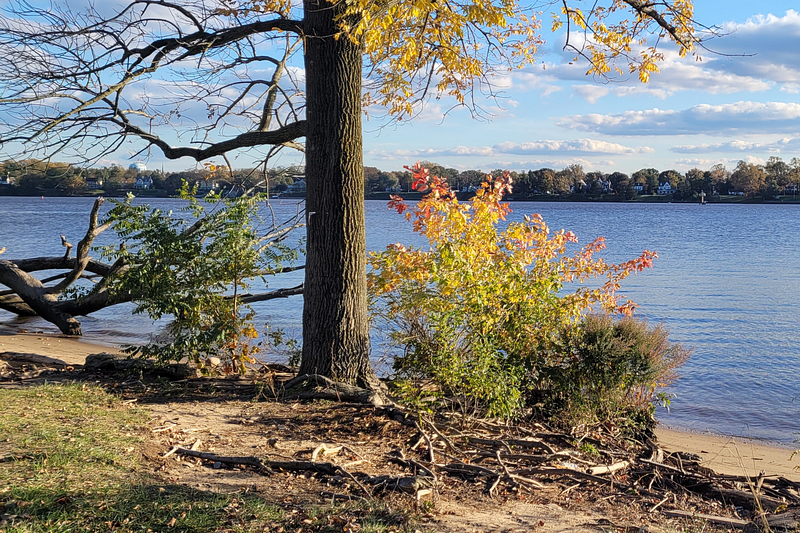
As I neared the end of my walk, I made my way out to the river. I snapped a quick picture. In the background, I noticed a tree that fell near the shore months ago. I often wished that tree would be removed. It blocked my view and messed up my photos.
Now I see it as a habitat for aquatic creatures as the tide rises and falls. I have a different level of appreciation for fallen trees and their role in the cycles of nature.
I also appreciate the exposed roots of the other trees that are working overtime holding on as the tides erode the beach away. These are no longer the ugly parts I want to cut out of my picture. They are a reminder of the test we have are facing.
Will we pass? Will we get to keep the planet?
Thanks for reading! I hope everyone finds sources of awe that help them refine their perspectives for the greater good.
Science suggests there are many benefits from writing and sharing experiences of feeling awe. Share your stories:
Awe Practices and Prompts
Practicing awe with the publication For Awe (updated 11/1/2021)
medium.com
Sign up for the Medium membership to receive unlimited access to my stories and the stories of many other great writers. (By signing up here you can directly support me, but my small commission does not impact your low cost of membership.)
Source: Art21 Mark Dion (44min mark— Vivarium)


