
A Day in the Life of a Flow-State Maximalist
How to master the art of daily peak performance: My schedule for optimal living

Have you ever felt so engrossed in a task that time flew by?
When your focus is laser-sharp, your productivity skyrockets, and you feel a sense of deep satisfaction and fulfillment.
This optimal performance state is known as flow, a powerful tool that can transform your career and personal life.
Flow, as coined by psychologist Mihaly Csikszentmihalyi, refers to a state of consciousness where you are completely absorbed in an activity, fully immersed and energized by the task before you.
In this article, I will take you through a day in my life as a flow-state maximalist, sharing my routines, rituals, and activities that help me tap into the power of flow consistently and frequently.
Mastering The Flow Cycle
The importance of flow must be balanced.
However, most people don’t know that the art of flow is a 4 phase cycle.
Those phases include:
- The Struggle Phase
- The Release Phase
- The Flow Phase
- The Recovery Phase
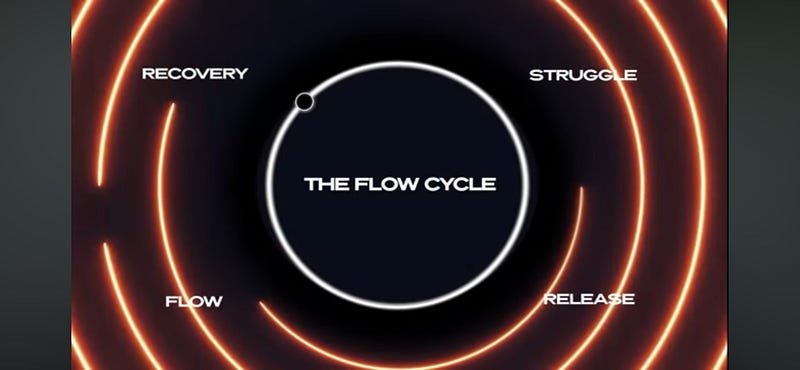
You must consistently complete each cycle phase to reach maximum flow output daily.
This means you have to accept there will be a struggle and release period before you can get into flow, and you must practice active recovery before you can reset the cycle and begin another flow session.
If you want a more in-depth breakdown of each phase, I recommend watching the video below from Rian Doris. He is the Co-Founder and CEO of the Flow Research Collective, and his team is dedicated to breaking down the science of flow so we can learn how to activate flow states at will.
Maximizing My Day Using Temporal Landmarks
As for scheduling my day for maximum flow, I’ve learned how to bake in multiple flow and recovery segments into my day.
I achieved this by adopting another technique from Rian Doirs called “Temporal Landmarks.”
This is where I set up goalposts throughout the day, structured by alarms, to take me through multiple flow states in one day based on my own personal energy ebbs and flows.
For more information on this Temporal Landmarks technique, see this video:
While Rian recommends six alarms/temporal landmarks, I’ve been okay with upgrading it to eight.
Here are the eight temporal landmarks that I stick to:
- 7:00am: Wake-up & Flow (Flow)
- 8:30am: AM Reboot (Recovery)
- 9:30am: Chronotype Zone (Flow)
- 12:00pm: PM Reboot (Recovery)
- 1:30pm: Afternoon Focus (Flow)
- 6:00pm: Evening Recovery (Recovery)
- 9:00pm: Late Night Focus (Flow)
- 11:00pm: Wind Down & Sleep (Recovery)
This schedule allows me to complete the Flow cycle four times a day while also adhering to my natural energetic peaks and troughs (I’ll talk more about this later).
And if you want a simple yet effective way to track these segments of your day rather than just alarms, I recommend using the app Structured. I use their free version, and it’s been enough to help me organize my day into these segments. I can even add subtasks to each segment to have repeatable tasks associated with each segment easily.
Now, let’s look at each segment more deeply to understand the specific activities and routines and the science behind them.
7:00am–9:30am: Wake-up & Flow / AM Reboot
My day starts with what I like to call the “Wake-up & Flow” routine.
This is another technique that I learned from, you guessed it, Rian Doris.
The concept is that within 1–2 minutes of waking up, you should jump directly into an active flow session. I have been trying this for the past two weeks and can confirm he’s on to something here.
If you want to learn about the technique in more depth, feel free to watch this video:
My Wake-up & Flow routine includes the following activities to help me get into the flow:
- Set a 90-second timer immediately upon waking up
- Sit down and be completely alone
- Drink Water
- Set a Pomodoro timer for 25 minutes using FocusPomo
- If I’m feeling stuck, I’ll start with light journaling about whatever is on my mind (to get through the struggle phase)
- Then, I begin my deeper flow activities
My primary Wake-up & Flow activity is writing. For instance, this entire article was written and edited during my Wake-up & Flow sessions.
This segment usually takes place between 7:00am and 8:30am. After that, I transition into my AM Reboot.
The AM Reboot consists of my official morning routine, between 8:15am and 9:30am, which I keep simple.
I use the stoic app to journal about the day ahead, then I get ready for work, commute, and use Notion to plan my tasks for my next flow session, my Chronotype Zone.
If you want a full breakdown of the productivity apps I’m using during and throughout the day, check out my other article.
9:30am-12:00pm: Chronotype Zone
If you have heard of Chronotypes, I’m a Bear Chronotype, and my peak performance hours are between 9:30am and 2:00pm.
If you haven’t heard of Chronotypes, I wrote an article introducing them and brief overviews of each one. You can take the quiz here if you want to learn your type.
I am naturally more alert, focused, and productive during this window. So, I schedule my most cognitive and flow-demanding tasks to maximize my Chronotype Zone.
One strategy I use extensively during this segment is the Pomodoro Technique. This technique involves breaking my work into 25-minute intervals, called Pomodoros, followed by short 5-minute breaks using the FocusPomo app. Working in short bursts, I can maintain my focus and energy levels throughout the morning.
Pro-tip: During your Pomodoro breaks, refrain from activities high in dopamine output (i.e., social media, YouTube videos, games, etc.). The trick is to take breaks low in dopamine so your brain craves the tasks at hand even more, and flow is easier to get into when the break ends.
During my breaks, I engage in restorative activities like:
- Standing up and walking around the office
- Breath work (using the stoic app)
- Practicing brief mindfulness meditation (freely or using the stoic app)
I also strategically use caffeine to give myself an extra boost during my Chronotype Zone.
I enjoy morning coffee or an energy drink to enhance my alertness and cognitive function. However, I consume it in moderation and do not rely solely on it for energy. By combining the Pomodoro Technique with caffeine, I can fully harness the power of my Bear Chronotype and achieve optimal performance.
Note: this is the only segment in the day that gets caffeine.
If you want to learn more about how to maximize the power of caffeine, watch this video on the topic by Rian Doris.
12:00pm-1:30pm: PM Reboot
After a productive morning, it’s time for a lunchtime reboot.
This is a valuable time to recharge, refuel, and reset my mind and body for the afternoon focus ahead. My lunchtime routine consists of activities that help me relax, unwind, and nourish myself physically and mentally.
One of my go-to activities during this time is spending time with friends and loved ones. I live close to work, and my girlfriend works from home, so sometimes I can bike home and spend my lunch break with her.
Regardless of your commuting situation, fresh air, sunlight, and movement during this time not only helps clear your mind but also improves your mood and overall well-being.
In addition to a walk and quality time with friends/loved ones, I prioritize nourishing my body with a balanced and nutritious meal.
I choose foods that provide sustained energy and support cognitive function, such as lean proteins, whole grains, and colorful fruits and vegetables. I return to my afternoon activities with renewed energy and clarity by caring for my physical and mental well-being during lunchtime.
1:30pm–6:00pm: Afternoon Focus
As the day progresses, my energy levels as a Bear Chronotype naturally begin to ebb.
However, I have developed afternoon and evening routines that help me sustain my focus and productivity throughout this time.
My focus now shifts to less demanding, more routine activities.
List of Afternoon Focus activities (Weekdays)
- Routine physical tasks needed around the office
- Meeting with coworkers
- Merely urgent but ultimately not essential work tasks
List of Afternoon Focus activities (Weekends)
- Everyday tasks for my side businesses
- Watching TV shows/Documentaries
- Light side hustles like dog-walking or task rabbit gigs
The Afternoon focus is to complete all the lower cognitively demanding tasks that need to be done during the workday.
I still utilize the Pomodoro technique to ensure I am taking ample breaks and maximizing my energy and potential for flow.
6:00pm–9:00pm: Evening Recovery
After a long work day, it’s time for another active recovery session.
One essential aspect of my evening recovery routine is incorporating an evening workout.
Exercise boosts my energy levels, releases endorphins, improves cognitive function, and reduces stress.
Whether it’s a yoga class, a run/walk on the treadmill, or an intense strength training session, moving my body in the evening helps me recover, stay alert and focused, and reset for another flow state later in the day.
After my workout, I follow an evening recovery routine checklist.
This includes activities such as:
- Stretching
- Hot shower
- Dinner with my partner
- Watching TV/Videos online
These practices help me relax my muscles, unwind from the day’s activities, and restore lost energy. By prioritizing recovery, I can maintain my physical and mental well-being and set the stage for another productive focus session later tonight.
9:00pm-11:00pm: Late Night Focus
The night brings a different kind of focus.
While recovering in the evening is essential, I also find value in a late-night focus session before bed.
This is when I engage in activities that stimulate my mind, spark creativity, and help me squeeze more productivity right before bed.
Some of my go-to activities during this time include:
- Working on my creative side projects
- Reading books
- Completing personal development courses (like MindValley Quests)
Immersing myself in these activities helps me tap into one last flow state, even late at night, and helps foster a sense of fulfillment and satisfaction.
These activities are manageable and are crucial for preparing my mind for the following day.
11:00pm–12:00am: Wind Down & Sleep
And now, after a highly productive and flow-rich day, it’s time to fully wind down and prepare for sleep to the end of the day on a positive note.
A wind-down and night routine is a powerful tool that can help you achieve peak performance and productivity.
By creating a calming and peaceful environment at night, you can disconnect from the day’s stresses and prepare your mind and body for a restful sleep.
List of wind-down activities:
- Reflecting on the day in the stoic app
- Brushing & flossing
- Preparing tomorrow morning’s Wake-up & Flow workstation
This is essential for recovery and maintaining focus and productivity during the day, crucial for producing flow states.
So, if you’re serious about optimizing your daily routine and achieving your goals, don’t neglect the power of a consistent nighttime ritual.
Doing so will unlock your full potential and reach a state of flow during your waking hours by maximizing your recovery phase each night and starting the next day with a newfound energy source.
Conclusion
A day in the life of a flow state maximalist is filled with intention, purpose, productivity, and satisfaction.
By incorporating temporal landmarks, your chronotype schedule, and active recovery routines that tap into the power of flow, we can unlock our full potential, achieve peak performance, and experience a deep sense of fulfillment daily.
Whether starting the day with a morning routine prioritizing flow or taking time in the afternoon and evenings for intentional recovery, each moment presents an opportunity to complete a phase of the flow cycle and live life to the fullest.
I hope these insights inspire you to discover and learn how to embrace more flow in your daily life. It’s a pursuit beyond mere productivity; it’s about enriching the quality of life and experiencing each day to its fullest potential.
If you enjoyed this article and want to learn more, subscribe to get my future content sent directly to your email. You can learn more about me here and follow me on Twitter, TikTok, and LinkedIn! ✌🏾


