
Chronotypes: Learn the Ideal Time to Do (Almost) Anything
Discover “The Power of When,” the Four Chronotypes, and your ideal schedule in five minutes or less.
When’s the best time for you to wake up?
Do you believe the secret to your success is waking up at 5 am each morning? Or do you feel you’d be just as, if not more, successful waking up at 7, 8, or even 10 am?
When’s the best time for you to hyper focus on an important task?
Do you feel the most alert first thing in the morning? Or do you focus better at night, when the rest of the world’s asleep?
When’s the best time to for you to write?
When’s the best time for you to lift weights or go for a run?
When’s the best time for you to have sex?
Okay, I think you get my point.
But seriously: Why do we all naturally answer those questions differently? And which timeframe is best for me?
Introducing “The Power of When”
The first time I heard about this concept, I scrolled through LinkedIn and read a productivity post about “chronotypes.” The author of the post described it as a personality assessment test that can tell you when’s the best time to do different activities throughout the day.
He then mentions a book called “The Power of When,” where Dr. Michael Breus, Ph.D. (a.k.a the Sleep Doctor), explains how all humans have a circadian rhythm and operate within one of four biological clocks or chronotypes.
In short, the four chronotypes are:
- Lions (usually known as “early birds”)
- Bears (most of society, their energy rises and falls with the sun)
- Wolves (also known as “night owls”)
- Dolphins (a new category determined by their higher levels of neuroticism and insomnia).
Each chronotype has unique strengths/weaknesses and experiences different peaks throughout the day in productivity, creativity, mood, hunger, sex drive, and more.
In this article, I want to give you a brief breakdown of the four chronotypes in hopes you will:
- Learn your specific chronotype.
- Learn the ideal times for everyday activities based on your chronotype.
- Learn personalized tips for your chronotype based on personal experiences.
So… What’s Your Chronotype?
If you don’t know your chronotype, you can take the quiz here, where you’ll get a crash course on “The Power of When” from the Sleep Doctor himself. I’d recommend watching the video at the end of the assessment for more insight into your chronotype.
Once you have your results (or if you already know your chronotype), continue below for your ideal daily schedule.
Things to note before we start:
- Don’t worry if there’s a significant difference between your chronotype’s ideal schedule and your current day-to-day schedule. That’s totally normal. The good news is adapting to this schedule is naturally easier, but I’d still recommend taking it slow and only changing a few activities first. Once you feel comfortable with those, you can add more.
- These schedules are under ideal conditions. But as we all know, our day-to-day conditions are rarely ideal. So when adapting to any new timeframes, have a lot of grace with yourself if you forget to do something within its specific time window. No one’s perfect, and everyone messes up.
- I created detailed infographics for each chronotype based on Dr. Breus and his work. If you find value in these, feel free to screenshot them so you can reference them quickly at any time. But if you want more information on why each timeframe is best, please consider purchasing his book.
Your Ideal Schedule & Personalized Tips
The Lion (15–20% of the Population)
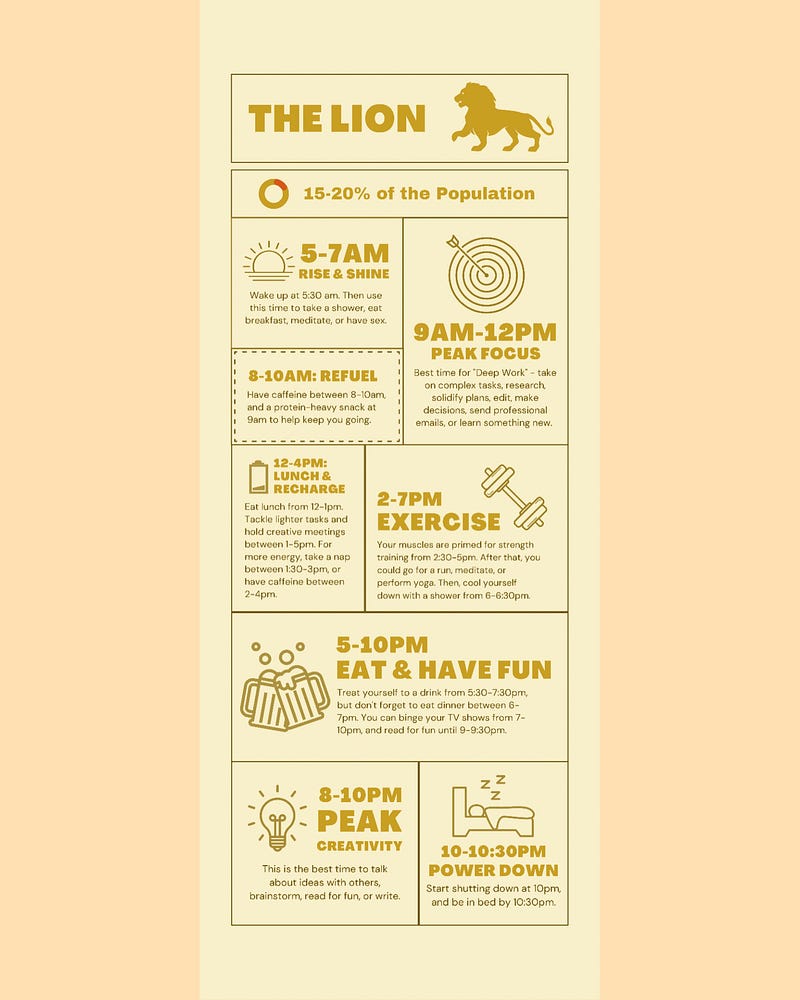
In his book, Dr. Breus describes Lions as ambitious and optimistic go-getters. The COO of companies that are up before the sun and sending off emails long before most of us have even opened our eyes.
Personalized Tip:
Pay attention to your afternoon energy levels. When you notice your focus starting to dwindle, pivot to lighter and more creative tasks like journaling, reflecting, or brainstorming (alone or with others).
The Dolphin (10% of the Population)
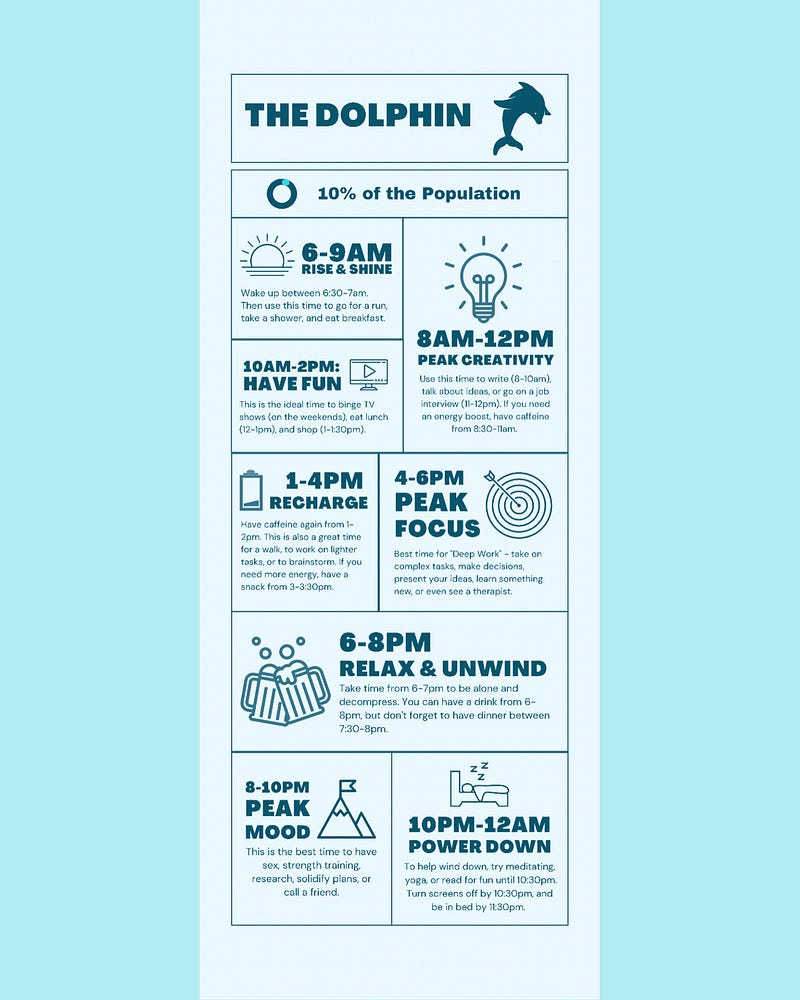
Dr. Breus describes the Dolphin as the highly intelligent and creative insomniac. The dolphin itself sleeps with half of its brain activated, so it can be wary of predators as it rests. Like the dolphin, it seems like this group of sleepers can never entirely shut their brains off.
Personalized Tip:
As much as you can help it, don’t take naps. In the book, Dr. Breus recommends Dolphins not take naps to increase their sleep pressure at night. The more sleep pressure you have, the deeper and more restful your sleep will be.
The Bear (55% of the Population)
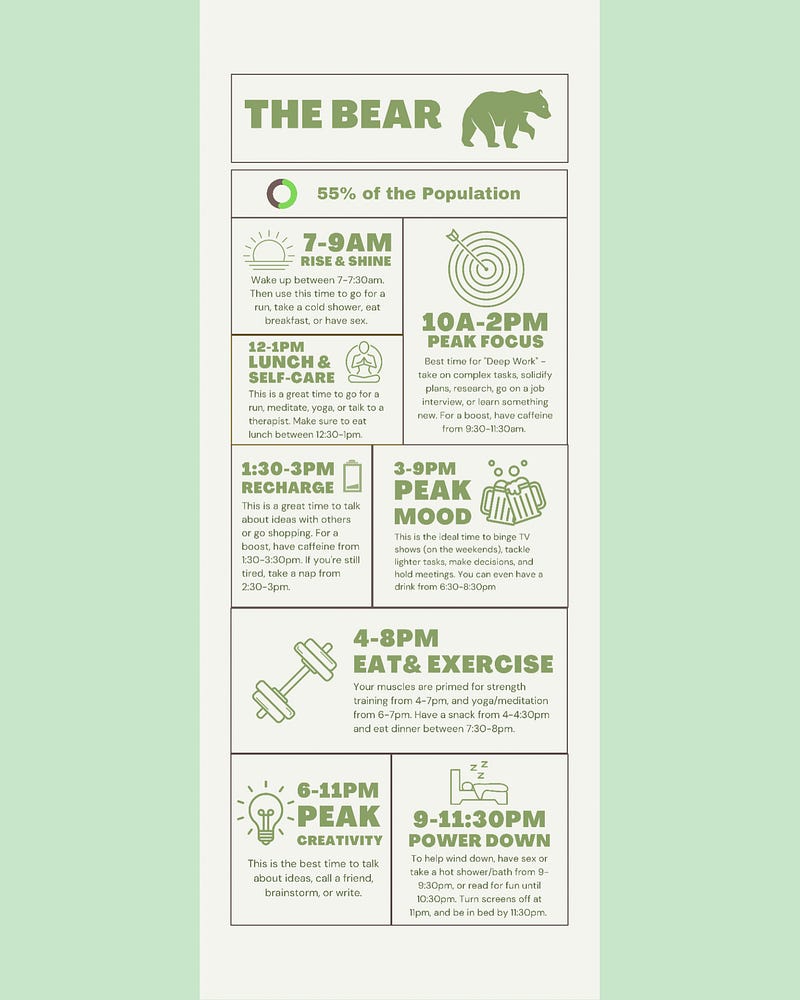
Bears’ energy rises and falls in close relation with the sun. They are the most common chronotype, which means our society mirrors their schedule the most.
Personalized Tip:
Accept that the afternoon energy lull is inevitable. And instead, lean into it. Schedule your more creative, reflective, or administrative tasks during this time: anything that requires less focus and mental alertness. And if you have the flexibility to, try taking a mid-afternoon nap (2:30–3:00 pm) for that extra energy boost.
The Wolf (15–20% of the Population)
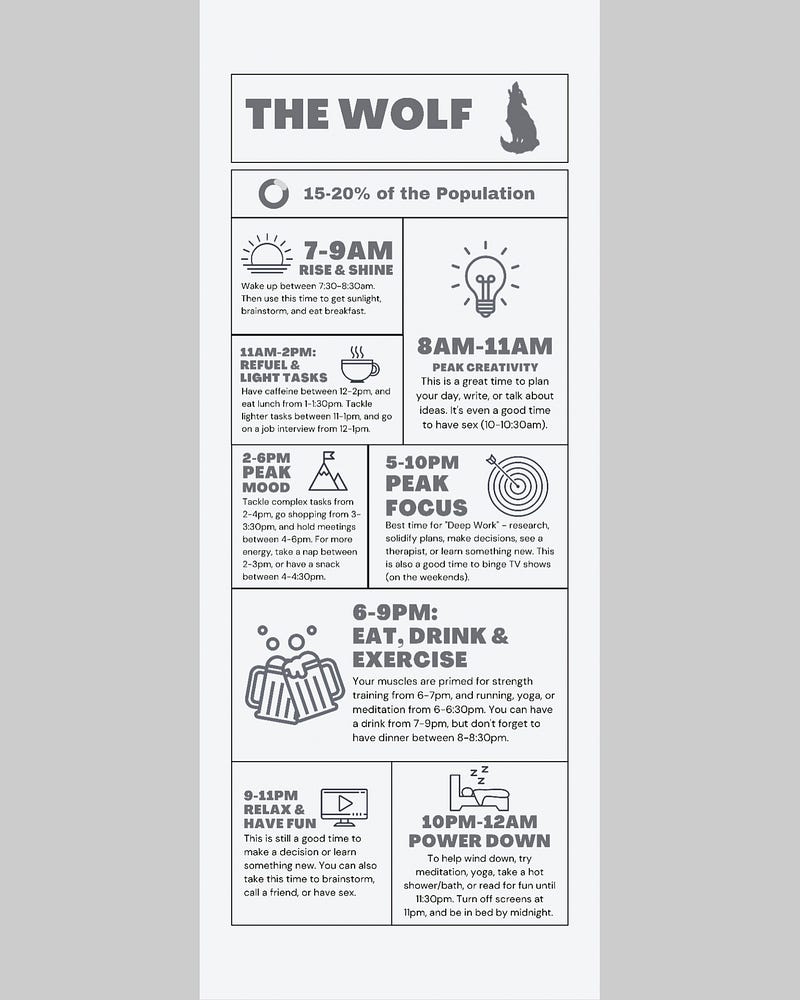
As the creative night owl, the wolf is hard-wired to focus and be more productive later in the day. Although your peak creativity and focus may conflict with the rest of society, learn to embrace these differences and find unique ways to compromise with work and other obligations.
Personalized Tip:
Give yourself plenty of grace in the morning. Remember that your strength comes later in the day, so plan your day accordingly. Use the morning for creative, lighter tasks that require a lot less mental energy. Save the more significant tasks for the afternoon/evening (after 2 pm) when you’ve found your groove.
Conclusion
So there you have it—your ideal schedule based on “The Power of When” and your chronotype. I hope you learned something new about your chronotype and the best times to do (almost) anything.
If you’re up for it, I challenge you to implement these timeframes in your own life and see the difference for yourself. I think you’ll be surprised at how much.
Additional Resources:
If you’d like to purchase Dr. Brues’ book on amazon, you can find it here.
If you use Notion, you can also download my free Chronotype Master Clock Dashboard as a template here, containing all the activities and timeframes mentioned in this article, plus more!


