
A Critical Vulnerability at AnythingLLM — Understanding and Mitigating CVE-2024–0765
Dive deep into CVE-2024–0765, a significant vulnerability in AnythingLLM, including its technical analysis, impacts, and strategic mitigation practices for cybersecurity professionals.
Hey there, fellow tech enthusiasts!
Today, we’re diving into a topic that’s caught the cybersecurity world by a bit of a storm — CVE-2024–0765 (CVSS 9.6).
The discovery of CVE-2024–0765 in AnythingLLM, a tool widely utilized for its advanced language processing capabilities, has raised significant concerns within the cybersecurity community.
This article delves into the technicalities of the vulnerability, its implications, and strategies for mitigation, providing cybersecurity professionals with the knowledge to safeguard against similar threats.
But before we get into the nitty-gritty, let’s chat about AnythingLLM, our protagonist in this cybersecurity saga.
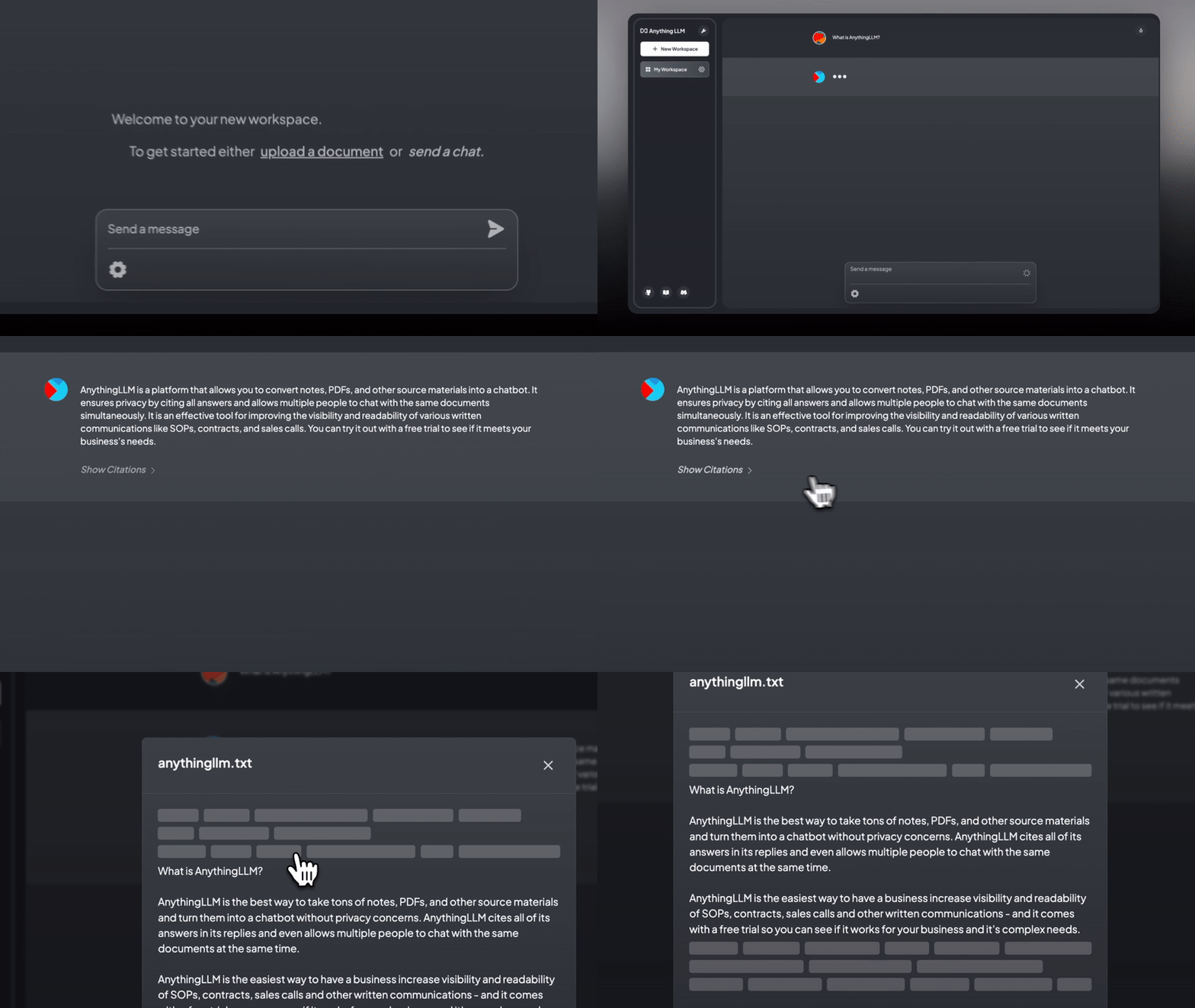
What is AnythingLLM?
AnythingLLM represents a sophisticated full-stack application designed to revolutionize how we interact with and leverage large language models (LLMs). I
t is engineered to transform any document, resource, or content into a context that can be utilized as references by any LLM during interactions.
This versatile application offers the flexibility to select from various LLMs or Vector Databases, tailoring the conversational context to specific needs.
Furthermore, AnythingLLM supports multi-user management and permissions, making it an ideal solution for collaborative environments where control over access and functionality is paramount. This formal definition emphasizes the application’s role in enhancing the usability and application of LLMs across different user groups and scenarios.
In-Depth Analysis of CVE-2024–0765
CVE-2024–0765 presents a significant security flaw within AnythingLLM’s framework, specifically through its /export-data endpoint.
This vulnerability enables unauthorized data exfiltration by authenticated users, exploiting the system's data export functionality.
The severity of this vulnerability lies not only in the unauthorized access and extraction of sensitive data but also in its stealthy nature—erasing traces of the data extraction post-operation, thereby complicating detection and response efforts.
A critical code change involved removing the functionality related to the GeneralExportImport component and its associated endpoints for exporting and importing data. This adjustment was made to prevent potential attackers from exploiting these endpoints to access and exfiltrate sensitive information undetected, thus addressing the security flaw and enhancing the overall security posture of AnythingLLM.
7 changes: 0 additions & 7 deletions 7
frontend/src/App.jsx
@@ -34,9 +34,6 @@ const GeneralEmbeddingPreference = lazy(
const GeneralVectorDatabase = lazy(
  () => import("@/pages/GeneralSettings/VectorDatabase")
);
- const GeneralExportImport = lazy(
-  () => import("@/pages/GeneralSettings/ExportImport")
- );
const GeneralSecurity = lazy(() => import("@/pages/GeneralSettings/Security"));
const DataConnectors = lazy(
  () => import("@/pages/GeneralSettings/DataConnectors")
@@ -74,10 +71,6 @@ export default function App() {
                element={<AdminRoute Component={GeneralVectorDatabase} />}
              />
              {/* Manager */}
-              <Route
-                path="/settings/export-import"
-                element={<ManagerRoute Component={GeneralExportImport} />}
-              />
              <Route
                path="/settings/security"
                element={<ManagerRoute Component={GeneralSecurity} />}
Operational Context and Security Implications
The exploitation of CVE-2024–0765 underscores critical challenges in securing AI-driven platforms.
As these systems become increasingly integrated into various sectors, their expansive data handling capabilities also introduce complex security vulnerabilities.
The particular vulnerability of CVE-2024–0765 highlights the need for robust security measures and policies that account for both human and technical factors within AI ecosystems.
Strategic Mitigation Approaches
Mitigating the risks associated with CVE-2024–0765 and similar vulnerabilities requires a multi-faceted approach. Key strategies include:
- Enhanced Access Control: Implementing stringent access controls and adopting a principle of least privilege can significantly reduce the risk of unauthorized data access and exfiltration.
- Comprehensive Monitoring and Anomaly Detection: Establishing advanced monitoring systems capable of detecting unusual access patterns or data movements can serve as an early warning system for potential security breaches.
- Regular Security Audits and Updates: Conducting regular security audits and ensuring that systems are updated with the latest security patches are critical in defending against known vulnerabilities.
- Security Awareness and Training: Educating users and administrators about the potential risks and indicators of security breaches can enhance an organization’s overall security posture.
By incorporating these strategies, organizations can bolster their defenses against CVE-2024–0765 and other similar security threats, ensuring the integrity and confidentiality of sensitive data within AI-driven systems.
This formal analysis underscores the importance of maintaining a vigilant and proactive approach to cybersecurity, particularly as we navigate the complexities introduced by advanced technological systems like AnythingLLM.
Why Should We Care?
In a world where AI and machine learning are part of our daily lives, understanding and protecting against vulnerabilities like CVE-2024–0765 is not just smart; it’s essential.
It’s about keeping our information safe, yes, but it’s also about trust — in our technology, our teams, and the systems that hold our digital lives together.
So, let’s gear up, dive deeper into the world of cybersecurity, and ensure that our journey with AnythingLLM and other AI marvels is both safe and rewarding. And remember, staying informed and alert is our best defense in the ever-evolving cybersecurity landscape.
Some Final Words
If you found this guide helpful and want to show some love, you could:
- Clap 50 times for this story👏👏👏
- Drop a comment with your thoughts or experiences
- Highlight any part that struck a chord with you
Your support means the world and helps keep this conversation going!
Follow me on Medium for more cybersecurity insights:
Catch me on Twitter for updates 🐦
Connect on LinkedIn 🔗
Follow my GitHub adventures: