
A Contrarian View of Defund the Police
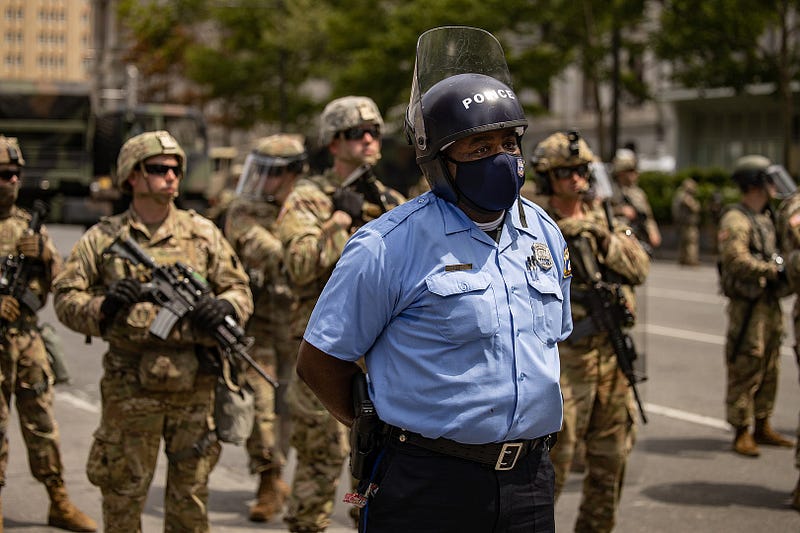
Isn’t it great writemanship to start a story with a disclaimer? Let’s do it: I’m very much a progressive; I support Black Lives Matter one-hundred percent; I understand that Defund the police doesn’t mean “Let’s cancel police”; I understand that the current protest movement is diverse and features a whole gamut of opinions; and in the past several weeks I’ve read extensively about Defund the police and have earnestly tried to find clarifications to the things that bother me. To no avail.
Defund means: transfer money from the police to social issues
This explanation is the first to be heard in every Defund discussion. Nobody seems to disagree that housing, rehabilitation, education, health and mental health services — that all these need to be promoted dozenfold their current halfhearted funding. Even staunch conservatives are reluctant (right now) to outright inveigh against this. There is growing recognition that it’s time to address the underlying causes instead of merely alleviating the symptoms.
But, to put it bluntly: social issues take decades to fix, whereas the drunkard near the playground is wielding his pocked penis at the children right now. I haven’t yet heard anyone say, “Well, we mean defund the police later, after some of the social issues have been addressed…”
Defund, because the police doesn’t need tanks and flamethrowers
We all agree that police militarization needs to be reversed. But the supposed direct link between high budgets and fancy, superfluous equipment is not clear to me. Here are several other things that need to be reversed: low salaries for police officers, crumbling stations, deficient equipment for daily operations (not tanks), insufficient training. All these can actually only be addressed by increasing police budget. Or indeed by better usage of the budget by police departments — this is true, but drastic defunding will undermine the departments’ ability to buy missile launchers and to raise salaries.

It seems that with all the educated opinions currently heard, only Joe Rogan and some of his guests discuss how the low salaries and other deplorable working conditions attract the worst of the crop. Does anyone disagree that personnel quality is one of the major underlying causes for the bad policing that brought us here? With all the Defund opinions I hear and read, I’m yet to understand how exactly defunding per se can attract higher-quality recruits to this thankless profession.
Defund, because the police shouldn’t be social workers
Once again, a worthy observation that few disagree with. The police are called for suicide attempts, domestic disputes, removal of the homeless. Let’s put this into a concrete example, featuring our penis waggler from above. In our new world order, Amber, a bespectacled 23-year-old social worker fresh out of school, is called to the scene. (Prior to that, several obsolete-minded witnesses, who haven’t yet come to terms with the novel “restructuring”, mumbled “Someone call the police!”, but were briskly admonished by woke passers-by: “The poor guy clearly has mental issues. What do the police have to do with this?”) Long story short, Amber is now at the hospital after Penis Guy attacked her with a knife, and there are now discussions about arming social workers with guns. Fast-forward three years, new protests erupt after a series of excessive, racially motivated cases of social-worker-mediated violence against black people.
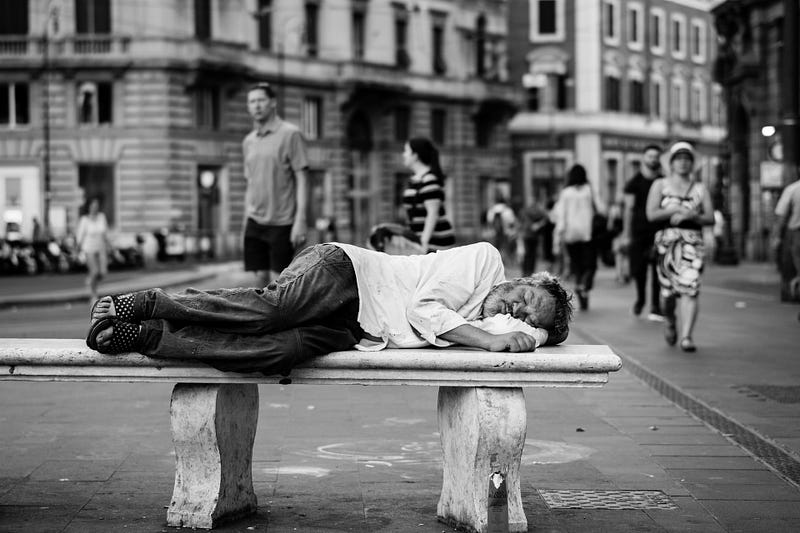
(Suicide attempts and the like are indeed not a police thing. I’ve seen articles that present Stockholm’s mental health ambulance as a good example of how when professionals are assigned to social problems things work so much better. The Swedish ambulance is laudable. But since police harassing suicidal people is not exactly the main issue right now in the USA, how come this is relevant at all? This is beyond me).
You might resent my simplistic, generalizing, demonizing portrayal of some of the weakest members of our society. The vast majority just want to be left alone; and police doesn’t solve the problem at all, only postpones it or transfers it several miles away. I completely agree.
But as a parent, if Penis Waggler nears my children, I want the police to come, period.
Let’s not forget that in order to achieve the reform we all want, we need to win hearts. The urge to call the police upon even perceived harassment is primal, and no amount of academic studies into the most efficacious ways of dealing with such people will convince the public otherwise. Someone behaves unpredictably, I want someone who’s trained and equipped to deal with such potential danger. The fact that Penis Guy might benefit more from a social worker is beside the point.
Defund, because the police should concentrate on murders and rapes
Many activists point at what they regard as excessive policing. Do we really need heavily gunned officers giving citations for broken tail lights, loitering or jaywalking?
This is the protest’s weakest argument. First, a huge portion of the population would answer a resounding Yes! to the question above. What are we most bothered with in our daily lives — murders and rapes, or rather neighbors that throw parties at night, drivers that endanger others, litterers, ticket scalpers, bicycle thieves and their friends? The activists that call for reducing the scope of policing are yet to divulge how they themselves cope with these commonplace nuisances that often turn our lives downright miserable. I hope that nobody suggests that social workers take to this task, or that improving social services will eradicate this entire issue in a decade or two.
Second, litterers and thieves are persecuted and prosecuted by law. If anything is to blame for “overpolicing”, it’s the laws that underlie it. Having laws that are not enforced should be reserved to curiosities curated by oddball websites — the 1823 South Carolina Goat Spitting Statute, for instance (just made that up) — and shouldn’t become the norm. If these infractions are to be discussed at all, they should at the legislative, not the policing, level.
Third, excessive policing is not tantamount to harassment and brutality. In Germany, where I live, there is strong police presence. I can’t walk a minute in the street without seeing police. Yet overpolicing is not a thing here. You may argue that as a privileged white guy I simply don’t experience the negative impact of overpolicing; but I have a hunch that if systematic targeting and harassment of non-whites were an issue here, I would’ve heard about it by now. Police here are devoid of many of the problems discussed above: they are better funded, better trained, more selectively recruited. (This notwithstanding, I’m not trying to ignore the racist origins and history of police in America, which play a major role in understanding the current situation). I would often see misdemeanors, and wish that there were literally police in every street corner.
Is it because I like seeing people harassed? Am I a grumpy malcontent who wishes for every kid who throws a gum on the floor to go to prison?
Not even a little. But when it comes to violations that make everyone miserable — and fully knowing that police here are my friends and that they’re only here to help — I am yearning for “overpolicing”. From here to George Floyd the distance is huge.
Afterthought
Whenever I delve into the Defund debate, I feel engulfed by generic slogans that make sense upon first hearing but are exposed as empty shells after careful consideration. Have you ever bought a cheap product, and after it broke your smart-alec friend quipped, “Well, you get what you pay for…”? Many of you will relate to my reaction to this: at first, yielding resignation at the astute truism thrown at me, but the next day: Wait a second, this is not true at all! It’s a complex issue that can’t be compressed into a catchy adage — much like with the issue at hand. But when it comes to Defunding the police, we might indeed end up getting what we paid for.


