
Disasters We Can Expect if We Defund the Police
What can we learn from places around the world that have radically re-imagined how policing can work?
As mass protests over the murder of George Floyd and the broken policing system that contributed to it continue, activists, protesters, and scholars calling to “Defund the Police” have gained increasing support and momentum. Predictably (and to some extent, deliberately), this has freaked the beans of a whole lot of people who don’t know what that means, a whole lot of other people who kind of know what it means but think it’s too radical, and a third set of people who don’t care what it means but want to gleefully use it as a blunt instrument in the culture wars.

“Defund the Police” means different things to different people, but in principle it is an umbrella for a series of reforms that include demilitarizing communities, safe housing, decarceration, and reallocating city funds towards healthcare and social workers.
But we don’t need to keep this in the realm of the highly conceptual to get an idea of what it would entail, because there are plenty of places around the world that are already living a version of that reality, so let’s take a look at a few concrete examples of the sorts of disaster we could expect if we were to take this path.
1. Milky Tripe Stew

In 2004, distrust of the corrupt police force in the Republic of Georgia had reached such high levels amongst the public that the new government decided to just get rid of the whole thing and create a smaller force over time with new recruits. As a result, violent crime fell by 66 percent, and, according to the Centre for Public Impact, “the reformed police force became one of the most well-regarded institutions in the country.” When major reforms, including amnesty for half of the country’s prison population, were extended to the severely mismanaged penitentiary system 8 years later, crime rates in the country dropped further and the country’s GDP saw massive improvement.

On the other hand, a popular hangover remedy in Georgia is “tripe stew,” whose recipe encourages you to “wash the cow shin and intestine thoroughly, slice them into lumps and put them in water for an hour.” As yet, no activist groups have demanded widespread adoption of this remedy in addition to policing reforms, but is it really worth the risk? And to make matters worse, Georgia’s capital, Tbilisi, has a thriving club culture and restaurant scene, which sounds both exhausting and expensive.
2. Wife-Carrying
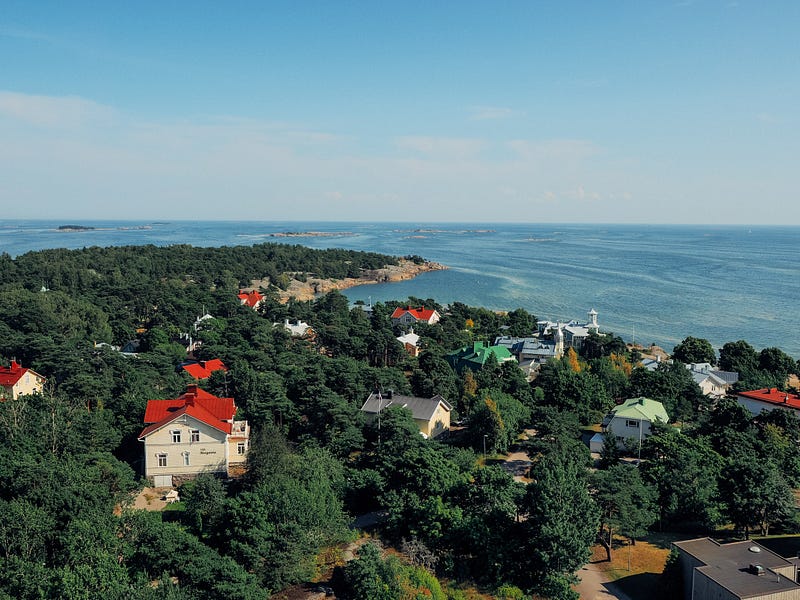
Finland has a very low number of police officers per capita and a dramatically low number of incarcerated people compared with the United States, but its clearance rate for murders is 99 percent (compared with about 62 percent in the U.S.), which may be partially because it has among the lowest murder rates in the world. Finland has also made dramatic strides in reducing homelessness, with a “housing first” program that keeps people off the streets and helps folks coming out of prison to get support that prevents them from reoffending.

Unfortunately, the low crime rate means, in part, that Finnish people have freedom and mental space to celebrate absurd traditions such as the World Wife-Carrying Championship, which seems like it would be both physically grueling and bad for your marriage.
3. Endless Wedding Speeches

In Stockholm, Sweden, a 2015 pilot program where incidents involving mental health emergencies were dealt with by mental health professionals instead of police was adopted permanently after uniformly positive results and dramatic improvement in the experiences of patients. The program has attracted interest from jurisdictions around the world.

Sweden’s progressive, touchy-feely approach to life may also be why it’s traditional for Swedes to give as many as 12 different speeches at a wedding, with any participant in the reception encouraged to give a speech if they feel moved. As a result, wedding dinners can sometimes go on for five or six hours.
4. The Death of Walt Whitman

In 2013, the city of Camden, New Jersey, decided that its police force simply wasn’t working and disbanded it. Starting over and hiring again with a new focus on community policing, the city saw violent crime fall by 42 percent over the next seven years.

Camden is also, of course, where the poet Walt Whitman died in 1892, of pleurisy. And while Camden’s lower crime rate and the improvement in community-police relations since 2013 are something to celebrate, are we really ready to trust the city that killed America’s most celebrated transcendentalist poet?
None of these places are perfect by any means, and many of them have a long way to go before they can be considered to be a paragon of policing, but two things are very clear from these examples:
- It is possible and effective to radically re-imagine how a police force works by reallocating resources away from police confrontations with civilians and towards programs that help with housing, mental health, and other issues that can contribute to crime.
- The disastrous potential for becoming a country of tripe-eating, wife-carrying, speechifying poet slayers is probably too horrifying to even think about.
For more information about what “defunding the police” means to the activists and scholars who have been talking about it, this is a great primer, and here’s one about the separate but connected “abolish the police” movement.


