
A boil of rice and climate change
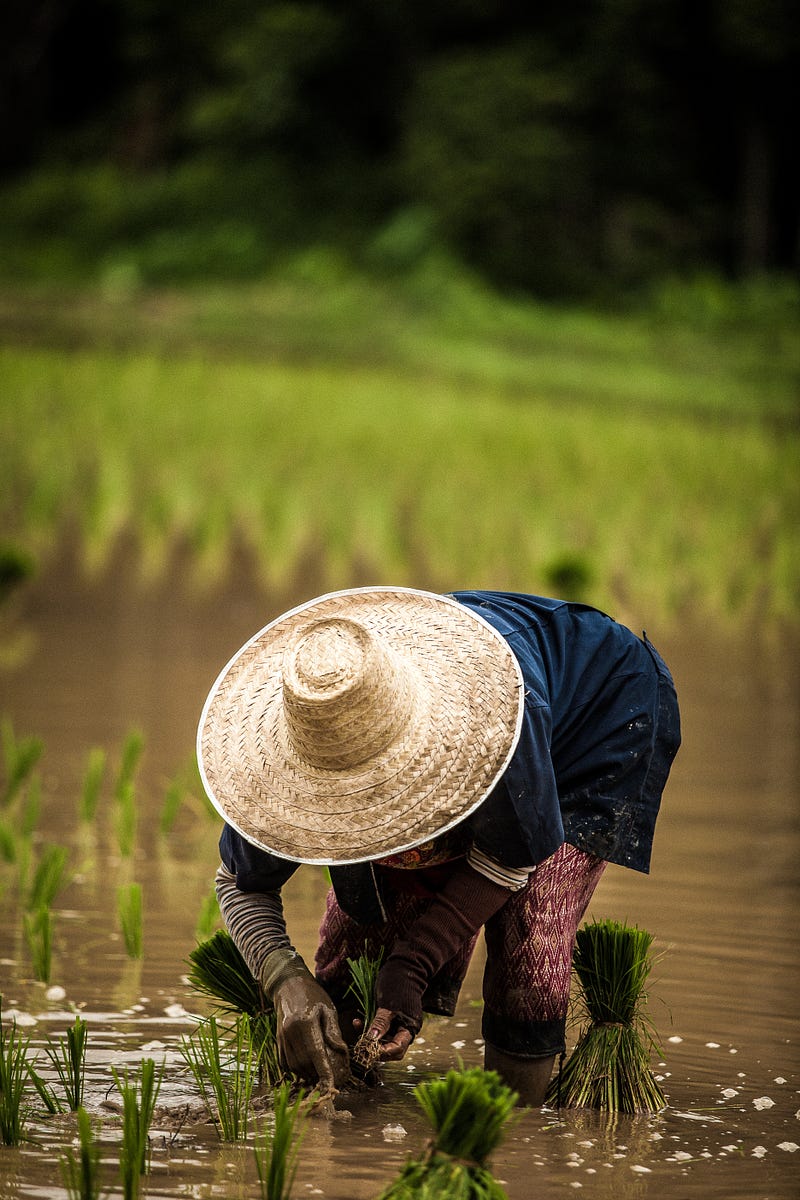
Rice is the most consumed crop in the world. There are more people eating rice than wheat (sorry for French bread) and maize (sorry Mexican tacos). In Vietnam, I eat rice at every meal! One boil for breakfast, two boils for lunch, and one boil for dinner. And half of the world is doing just like me.
Rice and methane
The problem with rice is the high amount of methane it releases during its cultivation. The main practice to grow rice is the agriculture on paddy which is a platform surrounded by small edges made of mud. The paddy is usually maintained wet during the rice growth because rice needs wet conditions to grow. Wet or water saturated conditions are a lovely environment for methanogenic bacteria, bacteria which produce methane. Since methane is a greenhouse gas 20 times more harmful than CO2 to the climate, it is crucial to prevent its emission.
In agriculture, rice is the second most significant source of greenhouse gas after livestock. In the case of Vietnam, agriculture is responsible for 30% of the emission of the country of which 50% comes from rice cultivation. With a growing demand for rice, the quantity of greenhouse gas emitted by rice paddies is likely to increase.
In 2015 at the Paris COP 21, Vietnam pledged to reduce by 8% its greenhouse gas emission, that’s what is called the NDC or nationally determined contribution. Agriculture has an important role to play in achieving this NDC because Vietnam had planned that 50% of its emission reduction will come from an improved crop production system, and rice production is a big part of it.
Alternate wetting drying
As mentioned above, rice farmers usually keep their paddy wet, however, researchers have discovered that drying the paddy at a certain moment in the year can reduce the greenhouse gas emissions of the paddy by 50% and save 30% of irrigation water. By widely implementing alternate wetting drying cultivation practices, Vietnam could reduce rice greenhouse gas emission by 20%.
However, there are still barriers to the wide implementation of this practice in Vietnam including policy gaps, lack of capacity at provincial level for implementation, and of course lack of investment.
Tran Van The from the Ministry of Agriculture reminded that Vietnam has recently developed environmental policies such as green growth, crop project development, rice production restructuring, Vietnam action plan for climate change etc. Still, there are gaps to solve. Widely implementing alternate wetting drying practices is a high ambition which lacks financial resources.
Even though alternate wetting drying in paddy agriculture can bring a net financial benefit to farmers, the latter do not have access to loan or land tenure to help them shift to this sustainable practice. This lack of mechanism to support the change to alternate wetting drying rice agriculture hampered the replication of the practice in the country.
700 millions dollars of investment would be needed to shift 1 million hectares of rice cultivation in the Mekong Delta to alternate wetting drying practice. The possible investment streams are domestic like public investment for rural development and climate change mitigation, and international for example from foreign government agencies (Germany, Japan…) and international donors (Global Environmental Fund). One hope is also to attract private investors to invest in the land and help to reduce carbon emission from rice paddies. This investment would be used to improve policies with concrete technical guidelines, build capacity of provincial government officials, improve irrigation systems, and enhance coordination between partners.
Since provincial government are the main implementers of the national plan, capacity building must be planned with them to address local needs. Constant monitoring of the fields using alternate wetting drying should be done to know the GHG reduction at the plot, regional and national level.
A large potential halt climate change
In total, it’s 1 million ha of rice paddies which can be converted to alternate wetting drying to reduce by 11 Mt the CO2 emission and increase by 370$ farmers income. And this is only for Vietnam. There are many other countries cultivating rice which can benefit from the wet and dry practice and reduce their CO2 emission. At the global level, this simple practice of drying the rice paddy at a certain time of the year can significantly reduce greenhouse gas emission and thereby halt climate change.
Now we have the technology, we know how to reduce greenhouse gas emission from rice cultivation. We need to implement this wet and dry sustainable practice, train farmers and invest money to scale it up. And we need to do it now because we have only 8 years to significantly reduce our CO2 emissions and halt climate change. 8 years.