avatarThuận Sarzynski

Free AI web copilot to create summaries, insights and extended knowledge, download it at here

2797

Abstract

lture every day and harvest the ripe mushrooms.</p><figure id="b3e8"><img src="https://cdn-images-1.readmedium.com/v2/resize:fit:800/1*EdhG1mtaopWmlx0nuu38jQ.jpeg"><figcaption></figcaption></figure><figure id="9e8f"><img src="https://cdn-images-1.readmedium.com/v2/resize:fit:800/1*3vbsnNjOpWtxIa_yZy8Uog.jpeg"><figcaption></figcaption></figure><figure id="c670"><img src="https://cdn-images-1.readmedium.com/v2/resize:fit:800/1*ydQ2TBfceNdT9-lHJe1kvQ.jpeg"><figcaption>Dark room to grow Button mushroom © Thuan Sarzynski</figcaption></figure><figure id="19b0"><img src="https://cdn-images-1.readmedium.com/v2/resize:fit:800/1*KlkZ8QDIft1igdJHaSXExA.jpeg"><figcaption></figcaption></figure><figure id="2b7c"><img src="https://cdn-images-1.readmedium.com/v2/resize:fit:800/1*oJ2tNztUEMivirjgSjCNMw.jpeg"><figcaption>Mushrooms on the way! © Thuan Sarzynski</figcaption></figure><p id="2096">Once farmers are trained, they are independent and send their production to Fargreen who sells it to restaurants, organic retail stores and hotels in Hanoi. Farmers also produce vegetables and rice organically without using artificial pesticides and fertilizers and give their production to Fargreen. Interestingly, Fargreen does not buy farmers’ production but hire them and pay them no matter the amount produced. This prevents farmers to cheat and hide bad practices.</p><p id="14be">Growing vegetables and rice naturally without any chemicals is not an easy task since farmers must use organic inputs to fertilize and control pests on their field; for example, compost, and pesticides made of chilli, garlic, and ginger. Fargreen is very strict on the quality of their products.</p><figure id="600c"><img src="https://cdn-images-1.readmedium.com/v2/resize:fit:800/1*O9e7QuKw5uPJiO_74rtnFg.jpeg"><figcaption></figcaption></figure><figure id="a024"><img src="https://cdn-images-1.readmedium.com/v2/resize:fit:800/1*yWB_fc_BxJL56RoI0wJ5Iw.jpeg"><figcaption>Eggplant on the right ©Thuan Sarzynski</figcaption></figure><p id="dc25">So far, Fargreen is working with ten farmers in Thai Binh province including nine women. In the region, women are more likely to get involved in agricultural activities while men are engaged in construction work or go to the city to find a job. Fargreen has recently started to implement their model in Gia Lai province in the centre of Vietnam.</p><p id="b33a">In addition to the mushroom, rice and vegetables, Fargreen had hired a beekeeper to produce honey. Chien, the beekeeper, has beehives at Fargreen farm in the forest. He regularly checks his beehives to collect honey. To collect the honey, he must cut the wax layer to open the cells where the honey is stored. Then he uses a kind of machine which makes the beehive’s frame turns on itself and releases honey without

Options

destroying the wax cells.</p><figure id="cb69"><img src="https://cdn-images-1.readmedium.com/v2/resize:fit:800/1*wD4lgSdNXf9Fy4DSRJldsw.jpeg"><figcaption></figcaption></figure><figure id="6a11"><img src="https://cdn-images-1.readmedium.com/v2/resize:fit:800/1*UubaUwD6h5mqye_dwOrTIA.jpeg"><figcaption></figcaption></figure><figure id="40d6"><img src="https://cdn-images-1.readmedium.com/v2/resize:fit:800/1*T4Wdr-FwIDGkiTPpF-n2DA.jpeg"><figcaption>Chien, the beekeeper, with a frame full of honey © Thuan Sarzynski</figcaption></figure><figure id="9fb6"><img src="https://cdn-images-1.readmedium.com/v2/resize:fit:800/1*3N1uzq-aNVBnCW97tU5RIA.jpeg"><figcaption></figcaption></figure><figure id="a5d2"><img src="https://cdn-images-1.readmedium.com/v2/resize:fit:800/1*oSuQZc2saHL0BCk_vieY0g.jpeg"><figcaption>Harvesting honey © Thuan Sarzynski</figcaption></figure><figure id="f351"><img src="https://cdn-images-1.readmedium.com/v2/resize:fit:800/1*hY3ucIpkJTsHQV7q3gNndA.jpeg"><figcaption></figcaption></figure><figure id="7fe0"><img src="https://cdn-images-1.readmedium.com/v2/resize:fit:800/1*JVvP4Z-84qis06f0wVpsMw.jpeg"><figcaption>Close up of a frame © Thuan Sarzynski</figcaption></figure><p id="0809">Fargreen’s vision is to reunite all farming components into one sustainable ecosystem which will contribute to conserve the natural environment and produce healthy food. Fargreen considers that the food production system must be circular and inclusive, reduce waste and allow farmers to earn a living out of their hard work.</p><figure id="ded0"><img src="https://cdn-images-1.readmedium.com/v2/resize:fit:800/1*FeW3Pt13zLsE6s5OV8Nk3Q.jpeg"><figcaption></figcaption></figure><figure id="4d14"><img src="https://cdn-images-1.readmedium.com/v2/resize:fit:800/1*Mfzq0ZEsf8THwAsV5gAZyg.jpeg"><figcaption>Packaging mushrooms © Thuan Sarzynski</figcaption></figure><figure id="f183"><img src="https://cdn-images-1.readmedium.com/v2/resize:fit:800/1*chA4QkmwW7TBHZjIXv5EpQ.jpeg"><figcaption>Thank you for reading © Thuan Sarzynski</figcaption></figure><div id="f830" class="link-block"> <a href="https://readmedium.com/how-eating-organic-shrimps-for-christmas-will-help-reducing-climate-change-effects-2d3219676cea"> <div> <div> <h2>Eat Organic Shrimps, Save Forest, Stock Carbon</h2> <div><h3>A ten footed animal menaces mangrove forest : the shrimp. Shrimp farming is directly competing with mangrove forest…</h3></div> <div><p>medium.com</p></div> </div> <div> <div style="background-image: url(https://miro.readmedium.com/v2/resize:fit:320/1*xKdUXdV59pqOT4NWkDYJPQ.jpeg)"></div> </div> </div> </a> </div></article></body>

Mushrooms, Vegetables and Bees

50 million tons of rice straw are produced every year in Vietnam. This straw resulting from rice harvest is considered as a waste and burnt by farmers. Burning is a fast and economic way of getting rid of it. However, burning releases greenhouse gases and toxic chemicals in the air, it also reduces the visibility on the road and can cause traffic accidents. In a village in Thai Binh province, farmers stopped burning rice straw and changed it into cash.

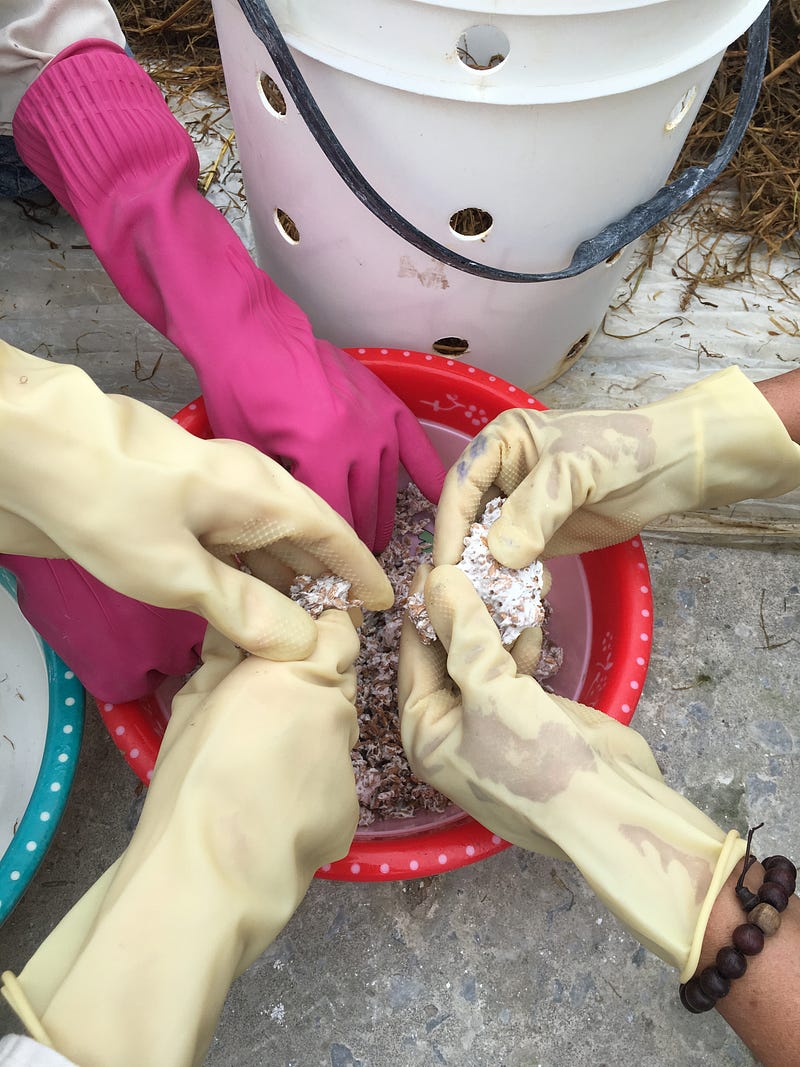
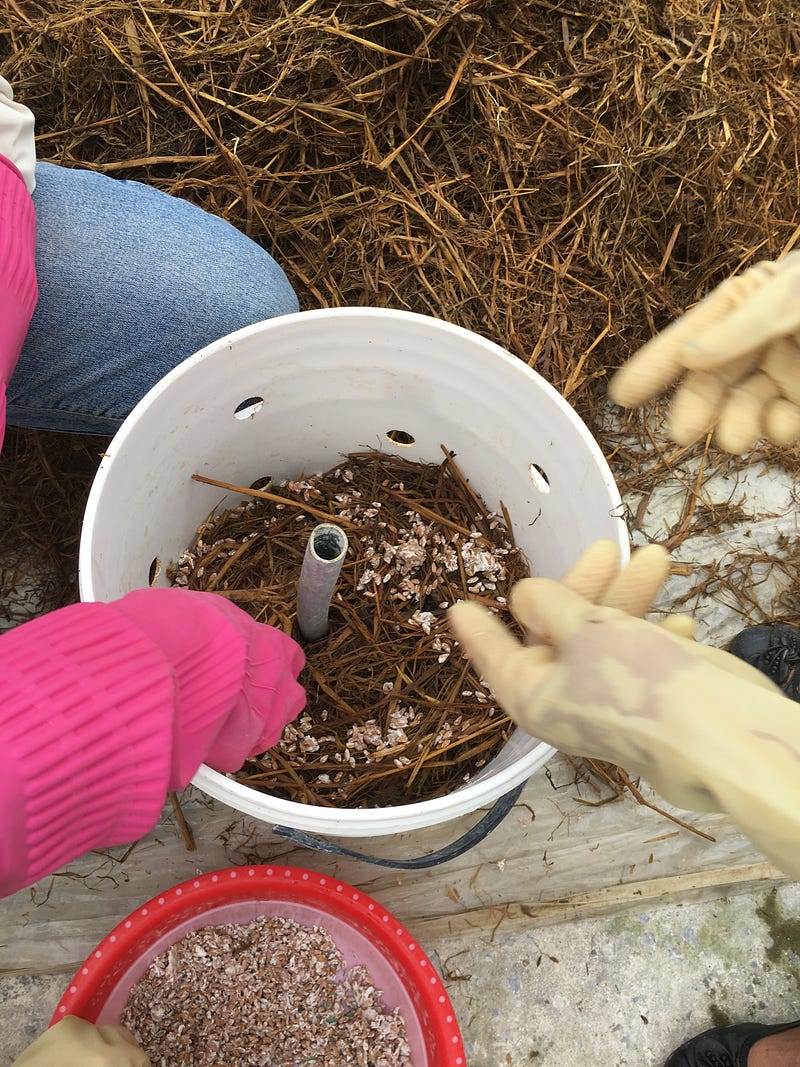
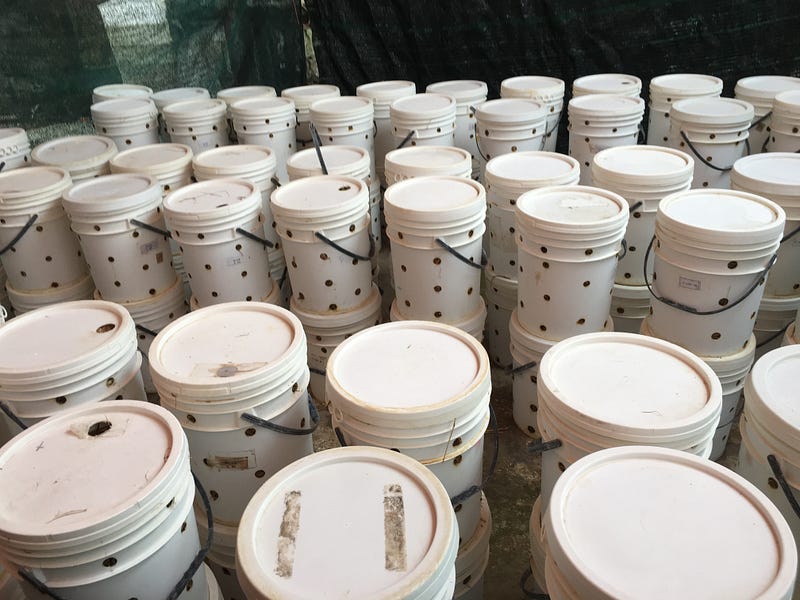
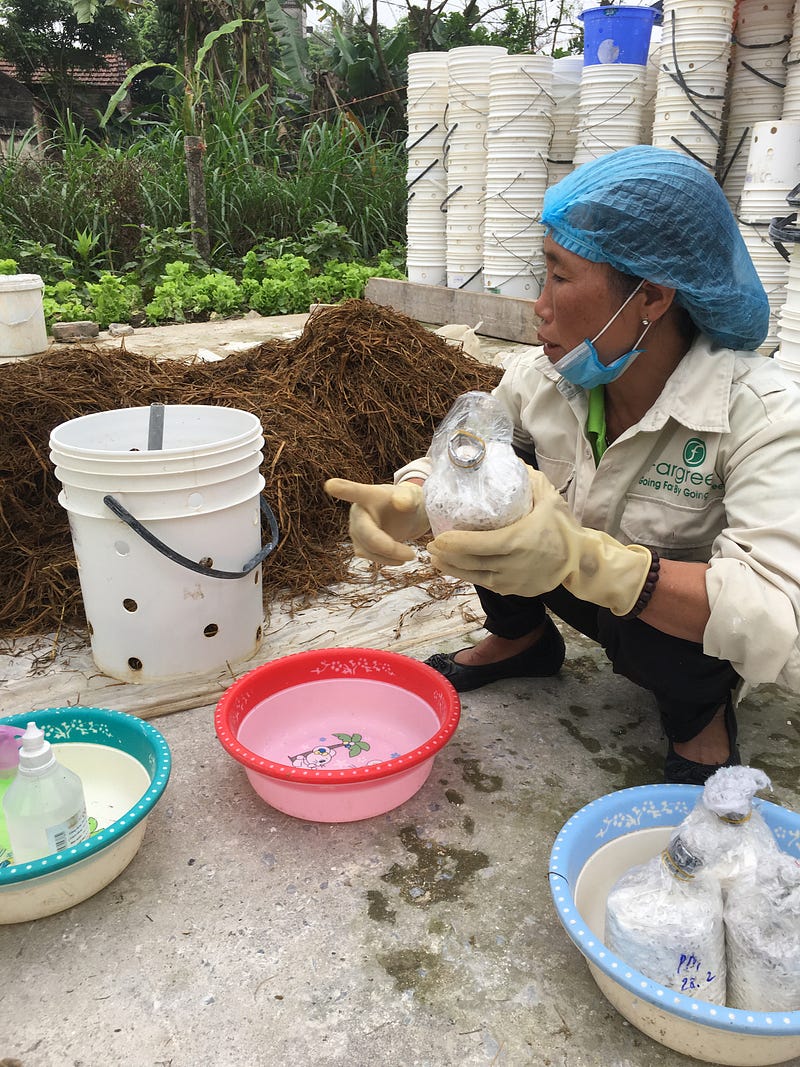
Thanks to Fargreen, a social enterprise promoting a sustainable agriculture producing healthy organic food, farmers have learnt how to use rice straw as a substrate to grow mushrooms. Fargreen trained farmers to grow Oyster mushrooms in plastic buckets. Buckets are pierced for aeration and filled up with alternating layers of rice straw and mushroom spawns provided by the Vietnam Agricultural University. Once inoculated, the bucket must rest for a certain period of time in a cold and dark room, so mushrooms can grow. People inoculating the mushroom must wear clean clothes, gloves and boot to prevent any contamination from pathogens.

Farmers spread lime on the floor and walls to disinfect the room where inoculated buckets are stored. Once stored, mushrooms need to be checked every day and watered to ensure the right amount of humidity and proper temperature.
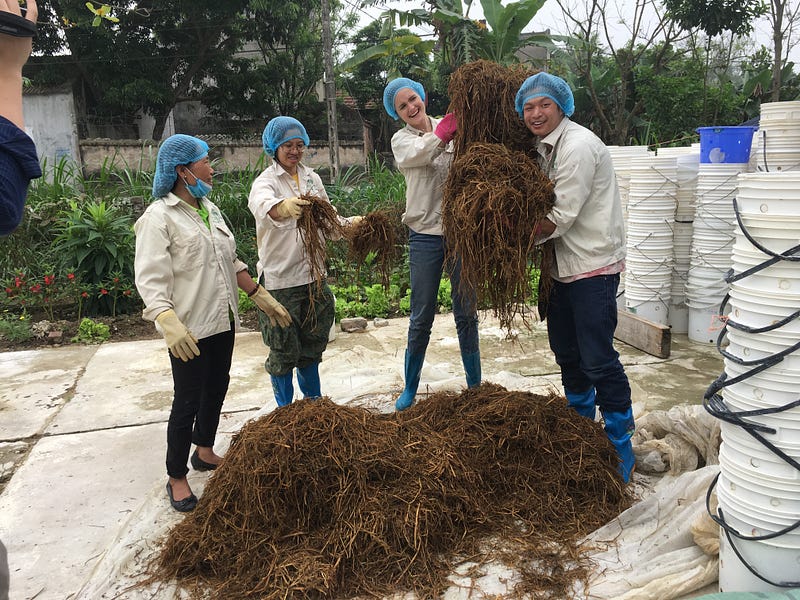
Aeration of the rice straw and crumbling of the inoculate © Thuan Sarzynski
Inoculation of the mushroom in the rice straw & storage of inoculated buckets © Thuan Sarzynski

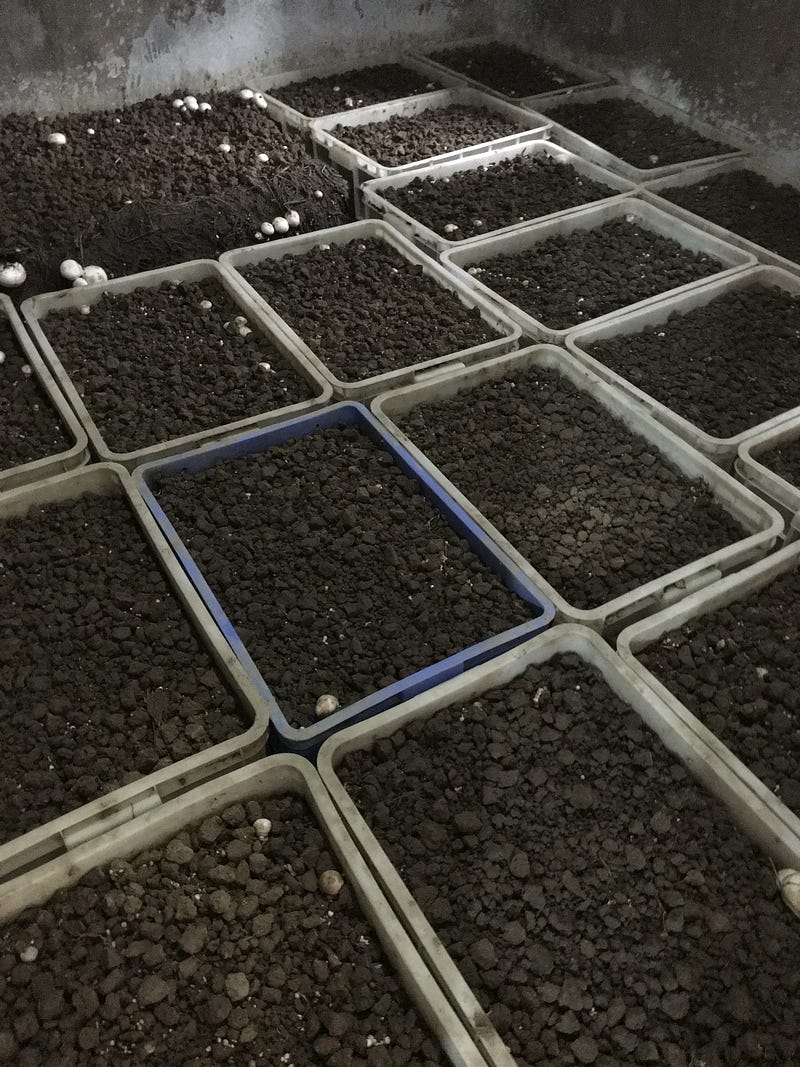
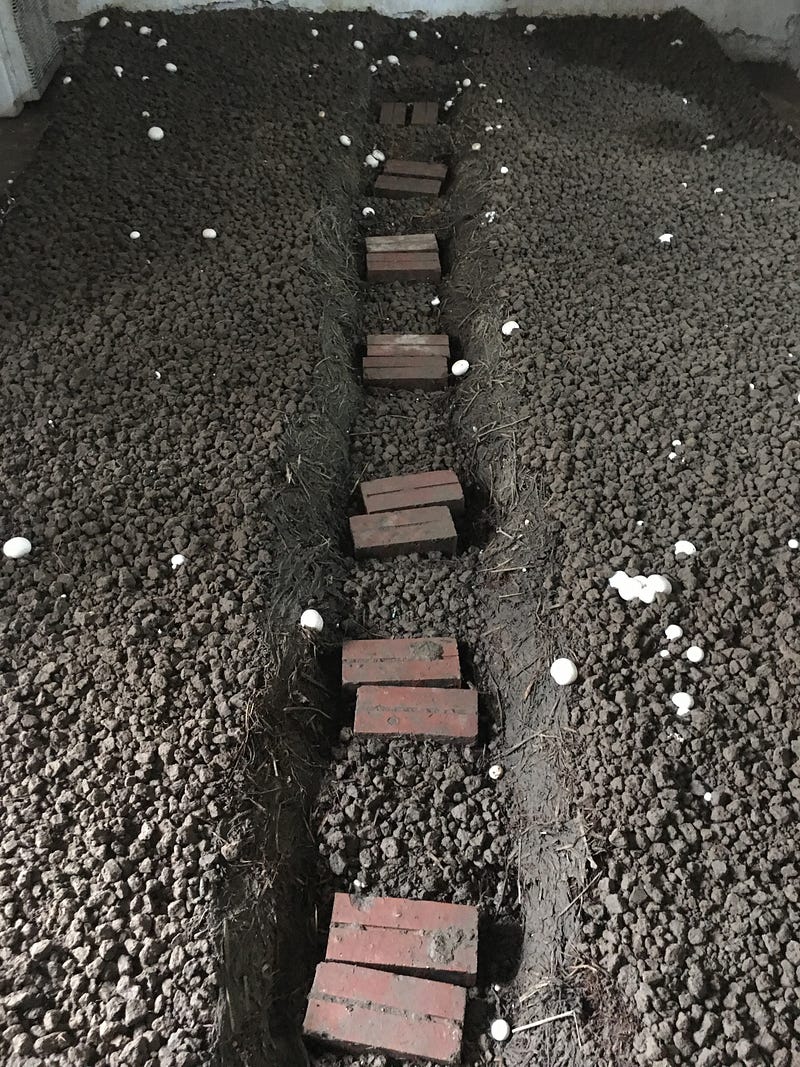
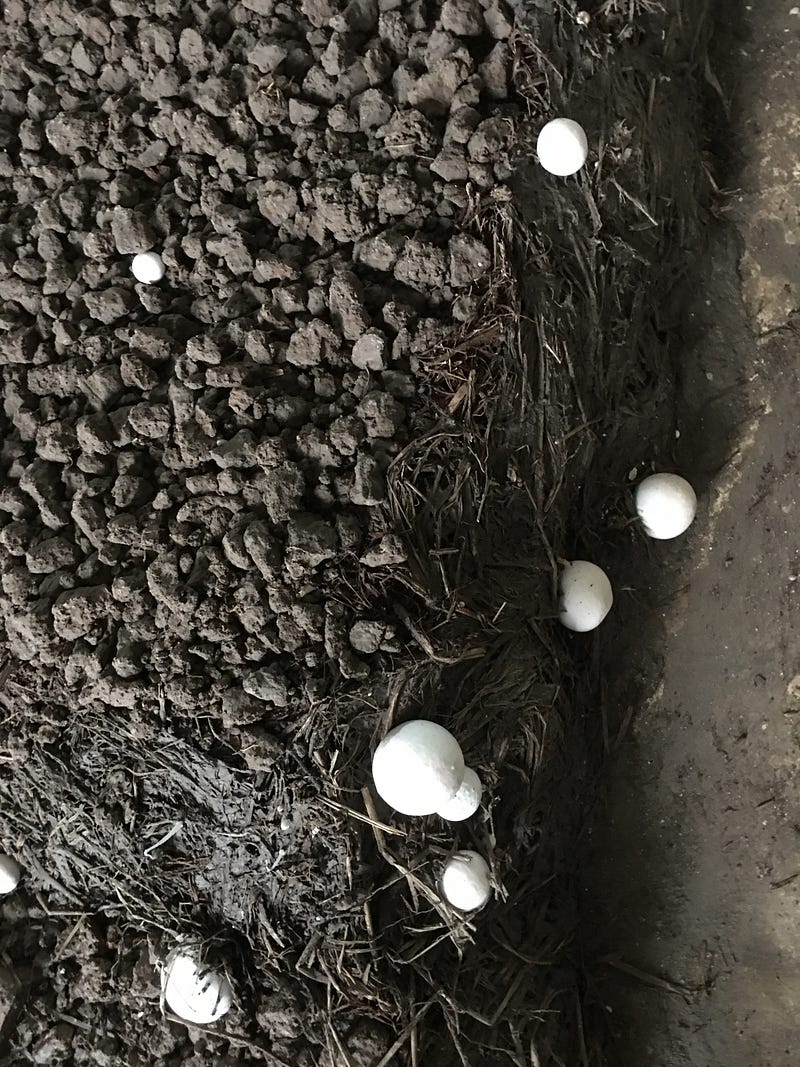
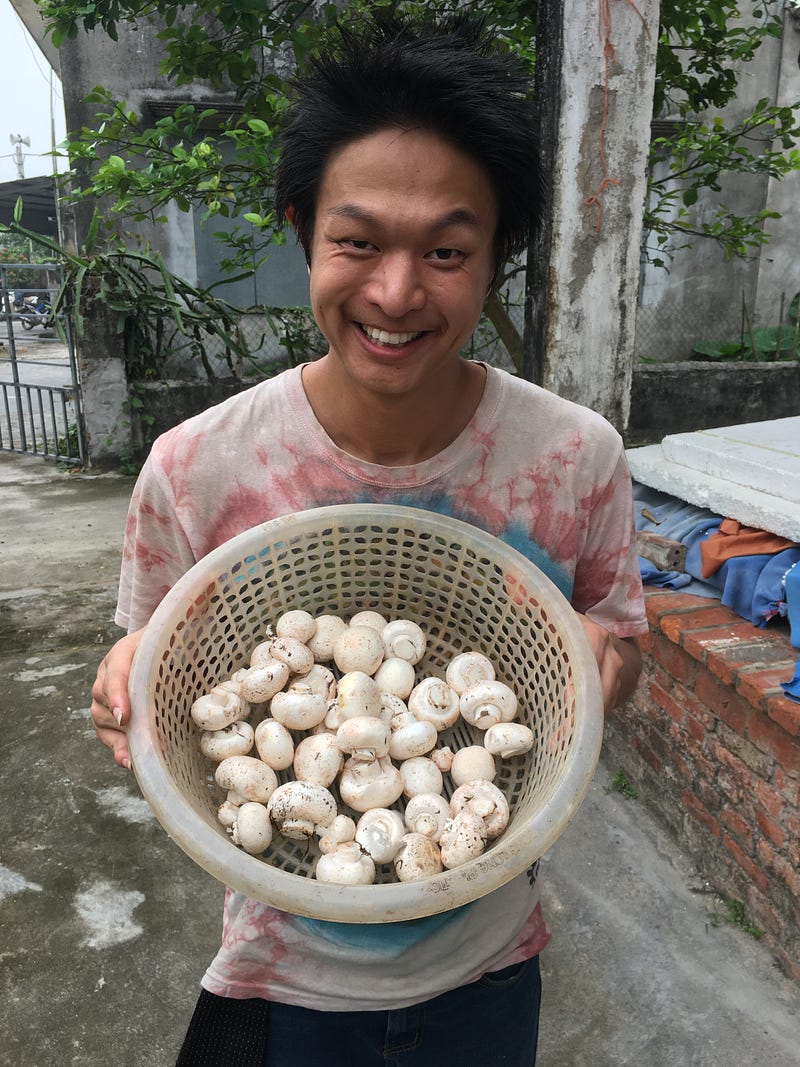
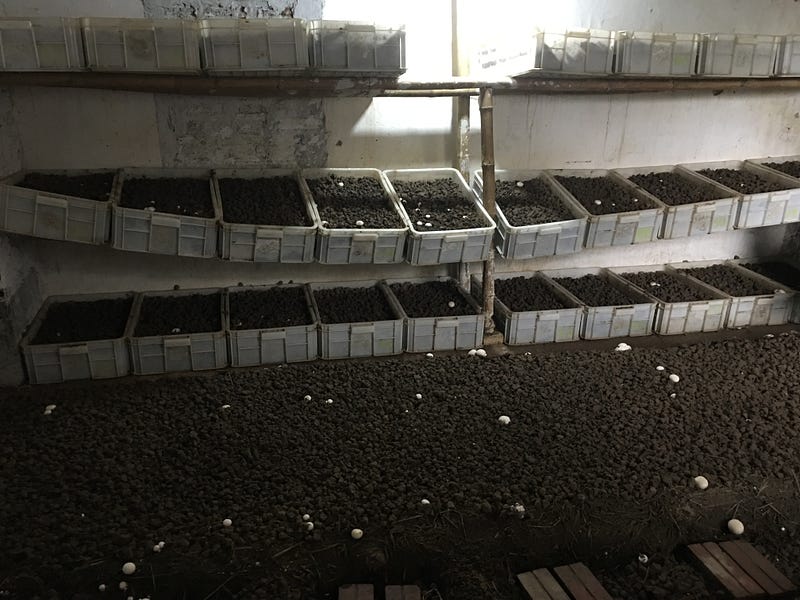
In addition to Oyster mushroom, Fargreen and its farmers are growing Button mushrooms also known as common mushroom or Portobello mushroom. This mushroom is grown in an air-conditioned dark room, on a raised bed made of dirt and rice straw, or in plastic boxes filled up with the same substrate. The inoculation process is more of less the same as with Oyster mushrooms. Once mushrooms have started to show up, farmers must check the culture every day and harvest the ripe mushrooms.
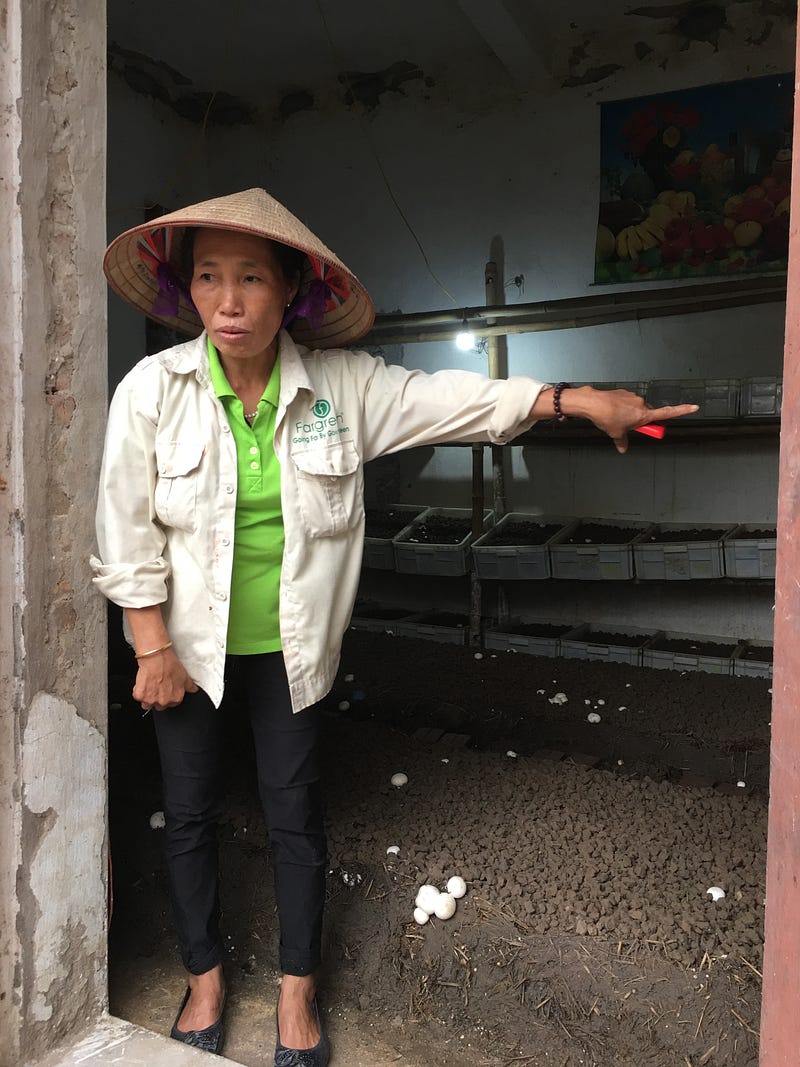
Dark room to grow Button mushroom © Thuan Sarzynski
Mushrooms on the way! © Thuan Sarzynski

Once farmers are trained, they are independent and send their production to Fargreen who sells it to restaurants, organic retail stores and hotels in Hanoi. Farmers also produce vegetables and rice organically without using artificial pesticides and fertilizers and give their production to Fargreen. Interestingly, Fargreen does not buy farmers’ production but hire them and pay them no matter the amount produced. This prevents farmers to cheat and hide bad practices.

Growing vegetables and rice naturally without any chemicals is not an easy task since farmers must use organic inputs to fertilize and control pests on their field; for example, compost, and pesticides made of chilli, garlic, and ginger. Fargreen is very strict on the quality of their products.
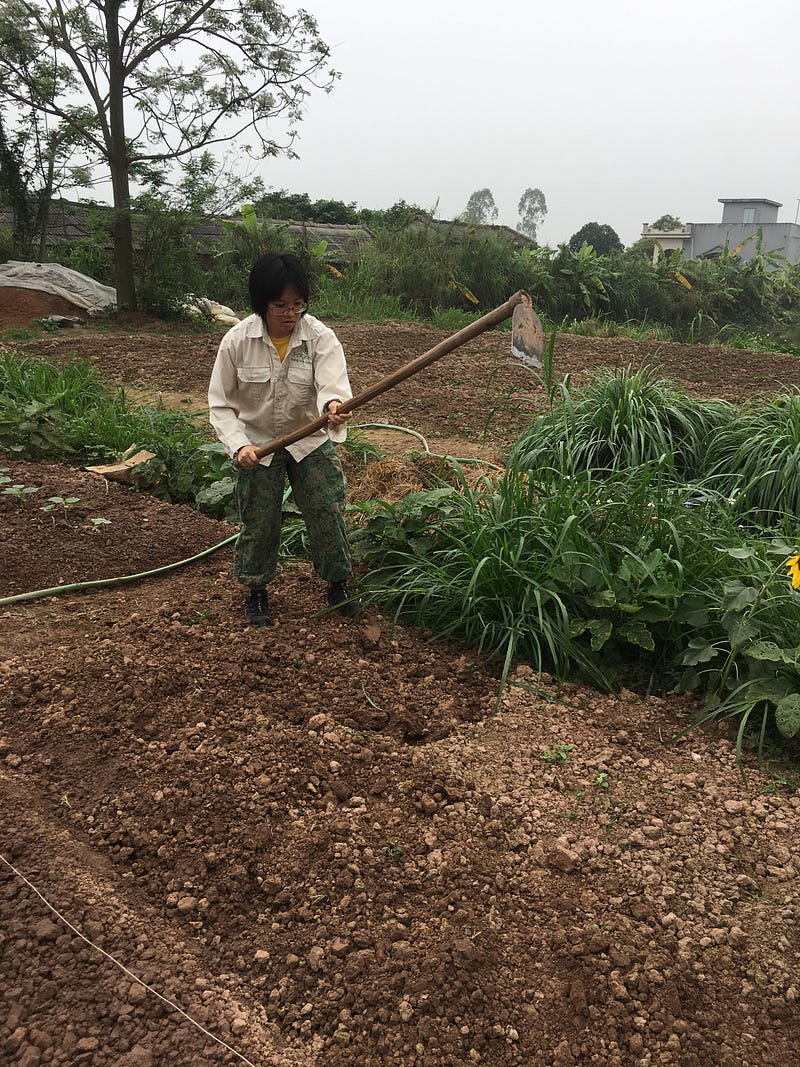
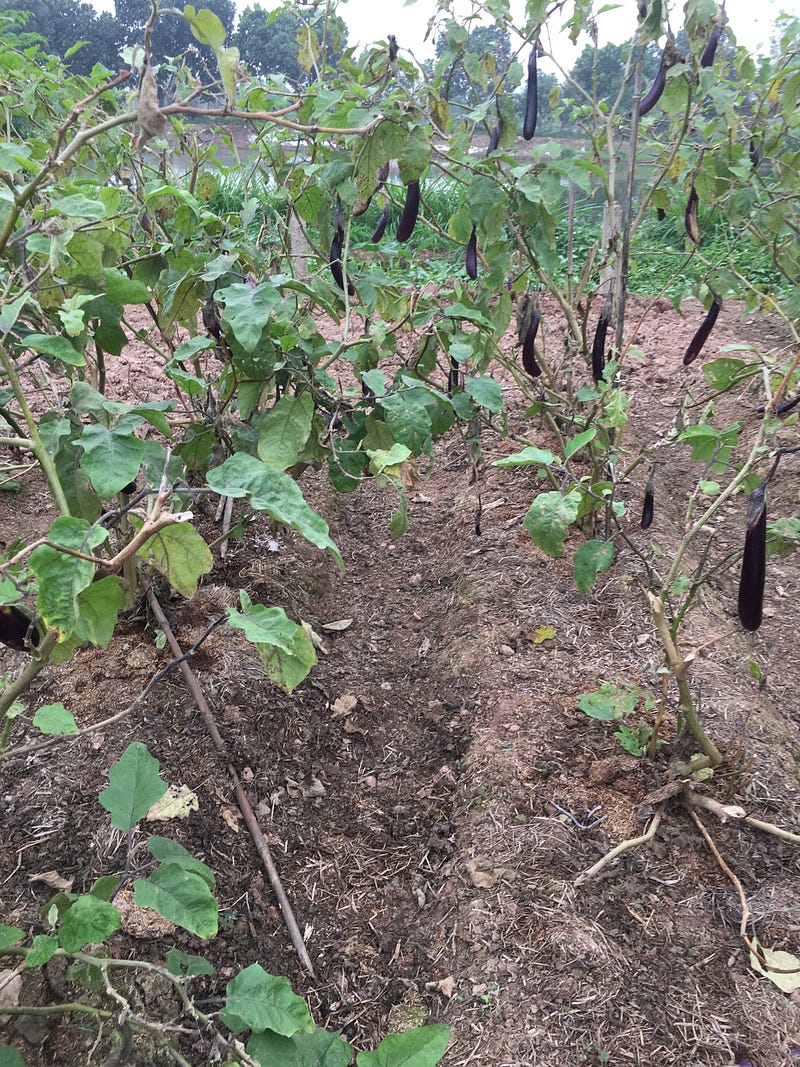
Eggplant on the right ©Thuan Sarzynski

So far, Fargreen is working with ten farmers in Thai Binh province including nine women. In the region, women are more likely to get involved in agricultural activities while men are engaged in construction work or go to the city to find a job. Fargreen has recently started to implement their model in Gia Lai province in the centre of Vietnam.

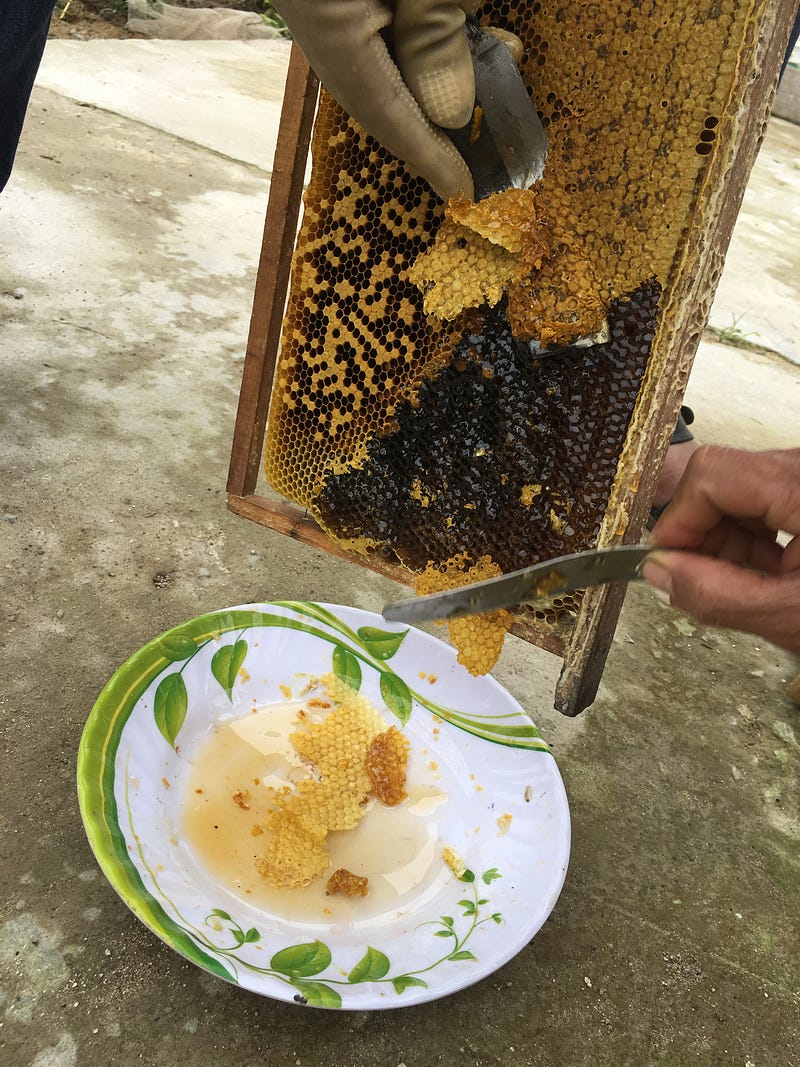
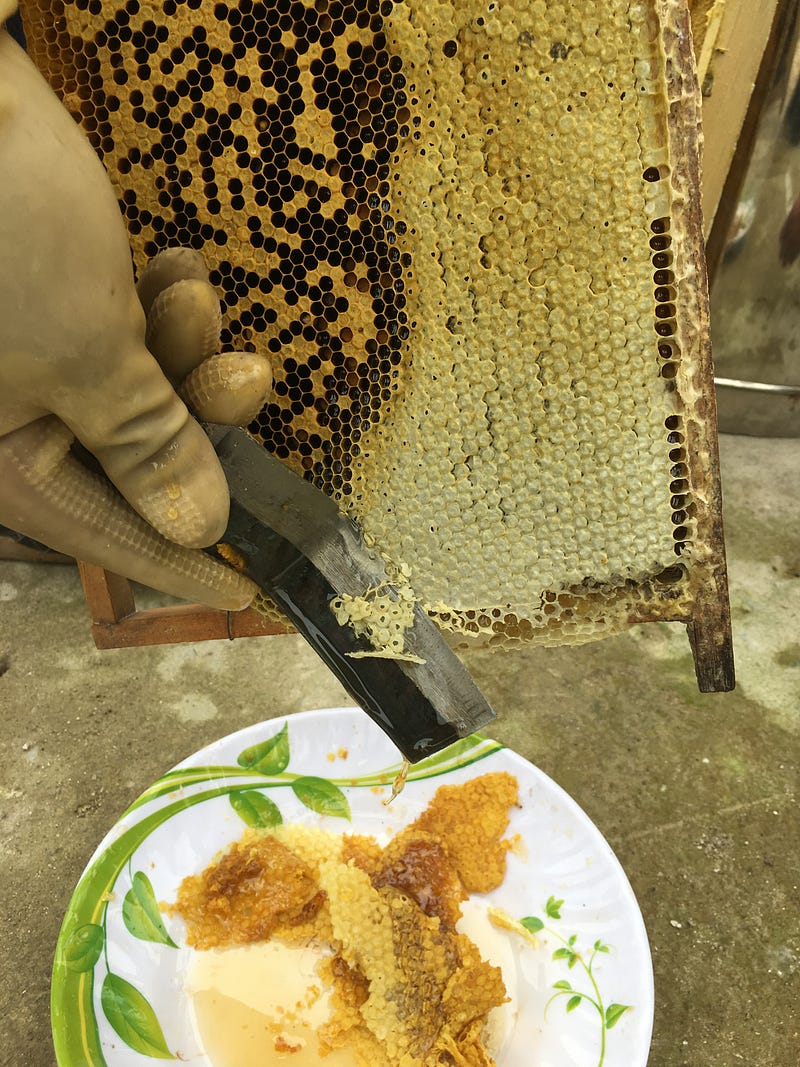
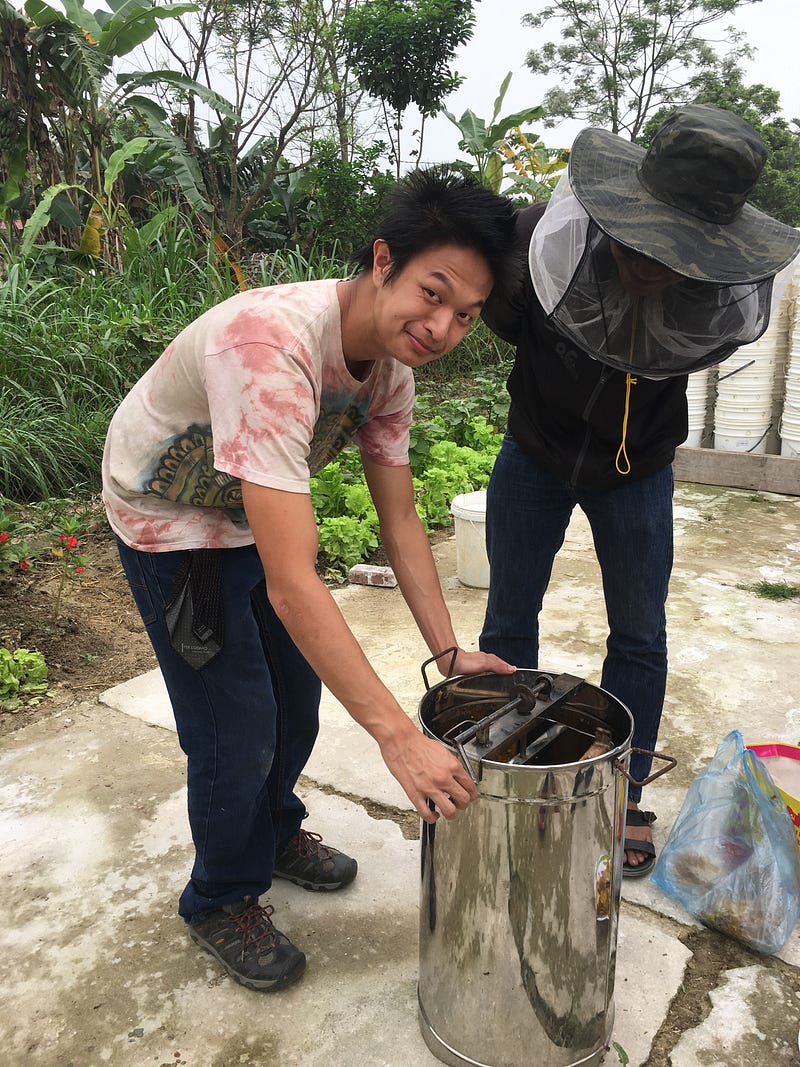
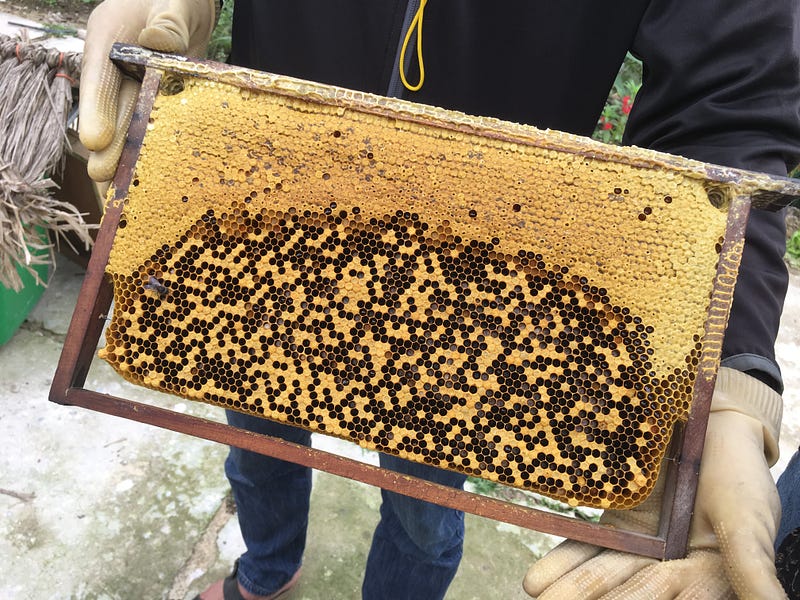
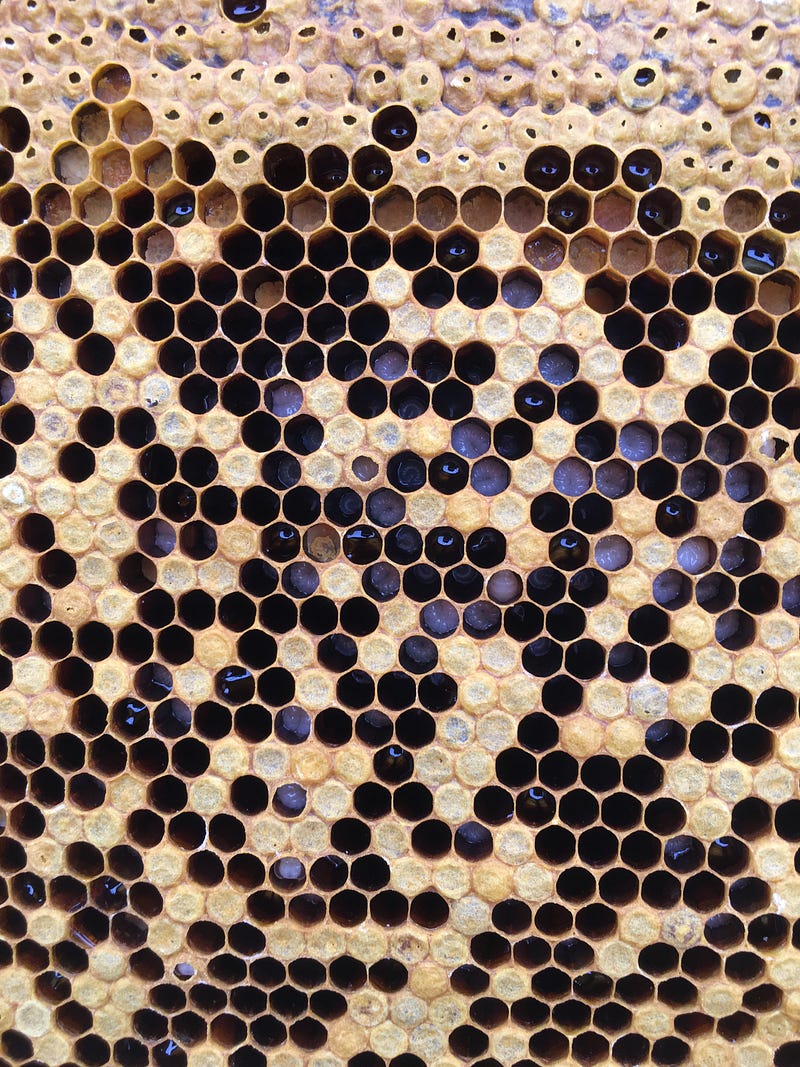
In addition to the mushroom, rice and vegetables, Fargreen had hired a beekeeper to produce honey. Chien, the beekeeper, has beehives at Fargreen farm in the forest. He regularly checks his beehives to collect honey. To collect the honey, he must cut the wax layer to open the cells where the honey is stored. Then he uses a kind of machine which makes the beehive’s frame turns on itself and releases honey without destroying the wax cells.
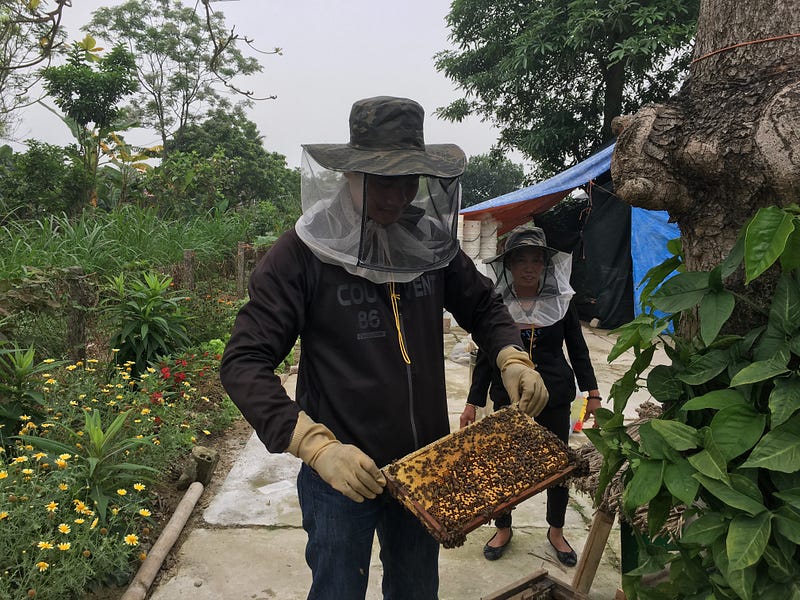
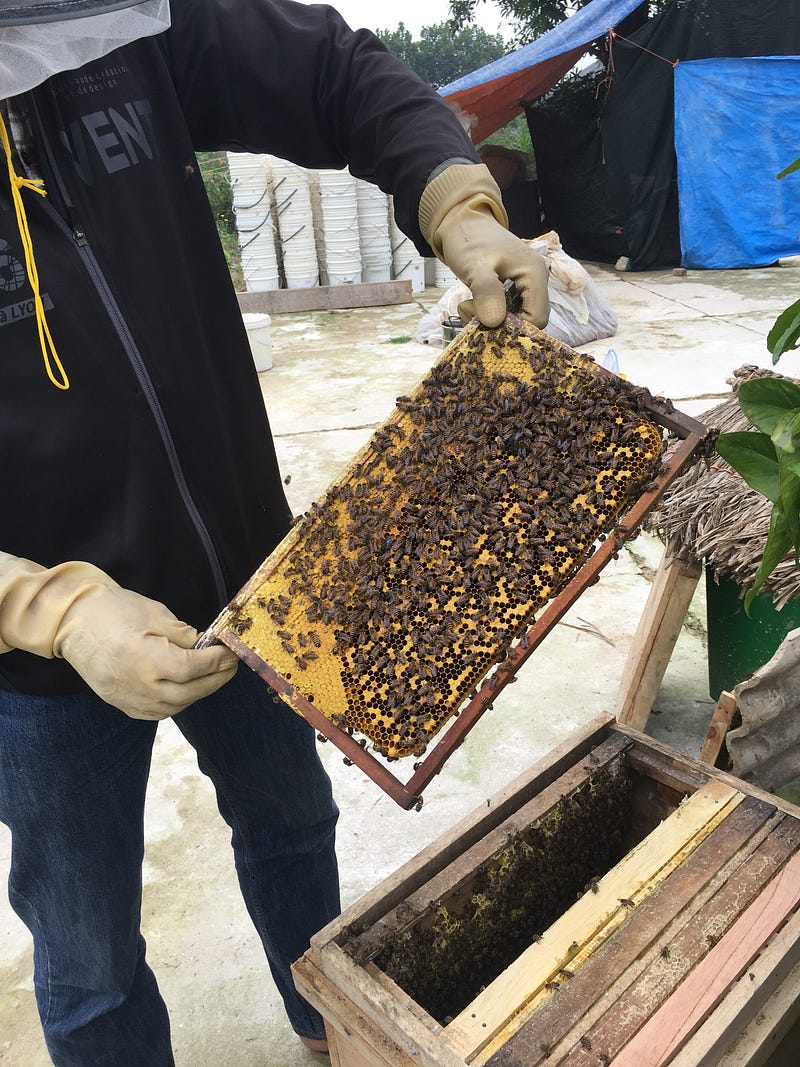
Chien, the beekeeper, with a frame full of honey © Thuan Sarzynski
Harvesting honey © Thuan Sarzynski
Close up of a frame © Thuan Sarzynski

Fargreen’s vision is to reunite all farming components into one sustainable ecosystem which will contribute to conserve the natural environment and produce healthy food. Fargreen considers that the food production system must be circular and inclusive, reduce waste and allow farmers to earn a living out of their hard work.
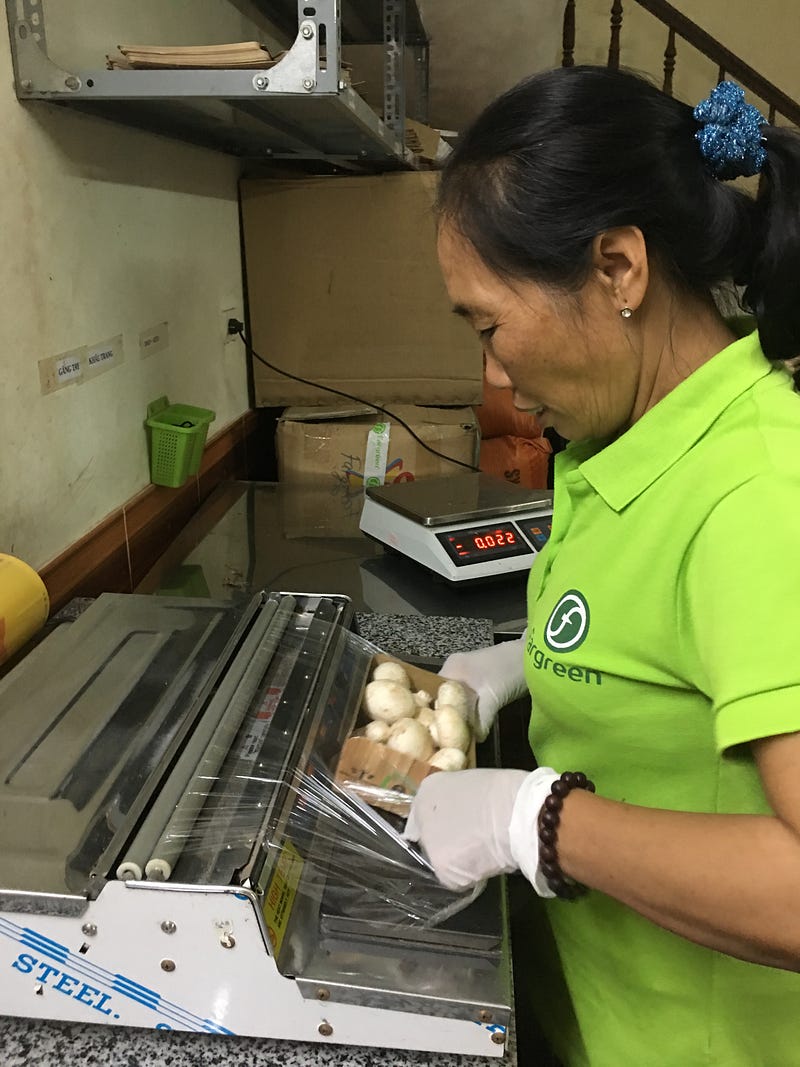
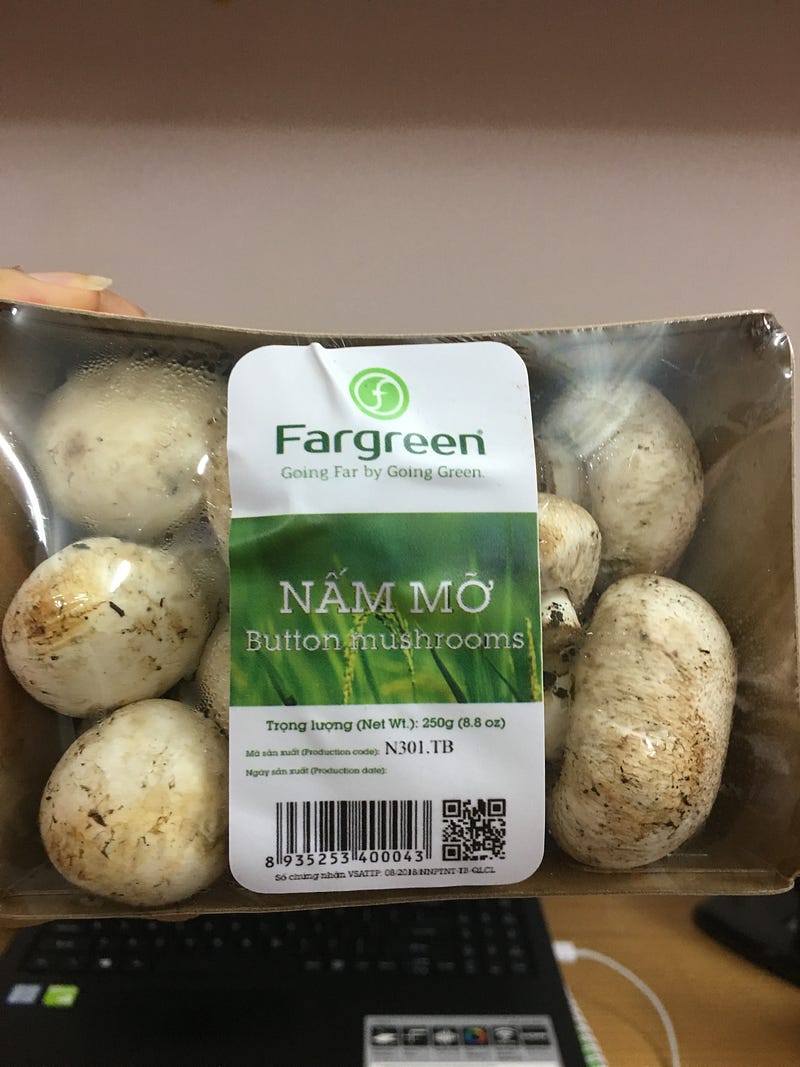
Packaging mushrooms © Thuan Sarzynski
Thank you for reading © Thuan Sarzynski
Agriculture
Sustainability
Environment
Vietnam
Mushrooms
Recommended from ReadMedium