
BORSCHT | SOUP | COOKING
A Ukrainian Soup Called Borscht
The hearty soup that packs a healthy punch!
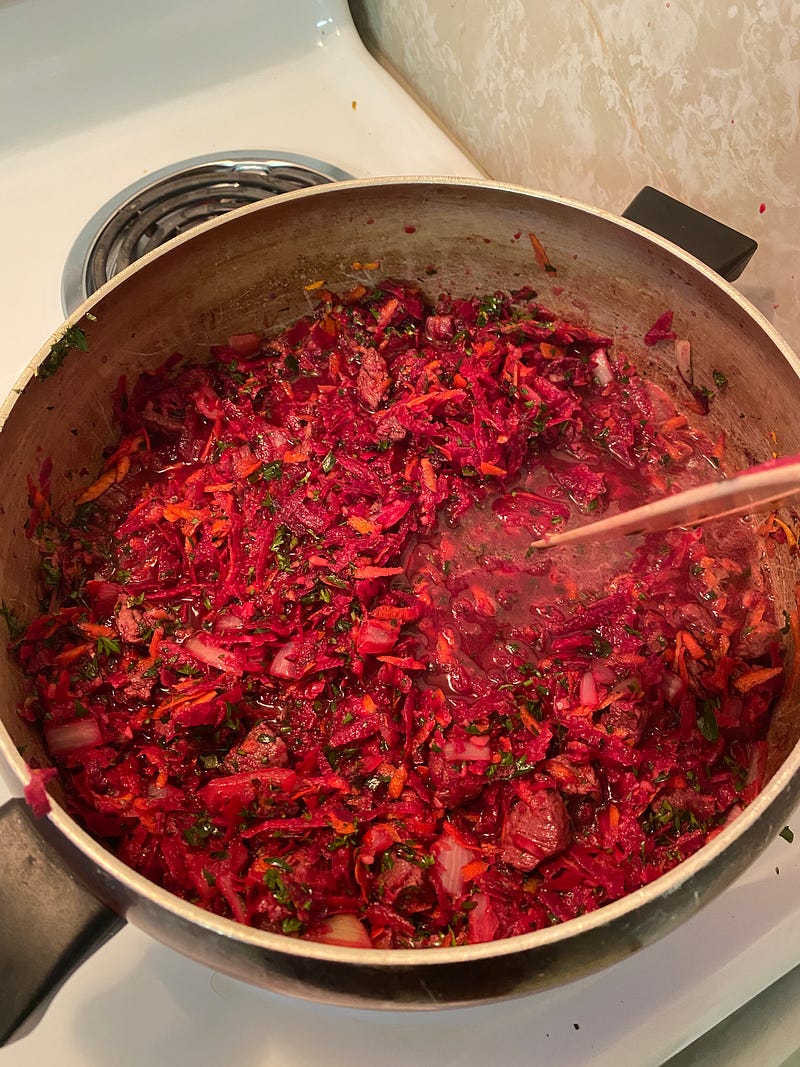
When I think of borscht, I can’t help but think of my Grandmother. Her ancestry is Romanian, so I grew up with a lot of Romanian, Ukranian and Russian food.
Some of my most vivid memories were of my grandmother with her butt high in the air, picking weeds and tending to her garden. I would show up to her house on my bike, first checking outside to see if she was in the garden before venturing inside. She grew amazing vegetables. Her life revolved around scouting out a manure pile every year so she could always get the garden good and fertilized.
Large family gatherings were held at her house often as she would dig fresh vegetables and cook us the most delicious food. But her borscht will always stand out to me and I relish in making it whenever I get the chance.
What is borscht?
Borscht is made with ingredients that are best harvested this time of year as the seasons are changing and shifting. For me, borscht is comfort. It is fall. It is cool wet days. Borscht brings memories of happier times when our family gathered to be together.
According to Wikipedia:
Borscht is a sour soup, made with meat stock, vegetables and seasonings, common in Eastern Europe and Northern Asia. In English, the word “borscht” is most often associated with the soup’s variant of Ukrainian origin, made with red beetroots as one of the main ingredients, which give the dish its distinctive red color.
For the month of September, my partner and I had the good fortune to stay at a family farm that had its own enormous garden filled with mountains of delicious food. It was from that garden that we gathered our ingredients to make borscht.
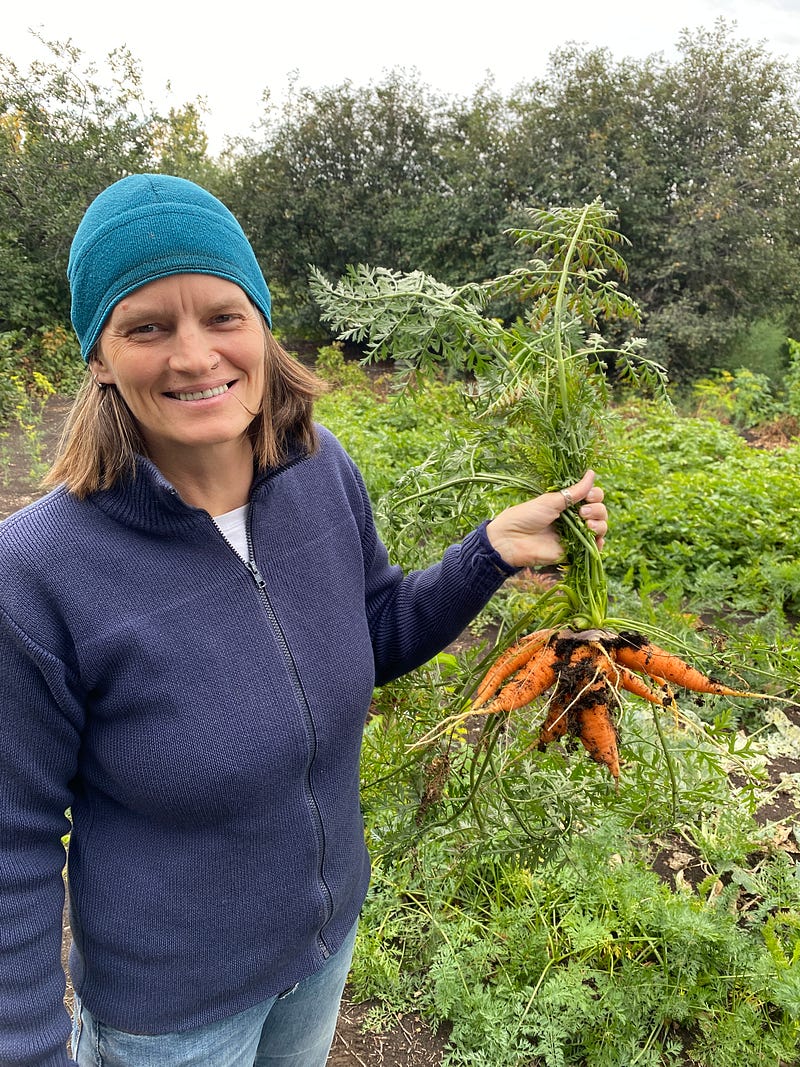
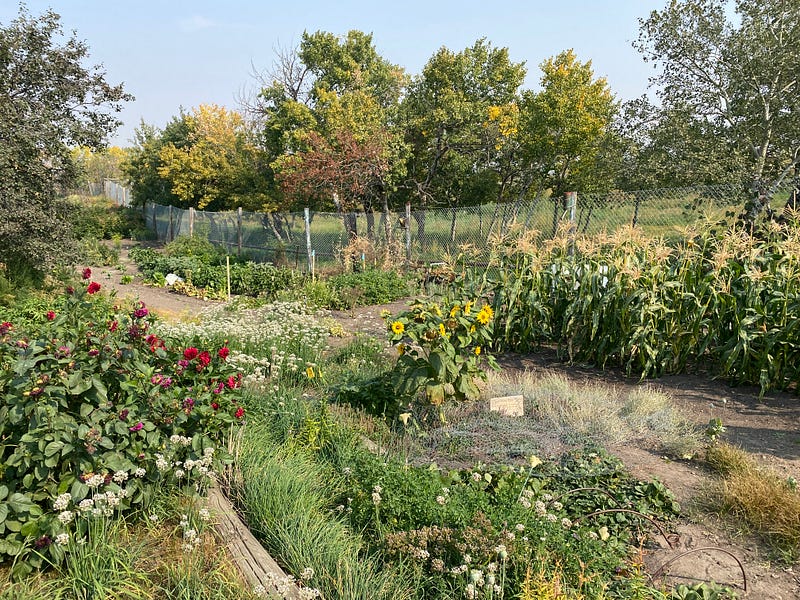
Beets, carrots, onions and other ingredients were picked, then we got started.
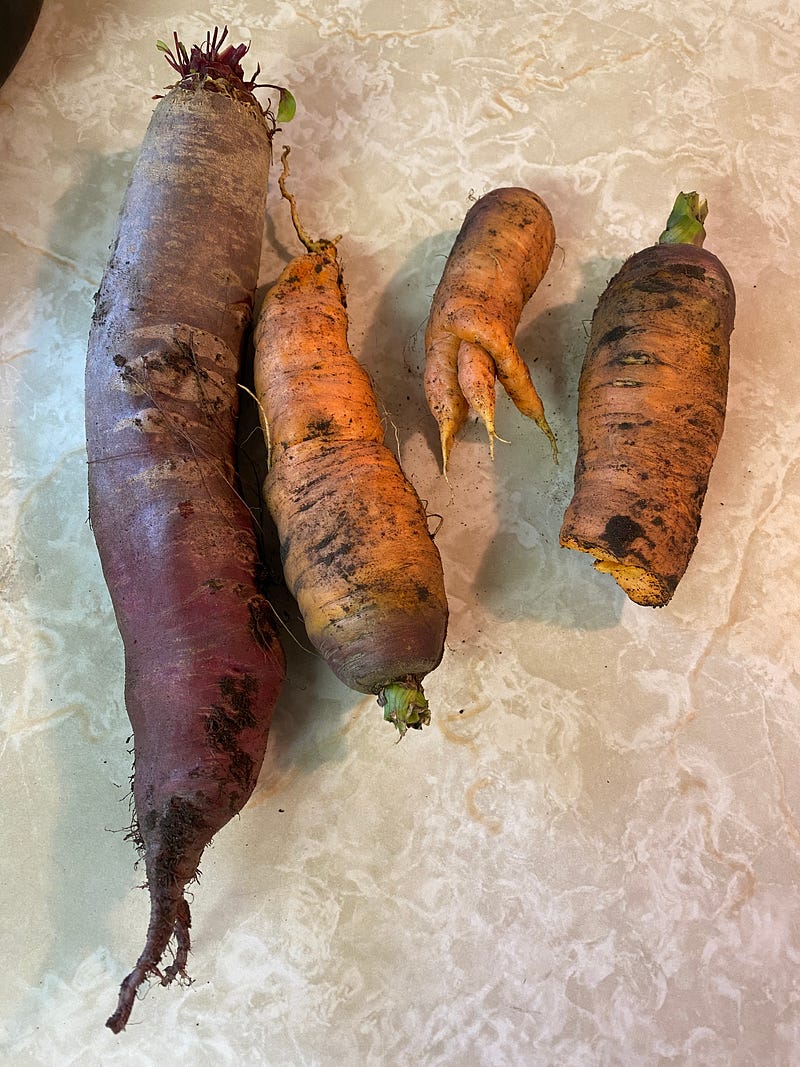
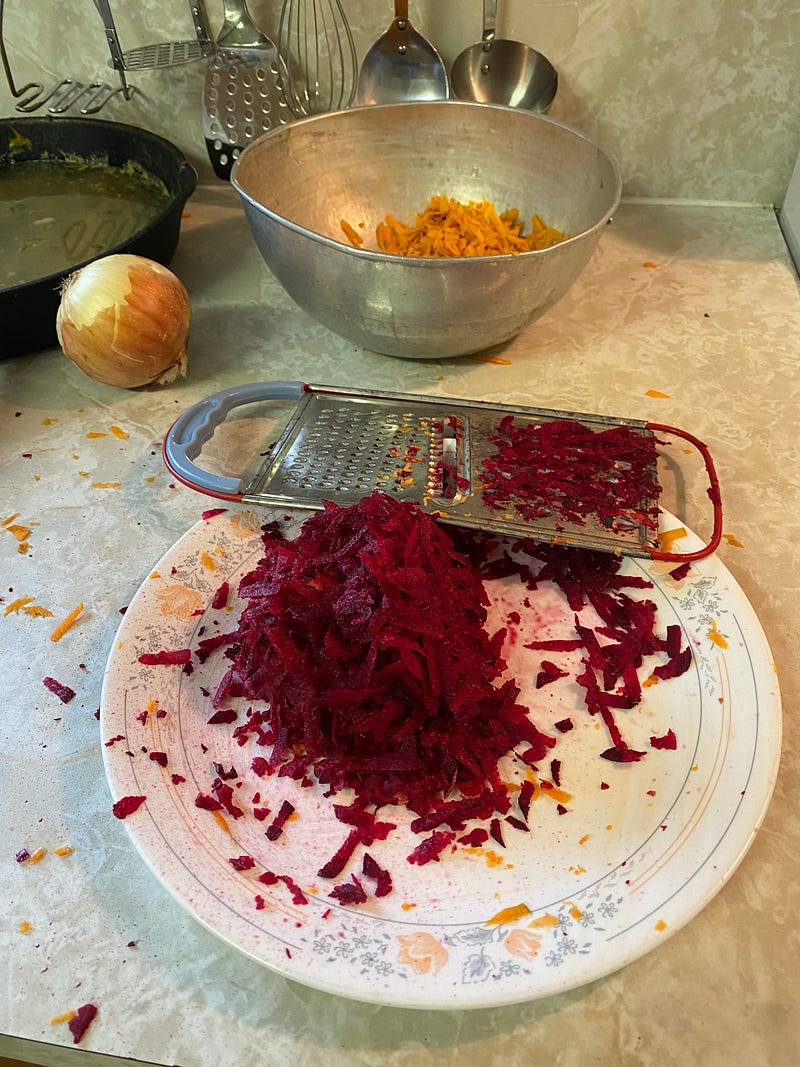
My grandmother never shredded the vegetables that she put into the pot, instead, she chopped them. But I really enjoy the soup more when the vegetables are made easier to chew and digest. I think I’m a bit of a lazy eater, I don’t like to chew very much. Either way, you do it, it will still taste delicious.
Shredding vegetables was no easy task for us, though. The place we were staying had a vintage shredder that only had a small panel to use as you can see in the above photo. Modern-day shredders would have been much quicker.
It’s a good thing that we have lots of time on our hands these days.
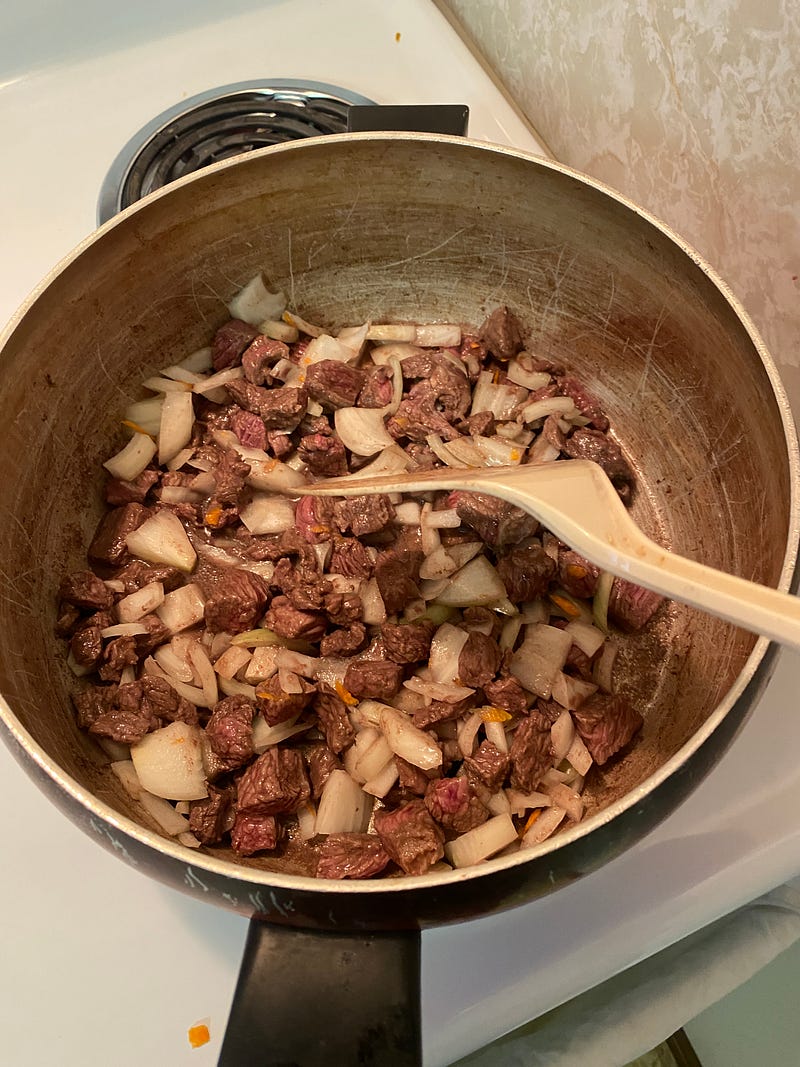
The farm we stayed on also had their own home-raised cattle, so we had access to a freezer full of frozen beef. Quite often I will add beef to my borscht, but not always. It is delicious both ways.
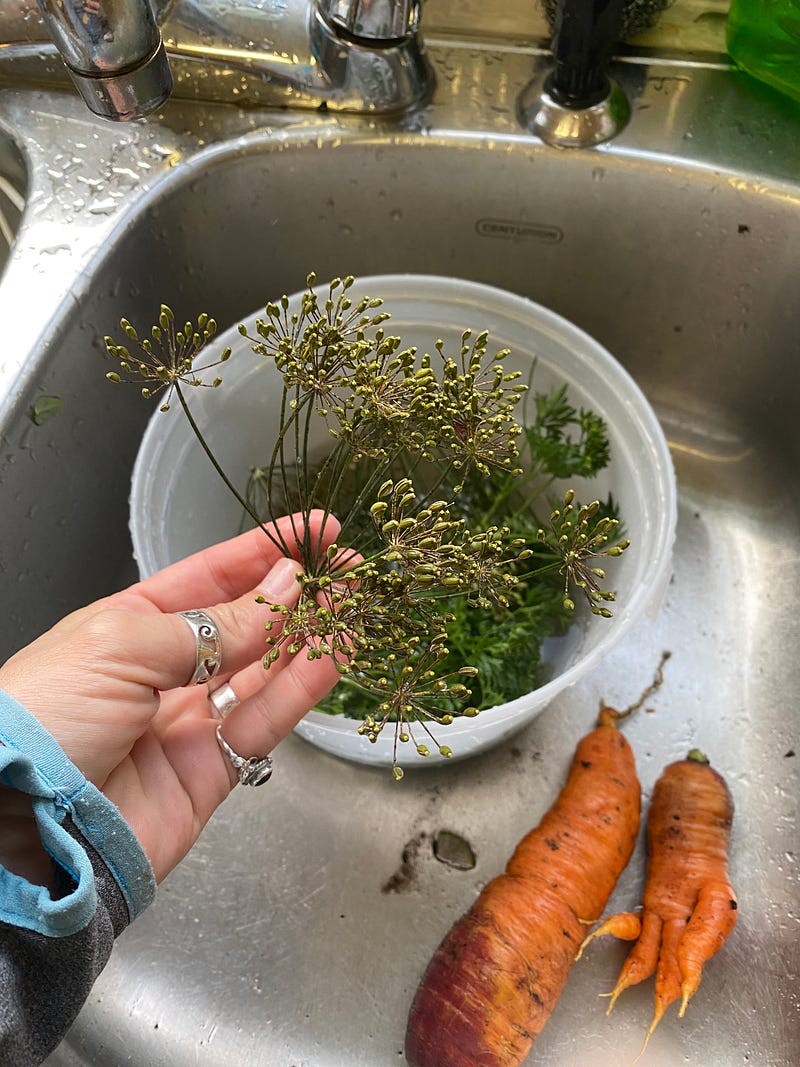
The fresh dill that we picked from the garden was so flavorful. Over our time staying there we had multiple kinds of herbs drying on top of the deep freeze in trays — sage, parsley, basil, thyme, oregano.
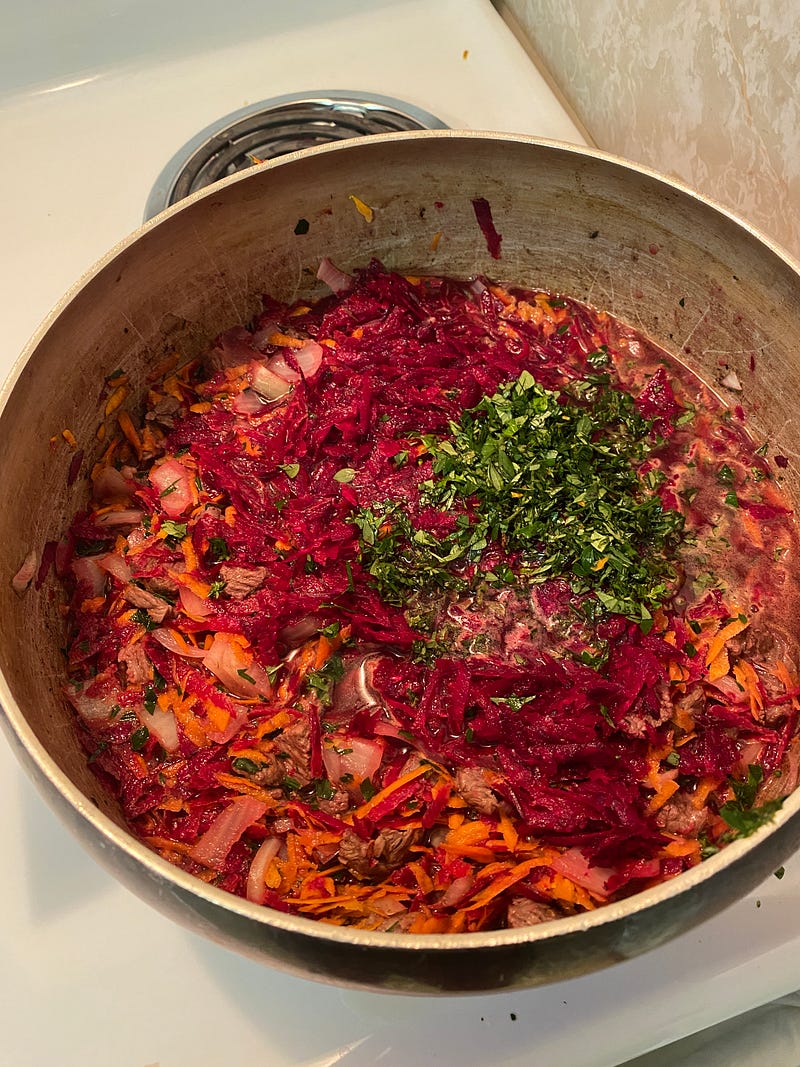
Besides beets, we also grated in carrots, chopped celery leaves, and many other herbs. Two main ingredients that make a big difference in borscht is apple cider vinegar and sour cream. Sadly we didn’t have any sour cream, but the apple cider vinegar really adds a delicious zing to the recipe.
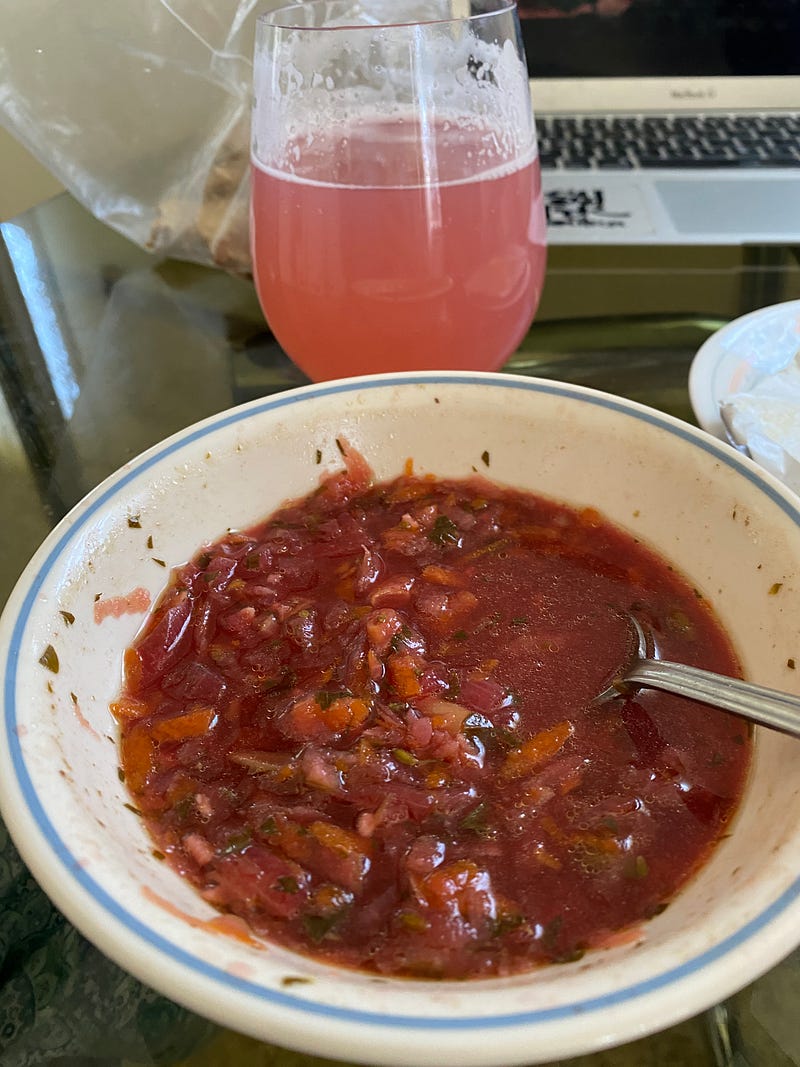
I have come to realize that true wealth doesn’t necessarily lie in the amount of money in our bank accounts. It lies in our ability to be sustainable. It lies in our ability to forage our own food and eat a healthy diet. Borscht is one of the healthiest soups that are out there, and it will always bring me comfort to eat it.
Follow my publication Sharing Food to learn about food from around the world!
Maybe you want to write for us?

If you like my writing and want to read more, follow me and sign up here to get my articles by email. We would also be happy if you considered leaving me a tip by using the link to Patreon or Ko-Fi below:)
We have been nomadic since 2017! Join our journey by hitting these links:
Website | Instagram | Facebook | LinkedIn| Patreon| YouTube | Medium | Twitter | Ko-Fi | Unsplash