
A Band-Aid For My Wounds
And a flesh-coloured one at that
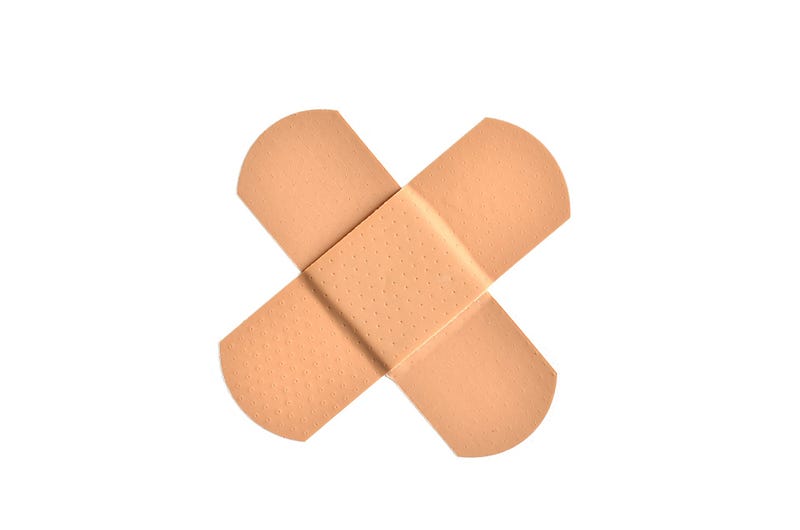
Band-aids caused more pain than they tried to heal
When I was a kid, I used to hate getting scraped and cut. Of course, the obvious reasons for this were the pain and discomfort of being wounded. But there was another reason that I so despised becoming injured: the Band-Aids.
Yes — something as seemingly mundane as a simple aid to stopping infection and helping to protect a cut was ironically the basis of much angst and pain.
You see, being a Black child in an era when the beauty of the range of skin colours in the world was ignored, was interesting to say the least. Upon falling and receiving scrapes and cuts, the inevitable washing of the wound by a loving parent or teacher was inevitably followed by the salve — yes, the antibiotic, but the physical salve — the Band-Aid — that would apparently make things better. Yet it didn’t.
The stark and very ugly “flesh-coloured” bandage that was put on my wounds ironically added to the emotional pain of realizing that “flesh” only meant a certain range of hues
The stark and very ugly “flesh-coloured” bandage that was put on my wounds ironically added to the emotional pain of realizing that “flesh” only meant a certain range of hues — and certainly did not include my particular shade of dark brown. Nor did it include the bulk of the world population that ranged in tone from olive-coloured to ebony. It’s as if we didn’t exist. Furthermore, to those purveyors of band-aids and generic brands, it didn’t matter.
It’s as if we didn’t exist. Furthermore, to those purveyors of band-aids and generic brands, it didn’t matter.
Being “the other” and reminded of such on a regular basis just added to your already existing wound. A wound that was both physical and emotional. It was like adding salt into the gaping hole of our psyche that lay underneath a mismatched covering.
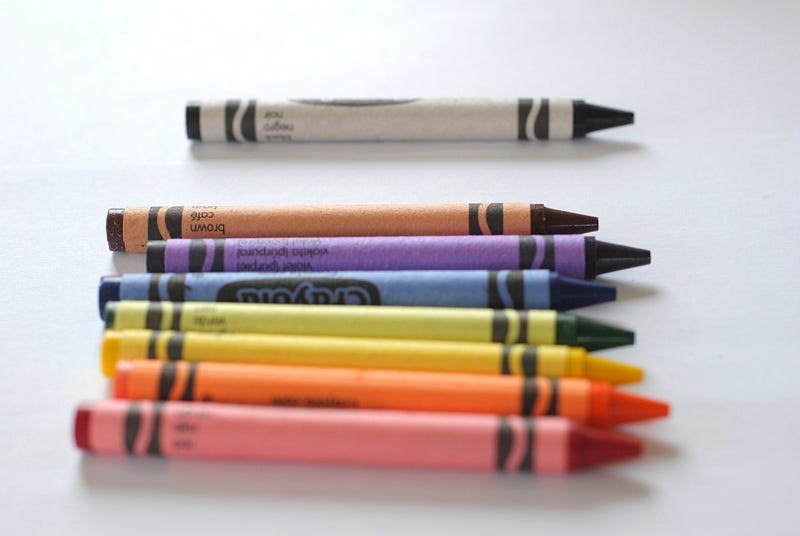
Crayons, too.
But the indignity didn’t end with bandages. As young Black girl, crayons also had hues that were labeled “flesh.” Apparently these particular crayons were the default colour that one was to be, in order to be normal. There were no equally-labelled darker hued crayons in the box that were similarly named; a fact that was not lost on the less fair and downright browner cohort. We kids who couldn’t find ourselves represented in a box of crayons at school just knew that we’d better get used to this reality, as the situation was a microcosm of the real world outside our elementary school doors.
We kids who couldn’t find ourselves represented in a box of crayons at school just knew that we’d better get used to this reality, as the situation was a microcosm of the real world outside our elementary school doors.
Between the inevitable cuts and scrapes of the typical elementary school child’s day, and the seemingly innocuous activity of colouring and drawing that was part and parcel of daily school life, being a kid during this time frame was a psychologically bruising existence. And this existence in “otherhood” has not ended. For practical reasons, I have not searched out the particularly few locations in my city that sell bandages that match my skin colour. Accordingly, I must still wear a bandage that does not have any semblance of bearing to the shade of my body. Yes — I can and do buy “invisible” bandages that have no colour, but that’s not always possible, and more importantly, that’s not the case. One has to ask why, in today’s multicultural world, that we who are not “flesh-coloured” in someone else’s eyes are not represented in the most basic of products.
Thankfully, the crayons have changed, and the nomenclature for skin-coloured crayons has as well. That being said, we’re a far way off from thinking of the default colour for skin extends beyond the decades-popular standard.
Between the inevitable cuts and scrapes of the typical elementary school child’s day, and the seemingly innocuous activity of colouring and drawing that was part and parcel of daily school life, being a kid during this time frame was a psychologically bruising existence.
Things are slow to change
Since my childhood in the 1970’s I’d like to think that we’ve evolved, somewhat. A quick Google search will pull up some real options for People of Colour who have the unfortunate occurrence of needing a bandage. And while this is a good step towards eliminating the obvious bias and othering inherent in the ubiquitous “flesh-coloured” bandages, we still have a ways to go. The standard in terms of Band-Aids is still the one that was set way back in 1920, and although I live in Toronto, noted as one of the most diverse cities in the world, I still couldn’t tell you where to find a bandage that closely matches my skin colour.


