
A Ball of Dung
Globetrotters Monthly Challenge — Souvenirs
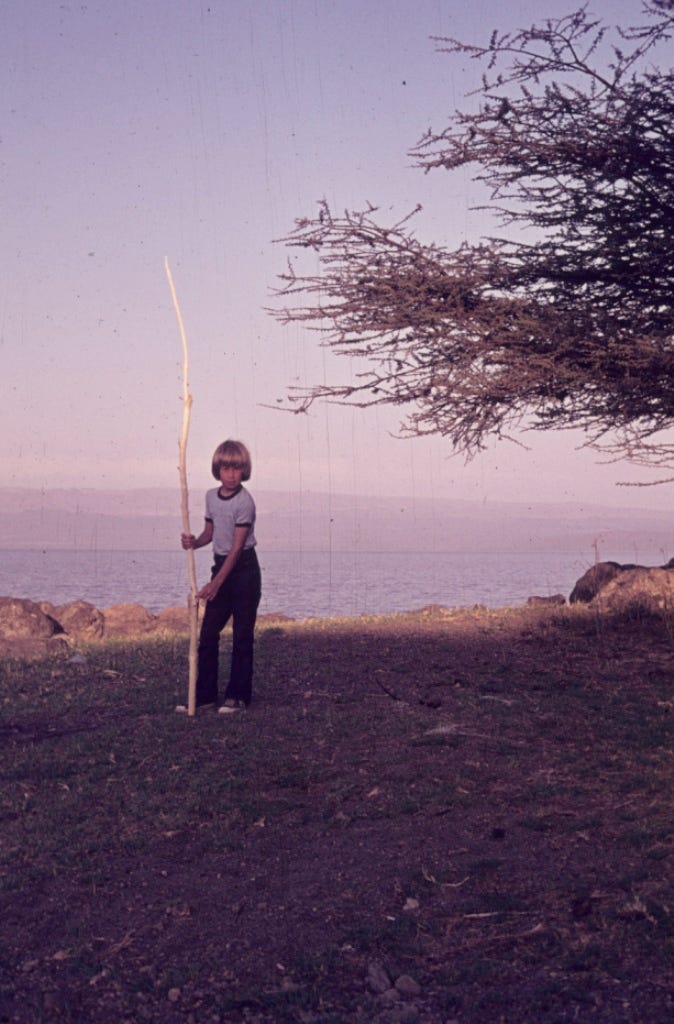
One day long ago, my parents and I packed up a few suitcases, went to the airport, and flew from the USA to the Horn of Africa. I do not remember what specific thoughts went through my head at this radical life change. I do remember arriving in Addis Ababa and being hit with an exquisite case of sensory overload. It forged the unsettled template that has become the model for my life ever since.
We were on a strict family budget, and I did not think much about getting ‘stuff’. My toys and books had been left behind. Now, I had nothing but a strange, new outdoors that was wide open to explore.
We lived in Ethiopia for years. It was the best time of my life (don’t tell my wife I said that). I savored all the weird and wonderful things to see and do, and I was young enough that I didn’t have to worry about a job, political safety, or where to buy food and medicine. Those were problems for my parents to deal with!
On long weekends, my favorite excursion was camping at Lake Langano. It is one of a chain of lakes tracing the tectonic fracture known as the East African Rift. Happily, for bathing, it was the one lake free of the freshwater snail species that harbor schistosomiasis (also known as snail fever or bilharzia).
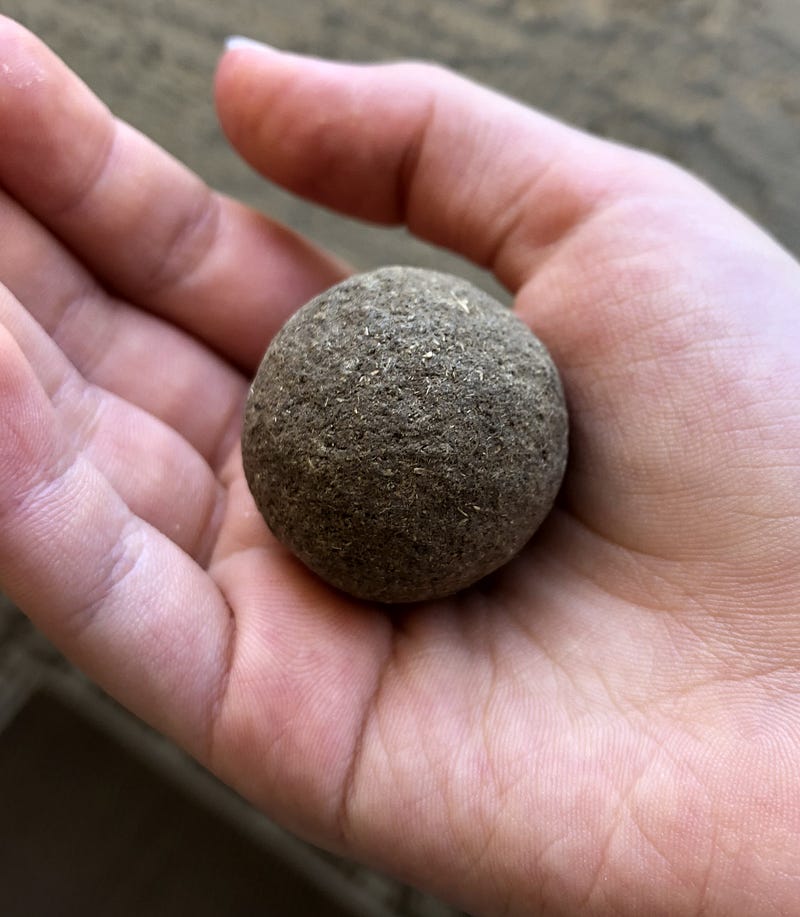
While wandering around the lake, I always looked for unusual seeds, rocks, or anything I could stow away in my pockets. My prize find was a perfectly smooth and spherical ball made by a dung beetle.
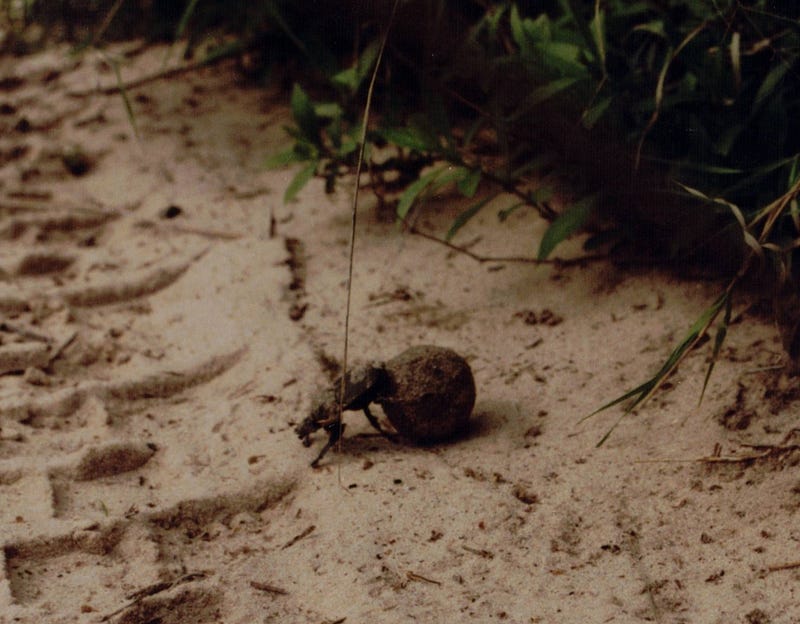
The dung beetle finds small lumps of dung and pushes them along the ground with its hind legs until they wear into spheres, like pebbles rolling down a riverbed. Because they lay their eggs inside it and let the sun incubate them, it is also called a ‘brood ball.’
I never met the beetle that created my prize. The ball was sitting on the ground, unattended. I don’t know what sort of poop it is (though it is probably herbivore). Since I have never cut it open, I don’t know if there are dung beetle eggs or larvae inside. If there are, they never emerged.
Dung beetles were known as scarabs in Egypt. In Pharaonic times, they were equated with the god Khepri and sometimes also with Ra. The action of rolling the ball symbolized the movement of the sun across the sky.
I’ve kept this souvenir for almost fifty years in one storage unit or another. I drag it out every decade or so. It is virtually the only thing I have left from those times besides my father’s 35mm slides.
When I see it, the memories flood back. I think about the delight of swimming in that lake, the hot African sun, and the sounds of turtledoves in the early morning outside the tent. I remember the inch-long acacia thorns that would pierce the soles of my shoes like butter and continue straight into my foot if I wasn’t careful. And I still hear the mumbling of tribesmen who would stop by and stare at the flimsy cloth houses we had pitched along the shore.
My dung beetle ball is a marvelous work of nature’s art. It invokes all the emotions I would want from a souvenir; a unique object with the power to take me back to the time and place I first picked it up.
Please check my profile for other travel-related articles at Brad Yonaka, and consider joining Medium to read many great stories using my referral link. I receive a portion of your subscription fee.
This article is in response to the Globetrotters monthly challenge prompt ‘Souvenirs’ by Anne Bonfert:
I have stepped on a lot of these at the beach, but Scott-Ryan Abt has found a good use for them as memorabilia:
For an ingenious souvenir you can keep with you always and never worry about it breaking, Matthew David has a solution:
I won’t show this article by Michele Maize to my daughter because she’d never stop asking me to get one:


