
TRAVEL
The Most Personal of Souvenirs
Getting tattooed in Chiang Mai, Thailand
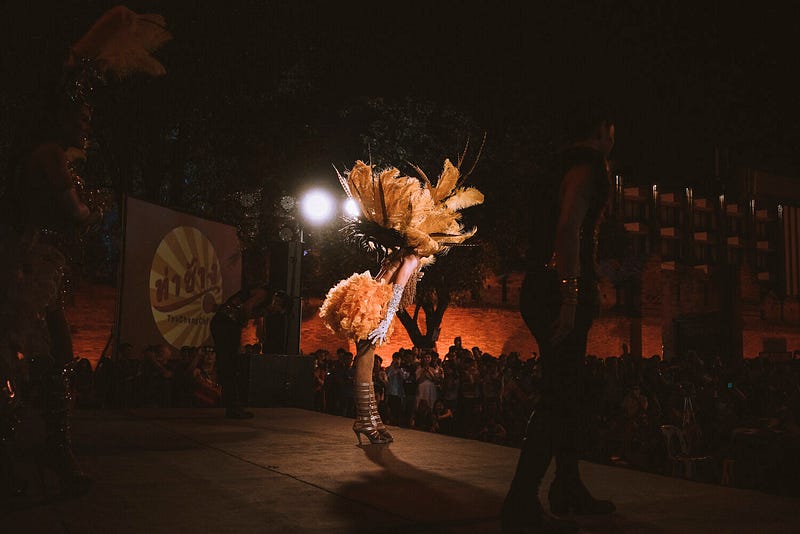
I’m not one to buy conventional “souvenirs.” As a minimalist - trinkets, tchotchkes, and totems don’t interest me as much as unique and personal artifacts. Besides, when traveling for a year or more without stopping, you don’t really have the ability to continually load up on little things.
My journals that I carry always get covered in stickers, and the pages are filled out and bookmarked with receipts and museum entrance tickets (similar to Anne Bonfert’s notes from her students in Ghana), tangible items to go along with the writings that accompany them. My train tickets and airline boarding passes are always saved as bookmarks that fill the paperbacks I pick up from hostel or cafe bookshelves, and I often buy locally roasted coffee, or sticks of incense that are slowly consumed over the course of my travels.
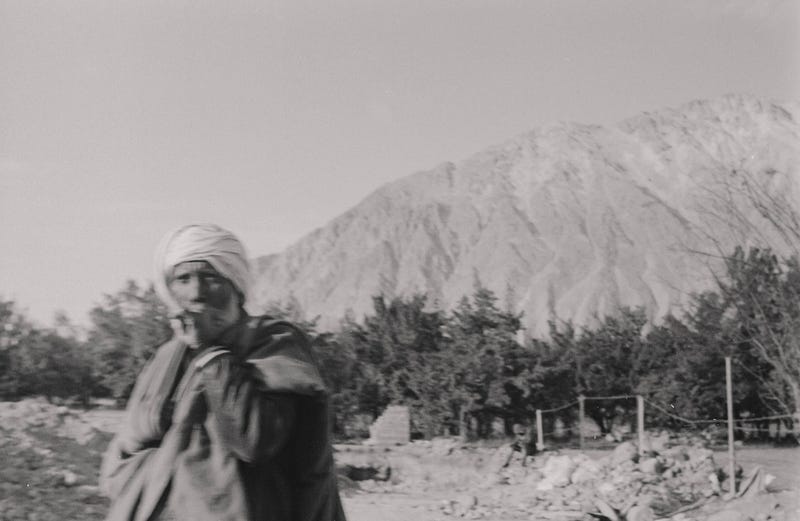
At a market in Zagreb, Croatia, I once picked up a beat-up, 1960’s Soviet film camera of questionable working order, which not only became a souvenir on its own but allowed me to create some of the most unforgettable and atmospheric photos. (Be sure to check out Simon Whaley’s touching and timely story of the photo as souvenir, specifically ones that he captured at Sycamore Gap). However, one souvenir of my travels will physically remain with me in a way that none of these others possibly can.
Of all of my experiences on my first trip to Chiang Mai, Thailand, the most unforgettable was getting my first tattoo. No, it wasn’t etched with a bamboo needle in the hands of a Buddhist monk, but was deeply meaningful to me all the same. I’d always been open to the idea of getting a tattoo, but had yet to find an image or idea that I liked enough to have permanently inked under my skin.
While eating breakfast at the hostel cafe on my third morning in Chiang Mai, I noticed a flyer for a Canadian tattoo artist who had moved to Thailand. I curiously began scrolling through the artist’s Instagram feed until I came upon a design that resonated with me. Doubting that anything would actually come of it, I messaged the artist and quickly received a reply, and before long had a consultation meeting scheduled for the same day.
Later that afternoon I met the artist, Shannon Wolf (check out her stunning portfolio on Instagram). Originally from Toronto, she had spent years traveling as a freelance writer and photographer across Europe, South America, Asia, before setting up residence in Chiang Mai to focus on her passion for tattooing. The design of hers that caught my eye was of a candle, with beads of melted wax dripping down as it sat in what I later learned was a traditional Nepali candle holder. Shannon said the design had been inspired by a trip of hers to Nepal, as well as one of her favorite songs, about a light that never goes out. “You mean that Smith’s song?” I asked, and she nodded, adding that the Smiths are her favorite band.
I liked the design enough on its own to begin with. I had often questioned during my days in the corporate world, whether the time, these years of my 20’s that I was exchanging for financial security was a fair trade. And so I liked the symbol of the hourglass to represent the truth of what was most important to me. But to see that same concept in this candle, and to hear that it was inspired both by a place I was going next (Nepal), as well as a song I greatly admired, I knew that this was something I couldn’t pass up. Another element that I found intriguing is that the tattoo, like all of her designs, was a “flash”. This meant that once her original design was tattooed, it would never be offered again to anyone else, making it completely unique to me.
We met again the following afternoon for the actual tattoo process, which took around four hours — including prep/paperwork, and measuring my forearm to find the perfect placement for the stencil. For the entire time leading up to this point, I had been wrestling with myself over where to put it. Part of me thought I should place my first tattoo, a decently sized one at that, somewhere easily concealed, but I also wanted it to be somewhere easily visible as a constant reminder of this journey I had been undertaking, and the reason why I had made it possible in the first place. I decided upon my inner left forearm, and to this day am grateful that it wasn’t placed elsewhere.
In the following years, working as a server/bartender to save up for longer and longer journeys, it often drew inquiries from guests about its meaning and ended up leading to conversations about life and travel.
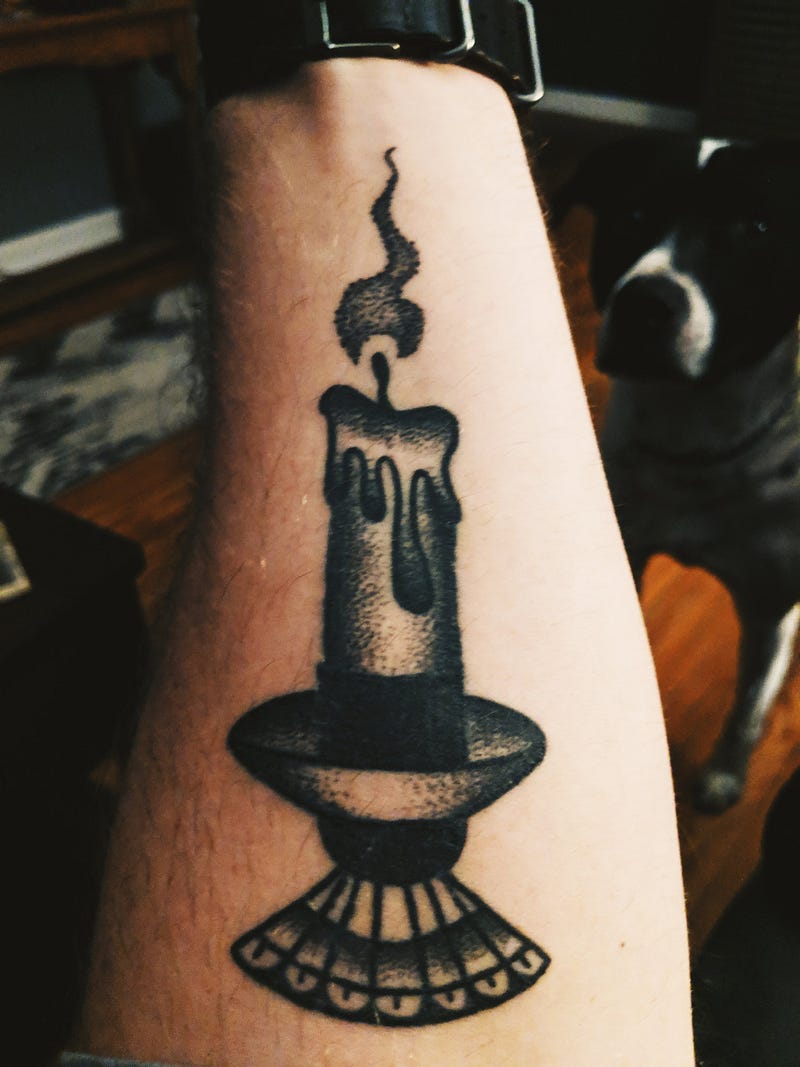
The tattoo itself took about three hours. Before starting to work on the piece, Shannon shared some of the challenges that are inherent in getting a tattoo in a developing country. Since Thailand’s tap water is unsafe to drink, any contact between running water and new tattoo would put me at high risk for bacterial infection. This meant that each shower I took as the tattoo healed over the next two weeks would be extremely awkward, since my entire left forearm was essentially an open wound that needed to remain clean, but could only be washed with drinking water and unscented bar soap. I would try to wrap it up in a shirt or boxers, but usually just resorted to standing in the shower with my left arm constantly raised above my head, trying to scrub only with my right hand. Aside from keeping it away from tap water, I would need to wash it twice daily for the next two weeks, which provided an added challenge during my days spent trekking in the rugged Annapurna Circuit in Nepal.
I’m very thankful to have met Shannon in Chiang Mai. Not only does her work possess a very distinctive character and high quality, she was super helpful in making my first tattoo experience as easy as possible. While I could’ve gone instead to one of the countless local tattoo parlors, or to the Buddhist monks, getting a traditional Sak Yant tattoo as my first didn’t appeal to me at all, as it would have been too gimmicky. For me, it was the design that mattered most, and the meaning behind it, along with its significance to that specific time of my life. I see the candle as a symbol that reflects the vitality of one’s life — perhaps questioning one as to whether theirs burns fiercely or merely flickers. For me it also draws a parallel to the finite amount of time we are each given, and see it as a reminder to constantly question how I make use of my own time, as it is the most precious resource we all possess.
Stories on souvenirs, film photography:


