
As a Sommelier, Here Is Everything We Wish People Knew About Wine
A decade of wine knowledge condensed into 11 minutes
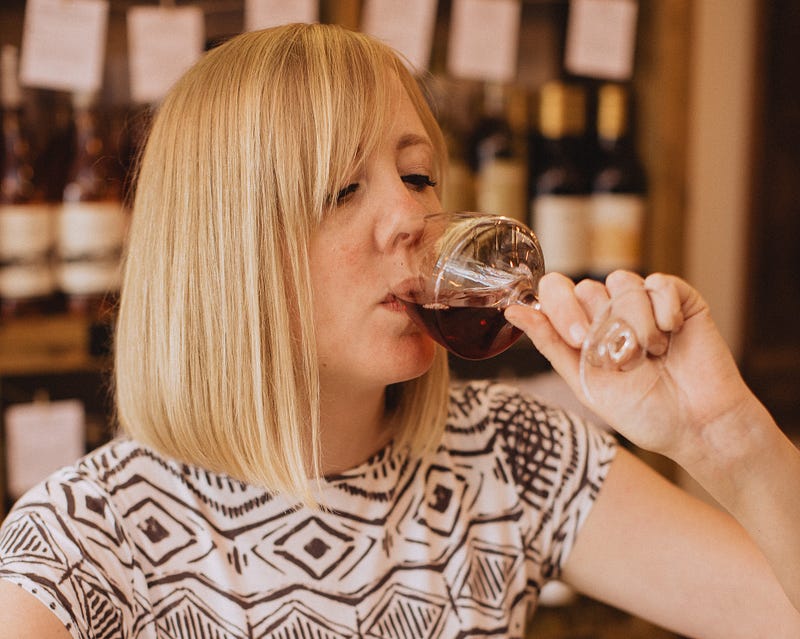
What you really need to know about wine is never what people say you need to know about wine.
I’ve seen thousands of people worry that they can’t enjoy wine because it’s such a complex subject. They think they need to know about everything before they are “allowed” to delve into the good stuff (at all prices). Regions. Terroir. All the complexities.
Nope.
Take it from me. I was the Sommelier in my own wine bar for nearly 8 years. Now I’m a wine consultant and content creator.
And whilst learning a little bit about grape varieties and regions is useful, what I’m about to tell you is going to elevate your wine experience to the next level. No studying required.
This is what all Somms wish more people knew about wine.
Here is the most important thing you need to know about wine
If you forget everything else, remember this:
The most important factor in wine is the producer.
The producer determines everything. The state of the vineyards. The quality of the grapes. How the grapes are fermented, what the juice is aged in, and for how long. Wine is not a fully natural product (even if it calls itself natural wine)— it can only be made with human intervention. And thus that human means a lot.
It’s why a Sommelier’s job is so hard. You could tell me you love Syrah because you had one once, I could give you one from a different producer and you could hate it, even if it was made just up the road.
It’s also why there’s little point in announcing you don’t like Chardonnay, or wines aged in oak, or sparkling wine. Unless you’ve tried them all, you can’t say for sure.
But this subjectivity is also what makes wine so fricking exciting. Because there are thousands of winemakers out there, which means thousands of potentially incredible finds.
Don’t be married to a grape variety, or style. Be married to producers you love.
6 of the most common wine myths we all hear too often
Don’t be fooled by these common misconceptions.
All wine is created equal
The commercial wine industry has a lot to answer for with its romantic commercials depicting pastoral scenes of hand-picked grapes, horses in the vineyards, and winemakers attending to every barrel.
In reality, many large-scale wineries are factories, where grapes grown for yield rather than quality come in for processing, are manipulated almost to the point of unrecognition, and sold for a price that keeps everyone in the process (apart from the shareholders of course) poor.
Those hand-picked grapes, horses, and winemakers treating barrels like children? They’re generally the realm of smaller, independent wineries. That sort of treatment costs a lot more but will result in a better bottle of wine.
Yes, you can get a Sancerre for $15. But it’s not the same Sancerre as what’s in a $30 bottle. Don’t be duped by clever marketing into thinking it is.
Light-bodied wines are always watery and lack flavor
The problem here lies with confusion over the difference between body and flavor concentration. They are not the same.
Body is a wine’s texture. Think of it like skimmed vs full-fat milk. One feels light in the mouth, one feels thick. That’s light-bodied vs full-bodied.
Concentration is the intensity of flavors in a wine.
You can have a light-bodied wine with plenty of long-lasting flavors that blow you away. Conversely, you could have a full-bodied wine that lacks much flavor whatsoever.
The problem lies with the bulk end of the wine market. If you make a light-bodied wine from high-yielding grapes, squeezing every last drop out in order to make your quota, then yeah, it’s going to taste watery compared to a full-bodied grape that has undergone the same treatment.
Light but concentrated wines are magical. Give them a go.
The darker the rosé, the sweeter it is
Rosé is (usually) made by macerating crushed-up red grapes, juice, and skin together. The longer the maceration, the darker the rose.
The sweet vs. dry thing is simply stylistic, made famous by two ends of the spectrum, the US White Zinfandel (dark and sweet) and France’s Provence rosé (light and dry).
You can absolutely have dark dry roses. Tavel in the Rhône Valley in France is a great example, as are many Northern Spanish rosados.
Don’t judge a rosé by its color.
Natural wine won’t give you a hangover
There’s still alcohol in that bottle. Your hangover may be lessened (and there’s scientific evidence to prove it) but if you drink enough natural wine, that head is going to hurt in the morning. Sorry, dudes.
Legs mean quality
You know when you swirl the glass and you get drips slowly sliding down the side? They’re called legs. Back in the day, they were synonymous with quality. In reality, all legs really signify is viscosity, which largely comes from alcohol and sweetness (the higher the levels, the slower the drips).
Unless you’re in some blind tasting competition, knowing the viscosity of a wine bears very little importance and less prominent legs no longer means poor quality. So don’t worry about them.
The larger the indentation on the bottom of a wine bottle (aka the punt), the better quality it is
Whilst this used to be true like 80 years ago when glass was of poor quality (so big, heavy, expensive bottles were less likely to break), this is no longer the case. In fact, many producers are turning to super light bottles because they’re kinder on the environment.
Punts mean nothing, nowadays.
Why organic, biodynamic, and natural wines are the future
I will bang this drum until I die.
For those of you not familiar with these styles, here’s a quick rundown:
Organic wine: grapes grown with no synthetic chemicals in the vineyard. Myth bust — organic wine can still contain other additives including sulfites and non-vegan agents. Generally, however, additives are kept to a minimum.
Biodynamic wine: is a holistic approach to winemaking — coined by Rudolf Steiner — where:
- Wine is produced in time with lunar cycles.
- Natural treatments are used on the vineyard, including the famous cow horn manure.
- There is a promotion of biodiversity in the vineyard to encourage natural predators for vineyard pests.
Some of it sounds woo woo, but the results speak for themselves. Biodynamic wines can produce some of the most energetic, beautiful expressions of wines in the world. Just ask Domaine de la Romanee Conti — the most expensive wine in the world…and biodynamic.
Natural wine: no official definition exists, but generally natural wine is considered to be made from naturally grown grapes (no synthetic chemicals) with nothing added in the cellar apart from (possibly) a small level of sulfites at bottling.
Here are just a few pertinent reasons why you should be looking towards low intervention wines:
- Since the second world war, wine has heavily relied on chemicals. In France for instance, vineyards make up 3% of agricultural land but account for 20% of the country’s pesticides
- Herbicides create monocultures that can stretch for miles. Aka a soil erosion wonderland.
- There are hundreds of studies that have found pesticides in finished bottles of wine (and not just a few, routinely all in the study). Pesticides have been linked to Parkinson’s and cancer, amongst other illnesses.
- Wine is a living product. It’s at its most exciting when it’s allowed to be alive, not suffocated under one of the long list of additives that are legally allowed in wine.
- Your body breaks down toxins such as sulfites and pesticides first, then alcohol. Lower the chemical level, lower your blood alcohol concentration.
- Organic, biodynamic, and natural wines are more expressive, generally have more complexity, and are more *real.*
- They taste better. Period.
How to taste like a pro
First, you do not need to taste like a pro. Pros tasting wine are boring and unless you’re planning to study wine professionally, analyzing a wine’s color or clarity, or talking for hours about the finish will not enhance your enjoyment.
But there are a few quirks that pros engage in that can enhance your wine drinking experience:
- Think about what’s in your glass. You don’t have to go crazy over it, but be a little bit intentional. Think about the texture, the finish, the flavors. Each time you do this, you become a little bit more informed.
- Swirl. This helps oxygenate the wine and shears flavor molecules from the side of the glass, releasing more aroma.
- Slurp. A little bit of oxygen brings out wine flavors like nothing else. It’s such a habit of mine now, I’ve been known to slurp water by mistake. To slurp, sip some wine, tilt your head down (which handily stops you choking), and suck some air through. See the difference?
The difference between a $5 bottle and a $15 bottle will blow your mind
The lower end of the market is where value considerably jumps with every extra dollar you pay. That goes for whichever country you’re buying your wine in.
A $5 bottle is largely taken up with fixed costs — tax, the actual bottle, shipping — leaving very little room for the cost of the wine itself. As you move up the price ladder, those fixed costs remain the same, which means your extra dollars are contributing to the wine. So quality rises considerably.
I saw it in my store all the time. Customers who would usually spend £7 ($9) in a supermarket would buy our £8.50 ($11) bottles and be blown away by them. If they hit £10 ($13), they’d be our customers for life. Because that’s when things really get interesting.
If you can, spend that extra couple of dollars. Your mouth will thank you for it.
The “If I like it, that’s all that matters” trope is really problematic
One of the world’s biggest wine critics Neal Martin was born in my town. Occasionally he’d hold an event for his friends and a few of our customers in my bar.
One night, the inevitable discussion arose about whether all this stuff about quality and producer really matters. As one of his friends said, if I like the wine, then that’s all that matters.
He disagreed. And I agree with him.
Yes, wine is a subjective thing. You might like a $5 wine. But as Neal pointed out, just because you like something doesn’t mean it’s good.
You are allowed to, of course, like whatever you like. They’re your taste buds.
But take McDonald’s hamburgers. Many people like them, myself included.
That doesn’t mean they’re objectively good. They can be delicious, but that shouldn’t be the only factor in eating them. They’re bad for you, they’re bad for the environment, the farmers, pretty much everyone involved in the production.
Junk food, junk wine. It’s the same deal. It might taste good, but that doesn’t mean it is good.
A small (but important) note on glassware
Here’s the secret. It doesn’t matter how much your wine glass costs. What matters is the shape.
This sort of glass will make even great wine taste like shit:
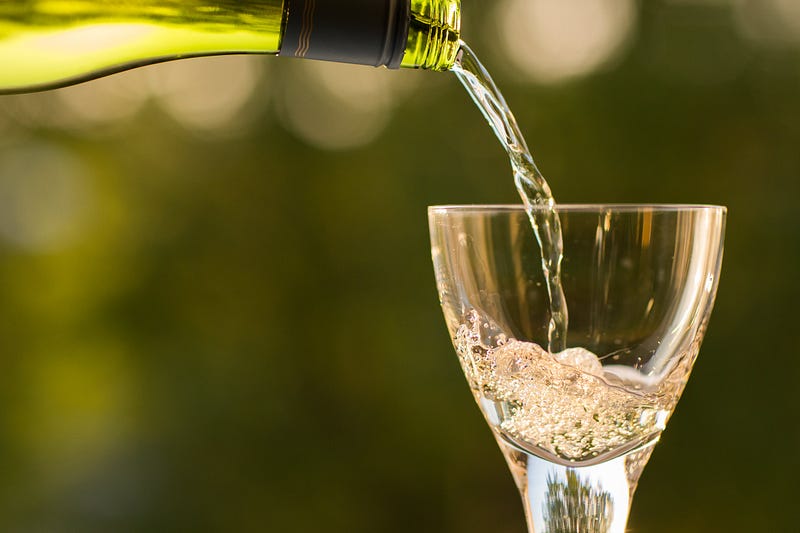
Any straight-sided or worse, Y-shape glass will lose all of those great sensory compounds straight out into the atmosphere.
This is much better:
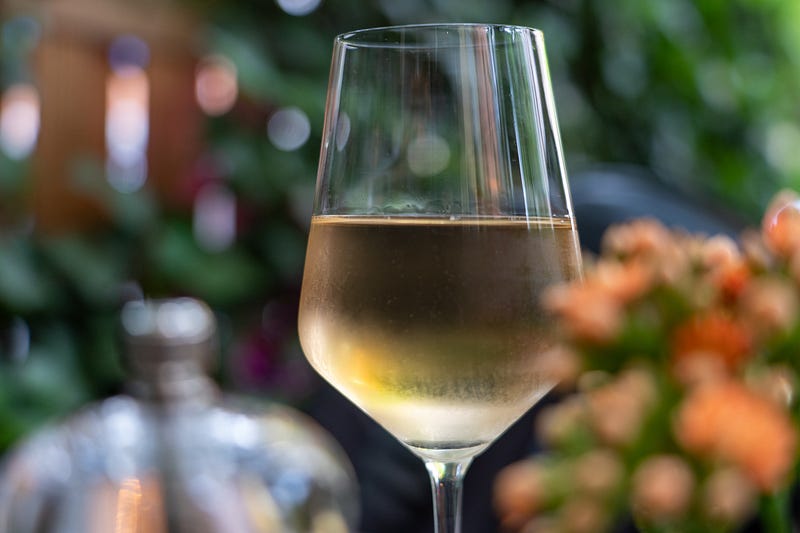
It’s tapered at the top and has a decent (but not too big) sized bowl.
I’m so fussy about my wine glass shape that even though I permanently live in Airbnbs, if an apartment has exhibit A-style glasses, I’ll pop out to the local supermarket and buy a couple of €2 glasses in the right shape. It makes that much of a difference.
I promise.
To age or not to age
That is the question to which the answer is — almost certainly not.
Here’s a secret. Most of us don’t actually like the taste of aged wine. Sure, it can be interesting to open an old bottle, but the taste? It’s not always great. Fruit flavors disappear, leaving what’s called tertiary flavors like leather, smoke, and tobacco.
It’s an acquired taste.
I’ve seen so many people desperate to buy wine for their kids' 18th birthday, only to be sorely disappointed when they open the bottle. If the wine hasn’t been stored in optimum conditions, it can really speed up the aging process. You could be opening something dead.
Having said that, if you do have a bottle of wine you want to lie down, do the following:
- Buy a bottle designed for aging. Knowing what can and can’t is tricky, and far too complex a subject to unpack here. It depends so much on grape variety, vintage, producer, region. Ask someone who knows their stuff like your local wine merchant for advice.
- Find the coolest, darkest place in your home. It doesn’t have to be a fancy cellar, for many years my wine stash was kept under my bed (I keep my bedroom super cold). An under-stairs cupboard is also often a good shout. The two biggest enemies of aging wine are light and fluctuations in temperature (especially heat) so that’s what you’re looking to avoid.
- Keep it on its side.
- Don’t touch it.
Do that and you’ve got at least a fighting chance of opening something half decent in the future.
And whilst we’re on the subject of storage…
For the love of God, please don’t keep any wine in the kitchen, unless you’re planning to drink it that night. That place is like a living nightmare for bottles. Remember that wine is alive, and kitchens get hot.
Nothing wants to be cooked alive. That goes for your wine as much as anything else.
What you really need to know about grape varieties
I’m not going to give you a lowdown because that would take forever.
If you want comprehensive guides, Wine Folly is an excellent resource.
Rather, remember my golden rule: the producer determines everything.
You could read about what a Riesling is “supposed” to taste like (lemons, limes, and searing acidity), then try winemaker Christian Binner’s example in Alsace and find ripe tropical fruit and soft textures. Chardonnay could be mineral and filled with pea-shoot flavors or ripe, rich, and vanilla-like.
So sure, educate yourself about what grape varieties largely taste like. But don’t be surprised if you’re surprised when the cork is popped. That’s the fun of it all.
Get some help
The intricacies of wine are complex. People like me spend their lives learning about them.
Next time you want some decent wine in your glass, lean on us for help. Get your ass to an independent wine merchant or a restaurant with a good sommelier and tell them what you want.
Buy from online stores that know what they’re doing. Get yourself into a wine club where different bottles are sent to your home each month.
We’ve done all the hard work learning about all aspects of wine so you don’t have to. Use us.
Just because wine is a complex subject doesn’t mean you have to know everything about it in order to enjoy it.
And underneath all the talking, all the swirling and slurping and spitting, wine just wants to be enjoyed. It’s what it was put here on this earth to do.
So grab your tapered glass (no straight-edged glasses from now on, remember), a good bottle that’s not been stored in the kitchen, and your corkscrew. Open, drink (in moderation, naturally), have a good time.
And let me know what’s in your glass.
Subscribe to my (free) Substack mailout Simple + Straightforward to receive stories, tips, and strategies for living a simple life. Coming to you every Friday.


