
THE READING LIFE
9 Books to Rethink Reality
Truth is stranger and better than fiction

What I love is a unique, hopeful, original book that enhances life’s possibilities and questions our assumptions about what it means to be human.
Non-fiction can be as imaginative as literature, especially when the author is taking the road less traveled and delving into a passion that carries her or him entirely off the map.
You may not resonate with all of these books, but you can take a trip somewhere you would never go by yourself with any of them.
The Outsider
Published 1965, by Colin Wilson
This young British author was broke and obscure when he wrote a bestseller. The mid-1960s seemed the perfect time to talk about societal change and rebellion. The Outsider presents the problems of artists, writers, and adventurers, and how they can’t fit into society, yet society needs them. What sets them apart, besides living on the edges, out of sync with ordinary life? They see differently, trying to maintain a vision and insight into life’s peak experiences. By examining the lives and art of Van Gogh, Kafka, Blake, T.E. Lawrence, and others, Wilson goes far beyond the conventional societal expectations of success, trying to redefine what is real and what matters to live a connected, creative life. It’s a book about philosophy, literature, and living true to one’s secret nature. This book speaks to every thinking person — whether we identify as outsiders or not.
Topics: Philosophy, Sociology, Culture
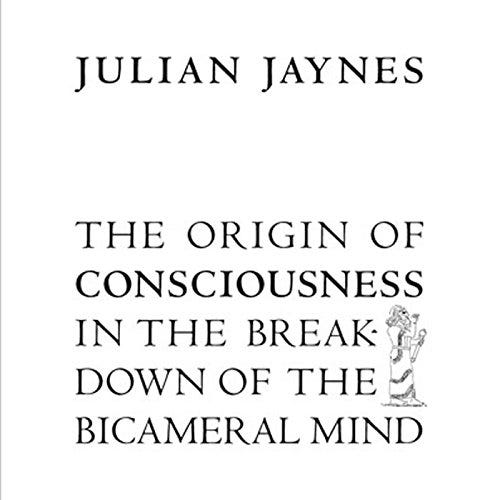
The Origin of Consciousness in the Breakdown of the Bicameral Mind
Published 2000, by Julian Jaynes
This was the only book Jaynes ever wrote. He was an ivy league psychology researcher who proposed that human consciousness is deeply misunderstood, asserting that self-awareness has evolved significantly in the last 10,000 years. Jaynes explores the twisted and inscrutable relationship between language, consciousness, and human reality. He helps flesh out the meaning of the vague term ‘consciousness’ while bringing the reader on a journey into how self-perception may have progressed.
By revisiting historical literature, language, and communication — with particular reliance on the ancient Greeks — he explores how our sense of knowing ourselves through language and culture has changed us into singularly ‘conscious’ individuals in relatively recent times.
It’s impossible to do this book justice with a summary, or even a review — the argument is unique in the annals of intellectual self-examination, seeking answers to the biggest questions in science, history, and philosophy.
Topics: Philosophy, Neuroscience, History
Nutrition and Physical Degeneration
Published 1939, by Weston Price
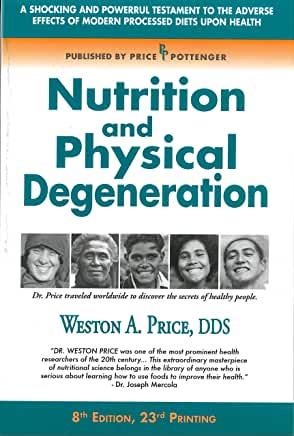
Dr. Price was a free-thinking dentist and world traveler who made multiple international journeys with his equally adventuresome (and mostly uncredited) wife. His quest was to discover who had good teeth, and why, as teeth are markers of overall health. His journeys, notes, and photos provide an illuminated portal into a lost historical period — the 1920s and 1930s — when indigenous cultures were rapidly disappearing everywhere.
Dr. Price was a sort of Indiana Jones, minus the Nazis and fisticuffs.
Natives were being introduced to white flour, sugar, bottled seed oils, and canned food in all corners of the earth — from traditional Irish to the quickly vanishing Seminole Indians of Florida. Dr. Price’s photos of teeth, native faces, and his conclusions about diet are not what one might expect, but his work was far, far ahead of its time in the 1930s, and STILL IS.
The picture he creates of collapsing cultures that stood intact for thousands of years challenges the notion of progress through technology, and the superiority of the white race (then, as now, believed by many). This may look like a textbook, but it stands as a classic in nutrition, anthropology, and health.
Topics: Travel, Anthropology, Nutrition
The Drama of the Gifted Child
Published 1979, by Alice Miller
Dr. Miller was a trained Jungian psychologist who proposed that children are far more sensitive than we realize, especially when it comes to pleasing their parents. The “gifted” child is broadly defined as sensitive enough to pick up on what the adult(s) in his or her life lack emotionally. Dr. Miller proposes that children with narcissistic parents deny their own basic needs in order to maintain equilibrium, leading to significant psychic wounds.
Some of her thesis has since been altered with new information about genetics, but her basic premise that childhood can be fraught with abuse even in homes with normal, successful parents remains sound. The book is an eye-opening reconnection with a lost sense of self that helped redefine and reimagine trauma.
Topics: Psychology, Philosophy
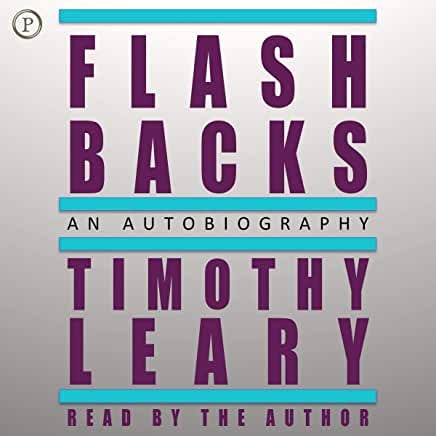
Flashbacks
Published 1987, by Timothy Leary
Timothy Leary was a pop phenomenon, a Harvard psychologist, the OG influencer— a guru who opened the door to psychedelic research. He was also a gifted storyteller who wrote a lot of books. Right or wrong, he led a wild life in the most interesting of modern times.
In this memoir, he recounts his upbringing, days at West Point, early career, and the years of tumult in which he was hounded by Nixon’s thugs, imprisoned, escaped, lived on the lam, and eventually returned to do his time.
When they threw him in prison, he was given the usual psych tests, laughing when he saw what they put in front of him: he had developed the personality test himself when at Harvard. Leary was a brilliant man, a free spirit, and a courageous and optimistic force in the battle against small minds.
Topics: Autobiography, Psychology, Culture
Loving What Is
Published 2002, by Byron Katie
Byron Katie was the original Eckhart Tolle, so don’t be put off by the self-help category or feel that it’s impossible to love what is. She clearly breaks down why our internal dialogues are enemy #1. The interior narrative is almost always inaccurate, destructive, terrible at predicting future events, and totally unnecessary.
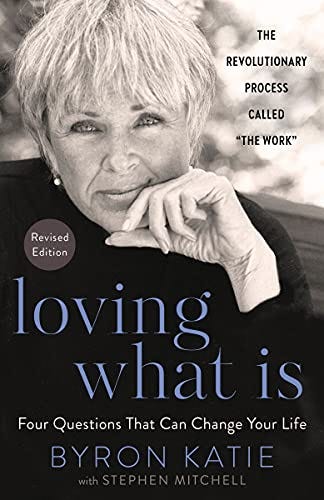
Like Tolle, she briefly tells her personal story of recovery from depression and eating disorders before laying out the solution. Unlike Tolle, her advice is grounded in a specific technique. She describes a 4-step system to defeat the irrational and relentless internal dialogue most adults live with during all their waking hours.
If you want to understand how your mind works, and how nearly everyone thinks, this book is the key.
Topics: Psychology, Metaphysics
The Anatomy of Violence: The Biological Roots of Crime
Published 2013, by Adrian Raine
This book examines recent research supporting the idea that violence often originates in biology while suggesting we go beyond the nature vs. nurture debate. Now that we know more about the human brain with scans, we can better predict what factors will lead to violent crime. The author uses a case study approach but doesn’t get mired in romanticizing serial killers. Ultimately, pathological violence often has its origin in brain abnormalities, including those caused in early life by head injuries and repeated physical, sexual, and emotional abuse. Raine convincingly argues that a greater understanding of the physiological and neurobiology of criminals can help prevent crime.
Topics: Neuropsychology, Crime.
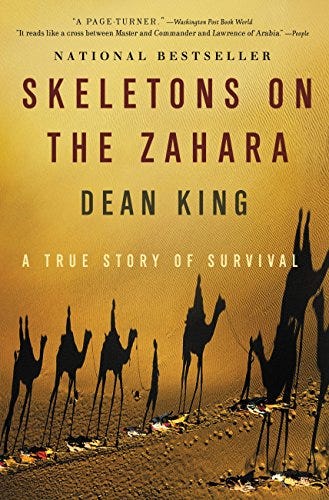
Skeletons of the Zahara
Published 2004, by Dean King
This incredible story is based on a bestselling memoir by a sea captain whose ship ran aground on the coast of West Africa in 1815. He was stranded beside the vast expanse known as the Saraha Desert with 12 members of his crew. None of the men had any knowledge of the nearby terrain or its inhabitants. That changed when all were captured by nomadic natives, then quickly shackled and turned into slaves. The story is a compelling page-turner about a man who found the tables turned, plummeting from a position of prestige and power to a captive whose only focus was saving as many of his men as possible.
For the remainder of his life, the captain fought against slavery in the US, having survived in the most brutal conditions imaginable. Although the story took place over 200 years ago, the timeless message of faith in the face of uncertainty makes for an extraordinary tale of belief in a setting still alien to westerners.
Topics: Adventure, History, Culture
Swimming to Antarctica: Tales of a Long-Distance Swimmer
Published 2005, by Lynne Cox
She swam in the waters of Antarctica. She also swam the English Channel and Lake Baikal. I threw this one in for Amy Sea, but you don’t have to be a swimmer to have your head spin when you read about this athlete’s mind-bending feats of cold-water swimming.
Want an email heads-up for new articles? Click Me.
Want to join Medium? Click Me.
Jean Campbell recently started her first Substack newsletter to laser focus on getting her book, City of Lies: A Street Hustler’s Omaha Journey published.