avatarJillian Amatt - Artistic Voyages

Free AI web copilot to create summaries, insights and extended knowledge, download it at here

6556

Abstract

m/v2/resize:fit:800/1*Jd_RHL52cyYYRGGCijKaOg.jpeg"><figcaption>They were so adorable and we loved watching their antics as they jumped all over the place while moving through our section of the beach. Photo Credit: <a href="undefined">Jillian Amatt - Artistic Voyages</a></figcaption></figure><p id="f9cc">One of our neighbors would hang a bunch of bananas out for them on occasion. Whenever he did this, he said the monkeys would have a literal party on his back deck. One day he came out to find three swinging in his hammock and a bunch jumping around on his railings. They definitely entertained him a lot.</p><h2 id="ceb6">There was a snake in the chair!</h2><p id="f132">I was walking around the corner of the house one day to another door of a room that was accessed off the front porch when I came across this guy just sitting on a chair.</p><figure id="016a"><img src="https://cdn-images-1.readmedium.com/v2/resize:fit:800/1*gFhXeb-RFZSXYVR2p3xspA.jpeg"><figcaption>Here he is, just hanging out and staying eerily still. Photo Credit: <a href="undefined">Jillian Amatt - Artistic Voyages</a></figcaption></figure><p id="2cb1">Of course, I gasped and then went into a state of panic. We had been told that the Green Viper is one of Costa Rica's deadliest snakes and the owner would kill them with a machete if they came across one. I yelled for Chris then jumped up on a nearby chair.</p><p id="b853">Of course, we aren’t really in favor of killing animals just for the sake of it, and we didn’t really know what kind of snake this was, we were just guessing. Standing on the chair gave me a good perch to do some <a href="https://youtu.be/-3Xk8oKEegk?si=A2lG7oqvB51PlMFA">filming</a> from, though. It’s not the best footage but it accurately portrays our state of distress at seeing this creature.</p><p id="d5e1">Later, after messaging the homeowner a picture, we were told that it was a harmless green vine snake. I’m glad that we simply chased it away. These days we would never kill something like this unless it was obviously attacking us or looking like it would. And we have gotten well used to snakes by now anyway.</p><h2 id="2fd9">The dogs were trying to drag something out of a tree!</h2><p id="17f5">Only about a week or two into our stay, we learned that the beach almond trees that were outside our house were a favorite tree for sloths to live in. Not only do they eat the leaves, but the configurations of the branches provide ample opportunity for them to sleep all day. We hadn’t seen any sloths until that point, so I figured that it wouldn’t hurt to go outside to take a look, just in case I could find one.</p><p id="4ea1">Would you believe me if I told you that there was actually one sleeping in a large tree right above our house?</p><p id="700b">We realized quite quickly after this episode that they were among us all along. They became a regular sighting on our beach walks as we would see them mostly sleeping among the tree tops, but occasionally moving slowly about. It was unusual to see them come down to the ground for any reason.</p><p id="b919">We were sitting on our porch one day when a group of three dogs was jumping up at the trunk of a nearby tree and trying to grab at something with their jaws. They were taking turns trying to get whatever it was and I suddenly took notice and wondered what the heck they were doing.</p><p id="5dd3">It didn’t take me long to realize what was going on.</p><p id="ad17">“Oh my gosh! I think those dogs are trying to pull a sloth out of the tree!” I announced to Chris.</p><p id="3cd3">I immediately jumped from my seat and ran screaming towards the dogs to chase them away. Sure enough, this poor sloth was just low enough to the ground that one could reach it. I’m sure it wouldn’t have been long before they would have had it in their mouths and eating lunch. Sadly, the dogs also ate the iguanas on the beach which is likely why they would scurry away so quickly when they hit the ground after falling off of our roof.</p><p id="445f">Of course, the sloth immediately climbed higher up in the branches, but at one point turned to hang upside down as it is in the lead photo. I like to think that it was thanking me for my assistance with its predicament.</p><p id="f893">We also had an incident where a sloth fell out of a tree on the neighbor’s property and then walked all the way around our house before finding another tree to climb up. It is very rare for sloths to be on the ground in the daytime because of the threat of predators and the fact that they don’t move very fast. But apparently, they do fall out of trees quite frequently.</p><figure id="007c"><img src="https://cdn-images-1.readmedium.com/v2/resize:fit:800/1*j5vjPsyA4XMrifalRJr_-Q.jpeg"><figcaption>Sloth ‘running’ on the ground. Photo Credit: <a href="undefined">Jillian Amatt - Artistic Voyages</a></figcaption></figure><p id="71a7"><b>I have a YouTube video of this encounter available to watch if you wish:</b></p> <figure id="dd7f"> <div> <div> <img class="ratio" src="http://placehold.it/16x9"> <iframe class="" src="https://cdn.embedly.com/widgets/media.html?src=https%3A%2F%2Fwww.youtube.com%2Fembed%2FBkqUojsXGIM%3Ffeature%3Doembed&amp;display_name=YouTube&amp;url=https%3A%2F%2Fwww.youtube.com%2Fwatch%3Fv%3DBkqUojsXGIM&amp;image=https%3A%2F%2Fi.ytimg.com%2Fvi%2FBkqUojsXGIM%2Fhqdefault.jpg&amp;key=a19fcc184b9711e1b4764040d3dc5c07&amp;type=text%2Fhtml&amp;schema=youtube" allowfullscreen="" frameborder="0" height="480" width="854"> </div> </div> </figure></iframe></div></div></figure><p id="9c3d">We immediately gathered the dogs and locked them in the house while a group of us walked around with the sloth. We tried to give it space but also wanted to protect it from other dogs in case they ran over. We stayed with it until it got safely up a tree in our front yard.</p><h2 id="27d6">Baby turtles made their way to the ocean.</h2><p id="dd13">There was a turtle sanctuary on our beach and each time we walked by it we would look through the chain link fence to see if we could see any baby turtles emerging. One day we told a friend that we met on the beach that we would love to see them when they hatch. Although my Spanish still wasn’t fluent, I understood that he was a volunteer for the organization and would let me know the next time they were hatching and had to be helped to the ocean.</p><p id="a498">Sure enough, one day he came by the house and told us that the ‘tort

Options

ugas’ (Spanish for turtle) were ready! We ran down to the sanctuary and we could see some emerging from the sand in the enclosure. People were also digging the sand up to see if more were below to make sure they all got out.</p><p id="d0f5">They gave me a rubber glove and told me to pick it up. I carried one solitary turtle down to the water's edge and put it down on the sand. Seeing this incredibly small creature move into the rushing water and then somehow start to swim as he plowed head-first into the seemingly huge waves was an incredible experience.</p><figure id="e581"><img src="https://cdn-images-1.readmedium.com/v2/resize:fit:800/1*sgiSWaFzG68wQMlRB_Lpag.jpeg"><figcaption>They were so adorable! Photo credit: <a href="undefined">Jillian Amatt - Artistic Voyages</a></figcaption></figure><p id="a9a3">“Good luck little one,” I whispered knowing that his odds of surviving to adulthood was 1 in 1000.</p><figure id="668c"><img src="https://cdn-images-1.readmedium.com/v2/resize:fit:800/1*L08G0YafYuzEHjN0MvThrw.jpeg"><figcaption>After just a couple of minutes, we could no longer see its tiny head bobbing above the surface of the water. It was hard to imagine the journey this little creature had ahead of it. Photo Credit: <a href="undefined">Jillian Amatt - Artistic Voyages</a></figcaption></figure><h2 id="4069">And there was so much more.</h2><p id="6708">As I mentioned earlier, this article is just meant to highlight the experiences that stand out in my mind. We had many more. From a crab invasion, to bird watching in a nearby estuary. Monkey fights and screeching toucans. The longer we stayed on this beach, the more we experienced the incredible animal diversity of Costa Rica.</p><figure id="4c3e"><img src="https://cdn-images-1.readmedium.com/v2/resize:fit:800/1*4sS0SLiEcSabVyMH_x6fGA.jpeg"><figcaption></figcaption></figure><figure id="5f7e"><img src="https://cdn-images-1.readmedium.com/v2/resize:fit:800/1*9zPQK1O0BnV3J8bMrq33JA.jpeg"><figcaption></figcaption></figure><figure id="9d76"><img src="https://cdn-images-1.readmedium.com/v2/resize:fit:800/1*QjTCPsOep5Z-kecZ50n3CQ.jpeg"><figcaption></figcaption></figure><figure id="a45e"><img src="https://cdn-images-1.readmedium.com/v2/resize:fit:800/1*QqmCgzCG34Jd_HjhhXki6Q.jpeg"><figcaption>Incredible beetles were found in Costa Rica! Teeny tiny geckos ran around in our house all the time. Beautiful birds were found in the estuary and this crab was one of hundreds that migrated past our house one day. He was about 6 inches long! Photo Credits: <a href="undefined">Jillian Amatt - Artistic Voyages</a></figcaption></figure><p id="3509">This experience was the perfect start to our nomadic life, and we were so very grateful for this fabulous opportunity.</p><p id="a64e"><b>Six years later, our time spent there is surely a part of our highlight reel.</b></p><p id="bcda">We, editors, are really looking forward to your Globetrotters Monthly Challenge posts! We know by now that we will not be disappointed with the stories we get to hear about people's incredible encounters with animals and wildlife.</p><p id="d732">To learn more about the prompt, please read Anne’s in-depth article that outlines the rules and submission guidelines:</p><div id="4e17" class="link-block"> <a href="https://readmedium.com/september-monthly-challenge-wildlife-36b9528dbf2a"> <div> <div> <h2>September Monthly Challenge — Wildlife</h2> <div><h3>What animals have you encountered on your travels?</h3></div> <div><p>medium.com</p></div> </div> <div> <div style="background-image: url(https://miro.readmedium.com/v2/resize:fit:320/1*7uCD1Py7OqgpVuK9Uw14YA.jpeg)"></div> </div> </div> </a> </div><p id="9bb0"><b>Other animal stories already published in Globetrotters:</b></p><p id="d1cb"><a href="undefined">Claire Elizabeth Levesque</a></p><div id="04f4" class="link-block"> <a href="https://readmedium.com/please-if-you-love-animals-leave-them-be-962f88ac4c20"> <div> <div> <h2>Please, If You Love Animals, Leave Them Be</h2> <div><h3>Especially when you travel</h3></div> <div><p>medium.com</p></div> </div> <div> <div style="background-image: url(https://miro.readmedium.com/v2/resize:fit:320/1*I8mqbpMl_QwCpcO8pjq_3A.jpeg)"></div> </div> </div> </a> </div><p id="4997"><a href="undefined">Joanna Skladanek</a></p><div id="feda" class="link-block"> <a href="https://readmedium.com/11-fun-facts-ive-learnt-about-animals-in-uganda-4301b3e9cd9b"> <div> <div> <h2>11 Fun Facts I’ve Learnt About Animals in Uganda</h2> <div><h3>This trip was supposed to be relaxing. We’re planning to take it easy, enjoy every moment, relish the nature around us…</h3></div> <div><p>medium.com</p></div> </div> <div> <div style="background-image: url(https://miro.readmedium.com/v2/resize:fit:320/1*zg7hhR90o7XrVT3Lez8eKg.jpeg)"></div> </div> </div> </a> </div><figure id="90bf"><img src="https://cdn-images-1.readmedium.com/v2/resize:fit:800/1*IDlDKuxoG0gmCX-cVp-Utw.png"><figcaption>Click above to learn more about us!</figcaption></figure><p id="b188"><b><i>If you like my writing and want to read more, follow me and sign up <a href="https://artisticvoyages.medium.com/subscribe">here</a> to get my articles by email. We would also be happy if you considered leaving me a tip by using the link to Patreon or Ko-Fi below:)</i></b></p><p id="afa5"><i>We have been nomadic since 2017! Join our journey by hitting these links:</i></p><p id="39e8"><a href="http://www.artisticvoyages.com/">Website</a> | <a href="http://www.instagram.com/artisticvoyages">Instagram</a> | <a href="http://www.facebook.com/artisticvoyages">Facebook</a> | <a href="https://www.linkedin.com/in/jillianamatt/">LinkedIn</a>| <a href="http://www.patreon.com/artisticvoyages">Patreon</a>|<a href="http://www.youtube.com/c/artisticvoyages"> YouTube</a> | <a href="http://www.medium.com/@artisticvoyages">Medium</a> | <a href="http://www.twitter.com/artisticvoyages">Twitter</a> | <a href="http://www.ko-fi.com/artisticvoyages">Ko-Fi</a> | <a href="https://unsplash.com/@jillamatt">Unsplash</a></p></article></body>

Our Neighbours Were Snakes, Sloths, Monkeys and Iguanas

And they dropped in unannounced
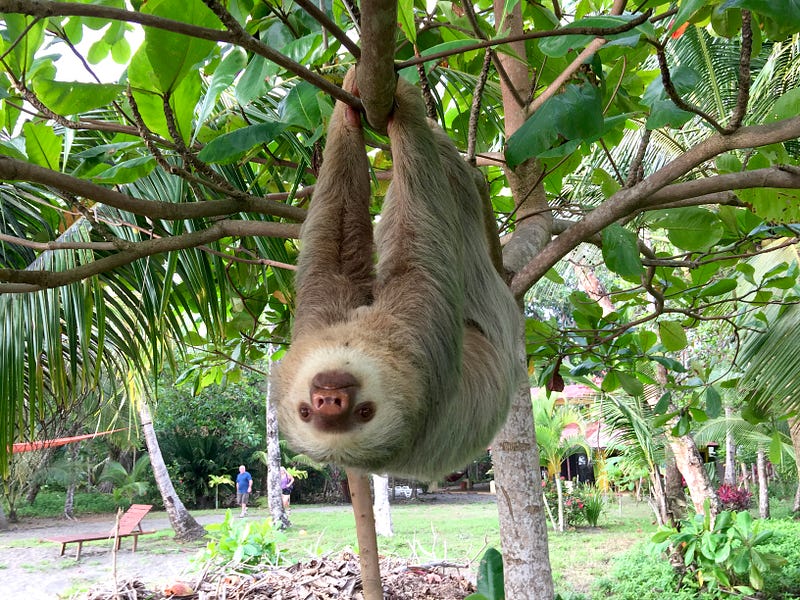
This sloth says thanks after we rescued it from getting bitten by dogs (read the full story below.) Photo Credit: Jillian Amatt - Artistic Voyages

As I look back on our almost 6 years of full-time travel it amazes me to think of the diversity of our planet and the different things that we have seen and witnessed. From differing landscapes to multitudes of plants and trees, we have seen a good variety of what Mother Nature provides us with.

But of course, those plants and landscapes would be nothing without the animals that grace the surface of them. Most of us humans have no idea how animals impact our planet. From incredibly large ones like whales to the teeniest insects like beetles, they all have a role to fill that keeps our planet healthy.

It doesn’t matter if it is ants, spiders or moths. We may see them as problems that we need to solve and control when they get in our spaces, but even they have a job to do. I’m not a scientist, but I do know this; if we humans continue to kill off everything that moves, we are going to find ourselves in a very interesting predicament.

But enough of my ranting! That’s a rabbit hole that can go very deep if I get started.

Our prompt at Globetrotters is meant to celebrate what we DO have left. It is an opportunity to allow others to learn about different animals and a moment for us to revel in the beings that we share our planet with.

Our first stop on our nomadic journey was Costa Rica. Talk about hitting the jackpot of flora and fauna all in one fell swoop!

According to this website:

Nestled in the middle of Central America, Costa Rica is one of the most biodiverse places on the planet.

Around half a million species are known to live there, which is equal to about 5% of the estimated species on Earth.

Considering Costa Rica only makes up 0.03% of the world’s landmass, this showcases the remarkable biodiversity of such a small country.

As expected, our wildlife encounters in Costa Rica were many. You can’t really look anywhere in that country without seeing animals of some sort doing something. Monkeys swing in the trees, birds flock through the sky. Hummingbirds dart around constantly and bees, bugs and crabs scurry about on their daily chores.

It is a constant hive of activity.

After securing a 2-month housesit on the beach, where we would start our nomadic journey from, we had no idea that we were about to have a front-row seat to quite the spectacle. Two months turned into 4.5 months after we secured another housesit two doors down from where we started, and we enjoyed an absolutely stunning start to our new life.

All of these encounters that I’m going to tell you about happened in these few first months in this one location. And this is just the tip of the iceberg. Every day brought some new adventure with the animals that lived on our beach, but these are the most memorable.
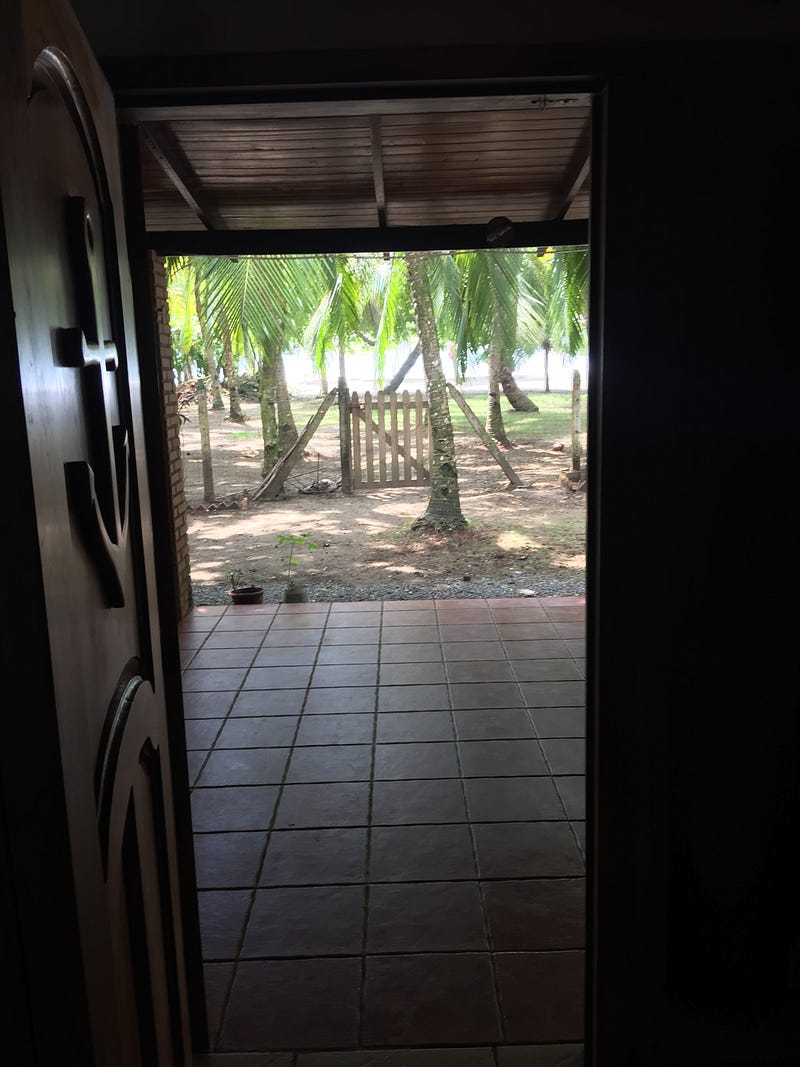
Our view to the beach from the front door. Photo Credit: Jillian Amatt - Artistic Voyages

There were parties on our roof!

We were just getting unpacked and settled in our new location when we were startled by a loud THUD followed by a scurrying of clicking nails across the metal roof. Nobody had prepared us for this, so you can imagine our alarm.

I looked at Chris wide-eyed, “What the hell was that?”

We both ran outside to take a look and spotted a huge iguana sitting at the edge of the roof. We would soon learn that they would climb the trees around the house, then simply drop down on the roof to suntan, I guess.

Haha, we really have no idea what they were doing up there, but it was certainly entertaining and had us jumping out of our skin with fright on more than one occasion.

It alarmed us further when they would simply fall off the roof of the house to get back down to the ground. Catching a glimpse of an iguana falling past your window, followed by hearing a loud THUMP in the sand outside, was an interesting experience. But before we could even take a look to see if they were okay, they had scurried off to another tree.

These sounds all became normal after a while and we paid less and less attention to them. It’s amazing what people can get used to.
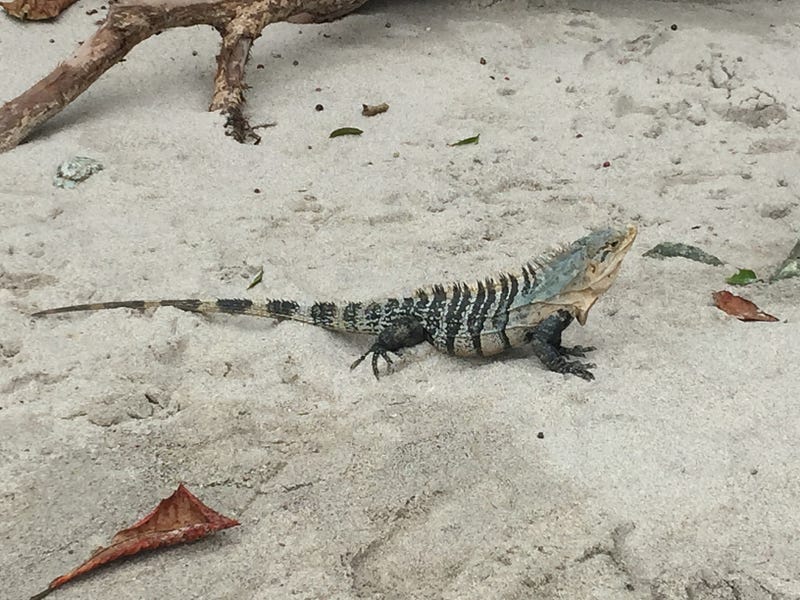
The iguanas were up to 4 feet long including the tails. Photo Credit: Jillian Amatt - Artistic Voyages

Iguanas weren’t the only ones!

We very quickly learned that a troop of capuchin monkeys would travel up and down our beach at least once per day. This was on our first morning while we were sound asleep. Again, we were startled by a loud bang above our heads, but this time it wasn’t nails on metal. It was soft feet running around. Followed by more thuds. And then there were more. And more.

It sounded like a party was going on up there so we had no choice but to crawl out of bed to see what all the ruckus was about.

As I came out the door, I was met by two capuchin monkeys hanging upside down over the edge of the roof looking directly at me. I came eye to eye with both of them at once and was immediately concerned that I shouldn’t be doing so. I had heard that direct eye contact with monkeys can be intimidating to them and may cause them to be aggressive. But as we got to know these monkeys over our time on the beach, we began to realize that they have no intention of getting tangled up with people if they can help it.
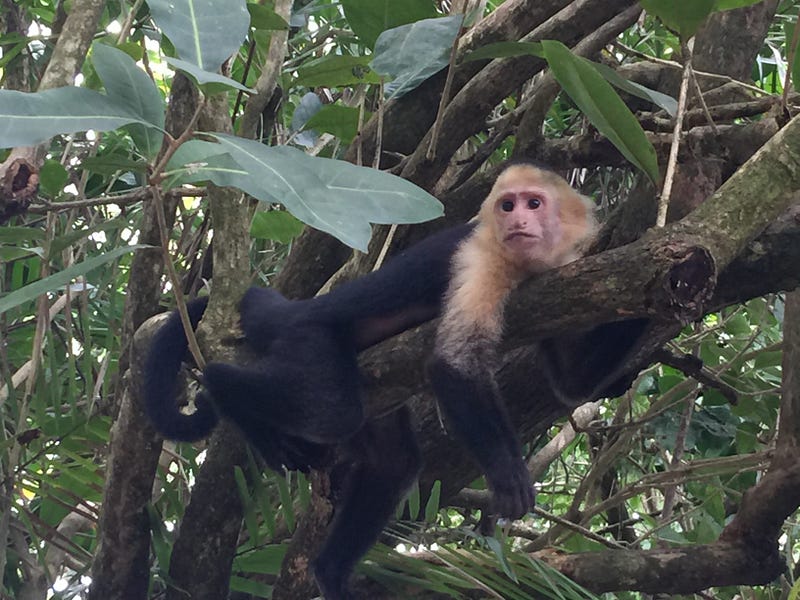
They were so adorable and we loved watching their antics as they jumped all over the place while moving through our section of the beach. Photo Credit: Jillian Amatt - Artistic Voyages

One of our neighbors would hang a bunch of bananas out for them on occasion. Whenever he did this, he said the monkeys would have a literal party on his back deck. One day he came out to find three swinging in his hammock and a bunch jumping around on his railings. They definitely entertained him a lot.

There was a snake in the chair!

I was walking around the corner of the house one day to another door of a room that was accessed off the front porch when I came across this guy just sitting on a chair.
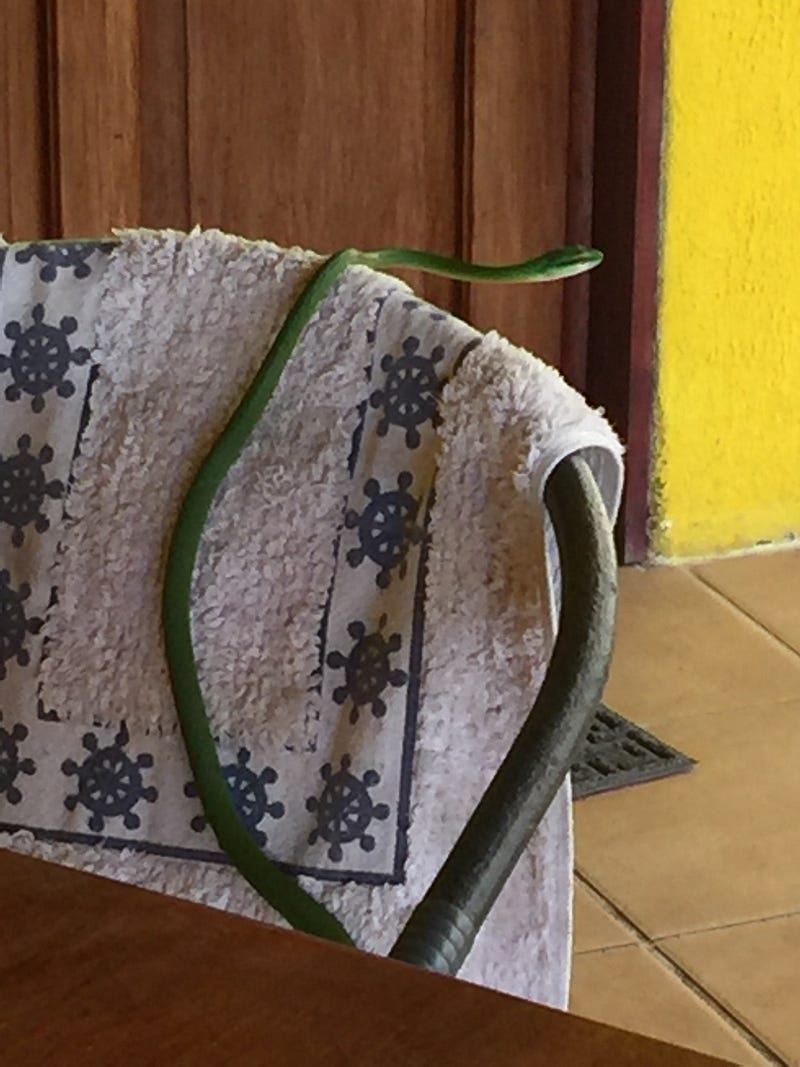
Here he is, just hanging out and staying eerily still. Photo Credit: Jillian Amatt - Artistic Voyages

Of course, I gasped and then went into a state of panic. We had been told that the Green Viper is one of Costa Rica's deadliest snakes and the owner would kill them with a machete if they came across one. I yelled for Chris then jumped up on a nearby chair.

Of course, we aren’t really in favor of killing animals just for the sake of it, and we didn’t really know what kind of snake this was, we were just guessing. Standing on the chair gave me a good perch to do some filming from, though. It’s not the best footage but it accurately portrays our state of distress at seeing this creature.

Later, after messaging the homeowner a picture, we were told that it was a harmless green vine snake. I’m glad that we simply chased it away. These days we would never kill something like this unless it was obviously attacking us or looking like it would. And we have gotten well used to snakes by now anyway.

The dogs were trying to drag something out of a tree!

Only about a week or two into our stay, we learned that the beach almond trees that were outside our house were a favorite tree for sloths to live in. Not only do they eat the leaves, but the configurations of the branches provide ample opportunity for them to sleep all day. We hadn’t seen any sloths until that point, so I figured that it wouldn’t hurt to go outside to take a look, just in case I could find one.

Would you believe me if I told you that there was actually one sleeping in a large tree right above our house?

We realized quite quickly after this episode that they were among us all along. They became a regular sighting on our beach walks as we would see them mostly sleeping among the tree tops, but occasionally moving slowly about. It was unusual to see them come down to the ground for any reason.

We were sitting on our porch one day when a group of three dogs was jumping up at the trunk of a nearby tree and trying to grab at something with their jaws. They were taking turns trying to get whatever it was and I suddenly took notice and wondered what the heck they were doing.

It didn’t take me long to realize what was going on.

“Oh my gosh! I think those dogs are trying to pull a sloth out of the tree!” I announced to Chris.

I immediately jumped from my seat and ran screaming towards the dogs to chase them away. Sure enough, this poor sloth was just low enough to the ground that one could reach it. I’m sure it wouldn’t have been long before they would have had it in their mouths and eating lunch. Sadly, the dogs also ate the iguanas on the beach which is likely why they would scurry away so quickly when they hit the ground after falling off of our roof.

Of course, the sloth immediately climbed higher up in the branches, but at one point turned to hang upside down as it is in the lead photo. I like to think that it was thanking me for my assistance with its predicament.

We also had an incident where a sloth fell out of a tree on the neighbor’s property and then walked all the way around our house before finding another tree to climb up. It is very rare for sloths to be on the ground in the daytime because of the threat of predators and the fact that they don’t move very fast. But apparently, they do fall out of trees quite frequently.
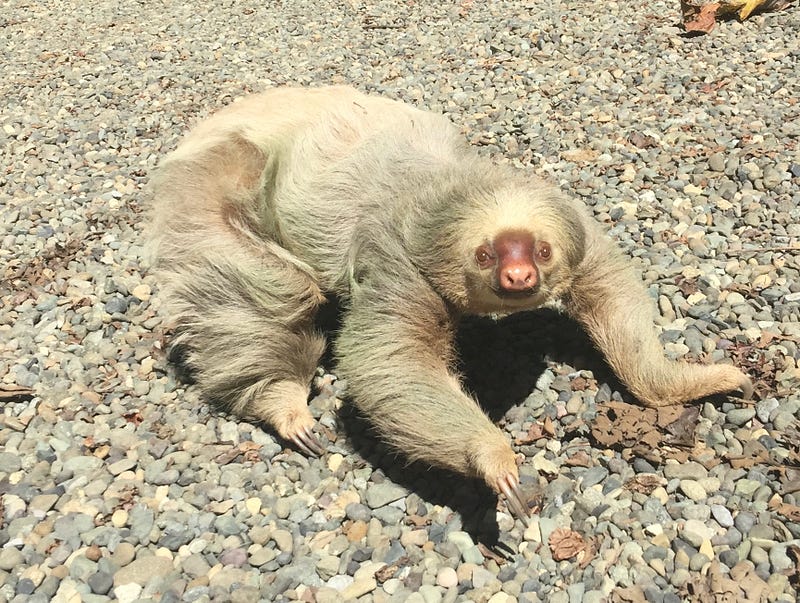
Sloth ‘running’ on the ground. Photo Credit: Jillian Amatt - Artistic Voyages

I have a YouTube video of this encounter available to watch if you wish:

We immediately gathered the dogs and locked them in the house while a group of us walked around with the sloth. We tried to give it space but also wanted to protect it from other dogs in case they ran over. We stayed with it until it got safely up a tree in our front yard.

Baby turtles made their way to the ocean.

There was a turtle sanctuary on our beach and each time we walked by it we would look through the chain link fence to see if we could see any baby turtles emerging. One day we told a friend that we met on the beach that we would love to see them when they hatch. Although my Spanish still wasn’t fluent, I understood that he was a volunteer for the organization and would let me know the next time they were hatching and had to be helped to the ocean.

Sure enough, one day he came by the house and told us that the ‘tortugas’ (Spanish for turtle) were ready! We ran down to the sanctuary and we could see some emerging from the sand in the enclosure. People were also digging the sand up to see if more were below to make sure they all got out.

They gave me a rubber glove and told me to pick it up. I carried one solitary turtle down to the water's edge and put it down on the sand. Seeing this incredibly small creature move into the rushing water and then somehow start to swim as he plowed head-first into the seemingly huge waves was an incredible experience.
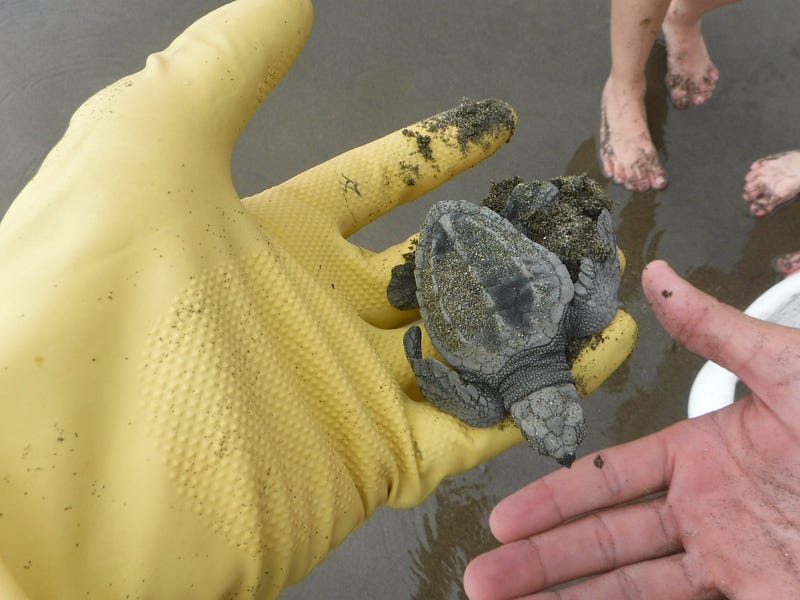
They were so adorable! Photo credit: Jillian Amatt - Artistic Voyages

“Good luck little one,” I whispered knowing that his odds of surviving to adulthood was 1 in 1000.
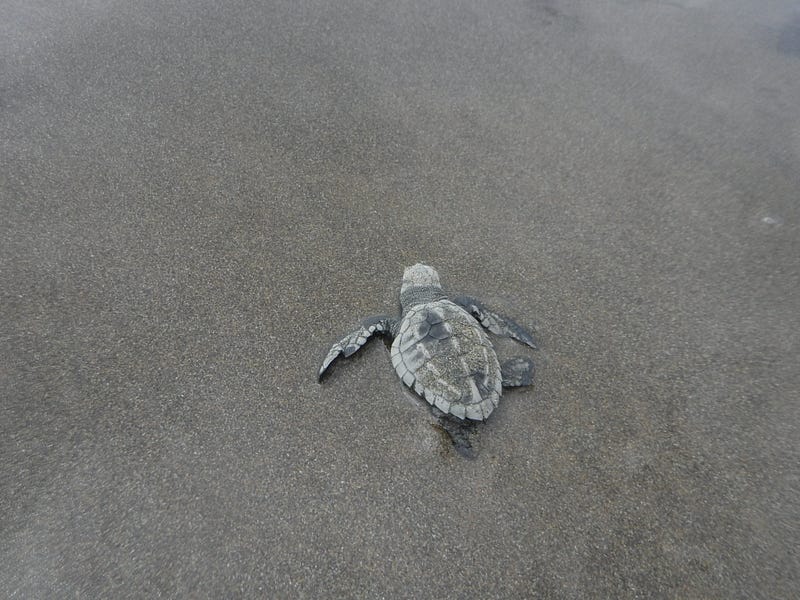
After just a couple of minutes, we could no longer see its tiny head bobbing above the surface of the water. It was hard to imagine the journey this little creature had ahead of it. Photo Credit: Jillian Amatt - Artistic Voyages

And there was so much more.

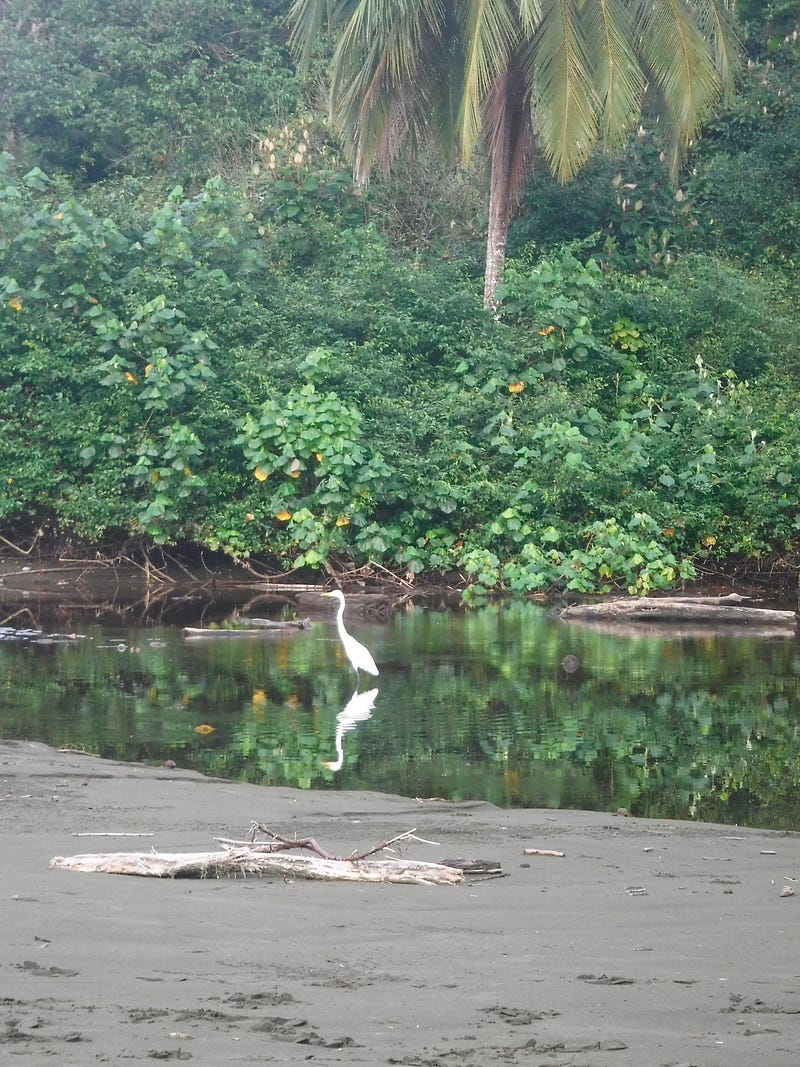
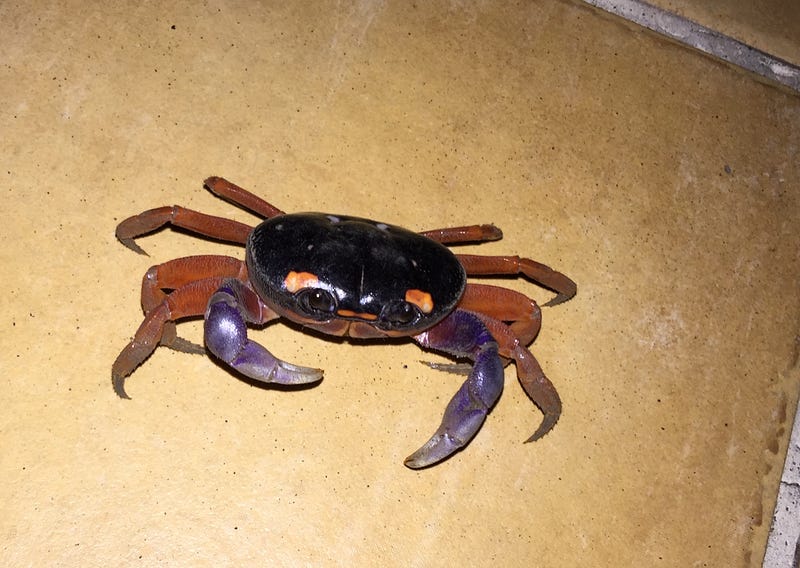
As I mentioned earlier, this article is just meant to highlight the experiences that stand out in my mind. We had many more. From a crab invasion, to bird watching in a nearby estuary. Monkey fights and screeching toucans. The longer we stayed on this beach, the more we experienced the incredible animal diversity of Costa Rica.
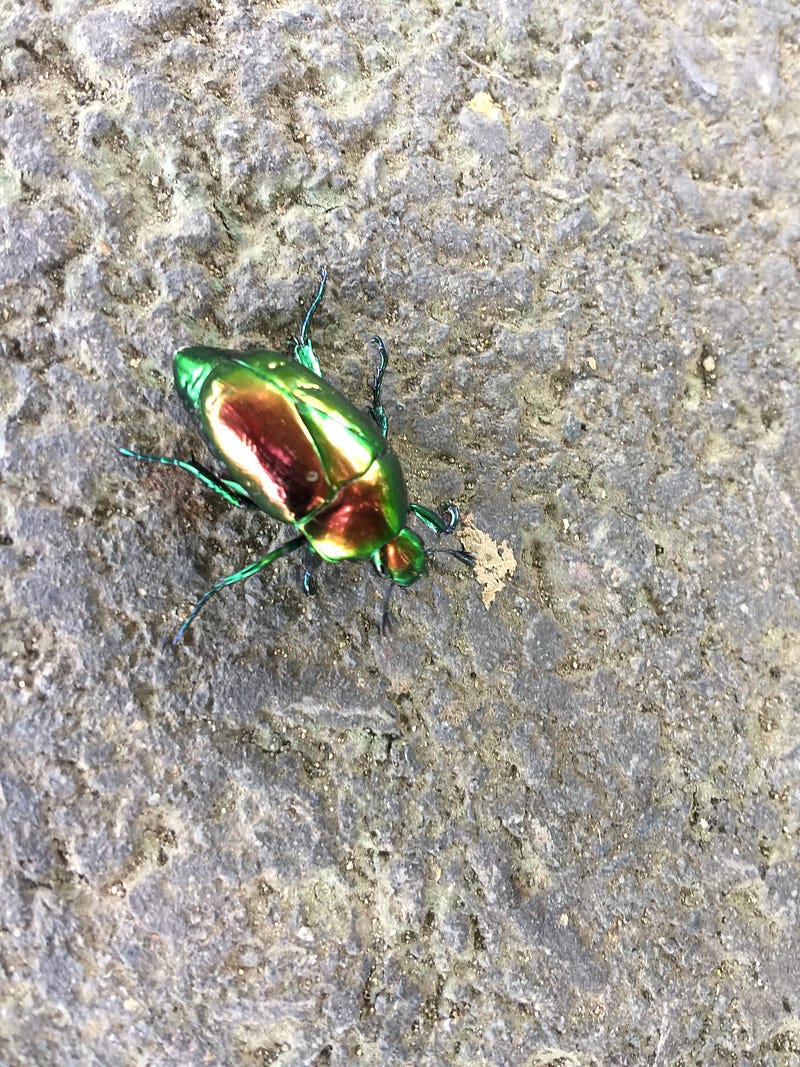
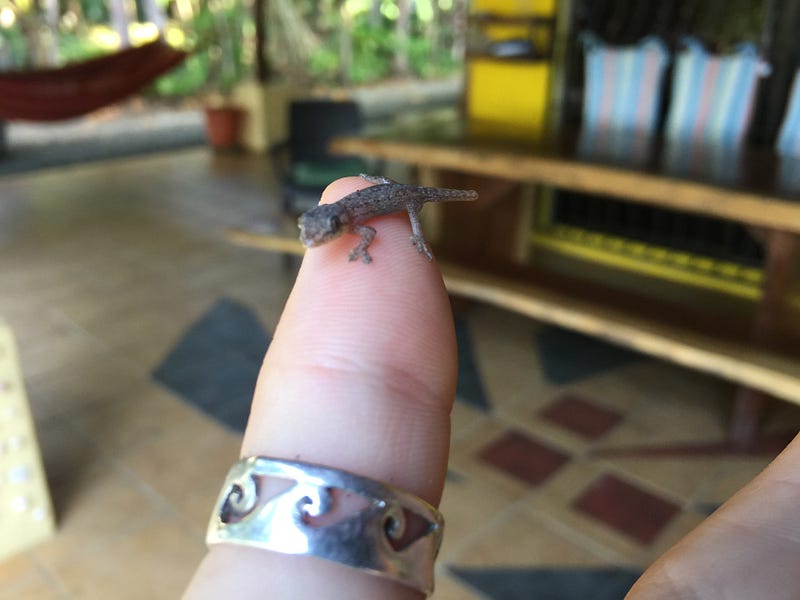
Incredible beetles were found in Costa Rica! Teeny tiny geckos ran around in our house all the time. Beautiful birds were found in the estuary and this crab was one of hundreds that migrated past our house one day. He was about 6 inches long! Photo Credits: Jillian Amatt - Artistic Voyages

This experience was the perfect start to our nomadic life, and we were so very grateful for this fabulous opportunity.

Six years later, our time spent there is surely a part of our highlight reel.

We, editors, are really looking forward to your Globetrotters Monthly Challenge posts! We know by now that we will not be disappointed with the stories we get to hear about people's incredible encounters with animals and wildlife.

To learn more about the prompt, please read Anne’s in-depth article that outlines the rules and submission guidelines:

Other animal stories already published in Globetrotters:

Claire Elizabeth Levesque

Joanna Skladanek

Click above to learn more about us!

If you like my writing and want to read more, follow me and sign up here to get my articles by email. We would also be happy if you considered leaving me a tip by using the link to Patreon or Ko-Fi below:)

We have been nomadic since 2017! Join our journey by hitting these links:

Website | Instagram | Facebook | LinkedIn| Patreon| YouTube | Medium | Twitter | Ko-Fi | Unsplash

Travel
Wildlife
Animals
Monthly Challenge
Costa Rica
Recommended from ReadMedium